

Allégorie du mariage de l'empereur Ferdinand II et Eleanor Gonzaga
L'illustration que vous avez partagée est intitulée “Allégorie du mariage de l'empereur Ferdinand II et Eleanor Gonzaga” et a été créé par le graveur flamand Aegidius Sadeler II (1570 – 1629). Il présente une représentation complexe et complexe de l'union entre l'empereur Ferdinand II du Saint Empire romain germanique et Eleanor Gonzaga., intégrant des thèmes allégoriques, symbolisme détaillé, et un style visuel de l'époque baroque.
Aperçu de l'œuvre
Cette gravure, produit par Aegidius Sadeler II; qui était le graveur impérial de Rodolphe II, Mathias et Ferdinand II, illustre une grande allégorie à plusieurs niveaux centrée sur le mariage de l'empereur Ferdinand II et d'Eleanor Gonzaga. La scène est remplie d'un riche symbolisme, combiner des figures humaines, éléments mythologiques, et motifs impériaux, tout cela contribue au récit plus profond de l’alliance politique, pouvoir, et faveur divine.
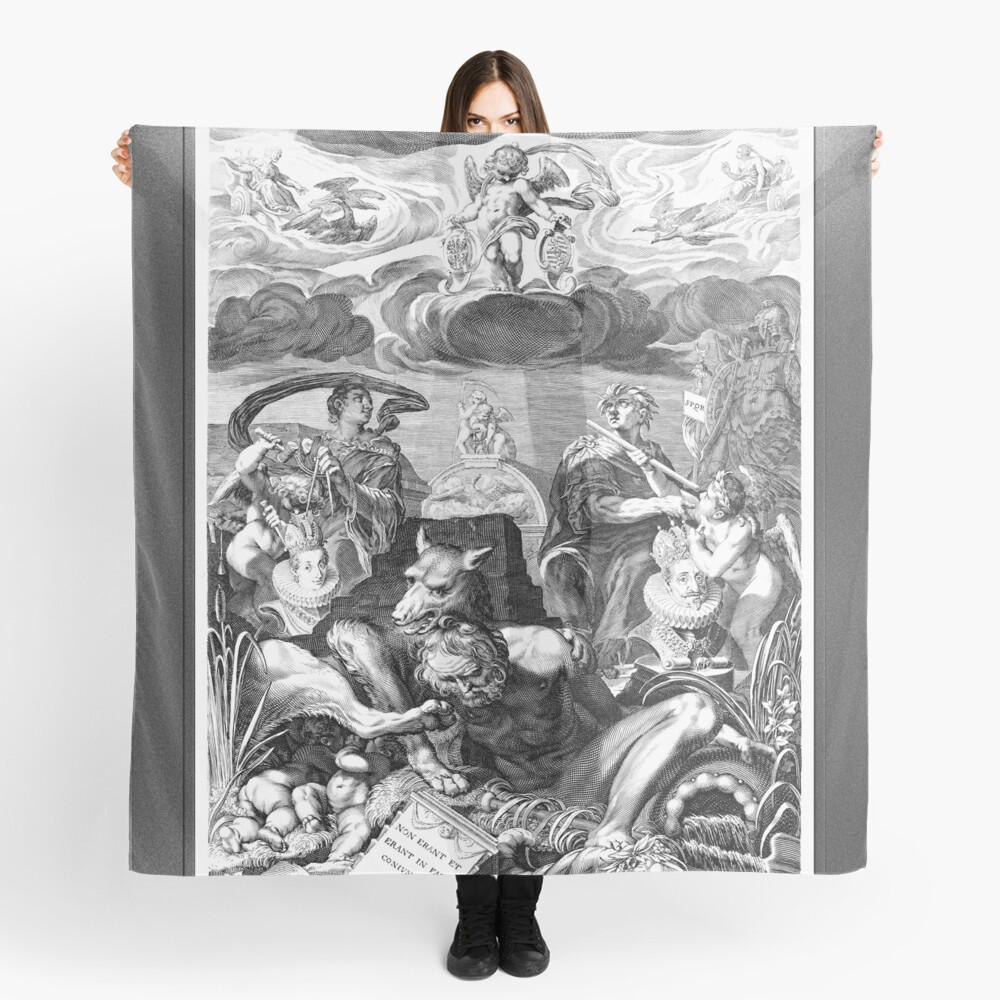
Table des matières
Sujet principal et composition
Au coeur du gravure, le couple impérial, Ferdinand II et Aliénor Gonzague, sont représentés symboliquement, bien que leurs ressemblances réelles ne soient pas au centre de l'attention. Au lieu, les personnages qui les entourent incarnent les vertus et les forces divines qui célèbrent leur mariage et sa signification. À gauche, la personnification de la terre et de la fertilité est représentée, avec des récoltes abondantes, un symbole fort de l'union féconde entre les deux souverains. À droite, le royaume divin est représenté avec des anges, soulignant les bénédictions spirituelles accordées au mariage.
Chiffres et symbolisme
Le graveur a habilement disposé les personnages pour guider le regard du spectateur à travers le récit.. Au premier plan, we see a muscular man with the head of a beast, a likely reference to the untamed forces that the imperial couple must tame and govern. Surrounding this figure are various allegorical representations, including gods and virtues, further enhancing the theme of the emperor and empress’ reign over both the earthly and divine realms.
The angel in the center of the composition holds a symbol of divine justice, perhaps reflecting the emperor’s role as a ruler blessed by heaven to uphold law and order. The celestial figures, with their flowing robes and dynamic poses, evoke the grandeur and divine right associated with the imperial family, while the serene and composed figures below ground symbolize stability, paix, and the benefits of imperial rule.
Terrain et arrière-plan
The engraving features a dramatic backdrop that splits the celestial and earthly realms. Au-dessus de, a tumultuous sky filled with swirling clouds suggests the power of the heavens, while below, the more grounded elements, such as the earthy foliage and rich textures, represent the earthly realm. The contrast between the divine and terrestrial realms is amplified by the figures’ positions, with celestial beings floating above and earthly symbols being firmly planted below.
The top portion of the artwork contains several figures of angels who convey movement, bringing a sense of divine purpose to the scene. One of the angels, holding a scroll, likely symbolizes the heavenly mandate that supports the marriage of the emperor and his empress. The angel is framed by clouds, further enhancing the ethereal and otherworldly nature of the divine realm.
Matériaux et techniques
En guise de gravure, the material of choice is metal or wood, and the process involves intricate carving to create delicate lines and textures that convey the fine details of the figures and the composition. Aegidius Sadeler II’s work is known for its fine craftsmanship and meticulous attention to detail. The sharp lines and contrasts between light and shadow add depth and texture to the image, imbuing it with a sense of volume and movement. The smooth flow of drapery and the detailed anatomy of the human forms showcase Sadeler’s skill in replicating the human figure with precision.
The use of chiaroscuro—the contrast between light and dark—enhances the dramatic effect, adding a heightened sense of realism while maintaining the idealized forms typical of the Baroque period. This technique draws the viewer’s focus to the central allegorical figures, which are bathed in light, while the background remains in darker tones, creating a sense of depth and focus.
Style, Thème, et humeur
The style of this engraving is clearly Baroque, evident in the dramatic use of light, intense emotion, and the complex, layered composition. The figures are dynamic, full of energy, and rendered with exaggerated realism, reflecting the grandeur of the Baroque period. The figures’ gestures and expressions convey the heightened emotional intensity that characterizes much of the Baroque art, making the scene not just a depiction of a marriage but a celebration of divine power, commande, and the emperor’s role as both a ruler and a divine figure.
The theme of this engraving is centered around the union of Ferdinand II and Eleanor Gonzaga, viewed through an allegorical lens. The marriage is not just a political alliance but a sacred bond that brings divine and earthly blessings. The marriage is framed as a cosmic event, linking the rulers to the heavens and nature. The celestial figures serve as intermediaries between the emperor and the divine, emphasizing the sanctity and importance of the union.
The mood of the artwork is serious and grand, reflecting the monumental nature of imperial power and divine favor. There is a sense of celebration, but also a recognition of the weight of the responsibility that comes with ruling. The figures of angels and gods seem to be both celebrating and overseeing the marriage, indicating that the rulers are under divine protection but also subject to heavenly scrutiny.
Conclusion
En somme, les “Allégorie du mariage de l'empereur Ferdinand II et Eleanor Gonzaga” by Aegidius Sadeler II is a masterful engraving that combines allegory, symbolisme, and Baroque artistry to convey the significance of the royal marriage. Through dynamic composition, détails complexes, et un symbolisme profond, Sadeler invites viewers to reflect on the spiritual and political ramifications of this union. The artwork is a testament to the power and divine mandate of the ruling couple and to the complex relationship between earthly sovereignty and divine will.
Il s'agit d'une reproduction de maîtres anciens d'art numérique remasterisée d'une image du domaine public qui est disponible en tant que impression sur toile.
Biographie de l'artiste dérivée de Wikipedia.org
Aegidius was part of the Sadeler family, which were the largest and probably the most successful of the Flemish engravers of the later 16th and 17th century that became the dominant Northern European printmakers; as both artist and publishers.
He was the son of Emmanuel de Sayeleer and the nephew of Aegidius I, Jan I en Raphael Sadeler; and was trained by his uncle Jan I; devenir membre de la Guilde Anversoise de St. Luc dans 1589.
Il a travaillé à Munich, Allemagne d'environ 1590 à 1593, puis à Rome, Italie de 1593 à 1594 puis retour à Munich depuis 1594 – 1597.
Dans 1597 il a déménagé à Prague, République tchèque où il décide de s'installer et devient le graveur impérial de Rodolphe II (1552 – 1612); et réalisé des peintures de l'aristocratie ainsi que des gravures d'œuvres d'art de Bartholomeus Spranger (1546 – 1611), Roelant Savery (1576 – 1639), Hans d'Aix-la-Chapelle (1552 – 1615), Giuseppe Arcimboldo (1527 – 1593), et sculptures de Giambologna (1529 – 1608) et Adriaen de Vries (1556 – 1626).
Après le décès de Rodolphe II, il servira de graveur impérial sous les deux empereurs Matthias (1557 – 1619) et Ferdinand II (1578 – 1637).