

El despertar de Psique: Un estudi sobre intimitat i transformació
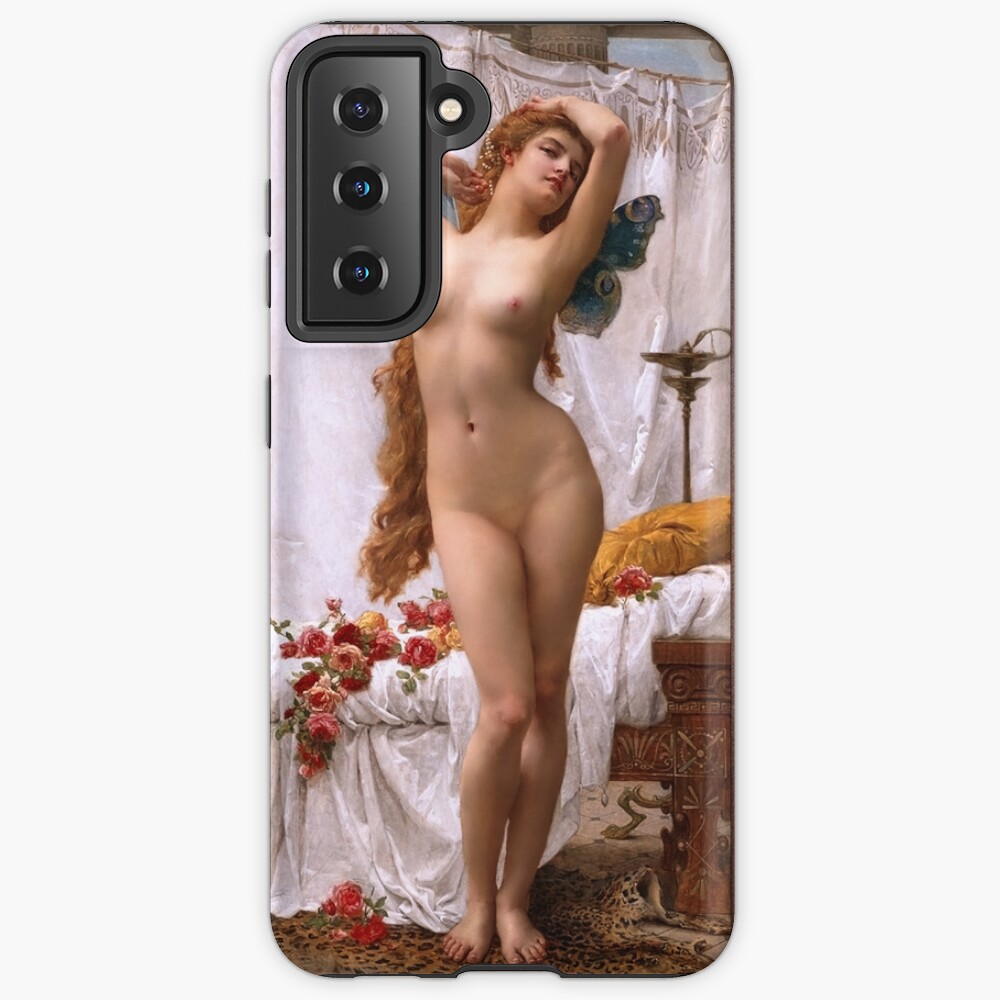
El Despertar de Psique (El despertar de Psique) c1904 de Guillaume Seignac (1870 – 1924), és una obra captivadora que exemplifica la fascinació de la Belle Époque per la mitologia clàssica i el retrat íntim.. Aquest llenç a gran escala transporta els espectadors a una cambra privada, on la figura mitològica de Psique pren consciència, marcant un moment clau en el seu viatge cap a la il·luminació i la unió amb Amor (Cupido). L'ús magistral de la llum per part de Seignac, color, i la composició crea una atmosfera de contemplació tranquil·la i consciència creixent.

Taula de continguts
Harmonia compositiva i profunditat espacial
The painting’s composition is carefully structured to draw the eye towards Psyche as the central figure. She occupies a prominent position within the frame, standing gracefully amidst draped fabrics and scattered blossoms. La disposició no és rígidament simètrica; una mica, it possesses a naturalistic flow that enhances the sense of immediacy.
A large bed dominates the background, partially obscured by flowing white curtains which create a soft backdrop against which Psyche’s form is subtly highlighted. These textiles aren’t merely decorative elements; they contribute to the overall feeling of enclosure and privacy, emphasizing the intimate nature of the scene. The floor, strewn with petals and foliage, further grounds the figure within her surroundings. A small table in the lower right corner holds a lamp and other objects, adding depth and detail to the setting.
Figura de Psique: Beauty and Vulnerability
Seignac’s depiction of Psyche is remarkable for its naturalism and delicate beauty. The artist renders her form with meticulous attention to anatomical accuracy, while simultaneously imbuing it with an ethereal quality. Her pose—one hand raised towards her face, the other gently supporting herself—suggests a moment of awakening, a gradual return from slumber.
Her expression is serene yet inquisitive; she appears both vulnerable and poised on the cusp of understanding. The artist’s treatment of skin tones is particularly noteworthy, capturing the subtle nuances of light and shadow that define her form. La seva llarga, els cabells castanys fluents li cauen en cascada per les espatlles, augmentant la impressió general de gràcia i feminitat.
Elements simbòlics: Butterflies and Blossoms
La pintura és rica en elements simbòlics extrets del mite de Psique i Amor. Les més destacades són les papallones que revoloten al voltant del cap de Psique. En la iconografia clàssica, Les papallones sovint representen l'ànima o la transformació, un símbol adequat per al viatge de Psique cap a la il·luminació espiritual.. La seva presència subratlla la idea que ella està emergint en un nou estat de ser.
Les roses disperses i altres flors escampades pel terra reforcen encara més aquest tema de renaixement i renovació. Roses, en particular, s'associen sovint amb l'amor i la bellesa, deixant entreveure l'eventual unió entre Psique i Amor. El llum de la taula proporciona un suau, warm light that illuminates Psyche’s face, symbolizing knowledge and illumination.
Llum i Color: Creating Atmosphere
Seignac’s skillful use of light and color is crucial to the painting’s overall effect. He employs a technique known as clarobscur, using dramatic contrasts between light and shadow to create depth and highlight key elements. El suau, diffused light emanating from the lamp casts gentle shadows across Psyche’s body, emphasizing her form while maintaining a sense of intimacy. The color palette is predominantly warm, dominated by shades of pink, crema, i or, which contributes to the painting’s overall feeling of warmth and tranquility. The subtle variations in tone create a sense of realism and enhance the visual appeal of the scene.
Artistic Influences and Context
"El despertar de Psique" reflecteix les tendències artístiques predominants durant la Belle Époque, un període caracteritzat per un renovat interès per la mitologia clàssica i una celebració de la bellesa. L'obra de Seignac comparteix afinitats amb la tradició de la pintura acadèmica, evident en la seva meticulosa atenció als detalls i el seu èmfasi en la precisió anatòmica. malgrat això, també demostra una sensibilitat cap al moviment simbolista emergent, que pretenia evocar emocions i idees mitjançant imatges simbòliques més que representacions literals. El focus de la pintura en un moment íntim de transformació personal s'alinea amb l'exploració dels simbolistes dels temes psicològics.
A Timeless Exploration of Transformation
En definitiva, "El despertar de Psique" és més que una bella representació d'una escena mitològica; it is a profound meditation on the human condition, on the challenges and rewards of self-discovery and spiritual growth. Seignac’s masterful technique and evocative imagery combine to create a work that continues to resonate with viewers today, inviting them to contemplate the timeless themes of beauty, transformació, and the pursuit of enlightenment. The painting stands as a testament to Seignac’s artistic skill and his ability to capture the essence of human experience in a single, imatge inoblidable.
Artista Bio de Wikipedia.org
Guillaume was born in Rennes in 1870, and died in Paris in 1924. He started training at the Académie Julian in Paris, where he spent 1889 a través 1895. He had many teachers there, including Gabriel Ferrier, William-Adolphe Bouguereau, and Tony Robert-Fleury.
In addition to his training in the academic style, much of Seignac’s work displayed classical themes and style, per exemple, el seu ús de cortines diàfanes que cobreixen el cos d'una dona recorda l'estil clàssic, en particular l'escultor Fídies.
En 1897, Guillaume Seignac va exposar regularment al Saló i va guanyar diversos honors, inclòs a 1900 menció honorífica i en 1903 una medalla de tercera classe.
The Awakening of Psyche és una reproducció retocada d'antics mestres d'art digital d'una imatge de domini públic que està disponible per a la venda en línia com a impressió de tela enrotllada.