

Il Risveglio di Psiche: A Study in Intimacy and Transformation
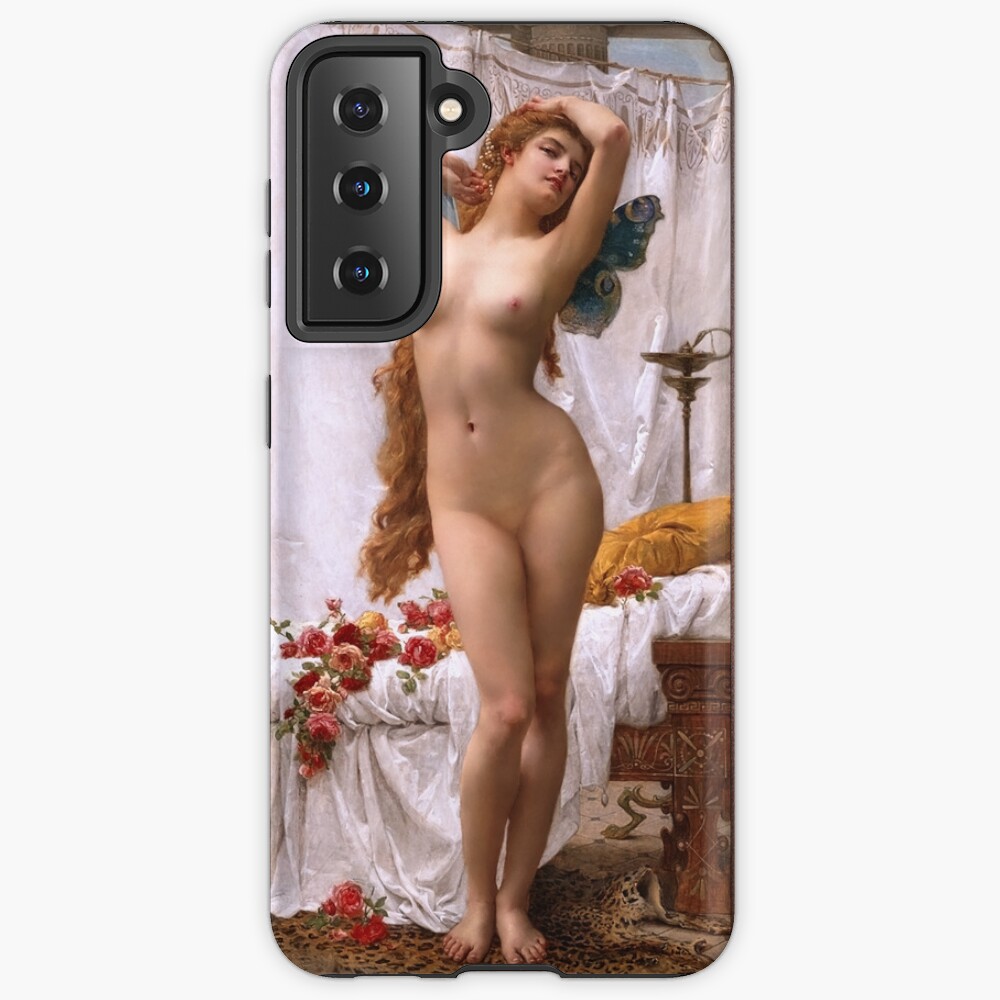
Il Risveglio di Psiche (Il Risveglio di Psiche) c1904 by Guillaume Seignac (1870 – 1924), is a captivating work that exemplifies the Belle Époque’s fascination with classical mythology and intimate portraiture. This large-scale canvas transports viewers to a private chamber, where the mythological figure of Psyche comes into consciousness, marking a pivotal moment in her journey toward enlightenment and union with Amor (Cupido). Seignac’s masterful use of light, colore, and composition creates an atmosphere of quiet contemplation and burgeoning awareness.

Sommario
Compositional Harmony and Spatial Depth
The painting’s composition is carefully structured to draw the eye towards Psyche as the central figure. She occupies a prominent position within the frame, standing gracefully amidst draped fabrics and scattered blossoms. La disposizione non è rigidamente simmetrica; Piuttosto, it possesses a naturalistic flow that enhances the sense of immediacy.
A large bed dominates the background, partially obscured by flowing white curtains which create a soft backdrop against which Psyche’s form is subtly highlighted. These textiles aren’t merely decorative elements; they contribute to the overall feeling of enclosure and privacy, emphasizing the intimate nature of the scene. The floor, strewn with petals and foliage, further grounds the figure within her surroundings. A small table in the lower right corner holds a lamp and other objects, adding depth and detail to the setting.
Psyche’s Figure: Beauty and Vulnerability
Seignac’s depiction of Psyche is remarkable for its naturalism and delicate beauty. The artist renders her form with meticulous attention to anatomical accuracy, while simultaneously imbuing it with an ethereal quality. Her pose—one hand raised towards her face, the other gently supporting herself—suggests a moment of awakening, a gradual return from slumber.
Her expression is serene yet inquisitive; she appears both vulnerable and poised on the cusp of understanding. The artist’s treatment of skin tones is particularly noteworthy, capturing the subtle nuances of light and shadow that define her form. Lei lunga, flowing auburn hair cascades down her shoulders, adding to the overall impression of grace and femininity.
Elementi simbolici: Butterflies and Blossoms
The painting is rich in symbolic elements drawn from the myth of Psyche and Amor. The most prominent are the butterflies fluttering around Psyche’s head. In classical iconography, butterflies often represent the soul or transformation—a fitting symbol for Psyche’s journey toward spiritual enlightenment. Their presence underscores the idea that she is emerging into a new state of being.
The scattered roses and other blossoms strewn across the floor further reinforce this theme of rebirth and renewal. Rose, in particolare, are frequently associated with love and beauty, hinting at the eventual union between Psyche and Amor. The lamp on the table provides a soft, warm light that illuminates Psyche’s face, symbolizing knowledge and illumination.
Luce e colore: Creating Atmosphere
Seignac’s skillful use of light and color is crucial to the painting’s overall effect. Impiega una tecnica nota come chiaroscuro, using dramatic contrasts between light and shadow to create depth and highlight key elements. Il morbido, diffused light emanating from the lamp casts gentle shadows across Psyche’s body, emphasizing her form while maintaining a sense of intimacy. The color palette is predominantly warm, dominated by shades of pink, crema, e oro, which contributes to the painting’s overall feeling of warmth and tranquility. The subtle variations in tone create a sense of realism and enhance the visual appeal of the scene.
Artistic Influences and Context
“The Awakening of Psyche” reflects the artistic trends prevalent during the Belle Époque, a period characterized by a renewed interest in classical mythology and a celebration of beauty. Il lavoro di Seignac condivide affinità con la tradizione della pittura accademica, evidente nella sua meticolosa attenzione ai dettagli e nella sua enfasi sulla precisione anatomica. tuttavia, dimostra anche una sensibilità per il movimento simbolista emergente, che cercava di evocare emozioni e idee attraverso immagini simboliche piuttosto che rappresentazioni letterali. L’attenzione del dipinto su un momento intimo di trasformazione personale è in linea con l’esplorazione dei temi psicologici da parte dei simbolisti.
A Timeless Exploration of Transformation
In definitiva, “Il risveglio di Psiche” è più di una semplice rappresentazione di una scena mitologica; è una profonda meditazione sulla condizione umana, sulle sfide e le ricompense della scoperta di sé e della crescita spirituale. La tecnica magistrale e le immagini evocative di Seignac si uniscono per creare un'opera che continua a risuonare con gli spettatori oggi, invitandoli a contemplare i temi senza tempo della bellezza, trasformazione, e la ricerca dell'illuminazione. Il dipinto testimonia l'abilità artistica di Seignac e la sua capacità di catturare l'essenza dell'esperienza umana in un unico gesto., immagine indimenticabile.
Bio dell'artista da Wikipedia.org
Guillaume è nato a Rennes nel 1870, e morì a Parigi nel 1924. Ha iniziato la formazione presso l'Académie Julian di Parigi, dove ha trascorso 1889 attraverso 1895. Aveva molti insegnanti lì, compreso Gabriel Ferrier, William-Adolphe Bouguereau, e Tony Robert-Fleury.
Oltre alla sua formazione in stile accademico, gran parte del lavoro di Seignac mostrava temi e stile classici, Per esempio, il suo uso di drappeggi diafani che coprono il corpo di una donna ricorda lo stile classico, in particolare lo scultore Fidia.
Nel 1897, Guillaume Seignac espone regolarmente al Salon e ha vinto diversi riconoscimenti, compreso in 1900 menzione d'onore e in 1903 una medaglia di terza classe.
The Awakening of Psyche è una riproduzione di vecchi maestri di arte digitale ritoccata di un'immagine di pubblico dominio che è disponibile per la vendita online come stampa su tela arrotolata.