

The Bath c1868
Marc-Charles-Gabriel Gleyre (1806 – 1874), a Swiss-born painter known for his academic training and adeptness in classical themes, sortu “The Bath” urtean 1868. Gleyre’s work displays his mastery of fine details, his deep understanding of the human form, and his classical approach to subjects often inspired by mythology, historia, and the beauty of the human body. “The Bath” serves as an example of Gleyre’s dedication to realism, portraying a serene and intimate scene that invites the viewer to reflect on the purity and tranquility of bathers in an idyllic, almost dream-like environment.
Edukien taula
Gai nagusia
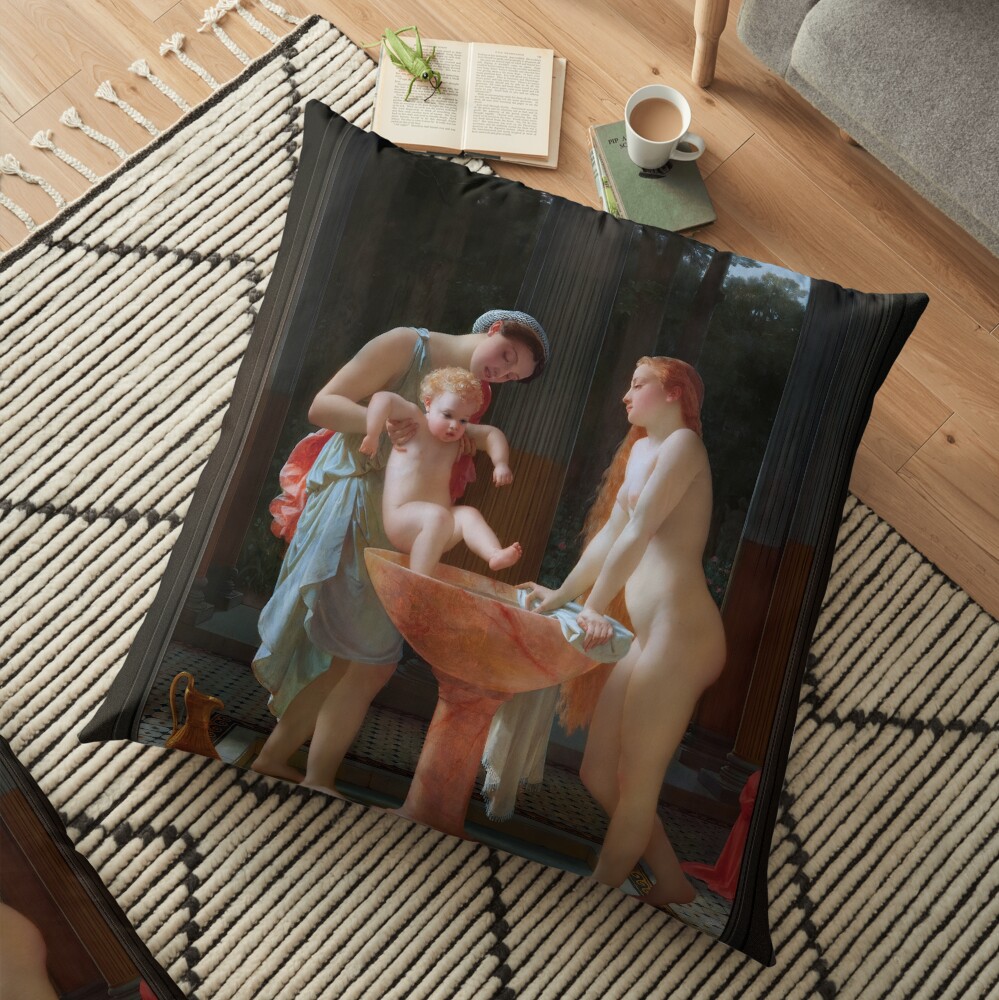
-ren bihotzean “The Bath” is a gentle and serene interaction between three figures: two women and a small child. The central theme of the painting is the intimate act of bathing, a moment of personal care and repose. The figures are depicted in a naturalistic manner, emphasizing the purity and simplicity of the scene. The woman on the left is assisting the small child in a marble basin, cradling the child as they both seem to enjoy the refreshing experience. Her gentle handling of the child is tender, showcasing maternal affection.
Eskuinera, another woman stands poised, almost as though in quiet contemplation of the moment. She gazes to the left, perhaps watching the child or lost in her thoughts, embodying a graceful yet subtle mood of tranquillity. Bere biguna, flowing hair and the natural stance of her body highlight the harmony between the human figure and the surrounding environment. Bi emakumeak delikatu batean ageri dira, forma femeninoaren edertasuna eta indarra islatzen dituen estilo klasikoa, gutxieneko arropaz jantzita, bere edertasun naturala eta momentuko leuntasuna nabarmentzen dituena.
Lurra eta atzeko planoa
Eszena intimo honen agertokia erromatar estiloko bainu eder bat da, marmolezko zutabe altuekin osatua espazioa markatu eta handitasun sentsazioa sortuz. Hondoak paisaia natural zabala iradokitzen du, zutabeen arteko espazio irekian zehar zuhaitz oparoekin ikusgai. Figurak barrualdea eta kanpoaldea nahasten dituen ingurune sofistikatu batean kokatzen dira, Erromatarren antzinako bainu erritualen ideia aldarrikatuz. Zutabeen erabilerak eragin klasikoa iradokitzen du, as it was common in the ancient world to build bathhouses as a place for both socialization and relaxation.
The ground is covered with a finely detailed tiled floor, perhaps a nod to the mosaics of ancient civilizations. The intricate designs on the floor contribute to the composition’s overall sense of balance and symmetry, reinforcing the classical nature of the painting. The space around the figures is bathed in soft, argi naturala, which filters through the open columns, creating a serene atmosphere of warmth and calm.
Objektuak eta materialak
Key to the scene is the marble basin in which the child is being bathed. The basin itself is a symbol of refinement and the timeless elegance of classical art. Marmolaren erabilera, a material prized by ancient civilizations, adds a luxurious element to the composition, suggesting not just utility but also a higher cultural status. The soft reflections on the marble surface enhance the realism of the piece, giving the material a life-like quality that is almost tangible.
In addition to the marble basin, the artist has meticulously rendered the fabrics and textures of the figures’ arropa. The drapery is portrayed with fine attention to detail, the fabrics gently clinging to the figures’ bodies or flowing gracefully with the weight of the fabric. The texture of the skin, particularly that of the child, is soft and tender, while the flow of the water adds an element of fluidity to the otherwise static composition.
Estiloa eta Teknika
Gleyre’s approach in “The Bath” is one of realism, with clear influences from the Neoclassical and Romantic traditions. His attention to the human form is evident in the soft, almost ethereal rendering of the figures, using delicate shading and blending to give the figures a lifelike appearance. The light plays an important role in the composition, highlighting the contours of the bodies and the subtle textures of the environment. The use of natural light entering the space through the columns adds depth and dimension to the work, casting soft shadows and illuminating the scene with a calm, golden hue.
The technique employed by Gleyre is one of careful, deliberate brushwork. His use of soft transitions between light and shadow creates a sense of realism, bringing the figures to life. The blending of tones and the careful modeling of light on the skin emphasize the artist’s deep understanding of the human body and his ability to depict its natural beauty.
Aldartea eta Giroa
ren aldartea “The Bath” is one of calm, bakea, and subtle intimacy. The scene evokes a sense of serenity, where the bath is not only a physical act of cleansing but also a moment of personal reflection and connection with others. The tender interaction between the mother and child, as well as the quiet, contemplative stance of the second woman, imbues the piece with a feeling of nurturing and protection. The classical setting and the figures’ graceful poses enhance the timeless quality of the work, suggesting an idealized version of femininity, lañotasun, and maternal care.
There is a sense of tranquility in the composition, as if the viewer has stumbled upon a private moment, one that is suspended in time and untouched by the outside world. The painting offers not just an aesthetic experience but also an emotional one, inviting the viewer to reflect on the themes of motherhood, edertasuna, eta garbitasuna.
Bukaera
Marc-Charles-Gabriel Gleyre’s “The Bath” is a masterful example of classical painting, reflecting both the refinement and elegance of the Neoclassical tradition while imbuing it with the soft realism of the Romantic era. The work exudes a timeless beauty, capturing a moment of serene intimacy between mother, child, and the environment. Xehetasun arretaz arretaz, a harmonious composition, and a focus on natural light and texture, Gleyre creates a visual narrative that transports the viewer into a world of quiet grace and perfect harmony.
Domeinu publikoko irudi baten erreprodukzioa da mihise inprimatu sarean.
Arte digitalaren sorkuntza hau, Xzendor7 webgunean aurki daitezkeen artelan guztiak bezala sarean erosteko eskuragarri dago hainbat material formatutan, mihise inprimatuak barne., estanpatu akrilikoak, metal estanpatuak, egur estanpatuak, marko estanpatuak, kartelak, eta ijetzitako mihise estanpatu gisa hainbat tamainatan 12 zentimetroetara 72 hazbeteko artelanaren eta artea erosteko aukeratzen duzun eskaeraren arabera inprimatzeko dendaren tamainaren arabera.
Artelana gizonezkoen eta emakumezkoen arropa sorta zabal batean ere eskuragarri dago, katiluak, totes, zapiak, koadernoak eta aldizkariak eta etxeko dekorazio produktu ugari.
Artistari buruz
Hemendik eratorritako informazioa Wikipedia.org
Marc Gabriel Charles Gleyre is generally known by the name Charles Gleyre who was raised by an uncle in Lyon, Frantzia, when his parents died when he was about 8 edo 9 urteak.
His uncle sent Charles to the city’s industrial school and began his artistic education under the French Painter and Lithographer Jean-Claude Bonnefond (1796 – 1860); an artist who was known for his portrayals of peasant life.
He then moved to Paris, France where he enrolled at the École des Beaux-Arts, and studied under the French Painter Louis Hersent (1777 – 1860); and he also studied under British Romantic Landscape Painter Richard Parkes Borington (1802 – 1826) at the Academie Suisse; and from there he traveled to Italy, where he became acquainted with French Painter Horace Vernet (1789 – 1863), and Swiss Painter Louis Léopold Robert (1794 – 1835).