

Baðið c1868
Marc-Charles-Gabriel Gleyre (1806 – 1874), svissneskur málari sem er þekktur fyrir akademíska þjálfun og færni í klassískum þemum, búin til “Baðið” inn 1868. Verk Gleyre sýna vald hans á fínum smáatriðum, djúpur skilningur hans á manngerðinni, og klassísk nálgun hans á viðfangsefni oft innblásin af goðafræði, sögu, og fegurð mannslíkamans. “Baðið” þjónar sem dæmi um vígslu Gleyre til raunsæis, dregur upp kyrrláta og innilegu senu sem býður áhorfandanum að velta fyrir sér hreinleika og ró baðgesta í idyllic, nánast draumalegt umhverfi.
Efnisyfirlit
Aðalefni
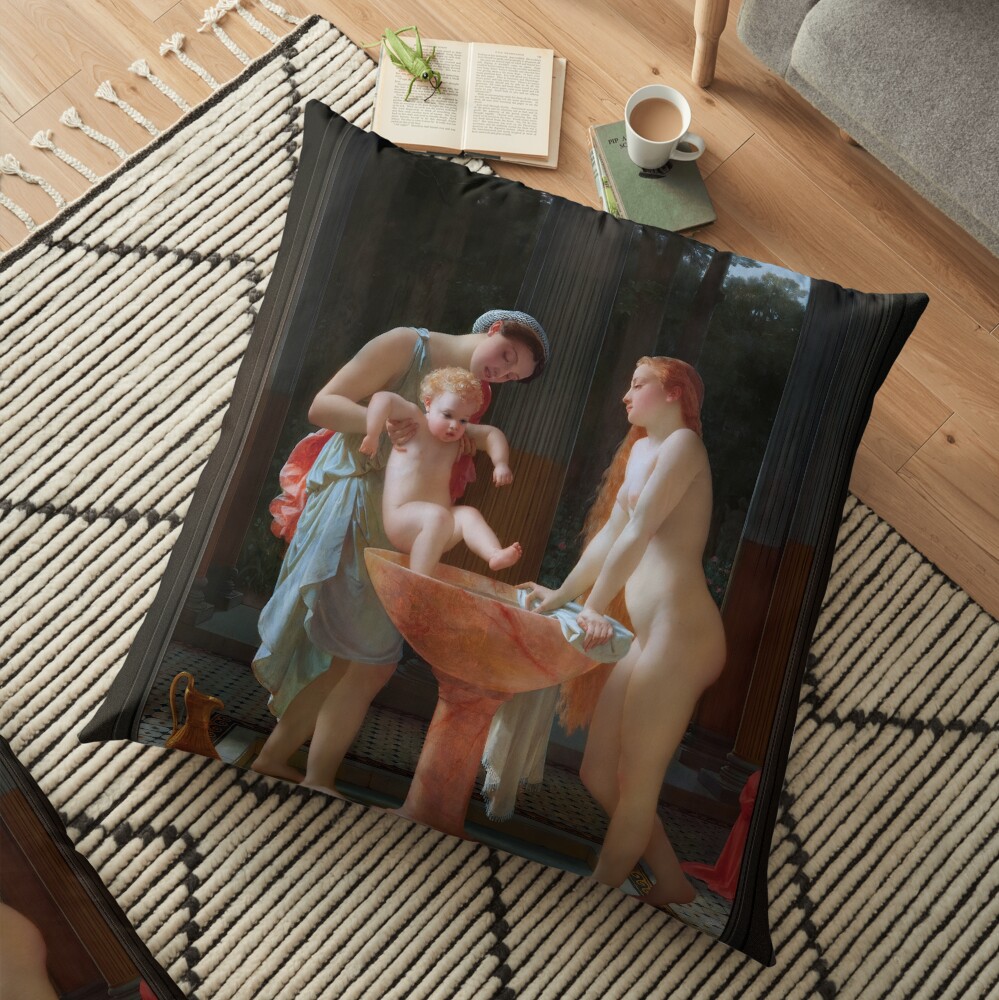
Í hjarta “Baðið” er blíð og kyrrlát samspil þriggja persóna: tvær konur og lítið barn. The central theme of the painting is the intimate act of bathing, a moment of personal care and repose. The figures are depicted in a naturalistic manner, emphasizing the purity and simplicity of the scene. The woman on the left is assisting the small child in a marble basin, cradling the child as they both seem to enjoy the refreshing experience. Her gentle handling of the child is tender, showcasing maternal affection.
Til hægri, another woman stands poised, almost as though in quiet contemplation of the moment. She gazes to the left, perhaps watching the child or lost in her thoughts, embodying a graceful yet subtle mood of tranquillity. Hún mjúk, flowing hair and the natural stance of her body highlight the harmony between the human figure and the surrounding environment. Both women are portrayed in a delicate, klassískur stíll sem endurspeglar fegurð og styrk hins kvenlega forms, dregnir í lágmarks fatnað, sem undirstrikar náttúrufegurð þeirra og mýkt augnabliksins.
Landslag og bakgrunnur
Umgjörð þessa innilegu senu er vel útbúið bað í rómverskum stíl, heill með háum marmarasúlum sem ramma inn rýmið og skapa tilfinningu fyrir glæsileika. Bakgrunnurinn gefur til kynna víðáttumikið náttúrulandslag, með gróskumiklum trjám sem sjást í gegnum opið rými milli súlna. Fígúrurnar eru staðsettar í fáguðu umhverfi sem blandar innréttingunni við útiveruna, skírskotað til hugmyndarinnar um forna rómverska baðsiði. Notkun súlna bendir til klassískra áhrifa, eins og algengt var í fornöld að reisa baðstofur sem staður fyrir bæði félagsmótun og slökun.
The ground is covered with a finely detailed tiled floor, perhaps a nod to the mosaics of ancient civilizations. The intricate designs on the floor contribute to the composition’s overall sense of balance and symmetry, reinforcing the classical nature of the painting. The space around the figures is bathed in soft, náttúrulegt ljós, which filters through the open columns, creating a serene atmosphere of warmth and calm.
Hlutir og efni
Key to the scene is the marble basin in which the child is being bathed. The basin itself is a symbol of refinement and the timeless elegance of classical art. The use of marble, a material prized by ancient civilizations, adds a luxurious element to the composition, suggesting not just utility but also a higher cultural status. The soft reflections on the marble surface enhance the realism of the piece, giving the material a life-like quality that is almost tangible.
In addition to the marble basin, the artist has meticulously rendered the fabrics and textures of the figures’ fatnað. The drapery is portrayed with fine attention to detail, the fabrics gently clinging to the figures’ bodies or flowing gracefully with the weight of the fabric. The texture of the skin, particularly that of the child, is soft and tender, while the flow of the water adds an element of fluidity to the otherwise static composition.
Stíll og tækni
Gleyre’s approach in “Baðið” is one of realism, with clear influences from the Neoclassical and Romantic traditions. His attention to the human form is evident in the soft, almost ethereal rendering of the figures, using delicate shading and blending to give the figures a lifelike appearance. The light plays an important role in the composition, highlighting the contours of the bodies and the subtle textures of the environment. The use of natural light entering the space through the columns adds depth and dimension to the work, casting soft shadows and illuminating the scene with a calm, golden hue.
The technique employed by Gleyre is one of careful, deliberate brushwork. His use of soft transitions between light and shadow creates a sense of realism, bringing the figures to life. The blending of tones and the careful modeling of light on the skin emphasize the artist’s deep understanding of the human body and his ability to depict its natural beauty.
Stemning og andrúmsloft
Stemningin á “Baðið” is one of calm, friður, and subtle intimacy. The scene evokes a sense of serenity, where the bath is not only a physical act of cleansing but also a moment of personal reflection and connection with others. The tender interaction between the mother and child, as well as the quiet, contemplative stance of the second woman, imbues the piece with a feeling of nurturing and protection. The classical setting and the figures’ graceful poses enhance the timeless quality of the work, suggesting an idealized version of femininity, sakleysi, and maternal care.
There is a sense of tranquility in the composition, as if the viewer has stumbled upon a private moment, one that is suspended in time and untouched by the outside world. The painting offers not just an aesthetic experience but also an emotional one, inviting the viewer to reflect on the themes of motherhood, fegurð, og hreinleika.
Niðurstaða
Marc-Charles-Gabriel Gleyre’s “Baðið” is a masterful example of classical painting, reflecting both the refinement and elegance of the Neoclassical tradition while imbuing it with the soft realism of the Romantic era. The work exudes a timeless beauty, capturing a moment of serene intimacy between mother, barn, og umhverfið. Með vandlega athygli á smáatriðum, a harmonious composition, and a focus on natural light and texture, Gleyre creates a visual narrative that transports the viewer into a world of quiet grace and perfect harmony.
Þetta er endurgerð stafræn list af gömlum meistara eftirgerð af mynd sem er í almenningseign sem er fáanleg sem strigaprentun á netinu.
Þessi stafræna listsköpun, eins og með öll listaverkin sem finna má á Xzendor7 vefsíðunni er hægt að kaupa á netinu í ýmsum efnissniðum þar á meðal strigaprentun, akrýl prentun, málmprentun, viðarprentanir, innrömmuð prentun, veggspjöld, og sem rúlluð strigaprentun í ýmsum stærðum frá 12 tommur til 72 tommur eftir stærð raunverulegu listaverksins og prentunarversluninni sem þú velur að kaupa listina frá.
Listaverkin eru einnig fáanleg á breitt úrval af herra- og kvenfatnaði, krúsar, töskur, trefla, minnisbækur og dagbækur og margar heimilisskreytingarvörur.
Um Listamanninn
Upplýsingar hér að neðan fengnar úr Wikipedia.org
Marc Gabriel Charles Gleyre is generally known by the name Charles Gleyre who was raised by an uncle in Lyon, Frakklandi, when his parents died when he was about 8 eða 9 ára aldri.
His uncle sent Charles to the city’s industrial school and began his artistic education under the French Painter and Lithographer Jean-Claude Bonnefond (1796 – 1860); an artist who was known for his portrayals of peasant life.
He then moved to Paris, France where he enrolled at the École des Beaux-Arts, and studied under the French Painter Louis Hersent (1777 – 1860); and he also studied under British Romantic Landscape Painter Richard Parkes Borington (1802 – 1826) at the Academie Suisse; and from there he traveled to Italy, where he became acquainted with French Painter Horace Vernet (1789 – 1863), and Swiss Painter Louis Léopold Robert (1794 – 1835).