

Fæðing Venusar: A Celebration of Classical Beauty
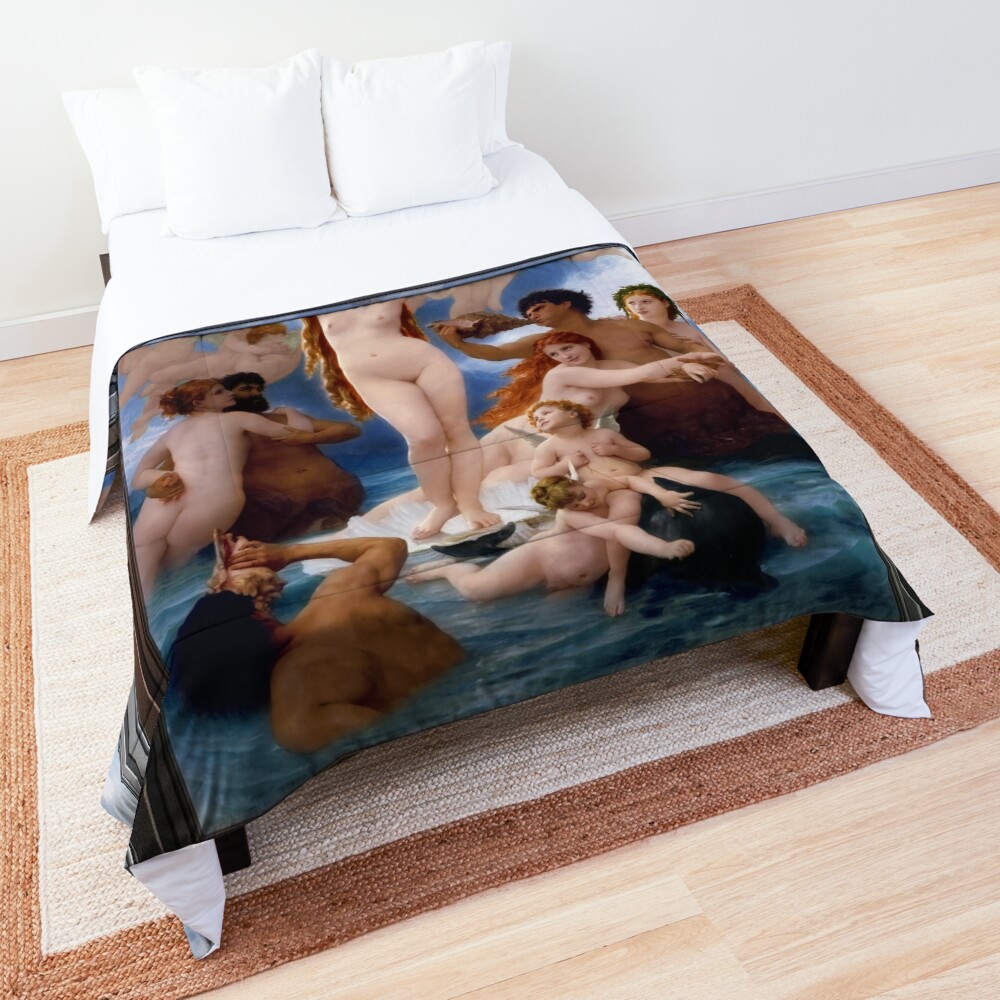
The Birth Of Venus c1879 by French Painter William-Adolphe Bouguereau (1825 – 1905), stands as a quintessential example of Academic art, embodying the principles of idealized beauty and technical mastery prevalent in mid-19th century France. This large-scale oil painting draws heavily from classical mythology, depicting the arrival of the goddess Venus (Aphrodite to the Greeks) upon the shores of Cyprus. Hins vegar, Bouguereau’s interpretation is far removed from earlier depictions; instead of a dramatic or tempestuous emergence, he presents a scene of serene grace and gentle unfolding.
Efnisyfirlit
Samsetningaruppbygging & Narrative Flow
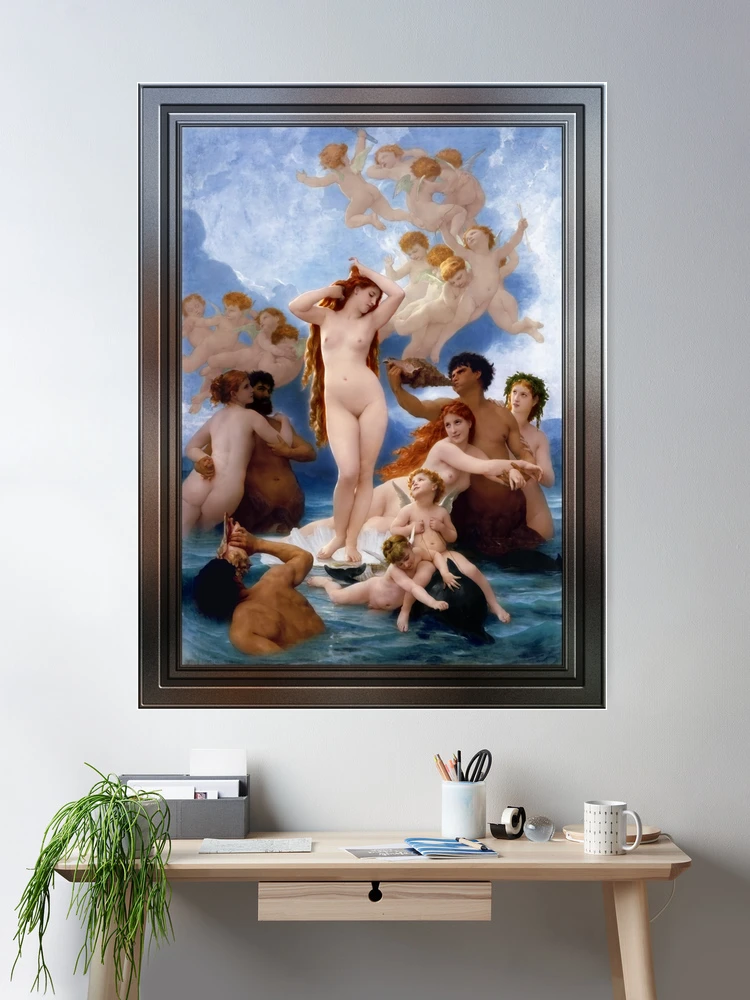
The composition is meticulously structured around Venus herself, positioned centrally within the canvas. She stands upon a massive scallop shell, which serves as her floating pedestal, gently approaching the shoreline. The arrangement isn’t haphazard; it’s carefully orchestrated to guide the viewer’s eye. To her left, a figure representing Zephyr, the west wind, and his consort Chloris, blow Venus towards the shore, their bodies intertwined in a dynamic pose that conveys movement and gentle force. On the right, a nymph, likely Hora, awaits with a floral garland, ready to welcome the goddess. The figures surrounding Venus are not merely decorative; they contribute to the narrative flow, illustrating the forces that brought her into being and the welcoming reception she receives.
Anatomical Precision & Idealized Form
Bouguereau’s reputation rested on his exceptional skill in depicting the human form with anatomical accuracy. Í “Fæðing Venusar,” this is evident in every curve and contour of the figures. The bodies are rendered with a smooth, nánast postulínslík gæði, showcasing an idealized beauty that adheres to classical standards. There’s no attempt at realism in the sense of portraying imperfections; í staðinn, Bouguereau elevates the human form to a state of perfect harmony and proportion. Venus’s pose is particularly striking – she stands with one foot slightly raised, creating a sense of poised elegance and effortless grace. The subtle modeling of her flesh, achieved through delicate gradations of light and shadow, further enhances the illusion of three-dimensionality and tactile realism.
Litapalletta & Andrúmsloftsáhrif
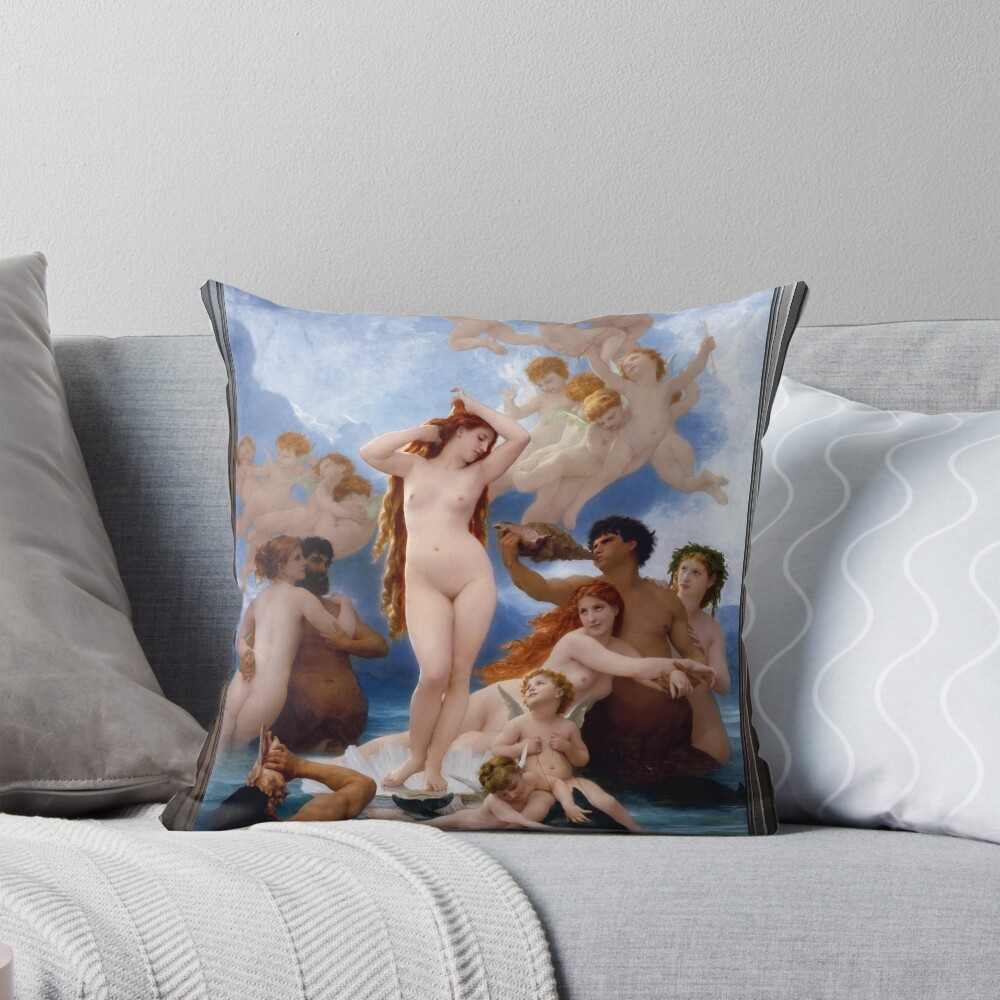
The color palette employed in “Fæðing Venusar” is predominantly soft and harmonious. Pale blues and greens dominate the seascape, creating a sense of tranquility and ethereal beauty. The sky is rendered with swirling clouds, suggesting a gentle breeze and an atmosphere of otherworldly calm. Venus’s skin tones are luminous, contrasting beautifully with her flowing auburn hair, which cascades down her shoulders in loose waves. The warm hues of the flesh tones are balanced by the cooler colors of the surrounding environment, creating a visually pleasing contrast that draws attention to the central figure. Bouguereau masterfully uses light and shadow to create depth and volume, enhancing the overall sense of realism and beauty.
Táknmál & Classical Allusions
Beyond its aesthetic appeal, “Fæðing Venusar” is rich in symbolism and classical allusions. The scallop shell upon which Venus stands is a recurring motif associated with her birth in mythology – born from sea foam (Greek: aphros), hence her name Aphrodite. Zephyr and Chloris represent the gentle forces of nature that guide Venus’s arrival, while Hora symbolizes welcome and celebration. The floral garland offered by the nymph signifies beauty and fertility. These symbolic elements contribute to the painting’s overall meaning, reinforcing its connection to classical mythology and celebrating the goddess as a symbol of love, fegurð, and renewal.
Bouguereau’s Artistic Legacy & Academic Tradition
Bouguereau was a leading figure in the Academic art movement, sem lagði áherslu á tæknikunnáttu, idealized forms, and adherence to established artistic conventions. “Fæðing Venusar” exemplifies these principles perfectly. The painting’s popularity during its time reflects the public’s appreciation for classical themes and the mastery of traditional techniques. While later generations would critique Academic art for its perceived lack of originality and emotional depth, Bouguereau’s work remains admired for its technical brilliance and enduring beauty. “Fæðing Venusar” continues to captivate viewers with its serene atmosphere, idealized forms, and celebration of classical mythology. It stands as a testament to the power of artistic skill and the enduring appeal of timeless themes.
Listamaður með kurteisi Wikipedia.org
William Adolphe Bouguereau fæddist í La Rochelle, Frakklandi, á 30 nóvember 1825, inn í fjölskyldu vín- og ólífuolíukaupmanna.[4] Sonur Théodore Bouguereau (fæddur 1800) og Marie Bonnin (1804), þekkt sem Adeline, William var alinn upp kaþólskur. Hann átti eldri bróður, Alfreð, og yngri systir, Marie (þekkt sem Hanna), sem lést þegar hún var sjö ára.
Fjölskyldan flutti til Saint-Martin-de-Ré í 1832. Annað systkini fæddist í 1834, Kitty. Á aldrinum 12, Bouguereau fór til Mortagne til að vera hjá frænda sínum Eugène, prestur og þróaði með sér ást á náttúrunni, trúarbrögð og bókmenntir.
Í 1839, hann var sendur til prestsnáms við kaþólskan háskóla í Pons. Hér var honum kennt að teikna og mála af Louis Sage, sem hafði numið hjá Ingres. Bouguereau yfirgaf námið með tregðu til að snúa aftur til fjölskyldu sinnar, býr nú í Bordeaux.
Þar hitti hann listamann á staðnum, Charles Marioneau, og hófst við teikni- og málaraskólann í nóvember 1841. Bouguereau starfaði einnig sem verslunarmaður, handlita litógrafíur og gera lítil málverk sem voru afrituð með litskiljun.
Hann var fljótlega besti nemandinn í bekknum sínum, og ákvað að verða listamaður í París. Til að fjármagna flutninginn, hann seldi portrett - 33 olíur á þremur mánuðum. Allir voru óundirritaðir og aðeins einn hefur verið rakinn. Hann kom til Parísar að aldri 20 í mars 1846.
Jafnrétti fyrir dauðann (Jafnrétti fyrir dauðann), 1848, olía á striga, 141 × 269 cm (55.5 × 105.9 inn), Orsay safnið, París. Jafnrétti er fyrsta stóra málverk Bouguereau, framleidd eftir tveggja ára nám í École des Beaux-Arts de Paris á aldrinum 23.
Bouguereau varð nemandi við École des Beaux-Arts.[4] Til að bæta við formlega þjálfun hans í teikningu, hann sótti líffærafræðilegar krufningar og lærði sögulega búninga og fornleifafræði.
Hann var tekinn inn á vinnustofu François-Édouard Picot, þar sem hann lærði málaralist í akademískum stíl. Dante og Virgil í helvíti (1850) var snemma dæmi um nýklassísk verk hans.
Akademískt málverk setti hæsta stöðu á sögulegum og goðafræðilegum viðfangsefnum, og Bouguereau staðráðinn í að vinna Prix de Rome, sem myndi gefa honum þriggja ára búsetu í Villa Medici í Róm, Ítalíu, þar sem hann gat auk formlegra kennslustunda rannsakað af eigin raun endurreisnarlistamenn og meistaraverk þeirra, sem og gríska, Etrúska, og rómverska fornminjar.
The Birth Of Venus is a retouched digital art old masters reproduction of a public domain image that is available online as a rúllað strigaprentun.