

The Bath c1868
Marc-Charles-Gabriel Gleyre (1806 – 1874), a Swiss-born painter known for his academic training and adeptness in classical themes, 作成した “お風呂” に 1868. Gleyre’s work displays his mastery of fine details, his deep understanding of the human form, and his classical approach to subjects often inspired by mythology, 歴史, and the beauty of the human body. “お風呂” serves as an example of Gleyre’s dedication to realism, portraying a serene and intimate scene that invites the viewer to reflect on the purity and tranquility of bathers in an idyllic, almost dream-like environment.
目次
主な主題
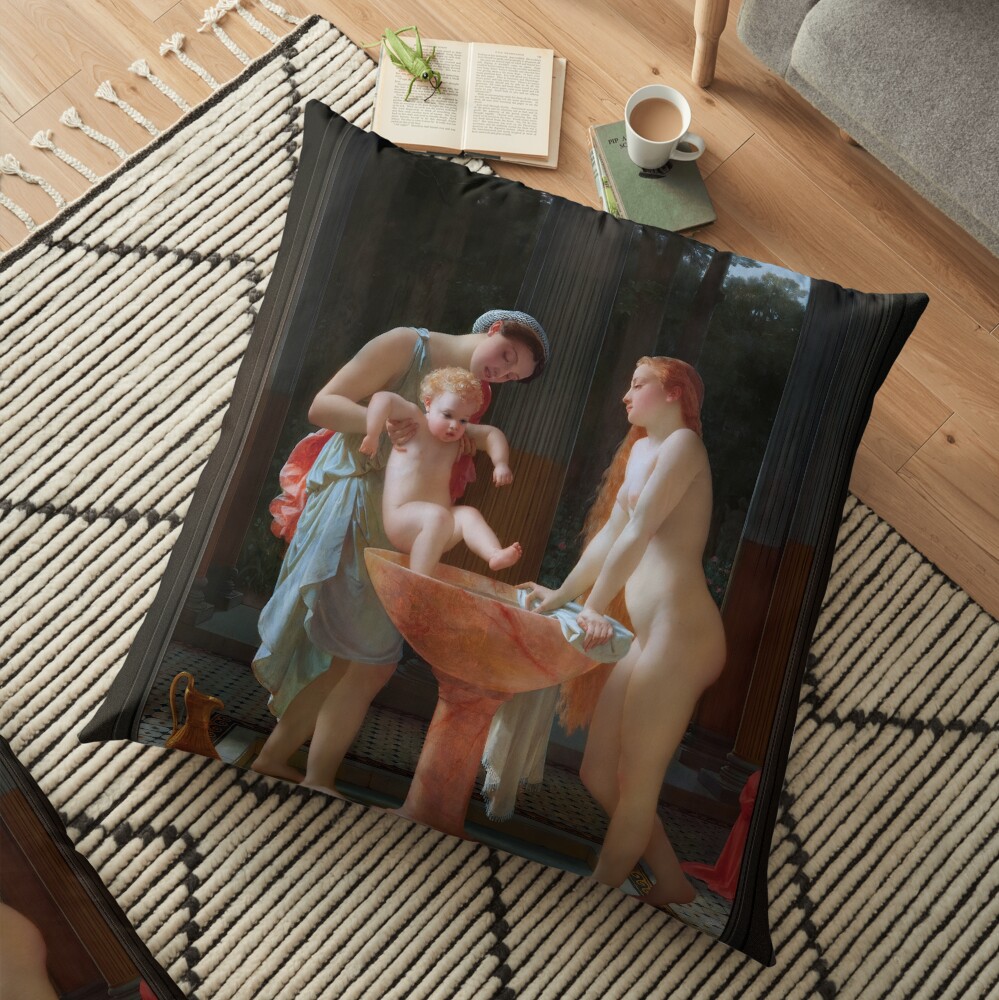
中心に “お風呂” is a gentle and serene interaction between three figures: two women and a small child. The central theme of the painting is the intimate act of bathing, a moment of personal care and repose. The figures are depicted in a naturalistic manner, emphasizing the purity and simplicity of the scene. The woman on the left is assisting the small child in a marble basin, cradling the child as they both seem to enjoy the refreshing experience. Her gentle handling of the child is tender, showcasing maternal affection.
右の方へ, another woman stands poised, almost as though in quiet contemplation of the moment. She gazes to the left, perhaps watching the child or lost in her thoughts, embodying a graceful yet subtle mood of tranquillity. 彼女の柔らかい, flowing hair and the natural stance of her body highlight the harmony between the human figure and the surrounding environment. Both women are portrayed in a delicate, classical style that reflects the beauty and the strength of the feminine form, draped in minimal clothing, which accentuates their natural beauty and the softness of the moment.
地形と背景
The setting for this intimate scene is a well-appointed Roman-style bath, complete with tall marble columns framing the space and creating a sense of grandeur. The background hints at an expansive natural landscape, with lush trees visible through the open space between the columns. The figures are positioned in a sophisticated environment that blends the interior with the outdoors, invoking the idea of ancient Roman bathing rituals. The use of columns suggests a classical influence, as it was common in the ancient world to build bathhouses as a place for both socialization and relaxation.
The ground is covered with a finely detailed tiled floor, perhaps a nod to the mosaics of ancient civilizations. The intricate designs on the floor contribute to the composition’s overall sense of balance and symmetry, reinforcing the classical nature of the painting. The space around the figures is bathed in soft, 自然光, which filters through the open columns, creating a serene atmosphere of warmth and calm.
オブジェクトと資料
Key to the scene is the marble basin in which the child is being bathed. The basin itself is a symbol of refinement and the timeless elegance of classical art. The use of marble, a material prized by ancient civilizations, adds a luxurious element to the composition, suggesting not just utility but also a higher cultural status. The soft reflections on the marble surface enhance the realism of the piece, giving the material a life-like quality that is almost tangible.
In addition to the marble basin, the artist has meticulously rendered the fabrics and textures of the figures’ 衣類. The drapery is portrayed with fine attention to detail, the fabrics gently clinging to the figures’ bodies or flowing gracefully with the weight of the fabric. The texture of the skin, particularly that of the child, is soft and tender, while the flow of the water adds an element of fluidity to the otherwise static composition.
スタイルとテクニック
Gleyre’s approach in “お風呂” is one of realism, with clear influences from the Neoclassical and Romantic traditions. His attention to the human form is evident in the soft, almost ethereal rendering of the figures, using delicate shading and blending to give the figures a lifelike appearance. The light plays an important role in the composition, highlighting the contours of the bodies and the subtle textures of the environment. The use of natural light entering the space through the columns adds depth and dimension to the work, casting soft shadows and illuminating the scene with a calm, golden hue.
The technique employed by Gleyre is one of careful, deliberate brushwork. His use of soft transitions between light and shadow creates a sense of realism, bringing the figures to life. The blending of tones and the careful modeling of light on the skin emphasize the artist’s deep understanding of the human body and his ability to depict its natural beauty.
気分と雰囲気
の気分 “お風呂” is one of calm, 平和, and subtle intimacy. The scene evokes a sense of serenity, where the bath is not only a physical act of cleansing but also a moment of personal reflection and connection with others. The tender interaction between the mother and child, as well as the quiet, contemplative stance of the second woman, imbues the piece with a feeling of nurturing and protection. The classical setting and the figures’ graceful poses enhance the timeless quality of the work, suggesting an idealized version of femininity, イノセンス, and maternal care.
There is a sense of tranquility in the composition, as if the viewer has stumbled upon a private moment, one that is suspended in time and untouched by the outside world. The painting offers not just an aesthetic experience but also an emotional one, inviting the viewer to reflect on the themes of motherhood, 美しさ, と純度.
結論
Marc-Charles-Gabriel Gleyre’s “お風呂” is a masterful example of classical painting, reflecting both the refinement and elegance of the Neoclassical tradition while imbuing it with the soft realism of the Romantic era. The work exudes a timeless beauty, capturing a moment of serene intimacy between mother, child, and the environment. 細部への注意を払って, a harmonious composition, and a focus on natural light and texture, Gleyre creates a visual narrative that transports the viewer into a world of quiet grace and perfect harmony.
これは、リマスターされたデジタルアートのオールドマスターであり、パブリックドメインの画像を複製したものです。 キャンバスプリントオンライン.
このデジタルアート作品は、, Xzendor7 Web サイトにあるすべてのアートワークと同様に、キャンバス プリントを含むさまざまな素材形式でオンラインで購入できます。, アクリルプリント, メタルプリント, 木版, 額入りプリント, ポスター, ロール状のキャンバス プリントとしてさまざまなサイズでご利用いただけます。 12 インチから 72 インチは、実際のアートワークのサイズと、アートを購入するために選択したオンデマンド プリント ショップによって異なります。.
このアートワークは、幅広いメンズおよびウィメンズのアパレルでも利用可能です, マグカップ, トートバッグ, スカーフ, ノートや日記帳、その他多くの室内装飾品.
アーティストについて
以下の情報から派生 Wikipedia.org
マルク・ガブリエル・シャルル・グレールは、リヨンの叔父に育てられたシャルル・グレールという名前で一般に知られています。, フランス, 彼が幼い頃に両親が亡くなったとき 8 また 9 RenouarddeBussière夫人の肖像.
彼の叔父はシャルルを市内の工業学校に送り、フランスの画家で石版画家のジャン=クロード・ボヌフォンの下で芸術教育を始めました。 (1796 – 1860); 農民の生活を描いたことで知られた芸術家.
その後、彼はパリに移りました, フランス、エコール・デ・ボザールに入学, フランスの画家ルイ・エルサントに師事。 (1777 – 1860); また、英国のロマンチックな風景画家リチャード・パークス・ボーリントンにも師事しました。 (1802 – 1826) スイスアカデミーで; そしてそこから彼はイタリアへ旅行しました, そこでフランスの画家オレス・ヴェルネと知り合いました。 (1789 – 1863), とスイスの画家ルイ・レオポルド・ロベール (1794 – 1835).