

הקרב על אוסטרליץ
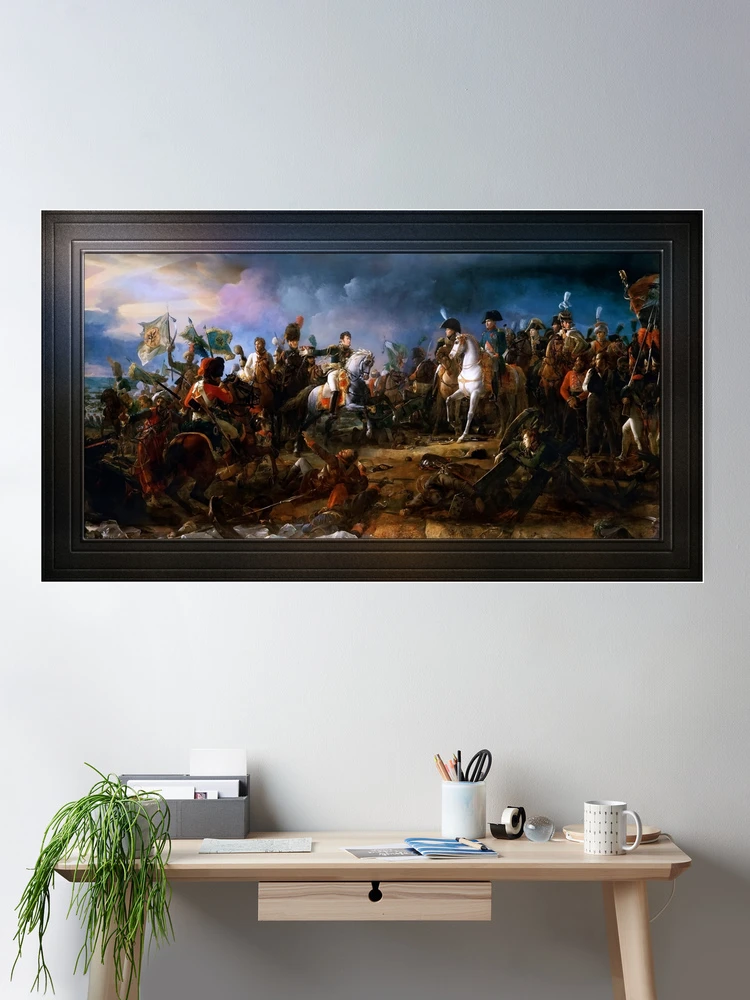
הגרפיקה שכותרתה ה קְרָב של אוסטרליץ, (2 בדצמבר, 1805), נוצר מסביב 1810 by French painter François Pascal Simon, הברון ג'רארד (1770 – 1837), captures one of the most significant battles of the Napoleonic Wars. Known as the Battle of the Three Emperors, this pivotal confrontation between Napoleon Bonaparte, Tsar Alexander I of Russia, and Holy Roman Emperor Francis II is immortalized in this grand composition. הסצנה, set in the midst of chaos and carnage, vividly portrays the intensity and dramatic nature of warfare during the early 19th century. It is an exemplary work of historical art, a striking mix of realism, דְרָמָה, and national pride.
תוכן העניינים
הנושא העיקרי: The Battlefield and Its Commanders
The central subject of the painting is a vast battlefield strewn with soldiers, flags, and fallen soldiers amidst the aftermath of intense combat. At the forefront, Napoleon Bonaparte, mounted on a white steed, stands as the undeniable focal point. His commanding posture exudes authority and confidence, reflecting his role as the mastermind behind the victory. His regal presence contrasts sharply with the chaos around him, which includes the deaths of numerous soldiers and the disarray of the battlefield. Napoleon’s horse is depicted as calm amidst the violence, as his sharp, focused gaze surveys the battlefield, likely calculating his next move.
Other key figures include the Tsar of Russia, Alexander I, whose dignified yet tense posture further emphasizes the turmoil of the conflict. His royal blue uniform, complete with gold epaulets and a decorative sash, signifies his nobility and status, while also showing his involvement in a struggle that he could not win. To the left of the scene, other officers are seen rallying their troops, coordinating efforts in the middle of a bloody battle. These military leaders, both French and foreign, represent the intersection of power, strategy, and the high cost of war. Their interactions and movements are charged with urgency and tension.
חפצים וסמלים: Flags, Weapons, and Debris
In addition to the commanding figures, the scene is teeming with symbols of war. Various military flags can be seen fluttering in the wind, a visual representation of the allegiances in this conflict. The flags are emblazoned with symbols of national pride and military power, their detailed designs hinting at the ongoing struggle for supremacy. The color contrast of these flags against the muted tones of the sky and terrain reflects the struggle between opposing forces, Napoleon’s French army and the allied Russian and Austrian forces.
Weapons, including swords, muskets, and bayonets, are scattered across the scene, many of them abandoned or broken, symbolizing the personal toll that war takes on both soldiers and commanders. פריטים אלה, while seemingly insignificant in their scattered state, contribute to the overall chaotic atmosphere of the battle. בנוסף, the bodies of fallen soldiers, including both French and allied forces, litter the battlefield, emphasizing the devastation of war. Blood-stained uniforms and wounded men in the background reflect the personal cost of the grand political and military maneuverings.
שטח וסביבה: The Landscape of War
הנוף ב הקרב על אוסטרליץ plays a crucial role in conveying the tone of the artwork. The background is dominated by tumultuous skies filled with stormy clouds, which intensify the scene’s mood of destruction and upheaval. The soft pink and purple hues of the clouds hint at the coming dusk, a symbolic representation of the end of the battle and the ominous aftermath that awaits the vanquished. The mountainous terrain in the distance offers a dramatic backdrop to the chaos unfolding in the foreground, while patches of fog or smoke obscure portions of the scene, adding to the disorientation of battle.
The ground is churned into mud and scattered with debris, as the clash of heavy artillery and cavalry have torn through the once-pristine field. The soil is punctuated by craters and trenches, illustrating the violent exchange of gunfire and cannonballs. This depiction serves as a visual reminder of the brutal physical toll warfare inflicts on the landscape, turning fertile earth into a desolate war zone.
סגנון וטכניקה אמנותית: Realism and Drama
Baron Gérard’s painting is rendered in the neoclassical style, a reflection of the era’s preference for grandeur and idealization. The dramatic use of light and shadow creates a sense of depth, pulling the viewer’s eye from the foreground chaos to the distant horizon. The strong contrasts between light and dark enhance the sense of tension and drama, with the figures of Napoleon and his generals illuminated, creating a sense of focus on their leadership amidst the chaos. The battlefield itself is painted with great detail, capturing the human emotion of the scene, from the urgency of soldiers engaged in combat to the despair of the wounded.
The emotional intensity of the scene is amplified by Gérard’s careful attention to facial expressions, body language, and the interaction of light with the soldiers’ uniforms. The vividness of the clothing, the rich golds and reds of Napoleon’s uniform, the dark coats of the Russian soldiers, and the bloody wounds of the fallen, conveys the raw reality of battle, while also celebrating the elegance and power of the leaders at its center. Gérard’s use of texture, particularly in his rendering of the horses and soldiers’ garments, adds to the sense of realism, bringing the viewer into the very moment of this monumental historical event.
נושא ומצב רוח: Victory, לְהַקְרִיב, and Tragedy
The mood of the painting is complex, balancing both triumph and tragedy. במרכז הקומפוזיציה, Napoleon’s victory is evident, as he surveys the battlefield with a sense of controlled determination. למרות זאת, the surrounding carnage, the broken bodies, the wounded, and the debris of war, reminds the viewer of the true cost of that victory. The victorious Napoleon is contrasted by the fallen and dying, creating a tension between the glory of military conquest and the somber realities of war.
The theme of heroism versus tragedy is deeply embedded in the composition. While Napoleon’s leadership is lauded, the human toll of his victory is undeniable. The figures of the fallen soldiers, both French and allied, serve as poignant reminders that war, though often seen as a means to an end, is a brutal and unforgiving force.
מַסְקָנָה
François Pascal Simon, Baron Gérard’s הקרב על אוסטרליץ is a masterful portrayal of one of the most significant battles in European history. Through its detailed depiction of the battlefield, its figures, and its use of light and shadow, the painting encapsulates the complexity of war, its grandeur, its leaders, and the devastating human cost. The emotional intensity of the scene, combined with its historical significance, makes this work a powerful and timeless reminder of the realities of military conflict.
תוכל לקרוא עוד על הסכסוך כאן: https://en.wikipedia.org/wiki/Battle_of_Austerlitz
הקרב על אוסטרליץ הוא יצירה משוחזרת של אמנות דיגיטלית של אמנים ותיקים של תמונת נחלת הכלל.
ביו אמן מ Wikipedia.org
פרנסואה ז'ראר נולד ברומא ל- J. ס. ג'רארד וקלריה מאטאי. בגיל שתים עשרה, ז'ראר קיבל הכניסה לפנסיון דו רועי בפריז. מהפנסיה, הוא עבר לסטודיו של הפסל אוגוסטין פאג'ו, אותו עזב בתום שנתיים לסטודיו של צייר ההיסטוריה ניקולה-גיא ברנט, את מי הוא עזב כמעט מיד כדי למקם את עצמו תחת ז'אק-לואי דיוויד.
ב 1789, הוא התחרה על פריקס דה רומא, שנשא על ידי חברו ג'ירודט. בשנה שלאחר מכן (1790), הוא שוב הציג את עצמו, אך מות אביו מנע את השלמת עבודתו וחייב אותו ללוות את אמו לרומא.
ב 1791, הוא חזר לפריז, אך עוניו היה כה גדול עד שנאלץ לוותר על לימודיו לטובת תעסוקה שתביא לרווח מיידי.
דוד ניצל מיד מעזרתו, ואחד מהפורטרטים המפורסמים ביותר של אותו מאסטר, של לואי מישל לה פלטייר דה סנט פרז'ו, עשוי להיות חייב הרבה לידיו של ז'רארד.
הציור הזה הוצא להורג בתחילתו 1793, השנה שבה ז'רארד, לבקשת דוד, הוגדר כחבר בבית הדין המהפכני, מההחלטות הקטלניות שבהן הוא, למרות זאת, תמיד נעדר בעצמו.
ב 1794, הוא השיג את הפרס הראשון בתחרות, הנושא שלו היה העשירי באוגוסט, כלומר, ההסתערות על ארמון טווילרי. עוד יותר מגורה על ידי ההצלחות של יריבו וחברו Girodet בסלונים של 1793 ו 1794, ז'רארד (בסיוע ז'אן-בטיסט איסבי, המיניאטוריסטי) מיוצר ב 1795 הבליזייר המפורסם שלו.
ב 1796, דיוקן של חברו הנדיב (נשמר היום בלובר) השיג הצלחה ללא עוררין, והכסף שהתקבל מאיסבי עבור שתי העבודות הללו אפשר לג'רארד לצאת לפועל 1797 הנפש והאהבה שלו (אִיוּר).[4] לְבָסוֹף, ב 1799, דיוקנו של מאדאם מיר ביסס את מעמדו כאחד מציירי הדיוקנאות הבולטים של היום.
ב 1808, עד שמונה (ובתוך 1810, לא פחות מארבע עשרה) דיוקנאות שלו הוצגו בסלון, והנתונים הללו מספקים רק אינדיקציה למספרים העצומים שהוא הוציא להורג מדי שנה. כל הדמויות המובילות של האימפריה ושל שיקום הבורבון, וכל הגברים והנשים המפורסמים ביותר באירופה, ישב עבור ז'רארד.
האופנה יוצאת הדופן הזו נבעה בחלקה מהקסם של התנהגותו ושיחתו, שכן הסלון שלו היה נפוץ כמו הסטודיו שלו. מאדאם דה שטאל, ג'ורג' קנינג, טליירנד והדוכס מוולינגטון מעידים כולם על משיכת החברה שלו.
עשיר ומפורסם, ז'ראר נעקץ בחרטה על שאיפות קודמות שננטשו; במרווחים, הוא אכן התאמץ עם גירודה ויריבים אחרים להוכיח את כוחו בציור ההיסטוריה, עדיין ז'אנר יוקרתי יותר מפורטרטים.
הקרב שלו על אוסטרליץ (1810) הראה רוחב של המצאה וסגנון שהיה בולט עוד יותר ב L'Entrée d'Henri IV בפריז (בוורסאי), העבודה שאיתה 1817 הוא עשה כבוד ללואי ה -16 שהוחזר. אחרי התאריך הזה, ג'רארד סירב, צופה בעצב חסר אונים בהתקדמות בית הספר הרומנטי.
עמוס בהצטיינות - הברון של האימפריה ב 1809, חבר המכון על 7 מרץ 1812, קצין לגיון הכבוד, הצייר הראשון למלך - הוא עבד עליו, עצוב ומיואש. המהפכה של 1830 הוסיף לחוסר השקט שלו, וכן הלאה 11 יָנוּאָר 1837, לאחר שלושה ימי חום, הוא מת.
ז'ראר זכור בעיקר בזכות הדיוקנאות שלו. צבע ציוריו נפגע, אבל רישומיו מראים בעדינות ללא פגע את טוהר הקו שלו, ואלו של נשים יוצאות דופן במיוחד בזכות הפשטות הבתולית והכנות של הביטוי. תלמידיו כללו את היינריך כריסטוף קולבה.