

The Battle of Terheide
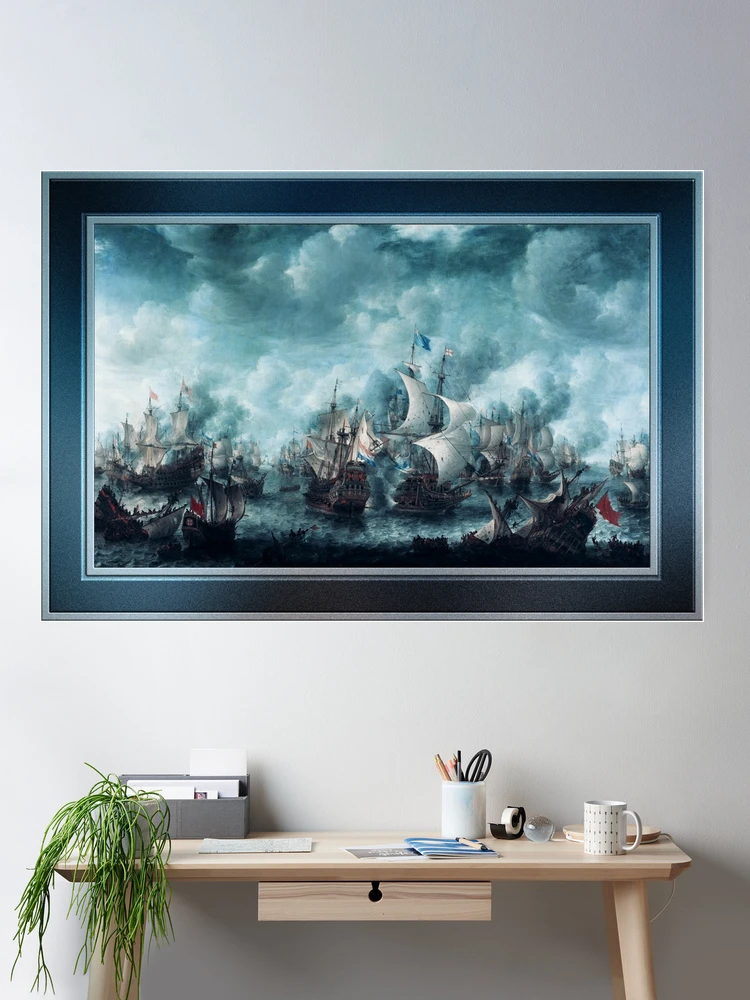
Jan Abrahamsz Beerstraaten’s (1622 – 1666) skilderij “The Battle of Terheide”, captures an intense and dramatic scene from one of the naval conflicts of the mid-17th century. Painted between 1653 en 1666, during a period of Dutch maritime power, Beerstraaten’s work portrays the powerful naval engagement between the Dutch fleet and its adversaries. This artwork offers a compelling window into the military conflicts of the time, particularly focusing on the naval warfare between the Dutch Republic and its enemies. Known for his skill in depicting dramatic sea battles, Beerstraaten’s composition serves not only as a historical document but also as a dynamic exploration of the chaos and intensity of war at sea.
Ynhâldsopjefte
Styl en technyk
Beerstraaten’s painting is rendered in the Baroque style, characterized by its dramatic contrasts, intense movement, and a highly emotive atmosphere. Baroque art frequently emphasizes action, spanning, en emoasje, and this piece encapsulates all of those elements. The stormy sky and tumultuous sea exemplify the Baroque interest in dramatic, sweeping visuals.
The composition is crowded with numerous ships battling in the foreground, while the background is enveloped in dark clouds, suggesting both the physical and symbolic chaos of war. The vibrant colors of the flags and sails are contrasted against the dark sky and turbulent sea, giving the painting a sense of urgency and intensity. This contrast not only highlights the main subjects—the ships and their naval engagement—but also adds to the overall sense of tension and danger.
The intricate details of the ships, their masts, and the sails are executed with precision, showcasing Beerstraaten’s technical mastery. The artist used oil paint, as was common in the Baroque period, which allowed for rich colors and smooth blending, giving depth to the figures of the ships, sailors, and the sea itself.
His brushwork conveys the roughness of the sea, with foamy waves and turbulent water splashing around the vessels, as if the elements themselves were in violent opposition to the human endeavor of battle. The motion in the waves and the sails of the ships is depicted with a fluidity that gives a sense of constant movement, it dramatyske effekt fan it stik fierder fersterke.
Tema en stimming
“The Battle of Terheide” is net allinnich in histoaryske útbylding; it draacht in djip ferhaal. De stoarmige loft, de gaoatyske botsing fan skippen, en it swarmjen fan manlju oan board bringt it geweld oer, betizing, en ûnwissichheid fan striid. It byld fan marineoarlochfiering beklammet sawol de brutaliteit as de strategy dy't belutsen binne by sokke engagements, mei seelju skynber opsletten yn in wanhopige striid foar oerlibjen midden yn 'e ferriederlike see.
De spanning tusken de tsjinoerstelde krêften, wjerspegele yn it chaotysk dwarreljen fan skippen en de reek fan de gewearen, jout in gefoel fan hopeleazens en bepaling oer. De tumultueuze himel, mei syn donkere wolken en ljochtflitsen, fersterket de emosjonele ynfloed, as docht de natuer sels mei oan de striid tusken de floaten.
De stimming fan it skilderij is spannend en somber, tinted mei in gefoel fan driigjende gefaar. It suggerearret de tol dat sokke marinekonflikten de belutsenen namen - sawol op 'e seelju oan board fan 'e skippen as op 'e omlizzende wrâld. Nettsjinsteande de oerweldigjende skaal fan 'e slach, der binne gjin dúdlike oerwinners yn it toaniel, dy't suggerearret de destruktive en syklyske aard fan oarloch. Bierstrjitten, lykwols, ropt subtyl in gefoel fan nasjonale grutskens op troch de ôfbylding fan de Nederlânske flaggen dy't boppe guon skippen wapperje, in knypeach nei de marine-oermacht dy't de Nederlânske Republyk yn de 17e iuw besocht te behâlden.
Main Underwerp en Objekten
It fokuspunt fan it skilderij is, fansels, de seeslach. De gearstalling wurdt dominearre troch ferskate grutte skippen dwaande mei de striid. Dizze skippen, towering above the sea and surrounded by smoke and splashing water, are rendered in sharp detail, showcasing their intricate rigging and imposing sails.
The ships, with their tall masts and billowing sails, appear to be caught in a violent storm, which amplifies the chaos of the battle. The way the ships are painted suggests a struggle for control, with sailors seen as small figures on deck, battling with their surroundings, the wind, and each other.
Oanfoljend, the depiction of the sea plays an integral role in the painting. The waves seem to grow more violent as they crash against the hulls of the ships, further symbolizing the chaotic forces at play in the battle. The colors of the water range from dark, almost black shades near the ships to lighter tones as the waves churn, creating a sense of movement and unrest.
The sky is another important element in Beerstraaten’s composition. It is filled with swirling clouds and patches of light, possibly alluding to the unpredictable nature of the battle and the forces of nature that the sailors had to contend with. De wolken, heavy with impending rain, contribute to the grim and foreboding atmosphere of the painting.
Terrein en materialen
The artist captures the tumultuous nature of the sea, which is crucial to understanding the terrain of this battle. The water is not a calm, peaceful expanse, but a violent, churning mass that seems to mirror the aggression and tumult of the battle taking place above it. The waves are depicted in a way that makes them appear almost like creatures themselves, coming alive with fury and intent. De see, dêrom, becomes not just a backdrop but an active participant in the struggle.
Beerstraaten also skillfully represents the smoke and gunfire coming from the ships, adding to the sense of action and danger in the scene. This smoke blurs parts of the composition, making the viewer feel the disorientation and chaos of battle, while the flashes of gunfire and cannon shots provide visual emphasis to the moment of conflict.
Konklúzje
Jan Abrahamsz Beerstraaten’s “The Battle of Terheide c1653 – 1666” is a striking portrayal of naval warfare during the 17th century. Through his use of the Baroque style, the artist emphasizes the chaos, intensity, and emotions of battle at sea. The dramatic rendering of the stormy sea, violent skies, and intricate ships makes this painting not just a historical document but also a captivating narrative of conflict, natuer, and human determination. The work exemplifies Beerstraaten’s technical prowess and his ability to capture the essence of a turbulent period in Dutch history.
Dit is in retouchearre reproduksje fan âlde masters fan digitale keunst fan in ôfbylding yn it iepenbier domein.
Dizze digitale keunst skepping, lykas mei al it keunstwurk dat te finen is op 'e Xzendor7-webside is online te keap yn in ferskaat oan materiaalformaten, ynklusyf canvasprints, acryl prints, metalen prints, hout prints, framed prints, posters, en as rôlde canvasprints yn in ferskaat oan grutte fan 12 inches oan 72 inch ôfhinklik fan de grutte fan it eigentlike keunstwurk en de print-on-demand winkel wêrfan jo kieze om de keunst te keapjen.
It keunstwurk is ek te krijen op in breed oanbod fan klean foar manlju en froulju, mokken, totes, sjaals, notebooks en tydskriften en in protte home decor produkten.
Oer The Artist
Under Info Courtesy Wikipedia.org
Der is wat betizing oer de identiteit fan fjouwer lânskipsskilders mei de namme Beerstraaten; Johannes, dizze Jan Abrahamsz, Abraham, en Anthony. Jan Abrahamsz, skilder, troud yn Amsterdam op 30 augustus 1642.
Ut dit houlik binne alve bern berne, en doe't er troude in twadde kear yn 1665, in dochter waard berne. Op it stuit, It RKD registreart Johannes as deselde persoan, en Abraham Beerstraaten wurdt beskôge as syn âldste soan.
Anthonie Beerstraaten wie besibbe oan dizze skilder. It RKD hat twa skilderijen oanmeld, tekene Anthonie van Beerstraten: men is in sicht fan in súdlike seehaven fan 1664 (stuit lokaasje Enkhuizen) en de oare in sicht op in tsjerke yn Aarlanderveen yn it eardere stedhûs fan Alphen aan den Rijn. Op grûn fan dizze twa skilderijen C.
Hofstede de Groot in iere Nederlânsk keunsthistoarikus, klassifisearre skilderijen tekene A. Beerstraaten as by Anthonie as se in earmere rang wiene as dy al oan Abraham taskreaun binne.