

Танцовщица живота: Her Alluring Dance – A Study in Light and Movement
Танцовщица живота c~ австрийского художника Ханс Зацка (1859 – 1945); также известный как П. Ронсар, Пьер де Ронсар, или Н. Забатери, и многие из его работ он подписывал как Джозеф Бернар., Богородица с ангелами около 1900 года французского художника Вильяма-Адольфа Бугро.. Бернар, или Бернард Зацк, чтобы избежать штрафов за разрыв контрактов, которые ограничивали количество работ, которые он мог продать..
Hans was an Austrian artist renowned for his depictions of idealized female figures within opulent settings, often drawing inspiration from Orientalist themes prevalent in 19th-century European art. “Танцовщица живота,” likely created around the turn of the century, exemplifies this style with its meticulous detail and evocative atmosphere. The painting is not merely a representation of a dancer; it’s an exploration of light, текстура, and graceful motion within a richly decorated interior space.

Оглавление
Композиционные элементы & Spatial Arrangement
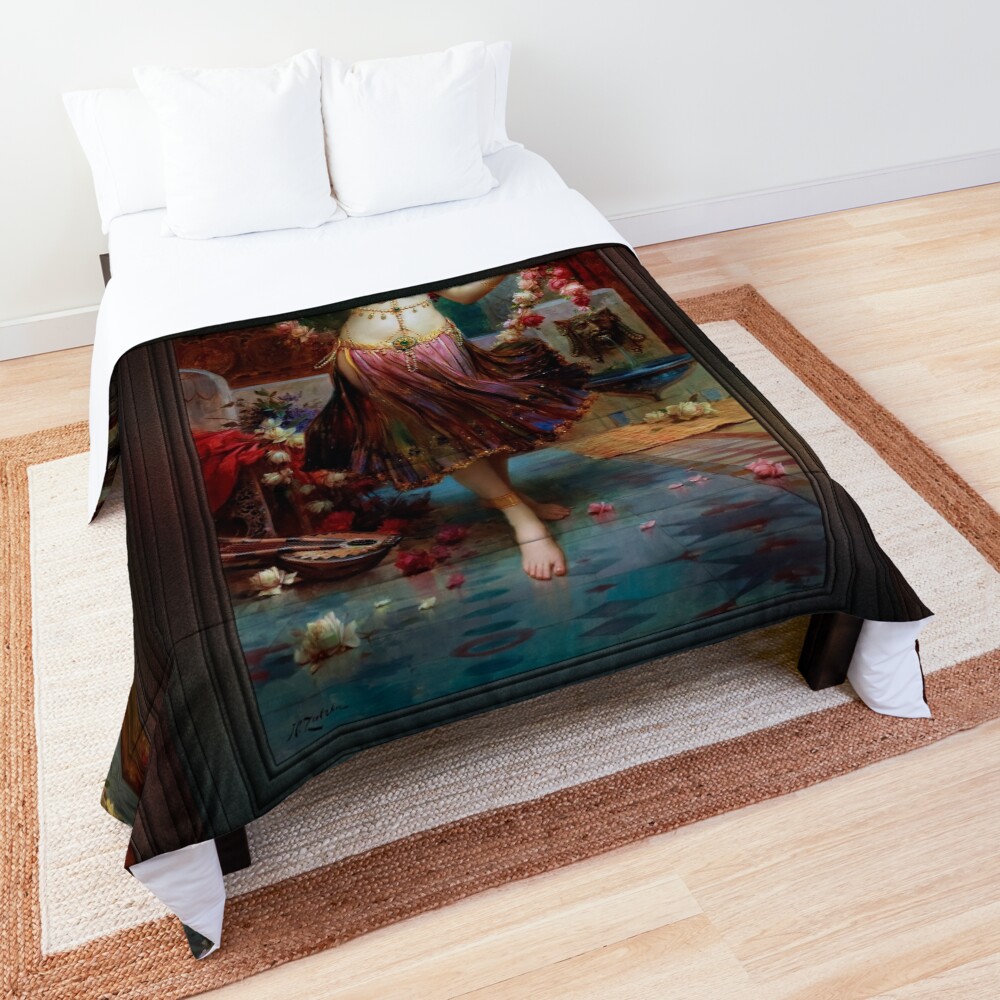
The composition immediately draws the viewer’s eye to the central figure of the belly dancer. She occupies a prominent position in the foreground, her form illuminated by a warm, diffused light source that originates from an unseen location beyond the frame’s right side. The artist employs a pyramidal structure, with the dancer forming the apex and the surrounding architectural details creating a stable base. This arrangement lends a sense of balance and harmony to the scene.
The floor is strewn with scattered petals, leading the eye towards the dancer’s feet and reinforcing her central role. A lute rests on the left side of the composition, hinting at musical accompaniment and adding another layer of cultural context. The background features an elaborately carved archway, partially obscured by shadows, which provides depth and a sense of mystery to the setting.
Цветовая палитра & Эффекты освещения
Zatzka’s masterful use of color is crucial to the painting’s impact. A warm palette dominates, with rich reds, золото, коричневые, and creams creating an atmosphere of luxurious warmth. The dancer’s costume is particularly striking, featuring a layered skirt in shades of crimson, бронза, and gold that shimmer under the light. The skin tones are rendered with remarkable realism, capturing subtle variations in color and texture.
The lighting is not harsh or direct; вместо, it’s soft and diffused, creating gentle gradations of tone across the dancer’s form and the surrounding environment. This technique softens the edges and contributes to the painting’s overall sense of elegance and refinement. The interplay of light and shadow emphasizes the contours of the dancer’s body while simultaneously obscuring details in the background, further focusing attention on the central figure.
The Dancer: Поза & Выражение
The dancer is depicted mid-motion, her right leg extended slightly forward as she gracefully turns. Her left arm is raised, holding a garland of flowers, while her right hand rests gently on her hip. This pose conveys both dynamism and poise. Her head is tilted slightly downward, and her expression is one of serene concentration rather than overt sensuality. There’s a quiet dignity in her gaze, suggesting an inner focus that transcends the purely performative aspect of her dance. The artist avoids any overtly provocative gestures or expressions, instead opting for a portrayal of graceful movement and understated beauty.
Архитектурные детали & Внутренняя обстановка
The setting is clearly an opulent interior space, likely inspired by Middle Eastern architecture. Intricate carvings adorn the walls and archways, showcasing the artist’s attention to detail. The architectural elements are not merely decorative; they contribute significantly to the painting’s overall atmosphere of luxury and exoticism. A small fountain with a sculpted head is visible on the right side, adding another element of visual interest and reinforcing the sense of an elaborate, well-appointed space. The shadows cast by the architecture create a dramatic contrast with the illuminated areas, enhancing the depth and dimensionality of the scene.
Художественные влияния & Контекст
Zatzka’s work reflects the broader trends of Orientalism that were popular in 19th-century European art. This artistic movement involved depicting scenes from North Africa and the Middle East, often romanticizing and idealizing these cultures. While Zatzka’s painting is rooted in this tradition, it also demonstrates a unique sensitivity to light, цвет, и форма. His meticulous attention to detail and his ability to capture the essence of graceful movement set him apart from many of his contemporaries. The popularity of belly dancing as entertainment during this period likely contributed to the subject matter’s appeal.
Технический навык & Artistic Legacy
“Танцовщица живота” is a testament to Zatzka’s technical skill as an artist. His mastery of oil painting techniques, particularly his ability to render textures and capture light effects, is evident in every detail of the work. The smooth brushstrokes and subtle gradations of tone create a sense of realism while simultaneously enhancing the painting’s overall aesthetic appeal. Zatzka’s legacy lies in his ability to combine technical virtuosity with a keen eye for beauty and an appreciation for the exotic allure of Orientalist themes. His paintings continue to be admired for their elegance, уточнение, and evocative atmosphere.
Художник биография от Wikipedia.org
Ганса Зацку иногда называли П.. Ронсар, Пьер де Ронсар, или Н. Батареи, и подписал многие из своих работ как Джозеф Бернар, Богородица с ангелами около 1900 года французского художника Вильяма-Адольфа Бугро.. Бернар, или Бернар Зацка. Цель огромного количества псевдонимов Зацки заключалась в том, чтобы избежать штрафов за нарушение контрактов, которые ограничивали количество произведений искусства, которые он мог продать..
Это привело к тому, что некоторые базы данных по искусству объединили работы Зацки под псевдонимом Жозеф Бернар с французским скульптором с таким же именем.. Ганс Зацка родился 8 Вечерняя гламурная девушка - гламурный портрет красивой брюнетки в розовых жемчужных серьгах. 1859 в Вене. Его отец Варфоломей был строителем., а его матерью была Мария Карпишек Зацка..
Между 1877 и 1882, он учился в Академии изящных искусств, под руководством Кристиана Грипенкерля, Карл Вурцингер, и Карл фон Блаас. Зацка мог зарабатывать на жизнь изготовлением фресок для церквей и других учреждений.. В 1885, Зацке было поручено создать потолочную фреску «Баденская наяда» в Курхаусе в Бадене..
Многие из работ Зацки были религиозными картинами и алтарями, посвященными различным церквям Австрии.. тем не мение, он более известен своими картинами женщин, феи, и другие фантастические сцены. Часто, он черпал вдохновение в произведениях Рихарда Вагнера и сказках братьев Гримм..
В конце 19 и начале 20 века, несколько произведений Зацки были сфотографированы и превращены в коммерческие и коллекционные открытки.. В течение 1920-х годов, Стиль Zatzka стал излюбленным декором по всей Европе.. Кроме того, предыдущие тридцать лет ознаменовались возрождением Zatzka.
«Танцовщица живота» — это отретушированная репродукция общедоступного изображения старых мастеров в цифровом искусстве, доступная в виде рулонная печать.