

El nacimiento de Venus: A Celebration of Classical Beauty
The Birth Of Venus c1879 by French Painter William-Adolphe Bouguereau (1825 – 1905), stands as a quintessential example of Academic art, embodying the principles of idealized beauty and technical mastery prevalent in mid-19th century France. This large-scale oil painting draws heavily from classical mythology, depicting the arrival of the goddess Venus (Aphrodite to the Greeks) upon the shores of Cyprus. sin emabargo, Bouguereau’s interpretation is far removed from earlier depictions; instead of a dramatic or tempestuous emergence, he presents a scene of serene grace and gentle unfolding.
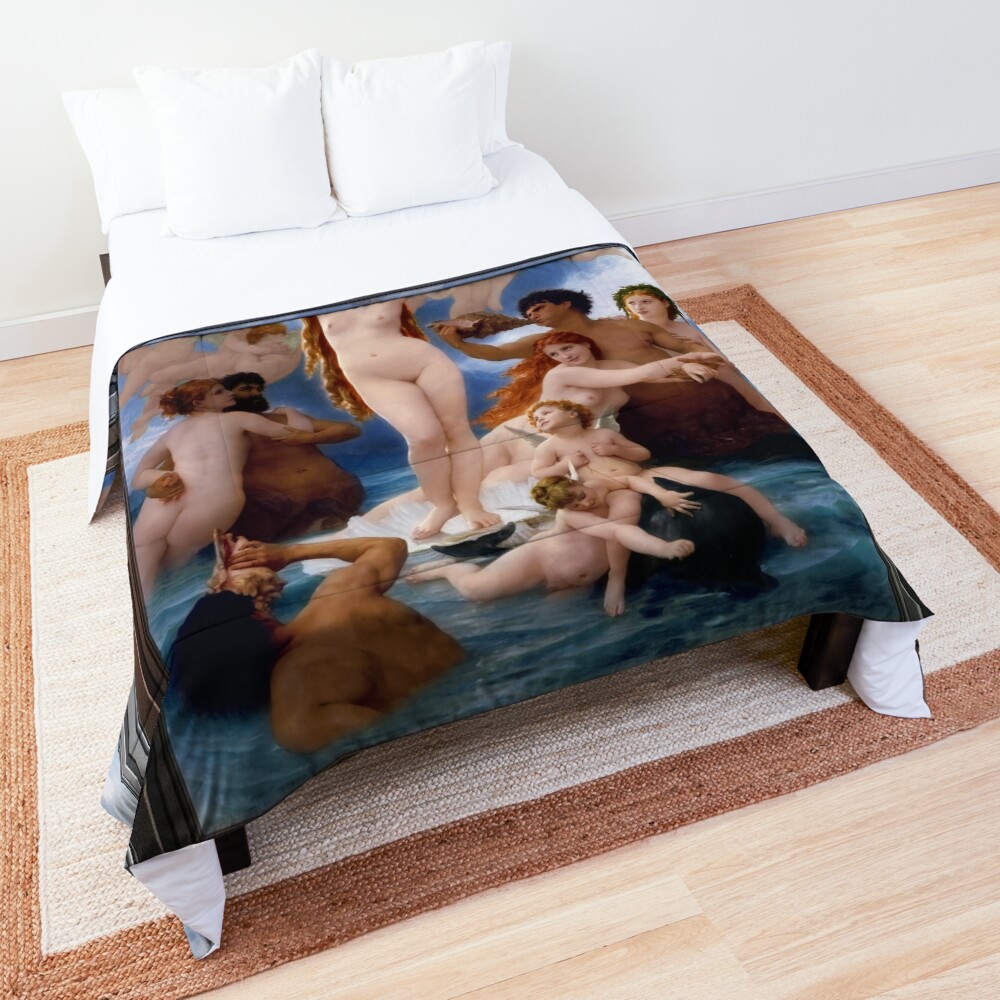
Tabla de contenido
Estructura compositiva & Flujo narrativo
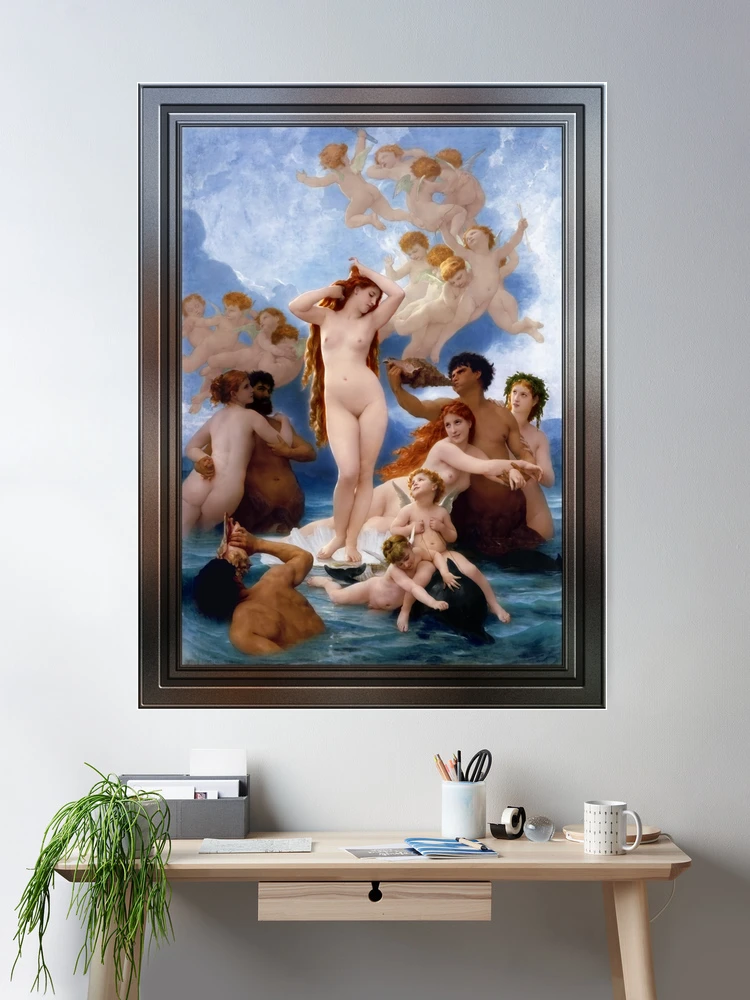
The composition is meticulously structured around Venus herself, positioned centrally within the canvas. She stands upon a massive scallop shell, which serves as her floating pedestal, gently approaching the shoreline. El arreglo no es casual; it’s carefully orchestrated to guide the viewer’s eye. a su izquierda, a figure representing Zephyr, the west wind, and his consort Chloris, blow Venus towards the shore, their bodies intertwined in a dynamic pose that conveys movement and gentle force. On the right, a nymph, likely Hora, awaits with a floral garland, ready to welcome the goddess. The figures surrounding Venus are not merely decorative; they contribute to the narrative flow, illustrating the forces that brought her into being and the welcoming reception she receives.
Anatomical Precision & Idealized Form
Bouguereau’s reputation rested on his exceptional skill in depicting the human form with anatomical accuracy. En “El nacimiento de Venus,” this is evident in every curve and contour of the figures. The bodies are rendered with a smooth, calidad casi de porcelana, showcasing an idealized beauty that adheres to classical standards. There’s no attempt at realism in the sense of portraying imperfections; en cambio, Bouguereau elevates the human form to a state of perfect harmony and proportion. Venus’s pose is particularly striking – she stands with one foot slightly raised, creating a sense of poised elegance and effortless grace. The subtle modeling of her flesh, achieved through delicate gradations of light and shadow, further enhances the illusion of three-dimensionality and tactile realism.
Paleta de colores & Efectos atmosféricos
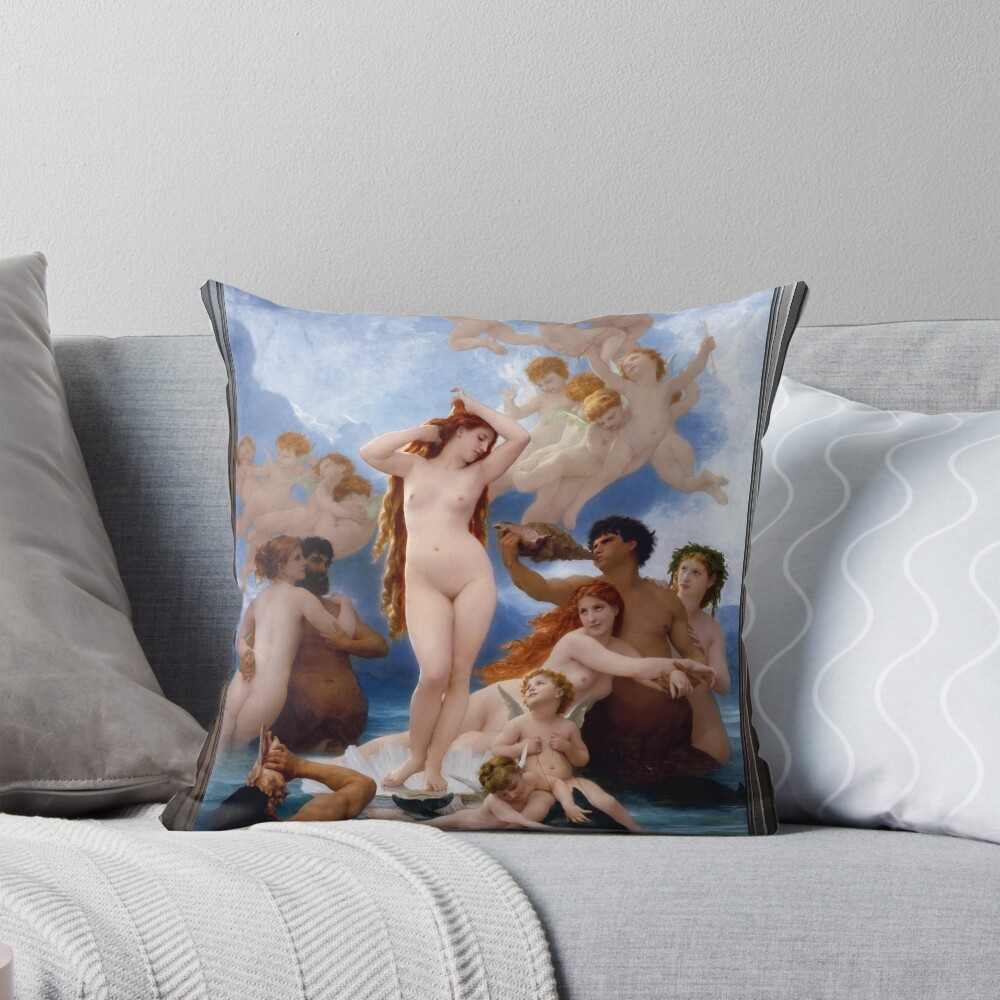
The color palette employed in “El nacimiento de Venus” is predominantly soft and harmonious. Pale blues and greens dominate the seascape, creating a sense of tranquility and ethereal beauty. The sky is rendered with swirling clouds, suggesting a gentle breeze and an atmosphere of otherworldly calm. Venus’s skin tones are luminous, contrasting beautifully with her flowing auburn hair, which cascades down her shoulders in loose waves. The warm hues of the flesh tones are balanced by the cooler colors of the surrounding environment, creating a visually pleasing contrast that draws attention to the central figure. Bouguereau masterfully uses light and shadow to create depth and volume, enhancing the overall sense of realism and beauty.
Simbolismo & Classical Allusions
Beyond its aesthetic appeal, “El nacimiento de Venus” is rich in symbolism and classical allusions. The scallop shell upon which Venus stands is a recurring motif associated with her birth in mythology – born from sea foam (Greek: aphros), hence her name Aphrodite. Zephyr and Chloris represent the gentle forces of nature that guide Venus’s arrival, while Hora symbolizes welcome and celebration. The floral garland offered by the nymph signifies beauty and fertility. These symbolic elements contribute to the painting’s overall meaning, reinforcing its connection to classical mythology and celebrating the goddess as a symbol of love, belleza, y renovación.
Bouguereau’s Artistic Legacy & Academic Tradition
Bouguereau was a leading figure in the Academic art movement, que enfatizó la habilidad técnica, idealized forms, and adherence to established artistic conventions. “El nacimiento de Venus” exemplifies these principles perfectly. The painting’s popularity during its time reflects the public’s appreciation for classical themes and the mastery of traditional techniques. While later generations would critique Academic art for its perceived lack of originality and emotional depth, Bouguereau’s work remains admired for its technical brilliance and enduring beauty. “El nacimiento de Venus” continues to captivate viewers with its serene atmosphere, idealized forms, and celebration of classical mythology. It stands as a testament to the power of artistic skill and the enduring appeal of timeless themes.
Artista Bio Cortesía Wikipedia.org
William-Adolphe Bouguereau nació en La Rochelle, Francia, en 30 noviembre 1825, en una familia de comerciantes de vino y aceite de oliva.[4] El hijo de Théodore Bouguereau (Nació 1800) y Marie Bonnin (1804), conocida como Adeline, William fue criado como católico. Tenía un hermano mayor, Alfredo, y una hermana menor, Marie (conocido como Hanna), que murió cuando tenía siete años.
La familia se mudó a Saint-Martin-de-Ré en 1832. Otro hermano nació en 1834, gatito. A la edad de 12, Bouguereau fue a Mortagne para quedarse con su tío Eugène, sacerdote y desarrolló un amor por la naturaleza, religión y literatura.
En 1839, fue enviado a estudiar para el sacerdocio en un colegio católico en Pons. Aquí le enseñó a dibujar y pintar por Louis Sage, que había estudiado con Ingres. Bouguereau abandonó a regañadientes sus estudios para volver con su familia, ahora residiendo en Burdeos.
Allí conoció a un artista local, Charles Marionneau, e inició en la Escuela Municipal de Dibujo y Pintura en noviembre 1841. Bouguereau también trabajó como dependienta, colorear litografías a mano y realizar pequeñas pinturas que fueron reproducidas mediante cromolitografía.
Pronto fue el mejor alumno de su clase., y decidió convertirse en artista en París. Para financiar la mudanza, vendió retratos - 33 aceites en tres meses. Todos estaban sin firmar y solo uno ha sido rastreado. Llegó a París envejecido 20 en marzo 1846.
Igualdad antes de la muerte (Igualdad antes de la muerte), 1848, óleo sobre lienzo, 141 × 269 cm (55.5 × 105.9 en), Museo de Orsay, París. La igualdad es la primera gran pintura de Bouguereau, producido después de dos años en la École des Beaux-Arts de Paris a la edad de 23.
Bouguereau se convirtió en estudiante en la École des Beaux-Arts.[4] Para complementar su formación formal en dibujo, asistió a disecciones anatómicas y estudió vestuario histórico y arqueología.
Fue admitido en el estudio de François-Édouard Picot, donde estudió pintura al estilo académico. Dante y Virgil en el infierno (1850) fue un ejemplo temprano de sus obras neoclásicas.
La pintura académica otorgó el estatus más alto a los temas históricos y mitológicos., y Bouguereau decidido a ganar el Prix de Rome, lo que le valdría una residencia de tres años en la Villa Medici en Roma, Italia, donde además de lecciones formales pudo estudiar de primera mano a los artistas del Renacimiento y sus obras maestras, así como griego, etrusco, y antigüedades romanas.
The Birth Of Venus is a retouched digital art old masters reproduction of a public domain image that is available online as a lienzo enrollado.