

The Birth of Venus: A Celebration of Classical Beauty
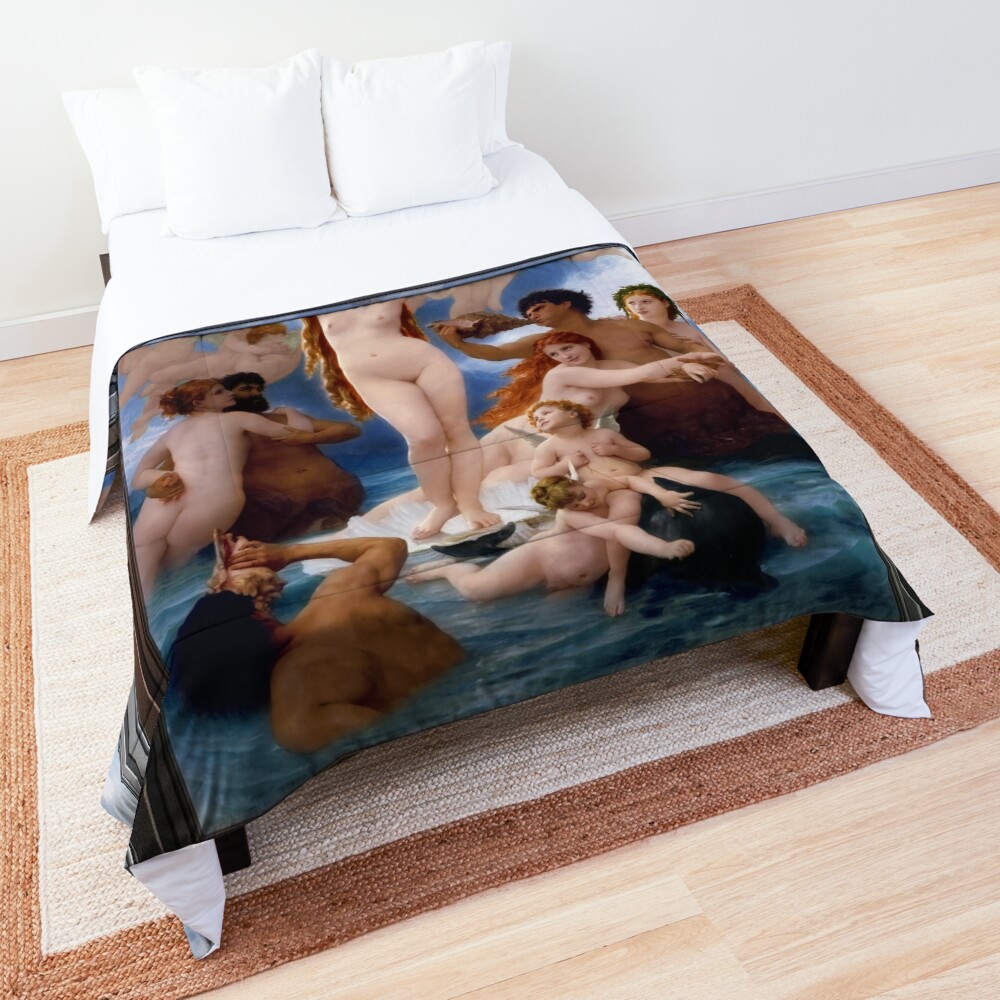
La Nascita Di Venere c1879 by French Painter William-Adolphe Bouguereau (1825 – 1905), stands as a quintessential example of Academic art, embodying the principles of idealized beauty and technical mastery prevalent in mid-19th century France. This large-scale oil painting draws heavily from classical mythology, depicting the arrival of the goddess Venus (Aphrodite to the Greeks) upon the shores of Cyprus. tuttavia, Bouguereau’s interpretation is far removed from earlier depictions; instead of a dramatic or tempestuous emergence, he presents a scene of serene grace and gentle unfolding.
Sommario
Struttura compositiva & Flusso narrativo
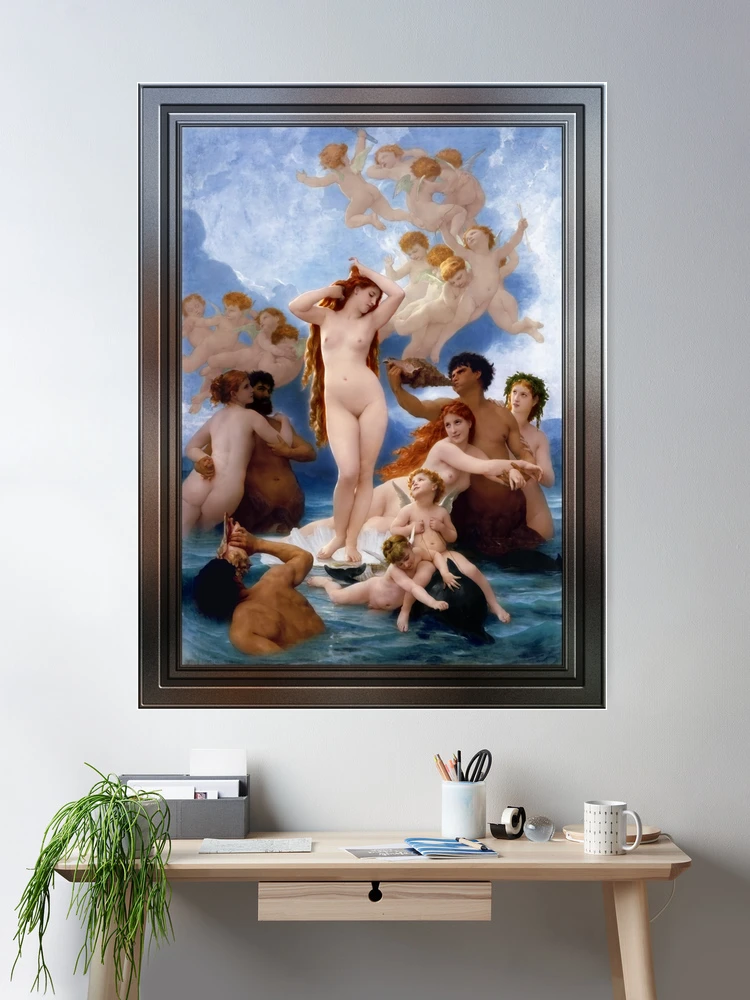
The composition is meticulously structured around Venus herself, positioned centrally within the canvas. She stands upon a massive scallop shell, which serves as her floating pedestal, gently approaching the shoreline. The arrangement isn’t haphazard; it’s carefully orchestrated to guide the viewer’s eye. To her left, a figure representing Zephyr, the west wind, and his consort Chloris, blow Venus towards the shore, their bodies intertwined in a dynamic pose that conveys movement and gentle force. A destra, a nymph, likely Hora, awaits with a floral garland, ready to welcome the goddess. The figures surrounding Venus are not merely decorative; they contribute to the narrative flow, illustrating the forces that brought her into being and the welcoming reception she receives.
Anatomical Precision & Idealized Form
Bouguereau’s reputation rested on his exceptional skill in depicting the human form with anatomical accuracy. Nel “The Birth of Venus,” this is evident in every curve and contour of the figures. The bodies are rendered with a smooth, qualità quasi simile alla porcellana, showcasing an idealized beauty that adheres to classical standards. There’s no attempt at realism in the sense of portraying imperfections; Invece, Bouguereau elevates the human form to a state of perfect harmony and proportion. Venus’s pose is particularly striking – she stands with one foot slightly raised, creating a sense of poised elegance and effortless grace. The subtle modeling of her flesh, achieved through delicate gradations of light and shadow, further enhances the illusion of three-dimensionality and tactile realism.
Tavolozza dei colori & Atmospheric Effects
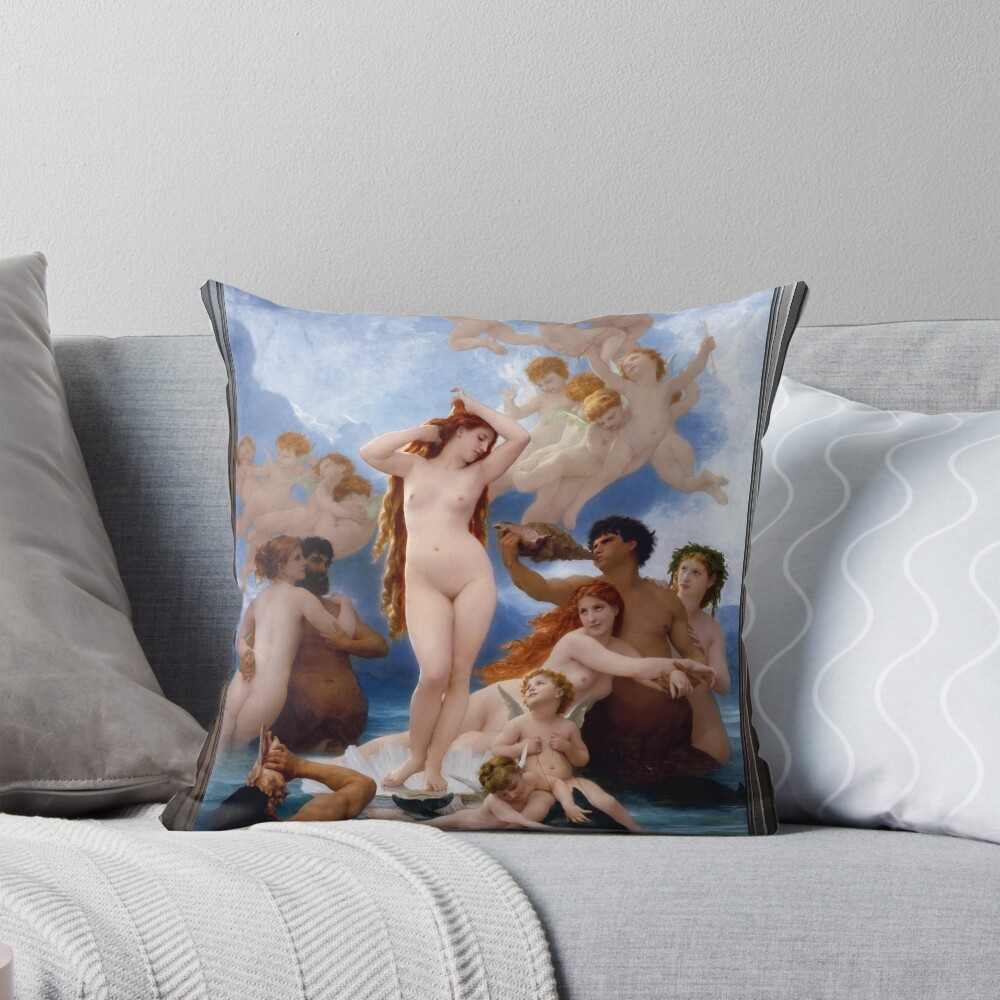
The color palette employed in “The Birth of Venus” is predominantly soft and harmonious. Pale blues and greens dominate the seascape, creating a sense of tranquility and ethereal beauty. The sky is rendered with swirling clouds, suggesting a gentle breeze and an atmosphere of otherworldly calm. Venus’s skin tones are luminous, contrasting beautifully with her flowing auburn hair, which cascades down her shoulders in loose waves. The warm hues of the flesh tones are balanced by the cooler colors of the surrounding environment, creating a visually pleasing contrast that draws attention to the central figure. Bouguereau masterfully uses light and shadow to create depth and volume, enhancing the overall sense of realism and beauty.
Simbolismo & Classical Allusions
Beyond its aesthetic appeal, “The Birth of Venus” is rich in symbolism and classical allusions. The scallop shell upon which Venus stands is a recurring motif associated with her birth in mythology – born from sea foam (Greek: aphros), hence her name Aphrodite. Zephyr and Chloris represent the gentle forces of nature that guide Venus’s arrival, while Hora symbolizes welcome and celebration. The floral garland offered by the nymph signifies beauty and fertility. These symbolic elements contribute to the painting’s overall meaning, reinforcing its connection to classical mythology and celebrating the goddess as a symbol of love, bellezza, e rinnovamento.
Bouguereau’s Artistic Legacy & Academic Tradition
Bouguereau was a leading figure in the Academic art movement, che enfatizzava l’abilità tecnica, idealized forms, and adherence to established artistic conventions. “The Birth of Venus” exemplifies these principles perfectly. The painting’s popularity during its time reflects the public’s appreciation for classical themes and the mastery of traditional techniques. While later generations would critique Academic art for its perceived lack of originality and emotional depth, Bouguereau’s work remains admired for its technical brilliance and enduring beauty. “The Birth of Venus” continues to captivate viewers with its serene atmosphere, idealized forms, and celebration of classical mythology. It stands as a testament to the power of artistic skill and the enduring appeal of timeless themes.
Biografia dell'artista per gentile concessione Wikipedia.org
William-Adolphe Bouguereau è nato a La Rochelle, Francia, sopra 30 novembre 1825, in una famiglia di commercianti di vino e olio d'oliva.[4] Il figlio di Théodore Bouguereau (Nato 1800) e Marie Bonnin (1804), conosciuta come Adeline, William è stato allevato cattolico. Aveva un fratello maggiore, Alfredo, e una sorella minore, Marie (noto come Hanna), che è morta quando aveva sette anni.
La famiglia si trasferì a Saint-Martin-de-Ré in 1832. Un altro fratello è nato a 1834, Gattino. All'età di 12, Bouguereau è andato a Mortagne per stare con suo zio Eugène, un prete e sviluppò un amore per la natura, religione e letteratura.
Nel 1839, fu mandato a studiare per il sacerdozio in un collegio cattolico a Pons. Qui gli è stato insegnato a disegnare e dipingere da Louis Sage, che aveva studiato con Ingres. Bouguereau lasciò a malincuore gli studi per tornare dalla sua famiglia, ora residente a Bordeaux.
Lì ha incontrato un artista locale, Carlo Marionneau, e iniziato presso la Scuola Comunale di Disegno e Pittura a novembre 1841. Bouguereau ha lavorato anche come commesso, litografie colorate a mano e piccoli dipinti riprodotti mediante cromolitografia.
Divenne presto il miglior allievo della sua classe, e ho deciso di diventare un artista a Parigi. Per finanziare il trasloco, ha venduto ritratti - 33 oli in tre mesi. Tutti non erano firmati e solo uno è stato rintracciato. È arrivato a Parigi invecchiato 20 a marzo 1846.
Uguaglianza prima della morte (Uguaglianza prima della morte), 1848, olio su tela, 141 × 269 cm (55.5 × 105.9 nel), Museo d'Orsay, Parigi. L'uguaglianza è il primo grande dipinto di Bouguereau, prodotto dopo due anni all'École des Beaux-Arts de Paris all'età di 23.
Bouguereau divenne uno studente all'École des Beaux-Arts.[4] Per completare la sua formazione formale nel disegno, ha frequentato dissezioni anatomiche e ha studiato costumi storici e archeologia.
Fu ammesso allo studio di François-Édouard Picot, dove ha studiato pittura in stile accademico. Dante e Virgilio all'inferno (1850) fu uno dei primi esempi delle sue opere neoclassiche.
La pittura accademica ha posto il più alto status su soggetti storici e mitologici, e Bouguereau determinati a vincere il Prix de Rome, che gli valse una residenza di tre anni a Villa Medici a Roma, Italia, dove oltre alle lezioni formali ha potuto studiare in prima persona gli artisti del Rinascimento e i loro capolavori, così come il greco, etrusco, e antichità romane.
The Birth Of Venus è una riproduzione di vecchi maestri di arte digitale ritoccata di un'immagine di pubblico dominio disponibile online come file stampa su tela arrotolata.