

De Rjochtseal Fan De Burgt Vrije, In Bruges
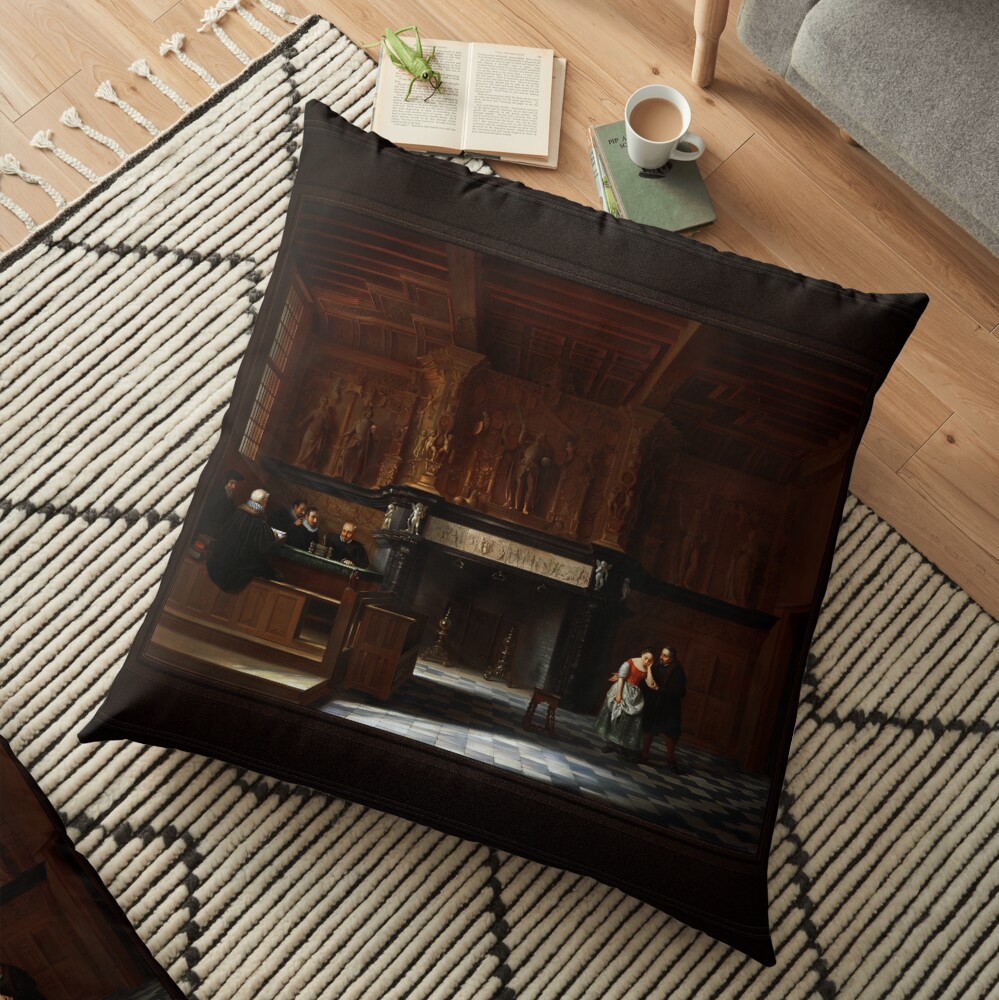
It keunstwurk mei de titel De Gerechtzaal Van De Burgt Vrije, Te Brugge (The Courtroom of the Burgt Vrije, in Bruges), oanmakke yn 1835 by the Belgian painter François Joseph Corneille Haseleer (1804 – 1890), transports the viewer to a moment in time within a historical courtroom setting.
The painting features a well-lit, expansive chamber where legal proceedings appear to unfold, encapsulating both the grandeur and formality of 19th-century judicial environments in Bruges. The artist’s careful rendering of the courtroom’s architecture, furniture, and figures contributes to a vivid portrayal of a scene in a prestigious setting where legal matters were conducted.
Ynhâldsopjefte
Architectural Setting and Materials
It haadûnderwerp fan it skilderij is in sjenre rjochtseal scene set yn de Burgt Vrije, in histoarysk rjochterlik gebou yn Brugge. De keamer is ûnbidich, en syn arsjitektuer wjerspegelet de grandeur fan de 19e ieu mei tall, klassike kolommen, in stiennen kachel fersierd mei bylden, en rike houten paneling. De muorren, yngewikkeld fersierd mei bas-reliëfs dy't allegoaryske figueren ôfbyldzje, suggerearje in gefoel fan autoriteit en gerjochtichheid. De grutte finsters, wêrtroch genôch ljocht de keamer oerstreame kin, in kontrast jaan oan it oars tsjustere, houten funksjes, it jaan fan de keamer in goed ferljochte, wat plechtige sfear.
De kachel, in sintraal elemint yn it skilderij, is in testamint foar de rykdom en de betsjutting fan 'e lokaasje. It is fersierd mei yngewikkelde skilderijen, ynklusyf bylden fan figueren yn klassike gewaden. The stonework of the fireplace, along with the polished marble floor tiles that reflect the light, reinforces the sense of affluence and tradition. The materials used to build the room, primarily wood and stone, serve to emphasize both stability and formality. The vaulted ceiling is richly detailed, with exposed beams and geometric patterns that add a layer of elegance to the space.
The Figures and Their Interactions
At the heart of the scene are several figures engaged in conversation or legal discussion. A group of men, dressed in traditional robes and headgear, are gathered around a table. Their solemn expressions and posture suggest a deep deliberation, possibly a legal debate or decision-making process.
The careful placement of these figures at the table and their attention to one another creates a dynamic within the space that pulls the viewer’s eye towards them. Each figure has been meticulously rendered, with distinct facial features and clothing, reflecting the artist’s ability to capture the nuance of both their individuality and their roles within the scene.
A woman, dressed in a white gown with a red sash, stands to the right side of the room, conversing with a man. This interaction, portrayed in a more intimate manner, contrasts with the more formal grouping of the men.
The man seems to lean in, perhaps providing counsel or explaining something to her, while she listens attentively. The mood between them is calm, hast kontemplatyf, suggerearret in rêstiger momint te midden fan de oars earnstige sfear fan de rjochtseal. Dizze ynteraksje foeget in minsklik elemint ta oan it toaniel, it grûnjen fan de formele ynstelling yn persoanlike ferbiningen.
De stimming en sfear
De algemiene stimming fan it skilderij kin wurde omskreaun as ien fan plechtichheid en swiertekrêft. De sombere kleurenpalet, dominearre troch brún, griis, en djippe readen, ropt in gefoel fan formaliteit en belang op. De swakke ferljochting, mei ljocht streamend troch de hege ruten, markearret bepaalde figueren en objekten yn 'e keamer, it kreëarjen fan in sêft kontrast tsjin de skaadgebieten. Dit ynteraksje fan ljocht en skaad draacht by oan in gefoel fan drama binnen it toaniel, beklamme it belang fan de prosedueres dy't plakfine.
De arsjitektoanyske en fysike eleminten fan 'e keamer, kombinearre mei de soarchfâldich keazen poses en útdrukkingen fan de figueren, suggest a theme of authority and respect. The courtroom, with its large, imposing furniture, is a place of power, where decisions are made that affect the lives of those who enter it. The figures appear immersed in their deliberations, their concentration adding weight to the atmosphere of the painting. There is an underlying tension in the room, not from conflict, but from the quiet seriousness of a legal setting.
De styl en artistike oanpak
François Joseph Corneille Haseleer’s style in this painting is rooted in the academic tradition of the 19th century, reflecting an attention to detail and a strong emphasis on realism. His skill in rendering light and texture, particularly in the depiction of the polished surfaces of the stone fireplace, the wood paneling, and the fabric of the figures’ clothing, demonstrates his technical prowess.
Haseleer’s ability to capture the grandeur of the room while focusing on the nuances of human interaction and expression adds a layer of depth to the painting. The figures are depicted with a sense of precision, their faces conveying a range of emotions from contemplation to concern.
The work can be classified within the broader genre of historical and genre painting, where the artist portrays a specific moment in time with accuracy and careful observation. While Haseleer’s focus on architectural and human elements ties the work to a sense of place and time, his composition also highlights the more personal and intimate exchanges between the figures, adding a layer of human interest to the narrative. His use of light and shadow is masterful, with the careful balance creating an atmosphere that is both serene and intense, reflective of the weight of the scene.
Konklúzje
François Joseph Corneille Haseleer’s De Gerechtzaal Van De Burgt Vrije, Te Brugge is a detailed and atmospheric depiction of a courtroom scene set in the historic Burgt Vrije of Bruges. Through his meticulous attention to architectural detail and human interaction, Haseleer has created a work that not only captures a moment in time but also conveys the seriousness and authority of the legal process.
It ynteraksje fan ljocht, skaad, and composition enhances the mood of the painting, drawing the viewer into a world where the weight of justice is tangible, yet where personal connections still play an integral role in the proceedings.
Dit is in remastered digitale keunst âlde masters reproduksje fan in ôfbylding yn it iepenbier domein dy't te krijen is as doekprint online.