

Dcera Herodias Salome přijímající hlavu Jana Křtitele
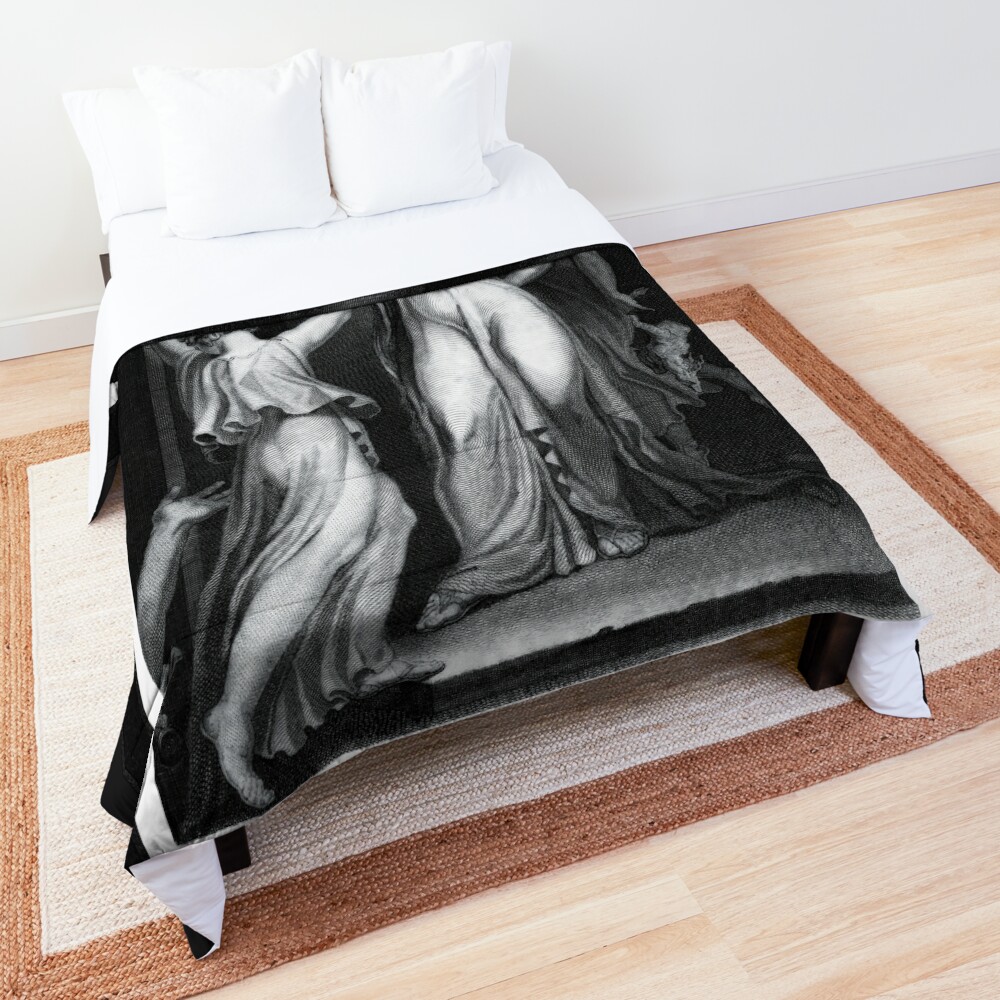
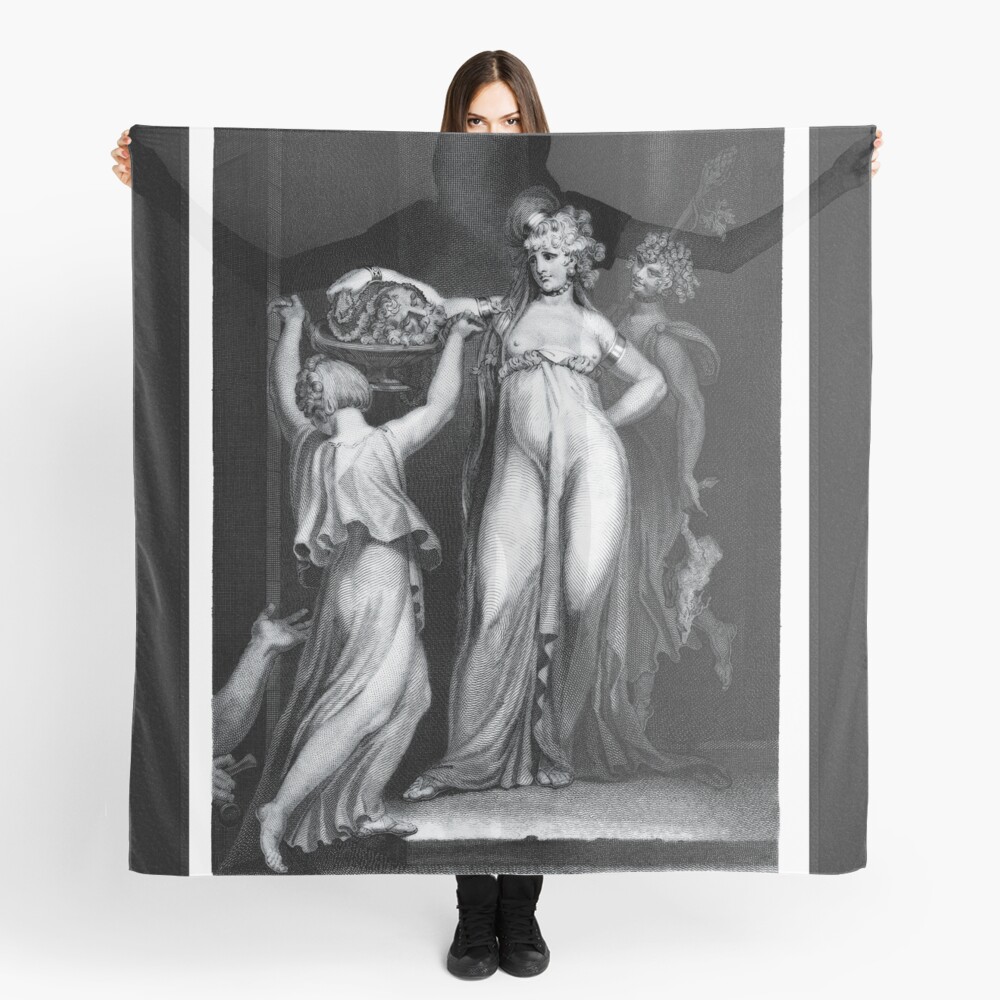
In the haunting engraving titled “Dcera Herodias; Salome přijímá hlavu Jana Křtitele,” created by the British engraver Thomas Holloway in 1798, we witness a pivotal moment drawn from the Bible, specifically Matthew 14:10-11. This stark and dramatic scene captures the tragic culmination of the beheading of John the Baptist.
Holloway’s meticulous craftsmanship evokes the emotional intensity and weight of the moment, blending both the grotesque and the regal. The engraving portrays Salome, the daughter of Herodias, holding the severed head of the prophet John, an act prompted by her mother’s desire for vengeance.
Obsah
The Main Subject and Theme
At the heart of Holloway’s engraving stands the female figure of Salome, her expression a curious mix of satisfaction and cold indifference as she receives the gruesome head of John the Baptist. Salome is depicted with long flowing hair, dressed in an elegant yet understated gown that flows to the floor. Její držení těla je vyrovnané, almost regal, despite the grim nature of the event. Her delicate yet firm grasp of the dish holding the severed head of John reflects the disturbing calmness of the scene.
The head of John the Baptist is eerily centered in the image, placed on a silver platter. His features are still discernible, though his eyes are shut in death, adding to the horror of the scene. His decapitated head is an unsettling contrast to the elegant appearance of the figures around it. Behind Salome stands a smaller male figure who seems to assist in the ceremonial transfer of the head, while another figure, draped in a flowing robe, completes the scene. These secondary characters underscore the ritualistic aspect of the narrative and their submission to the will of Herodias.
The theme of the artwork revolves around the notion of vengeance and betrayal, as well as the imbalance of power. Salome’s act is one of obedience to her mother, yet there is a calculated detachment in her demeanor that speaks to the complex emotional and moral implications of her actions. Holloway portrays the moment with an intensity that transcends the physical violence of the scene, offering viewers a glimpse into the darker realms of human nature and the consequences of unchecked power.
Materiály a technika
Thomas Holloway’s engraving is a masterwork of the intaglio process, a technique that involves incising an image onto a surface, which is then inked and pressed onto paper to create an impression. This traditional method allows for remarkable detail and tonal gradation, and Holloway’s skillful use of light and shadow brings the composition to life. The texture of the engraving, from the intricate folds of Salome’s gown to the delicate portrayal of the severed head, exhibits an exceptional level of detail characteristic of the neoclassical era. The depth of emotion is underscored by the expert contrast between light and dark, which emphasizes the drama of the moment.
The image is rendered in black and white, a stark yet powerful choice that reinforces the gravity of the scene. The contrast between the white of Salome’s skin and gown and the deep shadows of the background lends an almost theatrical quality to the image. This use of chiaroscuro – the contrast between light and dark – is particularly effective in drawing attention to the central figures, allowing their expressions and poses to dominate the composition.
Setting and Objects
The setting of the artwork is minimalistic but purposeful. The figures are placed in a semi-darkened space, hinting at a chamber or a palace, though no specific architectural details are given. This lack of specificity enhances the sense of timelessness, allowing the narrative to be universal rather than tied to a specific location or period. The dim lighting surrounding the figures suggests a scene shrouded in secrecy or ritual, contributing to the overall somber and foreboding mood of the piece.
The dish holding John the Baptist’s severed head is one of the most critical objects in the scene. Its presence is almost ceremonial, a stark juxtaposition of death and reverence. The head, severed from the body, conveys the brutality of the execution, yet the treatment of the dish elevates it to an almost sacred object, as though the head itself is now part of a macabre offering or tribute. The blood that would naturally accompany such an event is deliberately omitted from the image, making the scene even more surreal and unsettling. It is as though the severed head is merely a symbol of the act rather than a true representation of its grisly reality.
Nálada a emoční dopad
The overall mood of the engraving is one of darkness, suspense, a morální nejednoznačnost. The cold detachment of Salome, juxtaposed with the violent symbolism of John the Baptist’s death, creates a tense atmosphere. The lack of empathy displayed by Salome in this moment, while her expression reveals no sign of remorse or distress, calls attention to the inhumanity that often accompanies the pursuit of power. Holloway masterfully captures the eerie calmness of the scene, leaving the viewer with an unsettling sense of foreboding.
The engraved figures are imbued with a quiet stillness, but it is a stillness laced with an undercurrent of violence and intrigue. The sense of detachment from the horror of the act may provoke discomfort in the viewer, challenging them to consider the cost of vengeance and the complex nature of moral judgment. Salome’s role as the instrument of her mother’s revenge places her at the intersection of innocence and guilt, and Holloway’s work invites contemplation of the consequences of blind obedience.
Závěr
Thomas Holloway’s “Dcera Herodias; Salome přijímá hlavu Jana Křtitele” is a striking representation of a dark and tragic biblical moment. Through his expert use of engraving techniques and the careful rendering of light and shadow, Holloway brings an age-old story to life with vivid detail and emotional intensity. The scene is both beautiful and horrifying, offering a compelling reflection on the themes of power, vengeance, and moral complexity.
Dcera Herodias; Salome přijímající vedoucí Jana Křtitele, Matthew 14:10-11 c1798 britský rytec Thomas Holloway (1748 – 1827), z obrazu švýcarského malíře Henryho Fuseliho (741 – 1825); známý specializací na tvorbu uměleckých děl, která se ponořila do nadpřirozena; který byl také vynikajícím kreslířem, Spisovatel a držitel funkce profesora malířství a strážce Královské akademie.
Tato rytina od Thomase Hollowaye vychází z obrazu Henryho Fuseliho, který ukazuje dceru krále Herodiady, Salome přijala useknutou hlavu Jana Křtitele na palácovém dvoře.
The Daughter of Herodias Salome Receiving the Head of John the Baptist is a retouched digital art old masters reproduction of a public domain image that is available for purchase online as a rolovaný tisk na plátno.

Umělec bio z Wikipedia.org
Holloway byl v mladém věku vyučen rytecem pečetí jménem Stent. Začal studovat gravírování na Královské akademii od roku 1773, během této doby pobýval v 11 Pláže Row, poblíž Karlova náměstí, Hoxton, a vystavoval pastelové portréty ve Společnosti umělců v Praze 1777.
Později žil v Orme House v Hamptonu, Edgefield, Norfolk, a Coltishall, Norfolk. V roce se stal dvorním rytecem 1792.
Narodil se na Broad Street, Londýn, byl nejstarším synem obchodníka, který byl časným stoupencem Johna Wesleye; portrét jeho matky namaloval John Russell.
Byl spojen s rytcem tuleňů jménem Stent, jímž byl zaměstnán hlavně řezbářstvím ocelových ozdob. Následně navštěvoval školy Královské akademie, a v 1773 se poprvé objevil na Královské akademii jako vystavovatel pečetí a rytých drahokamů. Později a až 1792 byl přispěvatelem miniatur a portrétů v olejích a pastelkách.
Hlavním Hollowayovým směrem bylo gravírování. Jeho nejdříve publikované desky byly malé portréty pro časopisy, hlavně nekonformních ministrů. Později se ujal edice Eseje Johanna Kaspara Lavatera o fyziognomii, přeložil Henry Hunter, 5 sv., 1789–98.
Práce byla ilustrována asi 800 desky popravené samotným Hollowayem, Francesco Bartolozzi, William Blake, a další rytci, pod vedením Henryho Fuseliho.
Jeho portréty zahrnovaly portréty Charlese Howarda, 11vévoda z Norfolku, po Robert Edge Pine, a Timothy Priestleyho, 1792, a Richard Price, po Benjaminovi Westovi, 1793.
Byl také zaměstnán na ilustracích Shakespeara Johna Boydella, Historie Anglie Roberta Bowyera, a Bell’s British Theatre.
Holloway je známý svými náročnými rytinami karikatur od Rafaela na hradě Windsor v 1800, na kterém pracoval 30 let. Tento ambiciózní projekt byl finančním selháním. Karikatury již vyryl Nicolas Dorigny.
Vlivem Benjamina Westa, Holloway získal povolení vyrýt ve velkém měřítku sedm karikatur Rafaela ve Windsoru, a tomuto úkolu byl věnován zbytek jeho života.
Angažoval se jako asistenti svých bývalých žáků, R.. Slann a T. S. Webb, každý z nich se oženil s Hollowayovou neteří, společně s Josephem Thomsonem, umělec, který zemřel mladý. Společně pracovali ve Windsoru do 1814, když byly karikatury přesunuty do Hampton Court.
Po dokončení první desky, Pavel kázal v Aténách, v 1806, král jmenoval Hollowaye svým historickým rytcem; druhý, Kristova přikázání Petrovi, objevil se v 1810; třetí, Smrt Ananiášova, v 1816; a čtvrtý, Elymas, v 1820.
V tom roce byly dokončeny všechny předběžné výkresy, a Holloway odešel se svými společníky do Edgefieldu v Norfolku, a později do Coltishallu, poblíž Norwiche, aby pokračovali ve své práci na talířích, z toho pátý, Zázračný koncept ryb, bylo vydáno v 1824. To byl poslední, který Holloway žil, aby dokončil.
Šestý talíř, Paul a Barnabas v Lystře, byl téměř hotový v 1827, a sedmý, Petra a Jana u Krásné brány, začalo.
První se objevil v následujícím roce, 1828, ale dokončení posledně jmenovaného bylo odloženo na 1839, když byla vydána s věnováním královně, a stejně jako ostatní nesli jména Holloway, Slann, a Webb jako rytci a vydavatelé.