

Dottern till Herodias Salome som tar emot Johannes Döparens huvud
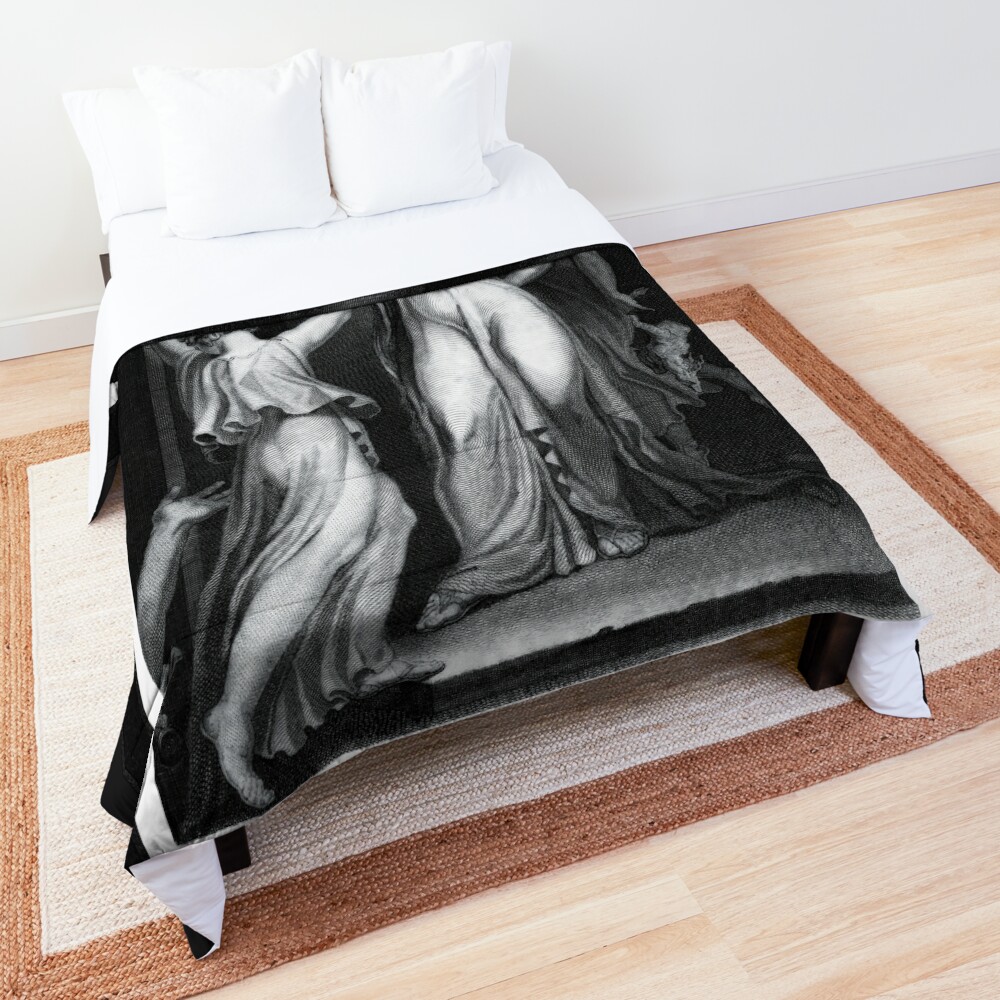
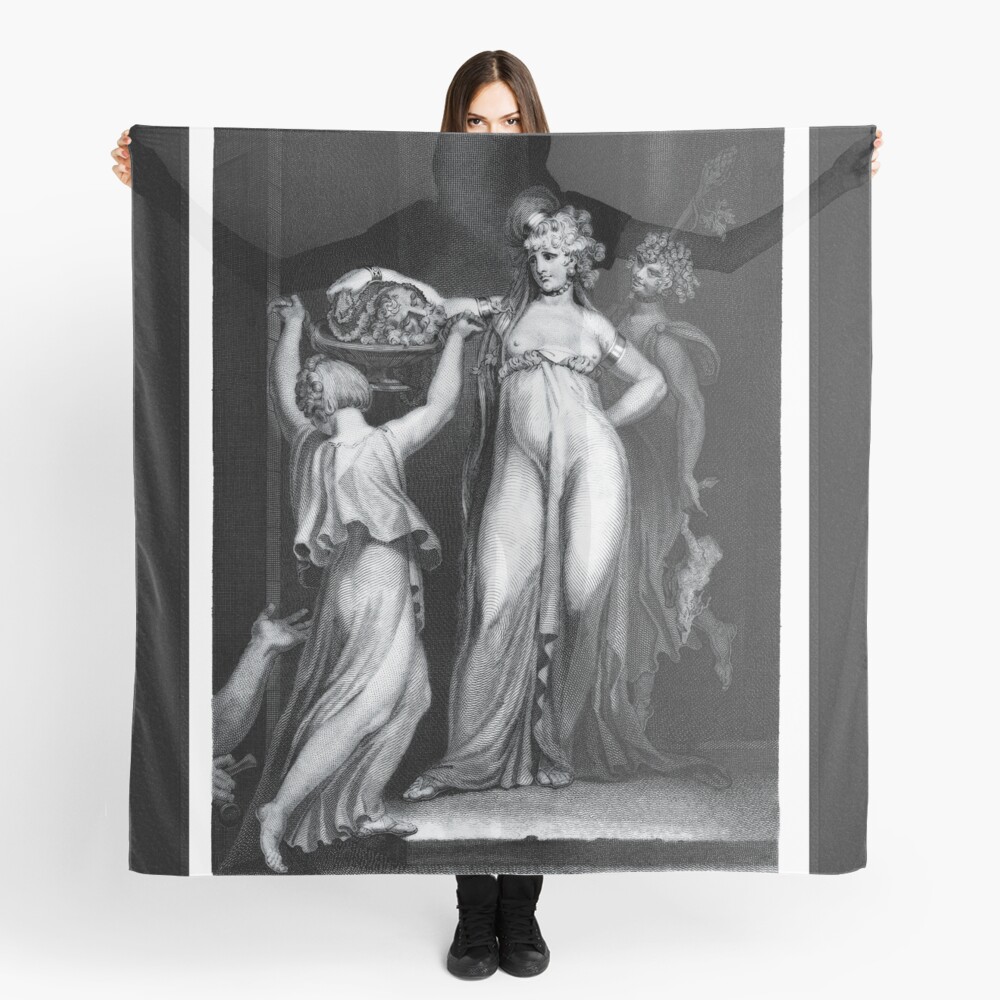
In the haunting engraving titled “Herodias dotter; Salome tar emot chefen för Johannes döparen,” created by the British engraver Thomas Holloway in 1798, we witness a pivotal moment drawn from the Bible, specifically Matthew 14:10-11. This stark and dramatic scene captures the tragic culmination of the beheading of John the Baptist.
Holloway’s meticulous craftsmanship evokes the emotional intensity and weight of the moment, blending both the grotesque and the regal. The engraving portrays Salome, the daughter of Herodias, holding the severed head of the prophet John, an act prompted by her mother’s desire for vengeance.
Innehållsförteckning
The Main Subject and Theme
At the heart of Holloway’s engraving stands the female figure of Salome, her expression a curious mix of satisfaction and cold indifference as she receives the gruesome head of John the Baptist. Salome is depicted with long flowing hair, dressed in an elegant yet understated gown that flows to the floor. Hennes hållning är balanserad, almost regal, despite the grim nature of the event. Her delicate yet firm grasp of the dish holding the severed head of John reflects the disturbing calmness of the scene.
The head of John the Baptist is eerily centered in the image, placed on a silver platter. His features are still discernible, though his eyes are shut in death, adding to the horror of the scene. His decapitated head is an unsettling contrast to the elegant appearance of the figures around it. Behind Salome stands a smaller male figure who seems to assist in the ceremonial transfer of the head, while another figure, draped in a flowing robe, completes the scene. These secondary characters underscore the ritualistic aspect of the narrative and their submission to the will of Herodias.
The theme of the artwork revolves around the notion of vengeance and betrayal, as well as the imbalance of power. Salome’s act is one of obedience to her mother, yet there is a calculated detachment in her demeanor that speaks to the complex emotional and moral implications of her actions. Holloway portrays the moment with an intensity that transcends the physical violence of the scene, offering viewers a glimpse into the darker realms of human nature and the consequences of unchecked power.
Material och teknik
Thomas Holloway’s engraving is a masterwork of the intaglio process, a technique that involves incising an image onto a surface, which is then inked and pressed onto paper to create an impression. This traditional method allows for remarkable detail and tonal gradation, and Holloway’s skillful use of light and shadow brings the composition to life. The texture of the engraving, from the intricate folds of Salome’s gown to the delicate portrayal of the severed head, exhibits an exceptional level of detail characteristic of the neoclassical era. The depth of emotion is underscored by the expert contrast between light and dark, which emphasizes the drama of the moment.
The image is rendered in black and white, a stark yet powerful choice that reinforces the gravity of the scene. The contrast between the white of Salome’s skin and gown and the deep shadows of the background lends an almost theatrical quality to the image. This use of chiaroscuro – the contrast between light and dark – is particularly effective in drawing attention to the central figures, allowing their expressions and poses to dominate the composition.
Inställning och objekt
The setting of the artwork is minimalistic but purposeful. The figures are placed in a semi-darkened space, hinting at a chamber or a palace, though no specific architectural details are given. This lack of specificity enhances the sense of timelessness, allowing the narrative to be universal rather than tied to a specific location or period. The dim lighting surrounding the figures suggests a scene shrouded in secrecy or ritual, contributing to the overall somber and foreboding mood of the piece.
The dish holding John the Baptist’s severed head is one of the most critical objects in the scene. Its presence is almost ceremonial, a stark juxtaposition of death and reverence. The head, severed from the body, conveys the brutality of the execution, yet the treatment of the dish elevates it to an almost sacred object, as though the head itself is now part of a macabre offering or tribute. The blood that would naturally accompany such an event is deliberately omitted from the image, making the scene even more surreal and unsettling. It is as though the severed head is merely a symbol of the act rather than a true representation of its grisly reality.
Humör och känslomässig inverkan
The overall mood of the engraving is one of darkness, suspense, och moralisk tvetydighet. The cold detachment of Salome, juxtaposed with the violent symbolism of John the Baptist’s death, creates a tense atmosphere. The lack of empathy displayed by Salome in this moment, while her expression reveals no sign of remorse or distress, calls attention to the inhumanity that often accompanies the pursuit of power. Holloway masterfully captures the eerie calmness of the scene, leaving the viewer with an unsettling sense of foreboding.
The engraved figures are imbued with a quiet stillness, but it is a stillness laced with an undercurrent of violence and intrigue. The sense of detachment from the horror of the act may provoke discomfort in the viewer, challenging them to consider the cost of vengeance and the complex nature of moral judgment. Salome’s role as the instrument of her mother’s revenge places her at the intersection of innocence and guilt, and Holloway’s work invites contemplation of the consequences of blind obedience.
Slutsats
Thomas Holloway’s “Herodias dotter; Salome tar emot chefen för Johannes döparen” is a striking representation of a dark and tragic biblical moment. Through his expert use of engraving techniques and the careful rendering of light and shadow, Holloway brings an age-old story to life with vivid detail and emotional intensity. The scene is both beautiful and horrifying, offering a compelling reflection on the themes of power, vengeance, and moral complexity.
Herodias dotter; Salome tar emot chefen för Johannes Döparen, Matthew 14:10-11 c1798 av den brittiska gravören Thomas Holloway (1748 – 1827), från en målning av den schweiziska målaren Henry Fuseli (741 – 1825); känd för att specialisera sig på att skapa konstverk som grävde in i det övernaturliga; som också var en skicklig tecknare, Skribent och innehavare av tjänsten som professor i målning och målare vid Royal Academy.
Denna gravyr av Thomas Holloway är baserad på en målning gjord Henry Fuseli som visar dotter till kung Herodias, Salome accepterar det avskurna huvudet på Johannes Döparen i palatsdomstolen.
The Daughter of Herodias Salome Receiving the Head of John the Baptist är en retuscherad digital konst reproduktion av gamla mästare av en allmän egendomsbild som finns att köpa online som en rullat canvastryck.

Artist Bio från Wikipedia.org
Holloway gick i ung ålder i lärling hos en sigillgravör vid namn Stent. Han fortsatte med att studera gravyr vid Royal Academy med början i 1773, under vilken tid han vistades kl 11 Stränder Row, nära Karlstorget, Hoxton, och ställde ut pastellporträtt på Konstnärsällskapet i 1777.
Han bodde senare i Orme House i Hampton, Edgefield, Norfolk, och Coltishall, Norfolk. Han blev hovgravör i 1792.
Född på Broad Street, London, han var äldste son till en köpman som var en tidig efterföljare till John Wesley; hans mors porträtt målades av John Russell.
Han var föremål för en sigillgravör som hette Stent, av vilken han huvudsakligen var sysselsatt med att snida stålprydnader. Han gick därefter på Royal Academys skolor, och i 1773 uppträdde först på Royal Academy som utställare av sälar och graverade pärlor. Senare och fram till 1792 han bidrog med miniatyrer och porträtt i oljor och kritor.
Holloways huvudriktning var linjegravering. Hans tidigast publicerade plattor var små porträtt för tidningar, främst av icke-konformistiska ministrar. Senare genomförde han en utgåva av Johann Kaspar Lavaters Essays on Physiognomy, översatt av Henry Hunter, 5 vol., 1789–98.
Verket illustrerades med ungefär 800 plattor utförda av Holloway själv, Francesco Bartolozzi, William Blake, och andra gravyrer, under ledning av Henry Fuseli.
Hans porträtt inkluderade Charles Howard, 11hertigen av Norfolk, efter Robert Edge Pine, och av Timothy Priestley, 1792, och Richard Price, efter Benjamin West, 1793.
Han var också anställd på illustrationerna till John Boydells Shakespeare, Robert Bowyer's History of England, och Bells British Theatre.
Holloway är känd för sina svåra gravyr av teckningar av Raphael på Windsor Castle i 1800, som han arbetade för 30 år. Detta ambitiösa projekt var ett ekonomiskt misslyckande. Teckningarna hade redan graverats av Nicolas Dorigny.
Genom inflytande av Benjamin West, Holloway fick tillstånd att gravera de sju Raphael -teckningarna i stor skala i Windsor, och denna uppgift ägnades resten av hans liv åt.
Han anlitade som assistenter sina tidigare elever, R. Slann och T. S. Webb, som alla gifte sig med en systerdotter till Holloway, tillsammans med Joseph Thomson, en konstnär som dog ung. De arbetade tillsammans på Windsor tills 1814, när teckningarna flyttades till Hampton Court.
När den första plattan är klar, Paulus predikar i Aten, i 1806, kungen utsåg Holloway till sin historiska gravör; den andra, Kristi befallning till Petrus, framträdde i 1810; den tredje, Ananias död, i 1816; och den fjärde, Elymas, i 1820.
Det året var alla preliminära ritningar färdiga, och Holloway drog sig tillbaka med sina medarbetare till Edgefield i Norfolk, och senare till Coltishall, nära Norwich, att fortsätta sitt arbete på tallrikarna, varav den femte, Det mirakulösa draget av fiskar, utfärdades i 1824. Detta var det sista som Holloway levde för att slutföra.
Den sjätte plattan, Paulus och Barnabas i Lystra, var nästan klar i 1827, och den sjunde, Peter och Johannes vid den vackra porten, börjat.
Den förra dök upp året därpå, 1828, men fullbordandet af den senare dröjde tills 1839, när den publicerades med en dedikation till drottningen, och som resten bar namnen på Holloway, Slann, och Webb som gravyrer och utgivare.