

Dauði Júlíusar Sesars í rómverska öldungadeildinni
The Death Of Julius Caesar In The Roman Senate Engraving by British Engraver James Charles Armytage (1802 – 1897); after a painting by French Painter Jean-Léon Gérôme (1824 – 1904). James is known to have created over 200 engravings during his career.
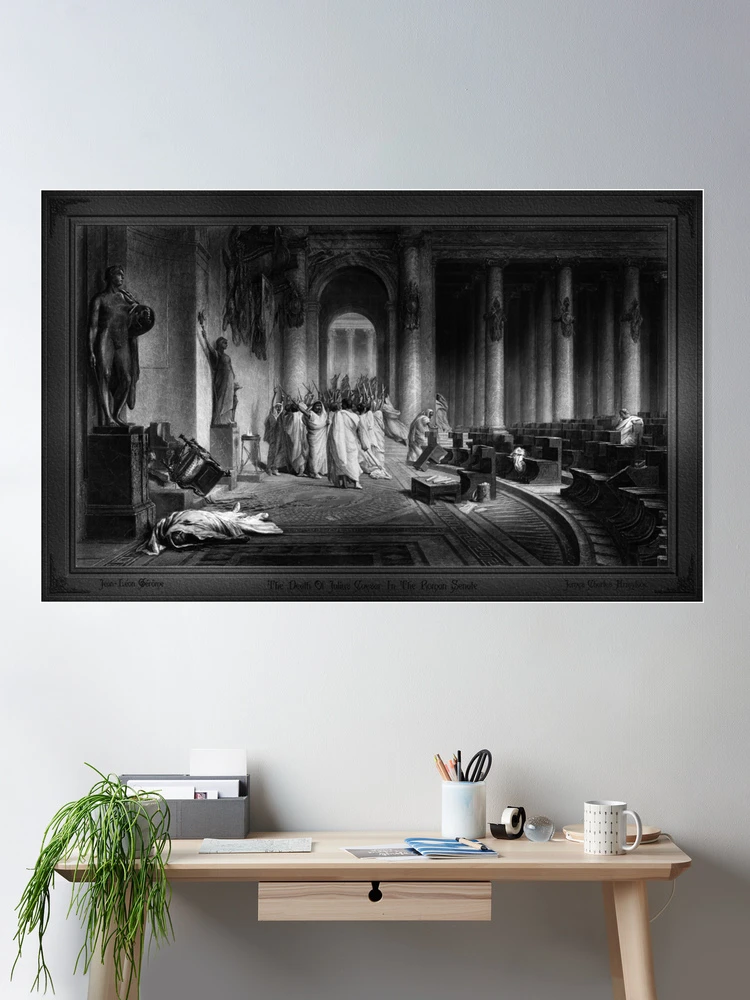
The Death Of Julius Caesar In The Roman Senate is a dramatic and powerful scene that depicts the events of that faithful day on March 15, 44 f.Kr. in Roman History; when in the Roman Senate House, Julius Caesar is murdered by 60 conspirators that, led by Marcus Junius Brutus and Gaius Cassius Longinus.
The assassins involved in Caesar’s death have all gathered together cheering his murder, as they flail their swords in the air after stabbing and hacking him to death; en í bakgrunni sjáum við marga af öðrum öldungadeildarþingmönnum rómverska öldungadeildarinnar á flótta af ótta við eigið líf.
Með stólinn sem Caesar sat í veltur á tröppunum, við sjáum blóðugan líkama hans liggja á gólfinu og slóð af blóði hans bera á skónum af glaðværum morðum hans.
Dauði Júlíusar Caesars í rómverska öldungadeildinni er leturgröftur lagfærð stafræn list eftirmynd af mynd í almenningseign..
Fyrir neðan upplýsingar fengnar frá Wikipedia
Jean-Leon Gerome (11 maí 1824 – 10 janúar 1904) var franskur málari og myndhöggvari í þeim stíl sem nú er þekktur sem akademísk fræði. Málverk hans voru svo mikið endurgerð að hann var “líklega frægasti núlifandi listamaður heims árið 1880.”[1] Umfang verka hans var meðal annars sögulegt málverk, Grísk goðafræði, Orientalismi, andlitsmyndir, og önnur viðfangsefni, að koma fræðilegri málarahefð á listrænan hápunkt. Hann er talinn einn mikilvægasti málarinn frá þessu fræðitímabili.
Í 1840 hann fór til Parísar, þar sem hann lærði undir Paul Delaroche, sem hann fylgdi til Ítalíu í 1843. Hann heimsótti Flórens, Róm, Vatíkanið og Pompeii. Við heimkomuna til Parísar kl 1844, eins og margir nemendur Delaroche, hann gekk til liðs við atelier Charles Gleyre og stundaði nám þar í stuttan tíma. Hann fór síðan í École des Beaux-Arts. Í 1846 hann reyndi að komast inn í hið virta Prix de Rome, en mistókst á lokastigi vegna þess að fígúruteikning hans var ófullnægjandi.

Málverk hans Hanabardaginn (1846) er akademísk æfing sem sýnir nakinn ungan mann og mjög þunnt drapaða unga konu með tvo slagsmálahana, með Napólí-flóa í bakgrunni. Hann sendi þetta málverk til Parísarstofu í 1847, þar sem það færði honum þriðja flokks verðlaun. Þetta verk var litið á sem fyrirmynd ný-grískrar hreyfingar sem hafði myndast út frá vinnustofu Gleyre (þar á meðal Henri-Pierre Picou og Jean-Louis Hamon), og var keppt af hinum áhrifamikla franska gagnrýnanda Théophile Gautier, umsögn hans gerði Gérôme frægan og hóf feril hans í raun.
Gérôme yfirgaf draum sinn um að vinna Prix de Rome og nýtti skyndilega velgengni sína. Myndir hans The Virgin, Jesúbarnið og heilagur Jóhannes og Anacreon, Bacchus og Eros tóku annars flokks verðlaun á Parísarstofunni í 1848. Í 1849, hann framleiddi myndirnar Michelangelo (einnig kallað In his Studio) og A Portrait of a Lady.
Í 1851, hann skreytti vasa síðar sem Napóleon III Frakklandskeisari bauð Albert prins, nú hluti af konunglega safninu í St. James's Palace, London. Hann sýndi gríska innréttingu, Minjagripur frá Ítalíu, Bakkus og ást, Drukkinn inn 1851; Plágan inn 1852; og An Idyll in 1853
Í 1852, Gérôme fékk umboð til að mála stóra veggmynd af allegórísku efni að eigin vali. Ágústusöld, fæðingu Krists, sem myndi sameina fæðingu Krists og sigraðar þjóðir sem heiðruðu Ágústus, gæti hafa verið ætlað að stæla Napóleon III, sem ríkisstjórnin lét gera veggmyndina og hver var auðkenndur sem a “nýr Ágústus.
Í 1854, hann lauk annarri mikilvægri umboði, skreytir kapelluna St. Jerome í kirkjunni St. Séverin í París. Síðasta samfélag hans á St. Jerome í þessari kapellu endurspeglar áhrif skóla Ingres á trúarleg verk hans; og inn 1855 hann lagði Pifferaro til, Hirðir, og Ágústusöld, fæðingu Krists, to the Universal Exhibition; but it was the modest painting Recreation in a Russian Camp that garnered the most attention .