

Young Woman with Flowers in Her Hair c1734
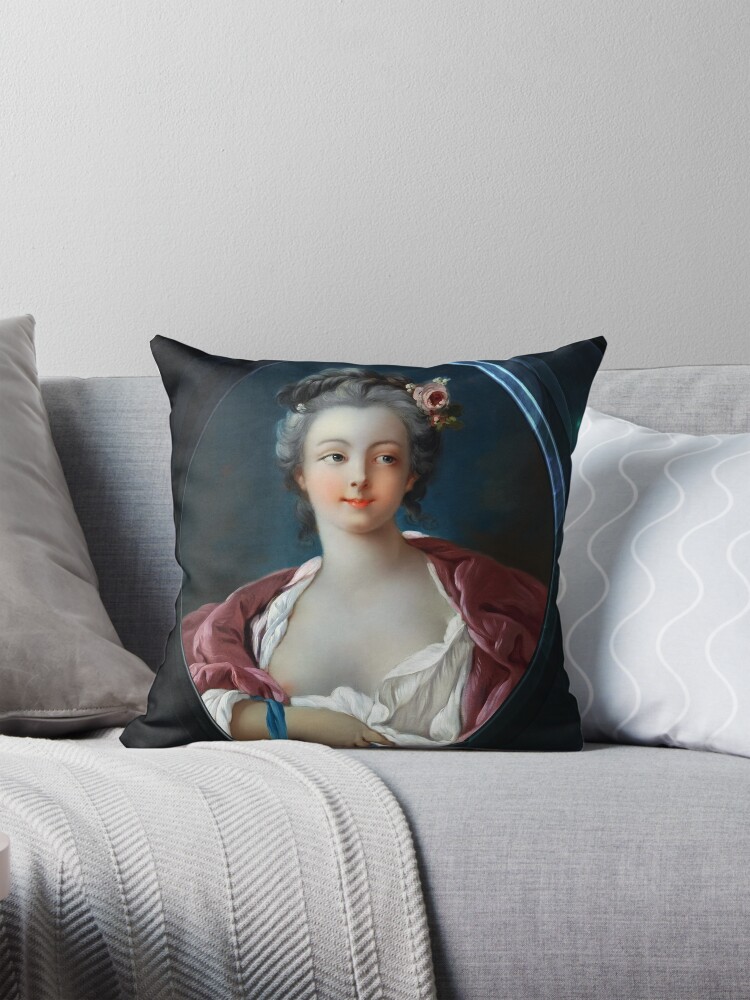
Listaverkin Ung kona með blóm í hárinu varð til í 1734 by the renowned French painter Francois Boucher (1703 – 1770). Boucher, celebrated for his role in the Rococo movement, presents in this painting a portrait of youthful beauty and elegance, characteristic of his ability to capture both the grace and sensuality of his subjects. This work is a delicate and refined depiction of a young woman, bathed in soft light and surrounded by elements that evoke a sense of opulence and ease, typical of the Rococo era. The artist’s brushwork, combined with the vivid detail of the subject’s attire and facial features, places the painting firmly within the context of 18th-century French aristocracy and fashion.
Efnisyfirlit
Viðfangsefnið og samsetningin
Í þessari mynd, Boucher expertly showcases a young woman dressed in a luxurious ensemble of flowing fabrics, with her face framed by soft curls and adorned with flowers. The woman is depicted in an intimate and almost wistful pose, her soft gaze directed slightly off-center, as if lost in contemplation. The simplicity of her pose, with one hand resting gently at her chest, invites the viewer to focus on her delicate features and the grace of her attire. The subtle contrast between the intricate folds of her luxurious robe and the softness of her skin enhances the natural elegance of the subject.
Hárið á henni, styled in an elaborate updo, is adorned with vibrant roses and delicate blossoms, a signature detail of Boucher’s work that celebrates both the natural world and the beauty of femininity. The arrangement of flowers in her hair, combined with the gentle expression on her face, speaks to the Rococo theme of idealized beauty and sensuality, set within a world of nature and grace.
Notkun lita og ljóss
Boucher’s use of color in this portrait is notable for its subtlety and richness. The soft pastel hues of her gown, composed of muted pinks, hvítum, and creams, contrast beautifully with the deeper, darker tones of the background. These color choices serve to enhance the subject’s youthful beauty, as her face and attire seem to almost glow against the dark, blurred backdrop. The gentle play of light on her skin and fabric adds depth to the composition, highlighting the textures of her clothing and the soft contours of her face. The muted tones of the background also create a sense of ethereal space, focusing all attention on the subject’s figure and face.
The Rococo Style and Mood
François Boucher Ung kona með blóm í hárinu encapsulates the defining characteristics of the Rococo style, which flourished in France during the early 18th century. Rococo, marked by its ornate, playful, and often sensual aesthetic, sought to evoke lightness and pleasure, moving away from the more somber tones of the Baroque period. Í þessu málverki, the delicate treatment of the subject’s features, the flowing, almost billowy fabrics, and the soft color palette all exemplify Rococo’s emphasis on grace and beauty.
The mood of the portrait is one of calm and serenity, with a hint of coquettish charm. The subject’s gentle smile and distant gaze suggest an inner world of thoughtfulness, while her elegant pose exudes both confidence and femininity. The flowers in her hair act as a metaphor for youth and beauty, reinforcing the Rococo fascination with fleeting moments of pleasure and the cultivation of beauty.
Symbolism and Materiality
The young woman’s attire and the surrounding elements in the painting are not only a reflection of her social status but also a symbol of the prevailing tastes of the time. Her gown, made of luxurious fabrics such as silk or velvet, is depicted with great attention to texture, emphasizing the wealth and refinement of the subject. The folds and draping of the fabric are painted with precision, showcasing Boucher’s skill in rendering the material as though it were tangible.
The flowers in her hair carry additional meaning, often seen as symbols of youth, fegurð, and transience in 18th-century art. Rósir, sérstaklega, have long been associated with love and passion, and their inclusion here suggests a connection between the subject’s outward beauty and the emotions she may evoke. The overall composition, with its focus on beauty and sensuality, aligns with the themes of ephemeral pleasure and the celebration of youth that were central to the Rococo movement.
Niðurstaða
François Boucher Ung kona með blóm í hárinu is an exemplary work of Rococo portraiture, capturing the essence of the period through its delicate portrayal of feminine beauty and sensuality. The artist’s ability to blend texture, Ljós, and color creates an image that not only reflects the fashion and ideals of 18th-century French aristocracy but also invites the viewer into a world of serene grace and elegant charm. Through this painting, Boucher immortalizes the subject’s youth, fegurð, og kvenleika, while also showcasing the opulent tastes and refined aesthetics of the time.
Ung kona með blóm í hárinu er lagfærð stafræn list eftirmynd af mynd sem er í almenningseign.
Listamaður Bio
Upplýsingar hér að neðan fengnar af Wikipedia.org
Innfæddur í París, Boucher var sonur minna þekkts málara Nicolas Boucher, sem veitti honum sína fyrstu listþjálfun. Á sautján ára aldri, málverk eftir Boucher var dáð af málaranum François Lemoyne. Lemoyne skipaði síðar Boucher sem lærling sinn, en eftir aðeins þrjá mánuði, hann fór að vinna hjá leturgröftaranum Jean-François Cars.
Í 1720, hann vann Elite Grand Prix de Rome fyrir málverk, en nýtti ekki tækifærið til að stunda nám á Ítalíu fyrr en fimm árum síðar, vegna fjárhagsvanda í Konunglegu málara- og höggmyndarakademíunni.[1] Þegar hann kom heim frá námi á Ítalíu fékk hann inngöngu í endurreista Académie de peinture et de sculpture á 24 nóvember 1731. Móttökustykkið hans (móttökustykki) var Rinaldo hans og Armida af 1734.
Boucher giftist Marie-Jeanne Buzeau árið 1733. Þau hjón eignuðust þrjú börn saman. Boucher varð deildarmeðlimur í 1734 og ferill hans hraðaði frá þessum tímapunkti þar sem hann var gerður prófessor þá rektor akademíunnar, verða eftirlitsmaður hjá Royal Gobelins Manufactory og loks forsætisráðherra Peintre du Roi (Fyrsti málari konungsins) inn 1765. Portrett af Marie-Louise O'Murphy c. 1752
Boucher lést á 30 maí 1770 í heimalandi sínu París. Nafn hans, ásamt verndara hans Madame de Pompadour, var orðið samheiti við franskan rókókóstíl, leiddi Goncourt bræður til að skrifa: “Boucher er einn af þessum mönnum sem tákna smekk aldar, sem tjá, persónugera það og setja það inn.”
Boucher er frægur fyrir að segja að náttúran sé það “of grænt og illa lýst” (of grænt og illa lýst).
Boucher var tengdur gimsteinagrafaranum Jacques Guay, sem hann kenndi að teikna. Hann leiðbeindi einnig moravísk-austurríska málarann Martin Ferdinand Quadal sem og nýklassíska málarann Jacques-Louis David í 1767.[4] Seinna, Boucher gerði röð teikninga af verkum eftir Guay sem frú de Pompadour greypti síðan út og dreifði sem myndarlega innbundnu bindi til hylli hirðmanna.