

The Dovecote c1758
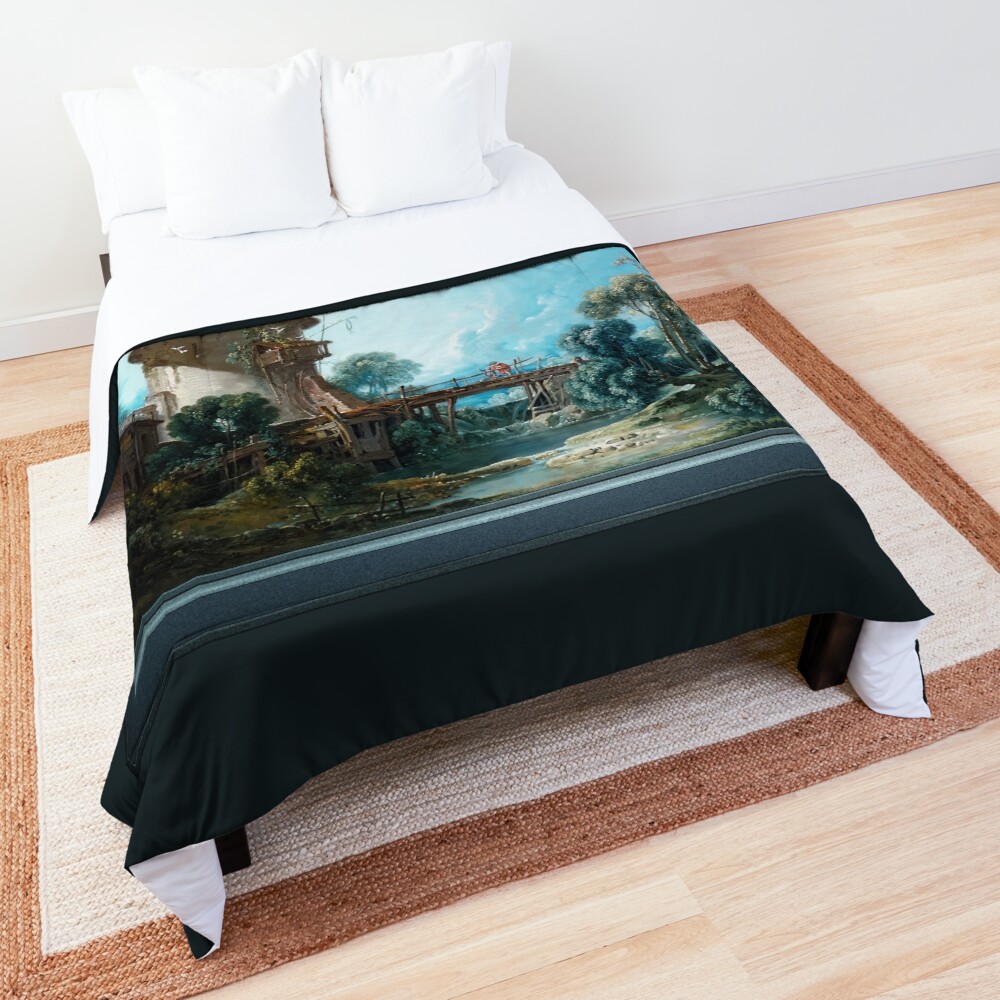
Francois Boucher‘s painting “The Dovecote” (c. 1758) is a captivating example of the French Rococo style. Boucher (1703 – 1770), one of the foremost painters of the 18th century, was known for his vibrant, delicate compositions and a distinctive lightness that characterized the era. This artwork embodies the Rococo spirit with its emphasis on nature, leisure, and an idyllic, almost dreamlike world. Boucher’s work often focused on the themes of aristocratic enjoyment, tender moments, and pastoral beauty, which are all reflected here in this serene, enchanting scene.
Efnisyfirlit
Aðalefni og samsetning
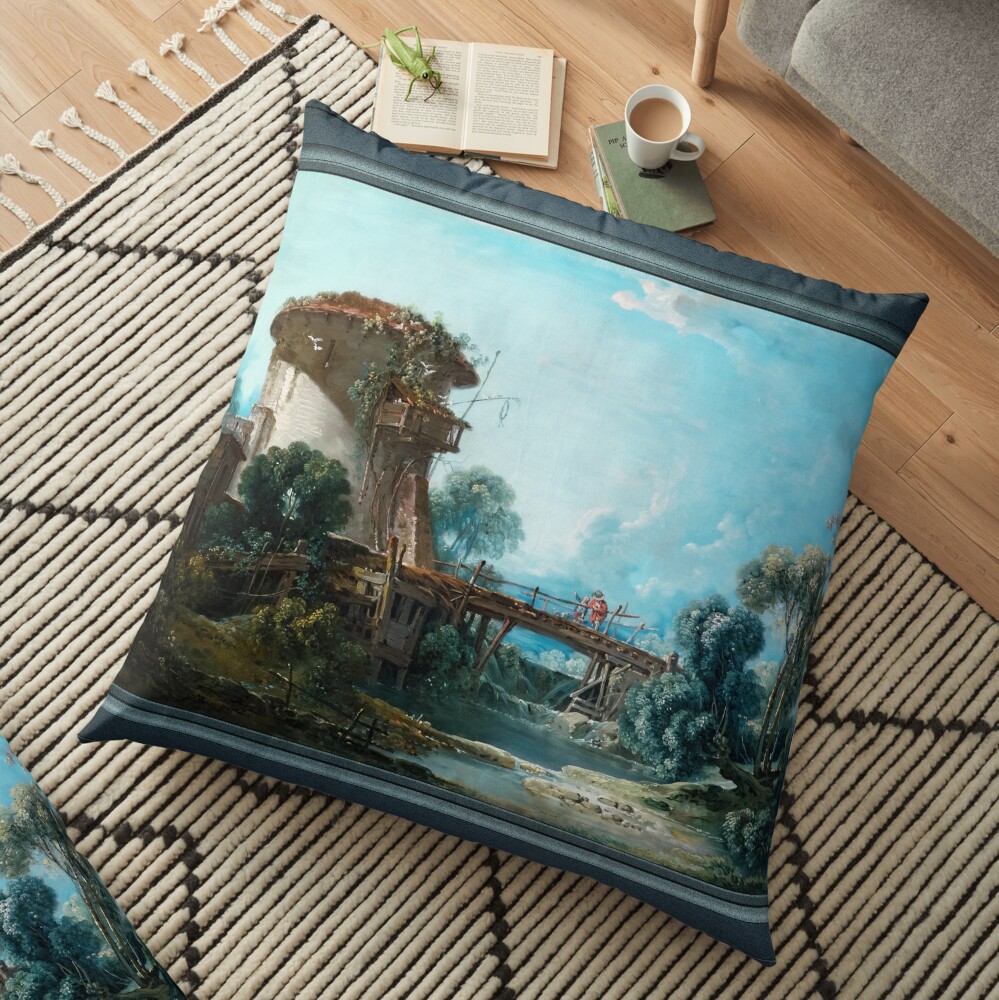
Í “The Dovecote,” the central focus is a tranquil rural setting that captures the idyllic beauty of nature. A man and a woman are depicted in the foreground, casually conversing, while standing on a rustic wooden bridge. The bridge spans a calm river, which reflects the soft hues of the sky and surrounding greenery. The figures are dressed in fashionable, yet simple 18th-century attire, their clothing bright and vibrant, contrasting with the natural tones around them. Their relaxed postures and the peacefulness of their interaction suggest a moment of quiet harmony in the countryside.
The scene’s setting, a rural landscape dotted with trees, gently rolling hills, and a distant stone structure—possibly a dovecote itself—evokes a pastoral life of leisure. The man and woman seem to be at ease in this bucolic world, their peaceful presence adding to the calm atmosphere of the composition.
Hlutir og tákn
Í bakgrunni, we see a distinctively constructed stone dovecote, a structure used for housing doves or pigeons. This is where the painting’s title comes from, symbolizing perhaps a quiet, secluded part of nature that complements the tranquil lives of the individuals depicted. The dovecote is placed prominently on the left side of the canvas, with the trees encircling it, drawing attention to its importance as both a physical object and a symbol of rural life.
The wooden bridge that spans the river adds another layer of meaning to the painting. It not only serves as a functional element connecting two areas but also becomes a metaphorical bridge between the viewer and the tranquil world of the figures, inviting them into a space of calm contemplation. The landscape itself, with its harmonious blend of natural and architectural elements, underscores the Rococo fascination with combining beauty and nature.
Auk þess, the soft, delicate brushwork captures the lush greenery, the water’s reflective qualities, and the atmosphere’s lightness, evoking a sense of serenity. The birds in flight above the dovecote add to the mood of freedom and peace, echoing the peaceful existence of the figures below.
Landslag og umhverfi
The terrain is depicted with lush, vibrant greenery, characteristic of the Rococo love for lush nature. The rolling hills in the distance are soft and inviting, bathed in a warm golden light that suggests either the early morning or late afternoon sun. The gentle curves of the hills lead the eye toward the horizon, giving a sense of depth to the landscape.
The flowing water at the bottom of the scene is tranquil, its surface gently disturbed by the occasional ripple, mirroring the calmness of the figures. The trees lining the riverbank are rich with foliage, their forms rounded and almost soft, contributing to the overall sense of gentleness that pervades the painting. The sky above is expansive and vibrant, painted with light, airy blues, and soft cloud formations, adding to the tranquil, almost dreamlike atmosphere of the scene.
Efni og tækni
Boucher’s signature technique of soft brushstrokes is evident throughout “The Dovecote.” The composition feels effortlessly fluid, with no harsh lines or contrasts, reflecting the Rococo aesthetic’s preference for lightness and grace. The use of light and shadow is subtle, contributing to the overall softness of the piece. The warm golden light that bathes the scene enhances the mood of serenity and the sense of timeless beauty.
Boucher’s handling of color is masterful. The contrast between the lively tones of the figures’ clothing and the natural greens and blues of the environment draws the viewer’s attention to the human subjects while still maintaining a balanced, harmonious composition. The vibrancy of the figures’ attire, with rich reds and muted yellows, echoes the playfulness and elegance of the Rococo period, where fashion and art were inextricably linked.
Stíll, Þema, og skap
“The Dovecote” dæmi um rococo stíl, characterized by its focus on lightness, glæsileiki, and the beauty of the natural world. The subject matter—the peaceful rural landscape, the leisurely figures, and the idyllic surroundings—speaks to the Rococo fascination with beauty, Náttúran, and the simple pleasures of life. There is no sense of urgency or conflict in the painting; frekar, the viewer is invited into a world where time slows down and the natural world offers peace and harmony.
The mood of the painting is gentle and soothing, enhanced by the soft color palette, the tranquil water, and the idyllic rural scene. The figures themselves appear content and relaxed, their quiet interaction suggesting a sense of contentment and ease. The painting evokes a sense of nostalgia for a simpler, more peaceful time, free from the concerns of the bustling urban world.
Niðurstaða
François Boucher “The Dovecote” is a quintessential Rococo painting that encapsulates the period’s love for nature, fegurð, and refined leisure. With its serene landscape, tender figures, and masterful technique, it invites the viewer into a world of tranquility and grace. The subtle use of symbolism, combined with Boucher’s soft brushwork and vibrant color palette, creates a harmonious composition that remains a delightful representation of 18th-century French art.
Þetta er endurgerð stafræn list af gömlum meistara eftirgerð af mynd sem er í almenningseign sem er fáanleg sem strigaprentun á netinu.
Listamaður Bio
Upplýsingar hér að neðan fengnar af Wikipedia.org
Innfæddur í París, Boucher var sonur minna þekkts málara Nicolas Boucher, sem veitti honum sína fyrstu listþjálfun. Á sautján ára aldri, málverk eftir Boucher var dáð af málaranum François Lemoyne. Lemoyne skipaði síðar Boucher sem lærling sinn, en eftir aðeins þrjá mánuði, hann fór að vinna hjá leturgröftaranum Jean-François Cars.
Í 1720, hann vann Elite Grand Prix de Rome fyrir málverk, en nýtti ekki tækifærið til að stunda nám á Ítalíu fyrr en fimm árum síðar, vegna fjárhagsvanda í Konunglegu málara- og höggmyndarakademíunni.[1] Þegar hann kom heim frá námi á Ítalíu fékk hann inngöngu í endurreista Académie de peinture et de sculpture á 24 nóvember 1731. Móttökustykkið hans (móttökustykki) var Rinaldo hans og Armida af 1734.
Boucher giftist Marie-Jeanne Buzeau árið 1733. Þau hjón eignuðust þrjú börn saman. Boucher varð deildarmeðlimur í 1734 og ferill hans hraðaði frá þessum tímapunkti þar sem hann var gerður prófessor þá rektor akademíunnar, verða eftirlitsmaður hjá Royal Gobelins Manufactory og loks forsætisráðherra Peintre du Roi (Fyrsti málari konungsins) inn 1765. Portrett af Marie-Louise O'Murphy c. 1752
Boucher lést á 30 maí 1770 í heimalandi sínu París. Nafn hans, ásamt verndara hans Madame de Pompadour, var orðið samheiti við franskan rókókóstíl, leiddi Goncourt bræður til að skrifa: “Boucher er einn af þessum mönnum sem tákna smekk aldar, sem tjá, persónugera það og setja það inn.”
Boucher er frægur fyrir að segja að náttúran sé það “of grænt og illa lýst” (of grænt og illa lýst).
Boucher var tengdur gimsteinagrafaranum Jacques Guay, sem hann kenndi að teikna. Hann leiðbeindi einnig moravísk-austurríska málarann Martin Ferdinand Quadal sem og nýklassíska málarann Jacques-Louis David í 1767.[4] Seinna, Boucher gerði röð teikninga af verkum eftir Guay sem frú de Pompadour greypti síðan út og dreifði sem myndarlega innbundnu bindi til hylli hirðmanna.