

夢想家
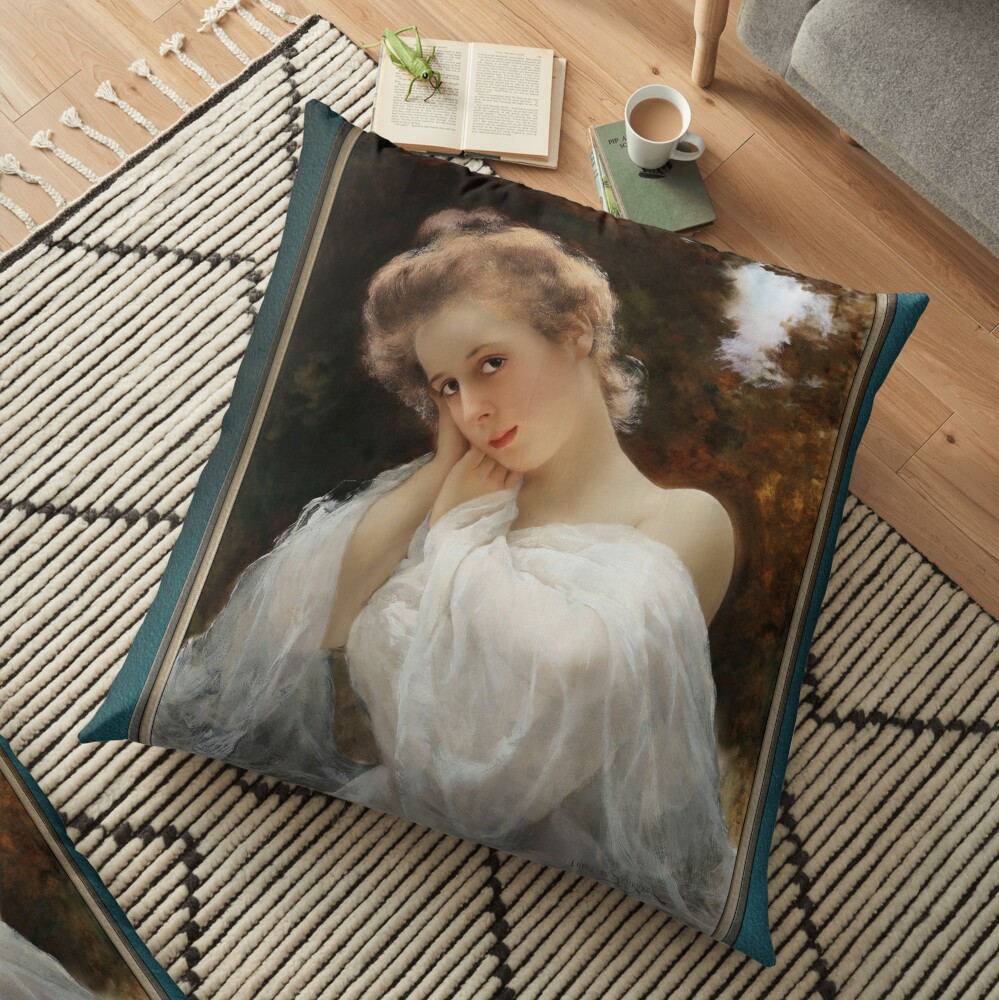
“夢想家” is a painting created by the French artist Louis Marie de Schryver, a renowned painter from the late 19th and early 20th century. Completed during the late 1800s or early 1900s, this masterpiece exemplifies de Schryver’s exquisite mastery of capturing the feminine form, as well as his finesse in conveying emotions through delicate color palettes and brushwork. アーティスト, 生まれ 1862 そして渡されます 1942, specialized in portraying beautiful women with soft, ethereal qualities, often enveloped in luxurious settings. この特定の作業で, de Schryver imbues a serene yet intimate mood through the portrayal of a young woman, who gazes gently outward, wrapped in an almost dreamlike state.
目次
主題: 夢想家
At the heart of the composition lies the subject of “夢想家,” a graceful 若い女性 exuding a quiet sense of reverie. Her expression is soft and contemplative, as if lost in a moment of personal introspection or dreaming. The pose she assumes is elegant, with one hand placed thoughtfully near her cheek, which accentuates her delicate features. The gaze, while directed slightly to the side, appears distant, almost as though the figure is absorbed in her own thoughts. Her tousled, soft hair, with its gentle waves, is light and airy, contributing to the gentle aura of innocence and femininity that the artist carefully constructs.
The subject is dressed in a flowing white garment that blends with the soft hues surrounding her, almost as if she is part of the ethereal landscape. The sheer fabric appears almost translucent, catching the light in ways that reveal the artist’s skill in portraying delicate textures and depth. The color choices enhance the dreamlike quality of the piece, as the white fabric contrasts with the darker tones of the background, which remains soft, but distant. The simplicity of her attire and serene expression directs the viewer’s attention solely to her, creating a powerful connection between the subject and the audience.
背景と地形
The background of the painting is subtle yet integral to the overall mood. Dark tones of brown and ochre wash over the upper corners, framing the figure. The gradation of colors creates a sense of depth, leading the viewer’s eyes towards the dreamer. Small touches of lighter, almost ethereal highlights suggest a vague landscape, perhaps an indistinct garden or natural setting, but the focus remains on the figure rather than the environment. These details evoke an ambiance that feels suspended in time—unfamiliar yet comforting.
The background’s smooth blending of colors reflects the softness and timelessness that de Schryver often infused into his works. There is a sense of quietude in the scene, where natural elements seem to fade into an otherworldly atmosphere. By avoiding distinct terrain or objects, the artist isolates the figure, allowing the dreamer to remain the central focus of the composition, unaffected by any external environment.
素材とスタイル
Louis Marie de Schryver’s approach to materials is evident in the texture and fluidity of his work. Known for his mastery in oil painting, de Schryver uses layers of pigment to create a soft and rich appearance, showcasing his meticulous attention to detail. The brushstrokes in “夢想家” are smooth and refined, characteristic of the artist’s style that aimed to mimic the elegance and delicate nature of the human form. ソフト, almost velvety application of paint adds to the illusion of lightness and airiness that pervades the piece.
The style itself draws upon the academic realism of the late 19th century, but it is imbued with a sense of romanticism. De Schryver does not merely depict a woman but rather presents her as an idealized vision of feminine beauty. This approach is in line with the ideals of the French Salon painting tradition, ここで美しさ, 恵み, and refinement were paramount. まだ, there is also a subtle abstraction in the work that allows the viewer to project their own interpretations, making the artwork transcend any one specific period or style.
The choice of using predominantly soft tones—beiges, 白人, and muted golds—against the darkened backdrop creates a gentle contrast that emphasizes the lightness of the figure while maintaining the softness of the scene. De Schryver’s ability to create fluidity between the subject and its surroundings is evident, as the figure and background merge seamlessly, suggesting the dreamlike quality of the painting.
アートワークのテーマとムード
のテーマ “夢想家” is one of introspection, 女性らしさ, そして繊細な美しさ. The painting seems to invite the viewer into a moment of calm reverie, where the boundaries between reality and dream blur. 主題, wrapped in soft, light fabrics, could represent an idealized vision of womanhood or simply the quiet introspection that the artist wished to convey. The air of delicacy and fragility in the composition speaks to the vulnerability of the subject, drawing on themes of youth and purity.
The overall mood of the painting is one of quiet serenity. There is no overt emotion in the subject’s expression, but the subtlety of her demeanor suggests a peaceful contemplation, a calmness that pervades the entire composition. ソフト, muted tones—paired with the grace of the figure—imbue the piece with a timeless elegance. The stillness of the woman’s pose contrasts with the flowing movement of the fabric, creating a harmonious tension between the static and the dynamic elements.
The dreamlike quality in this piece suggests the artist’s romantic view of femininity, presenting the woman as both a figure of beauty and an enigmatic presence. This ethereal representation aligns with the ideals of the time, where the ideal woman was often depicted as elusive and unattainable, existing in a world of soft light and undisturbed solitude.
結論
に “夢想家,” Louis Marie de Schryver has created a poignant and elegant depiction of feminine beauty and tranquility. Through his delicate brushwork and mastery of color, he presents a vision of a young woman enveloped in a moment of quiet reverie. The muted tones, 流れる生地, and gentle composition invite the viewer to reflect on the peaceful and idealized nature of the figure, while the absence of any definitive background allows for a timeless interpretation. この絵, while rooted in the academic traditions of the late 19th century, transcends its era to become a universal expression of beauty, 恵み, および内省.
これは、リマスターされたデジタルアートのオールドマスターであり、パブリックドメインの画像を複製したものです。 キャンバスプリントオンライン.
アーティスト略歴の由来 Rehs.com
ルイはパリで生まれました, 10月のフランス 12, 1862 著名なジャーナリストに, 幼い頃から芸術に興味を持ち、独学で絵の描き方を学び始めました。.
彼はとても才能があったので、その年齢までに 13 彼は静物画「デイジー、菊、スミレ、春の花」を展示しました。 1876 パリサロン.
翌年、彼はフランスの静物画と風俗画家のフィリップ・ルソーに師事し始めました。 (1816 – 1887), にも出展しました 1877 パリサロン.
に 1880 歳の時に 17 シドニー万国博覧会で「リラ」というタイトルの絵が銅メダルを獲得した.
次の6年間、彼は静物画、風俗画、肖像画を毎年開催されるサロンに出品し続けました。; そしてによって 1886 彼はパリの日常生活に焦点を当てていた, そして、当時の上流社会の人物の肖像画を描く依頼を受け始めました。.
に 1891 彼はパリのサロンで絵画『夢の終わり』を展示した, それにより彼は銅メダルを獲得した; そしてそして 1900 彼は万国博覧会に出展した, 金メダルを獲得する.
この時期、ルイはベル・エポックの時代から関心を移しました。 (1871 – 1880 そして 1914 第一次世界大戦の勃発), 肖像画を描いたり、シルクやサテンの衣装を着た昔の優雅な男女を描いた衣装画を描いたりすることまで。.