

Cwymp Phaeton
Cwymp Phaeton C1604 gan yr arlunydd Fflandrys Peter Paul Rubens (1577 – 1640); yn cael ei ystyried yn un o artistiaid mwyaf dylanwadol y Traddodiad Baróc Ffleminaidd ac roedd hefyd yn beintiwr Cyfnod y Dadeni.
Mae Cwymp Phaeton yn stori am fab y Duw Haul Helios sy'n cael y dymuniad i farchogaeth Helios Chariot Ar Draws yr Awyr fel prawf ei fod yn dad i Phaeton; ymdrech na fyddai hyd yn oed Zeus yn ei cheisio.
Mae hyn wrth gwrs yn arwain at broblemau gan na all y dyn ifanc reoli'r pedwar ceffyl (Aethon, Eos, Phlegon a Pyrois) sy'n gyrru'r cerbyd a Phaeton yn dechrau difrodi'r ddaear trwy ei rewi ac yna ei losgi, creu'r Anialwch Nubian yn ogystal â sychu llynnoedd ac afonydd.
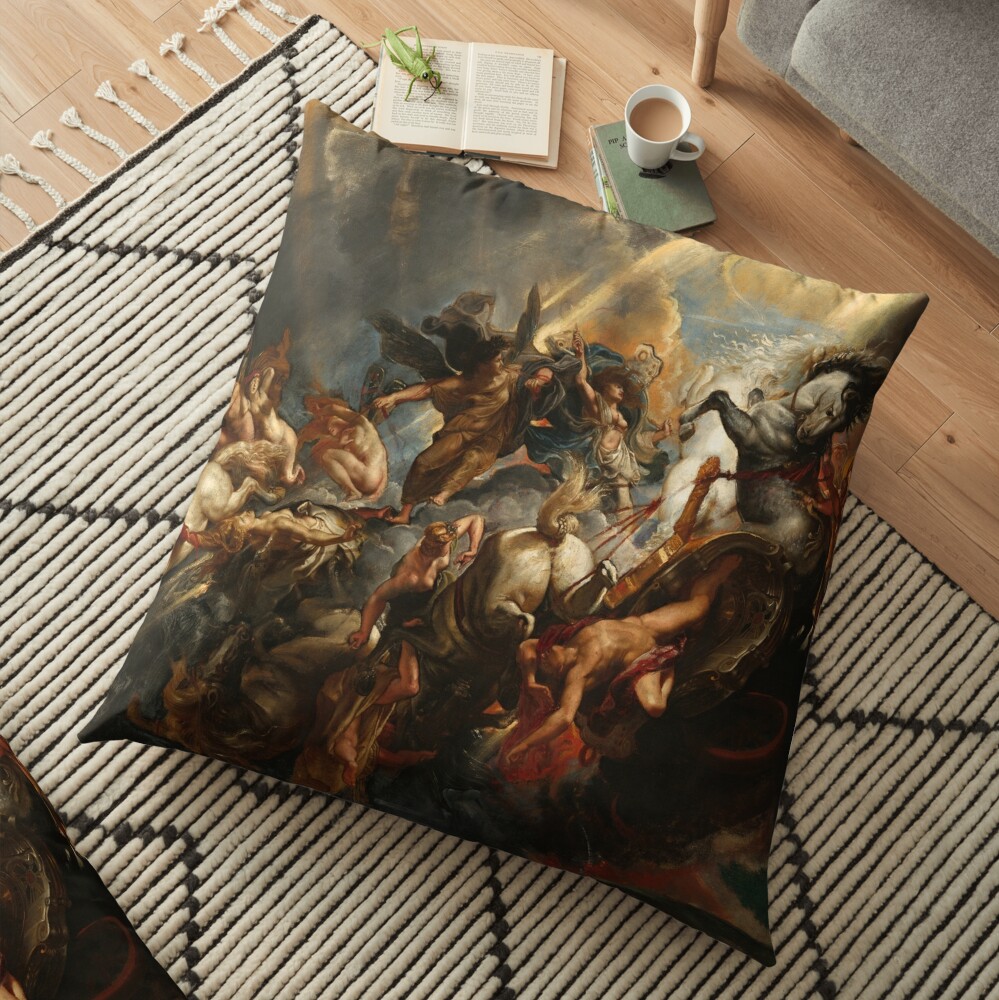
Zeus wrth weld hyn, penderfynu rhoi terfyn ar ddianc Phaetons a rhyddhau bollt mellt sy'n taro Phaeton gan anfon ei gorff difywyd yn plymio i'r ddaear ac yn gorffen yn Afon Eriadanos.
Mae The Fall of Phaeton yn atgynhyrchiad celf ddigidol wedi'i atgyffwrdd o ddelwedd parth cyhoeddus sydd ar gael ar-lein fel print cynfas.
Isod Gwybodaeth O Wikipedia.org
Syr Peter Paul Rubens (Mehefin 28, 1577 – Mai 30, 1640) Roedd yn arlunydd Ffleminaidd ac yn ddiplomydd o Ddugiaeth Brabant yn Ne'r Iseldiroedd (Gwlad Belg heddiw).
Ystyrir ef yn arlunydd mwyaf dylanwadol y traddodiad Baróc Fflemaidd. Mae cyfansoddiadau gwefreiddiol Rubens yn cyfeirio at agweddau gwallgof ar hanes clasurol a Christnogol. Roedd ei arddull Baróc unigryw a hynod boblogaidd yn pwysleisio symudiad, lliw, a synwyrusrwydd, a ddilynodd yn syth, arddull artistig dramatig a hyrwyddwyd yn y Gwrth-ddiwygiad.
Peintiwr oedd Rubens yn cynhyrchu darnau allor, portreadau, tirweddau, a phaentiadau hanes o mytholegol a phynciau alegorïaidd. Roedd hefyd yn ddylunydd toreithiog o gartwnau ar gyfer y gweithdai tapestri Ffleminaidd ac o flaenddarluniau i'r cyhoeddwyr yn Antwerp..
Yn ogystal â chynnal gweithdy mawr yn Antwerp a gynhyrchodd baentiadau a oedd yn boblogaidd gan uchelwyr a chasglwyr celf ledled Ewrop, Ysgolhaig a diplomydd dyneiddiol a addysgwyd yn glasurol oedd Rubens a gafodd ei urddo'n farchog gan Philip IV o Sbaen a Siarl I o Loegr. Roedd Rubens yn arlunydd toreithiog. Mae'r catalog o'i weithiau gan Michael Jaffé yn rhestru 1,403 darnau, ac eithrio copïau niferus a wnaed yn ei weithdy.
Paentiadau hanes oedd ei weithiau comisiwn yn bennaf, oedd yn cynnwys pynciau crefyddol a mytholegol, a golygfeydd hela. Peintiodd bortreadau, yn enwedig o ffrindiau, a hunanbortreadau, ac yn ddiweddarach mewn bywyd peintio sawl tirwedd. Dyluniodd Rubens dapestrïau a phrintiau, yn ogystal â'i dŷ ei hun.
Goruchwyliodd hefyd addurniadau byrhoedlog y mynediad brenhinol i Antwerp gan y Cardinal-Infante Ferdinand o Awstria yn 1635. Ysgrifennodd lyfr gyda darluniau o'r palasau yn Genoa, a gyhoeddwyd yn 1622 fel Palasau Genoa. Bu'r llyfr yn ddylanwadol wrth ledaenu arddull palas Genoese yng Ngogledd Ewrop.
Roedd Rubens yn gasglwr celf brwd ac roedd ganddo un o'r casgliadau celf a llyfrau mwyaf yn Antwerp. Roedd hefyd yn werthwr celf a gwyddys iddo werthu nifer bwysig o wrthrychau celf i George Villiers, 1Sant Dug Buckingham.
Ef oedd un o'r artistiaid mawr olaf i wneud defnydd cyson o baneli pren fel cyfrwng cynnal, hyd yn oed ar gyfer gweithiau mawr iawn, ond defnyddiai gynfas hefyd, yn enwedig pan oedd angen anfon y gwaith yn bell. Ar gyfer darnau allor byddai weithiau'n peintio ar lechen i leihau problemau adlewyrchiad.