

The Flower Seller
Léon François Comerre’s artwork titled The Flower Seller, created between the late 19th and early 20th century, stands as a magnificent example of academic realism and the fascination with delicate femininity in art. Léon François Comerre, nato in 1850 e morire 1916, was an acclaimed French artist who skillfully captured the essence of everyday life with an elevated sense of grace and charm. This work is a perfect representation of his style, with its depiction of a serene young woman engaged in the simple yet poignant act of flower selling.
Sommario
Argomento principale: The Young Flower Seller
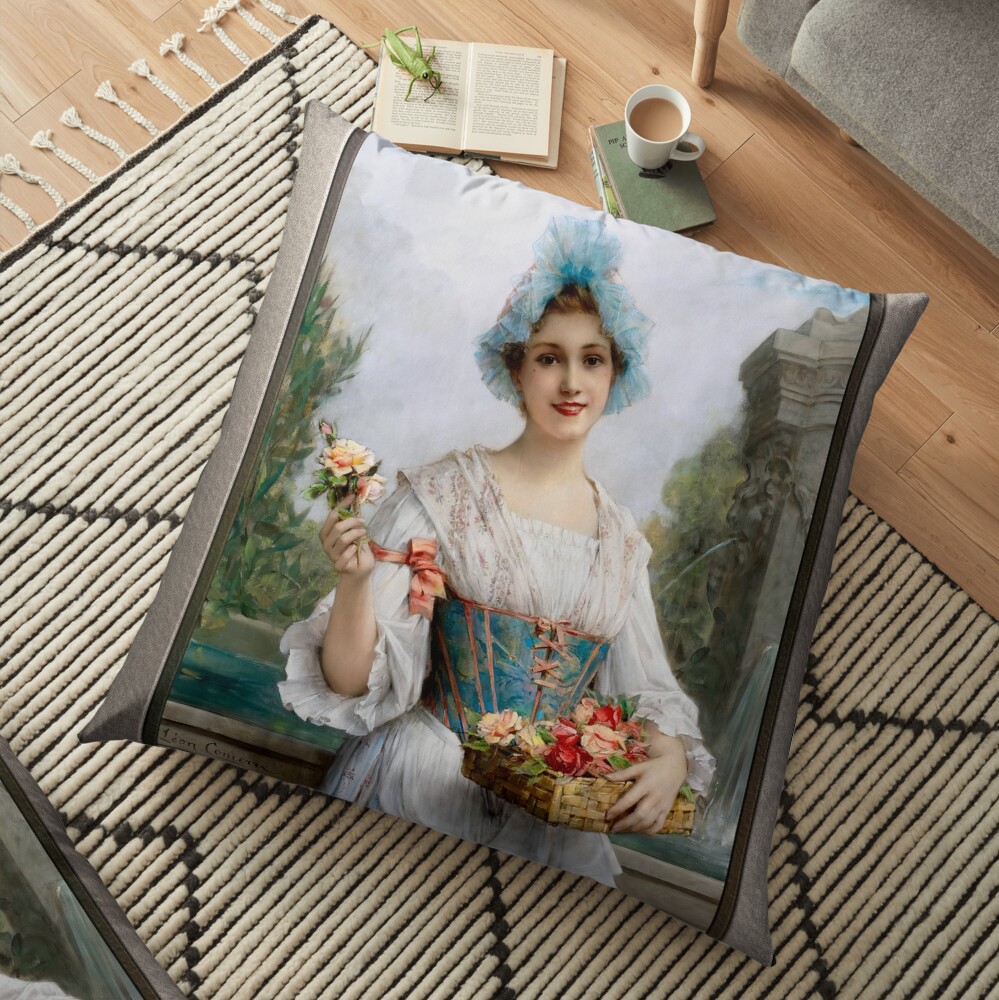
At the heart of the painting is a young woman, who stands poised and gentle, her youthful expression radiating an air of innocence and joy. Her posture is relaxed yet elegant, a classic representation of feminine grace. The woman is dressed in an ensemble that is suggestive of a simple, rural or village life, though the details of her attire also speak to the painter’s attention to fashionable femininity of the time.
The woman wears a light, flowing white dress with soft pastel floral designs on the fabric, a piece that allows her natural beauty to shine through. A turquoise corset cinches her waist, adding a touch of color and highlighting her figure. Her attire is completed by a light blue bonnet that gently frames her face and adds a touch of softness to her overall appearance.
In one hand, she delicately holds a bouquet of roses, an important element within the narrative of the painting, symbolizing the freshness of life, bellezza, and the tender emotions associated with the selling of flowers. In her other hand, she carries a basket brimming with more roses, adding depth to the scene and suggesting her livelihood as a flower seller.
These roses, captured with vibrant detail and subtle shading, are rendered almost as lifelike as the young woman herself, a testament to the artist’s attention to detail and reverence for the natural world. The colors of the roses, a mix of soft pinks, rossi, e bianchi, further evoke the feeling of purity and delicate beauty.
Sfondo e terreno: A Gentle Garden Setting
Lo sfondo di The Flower Seller is equally as serene and harmonious as the subject. The setting is a lush garden or park, a peaceful environment that underscores the softness and tranquility of the moment. In lontananza, we see the suggestion of stone walls and fountains, elements of classical architecture that provide an elegant backdrop.
These elements suggest that the young woman is not in a rural countryside, but rather in a more cultivated, upper-class environment. The gentle curve of the garden’s green foliage frames the subject, drawing the viewer’s eye to her, while also enhancing the idyllic nature of the scene.
A fountain, barely visible to the right of the composition, adds a sense of movement to the otherwise calm and still atmosphere. The water in the fountain is captured as a gentle stream, falling in delicate, feathery arcs into the stone basin below. The presence of water, often symbolic of life and purity, reinforces the peaceful and refreshing tone of the piece. The soft sky above, painted in light, cloudy tones, further contributes to the serene and peaceful atmosphere, evoking a sense of stillness and quiet contemplation.
Style and Artistic Technique
Léon François Comerre’s work is deeply rooted in academic realism, where meticulous attention is paid to detail and composition, while also embracing romantic ideals. The artist’s use of fine brushstrokes to depict the textures of the woman’s clothing, the delicate petals of the roses, and the subtle nuances of the background, showcases his mastery of the technique. The use of light is also particularly noteworthy; it bathes the figure in a soft glow, emphasizing the beauty of the subject and the flowers she holds. This lighting, combined with the pale colors of the woman’s attire, creates a harmonious blend of tones that are soothing to the eye.
The work exemplifies the characteristic aesthetic of the Belle Époque period, which celebrated the beauty of nature and human form. The artist’s use of vibrant yet soft hues—particularly in the skin tones of the young woman and the roses she holds—imbues the painting with a warmth that radiates both innocence and refinement. The portrayal of the flowers as nearly tangible objects adds a layer of realism that draws the viewer into the painting’s world. Each petal, each leaf, is carefully delineated, inviting closer inspection, while the overall composition is harmoniously balanced and pleasing to the eye.
Umore e tema
L'umore di The Flower Seller is one of quiet beauty and subtle elegance. La giovane donna, with her soft smile and gentle gaze, evokes a sense of serenity and calmness, while the act of selling flowers suggests a connection to the natural world and to simple, everyday life. There is no indication of hardship or drama in the scene; Piuttosto, the viewer is invited to enjoy the peaceful moment alongside the subject. The bouquet of roses, the natural setting, and the young woman’s graceful demeanor combine to create a theme of timeless beauty, untouched by the complexities of the world beyond the garden walls.
The theme of femininity and beauty is central to this work. The flower seller is not just a simple vendor but a symbol of youthful beauty and purity, as represented by the flowers she holds. Flowers themselves have long been symbols of beauty, amore, e innocenza, and by placing them in the hands of the young woman, Comerre elevates the subject, giving her an almost ethereal quality. There is an implied connection between the woman and the flowers she sells, as if she too, like the blooms, is part of nature’s cycle of growth and renewal.
Conclusione
The Flower Seller by Léon François Comerre is a quintessential work of late 19th-century French academic realism, dove la bellezza, adornare, and nature are intertwined in a visual harmony that speaks to the viewer’s emotions. Through meticulous detail, the artist captures a moment of timeless femininity, portraying a young woman in the act of selling flowers in a tranquil garden setting. The painting’s soft colors, pennellata delicata, and serene mood invite the viewer into a world of grace and elegance, making it a masterpiece of its genre and an enduring example of the artist’s skill and vision.
Questa è una riproduzione di vecchi maestri di arte digitale ritoccata di un'immagine di dominio pubblico disponibile online come a stampa su tela.
Biografia dell'artista
Informazioni sotto da Wikipedia.org
Léon was born in Trélon, nel Dipartimento del Nord, il figlio di una maestra. Si è trasferito a Lille con la sua famiglia 1853. Fin da piccolo mostrò interesse per l'arte e divenne allievo di Alphonse Colas all'École des Beaux-Arts di Lille, vincere una medaglia d'oro in 1867.
A partire dal 1868 una borsa di studio del Département du Nord gli ha permesso di continuare i suoi studi a Parigi presso la famosa École Nationale Supérieure des Beaux-Arts nello studio di Alexandre Cabanel. Lì cadde sotto l'influenza dell'orientalismo.
Léon first exhibited at the Paris Salon in 1871 e ha continuato a vincere premi lì dentro 1875 e 1881. Nel 1875, ha vinto il Grand Prix de Rome per la sua pittura “L'angelo che annuncia la nascita di Cristo ai pastori” (L'Angelo che annuncia la nascita di Cristo ai pastori).
Ciò ha portato a una borsa di studio presso l'Accademia di Francia a Roma da gennaio 1876 a dicembre 1879. Nel 1885 ha vinto un premio al “Esposizione Mondiale” ad Anversa. Ha anche vinto prestigiosi premi d'arte negli Stati Uniti (1876) e Australia (1881 e 1897). Divenne Cavaliere della Legion d'Onore nel 1903.
Espone a Londra presso la Royal Academy e la Royal Society of Portrait Painters, ea Glasgow al Glasgow Institute of the Fine Arts.