

O Cisne Inocente (O cisne; Inocência)
“O Cisne Inocente (O cisne; Inocência)” is a remarkable work created by Elisabeth Sonrel (1874 – 1953), no 1905, encapsulating the graceful and serene qualities associated with the Symbolist movement that defined much of the late 19th and early 20th centuries. Nasceu em 1874 e falecendo em 1953, Sonrel was a French artist whose works often blended the ethereal and the earthly, producing dreamlike scenes that were deeply influenced by mythology and the natural world. This specific piece, infused with both tranquility and delicate beauty, perfectly exemplifies Sonrel’s ability to combine the elegance of natural forms with symbolic richness.
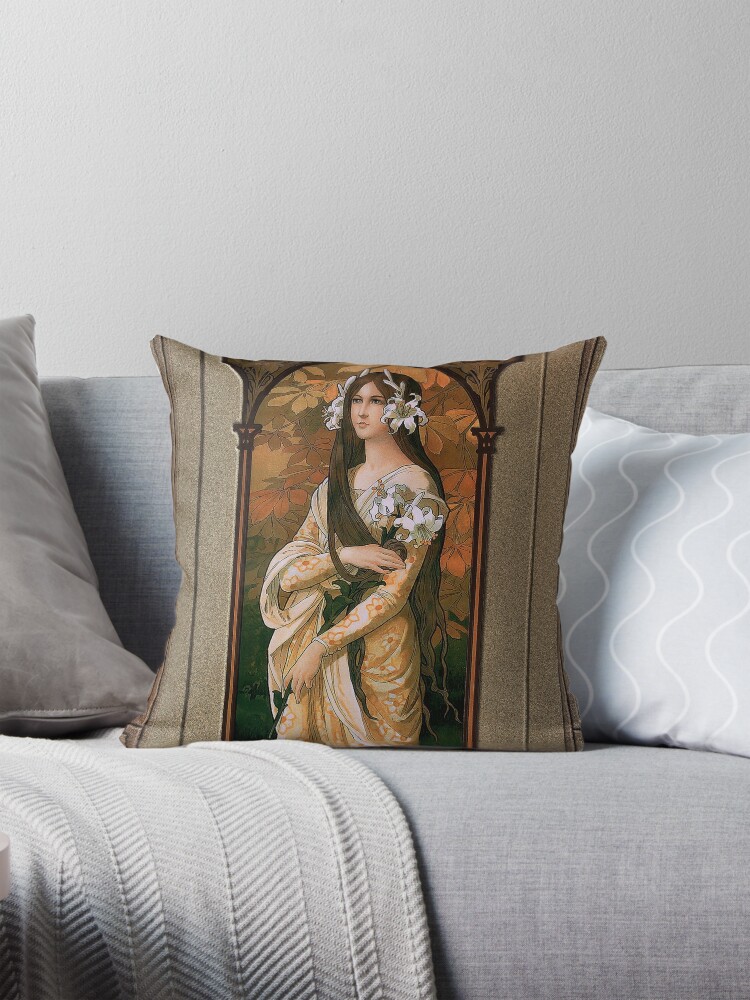
The central figure of the painting is a young woman dressed in an opulent yellow gown adorned with soft floral patterns. Her long brown hair cascades past her shoulders, entwined with white lilies that give her a pure and almost mystical appearance. She stands in a calm, poised stance with a swan at her feet, symbolizing the innocence and grace attributed to both the bird and the figure she represents. The soft rendering of her face, with an expression of contemplation, invites the viewer to ponder her thoughts while gazing upon the tranquil setting that surrounds her.
Índice
Composition and Surroundings
The composition of the painting is characterized by a harmonious blend of the natural and the human, with the figure of the woman placed in a vertical format that emphasizes the elongated style of the subject. She is situated against a lush, verdant background, where delicate autumn leaves in shades of orange, ouro, and green suggest the time of year and create a backdrop that contrasts beautifully with the pale, luminous gown she wears. The subtle inclusion of the swan further elevates the symbolic aspect of the work, as swans are traditionally linked with themes of purity, inocência, e beleza, reinforcing the title of the piece.
The swan, which rests at the woman’s feet, seems to mirror her own graceful posture. Its neck curves delicately, almost as if echoing the lines of her figure. This visual connection between the human and the bird further deepens the symbolism of the painting, suggesting a harmonious relationship between humanity and nature. The swan’s white feathers reflect the woman’s innocence, offering a serene presence that balances the vibrancy of the autumn leaves in the background.
Color Palette and Technique
Sonrel’s use of color is one of the most striking aspects of the painting. The soft pastel tones of the yellow gown are balanced by the earthier tones of the foliage behind the figure, creating a warm and inviting ambiance. The yellows, ouro, and subtle greens of the dress blend with the oranges and reds of the autumn leaves, evoking a sense of calm serenity that is further reflected in the softness of the background. The subdued hues work together to draw attention to the figure of the woman, allowing her to remain the focal point of the piece.
The technique employed by Sonrel showcases her skill in using soft brushstrokes and a gentle application of light and shadow. A pincelada, embora preciso, retains an air of fluidity that enhances the overall delicacy of the scene. There is an almost translucent quality to the woman’s skin, suggesting her ethereal nature, while the details in the gown, flores, and leaves are rendered with a subtle yet deliberate attention to texture and form. This blending of realism with a dreamy, almost otherworldly quality is characteristic of Sonrel’s approach to painting.
Symbolism and Meaning
The swan in “O Cisne Inocente” is not just a decorative element, but rather a powerful symbol. In various cultures, the swan is associated with purity, transformation, e o divino. In Greek mythology, por exemplo, swans were often connected to gods and goddesses, embodying both grace and the higher realms of beauty. Aqui, the swan’s purity is reflected in the figure of the young woman, who is portrayed with an expression of innocence and calm. The lily flowers, which intertwine with her hair, further reinforce this symbolism of purity and innocence.
The combination of the woman’s serene posture, the swan’s graceful presence, and the natural elements around them creates a timeless scene of tranquility, emphasizing the connection between humanity and nature. The autumnal setting could be seen as a representation of the fleeting nature of innocence and beauty, reminding the viewer of the transient moments in life. The gentle curve of the woman’s figure and the soft tones of the piece give the painting a nostalgic quality, evoking a sense of longing for a simpler, purer time.
Style and Artistic Influence
“O Cisne Inocente” is a prime example of the Symbolist style, which was marked by an emphasis on emotions, the imagination, and an exploration of the mystical and metaphysical realms. Sonrel’s work is deeply embedded in this tradition, capturing moments that evoke a sense of reverie and contemplation. As linhas finas, atenção aos detalhes, and use of symbolic imagery also tie her work to the Art Nouveau movement, which was flourishing in France during her time. The floral motifs, linhas fluidas, and organic forms in the painting align it with the decorative and ornamental elements that defined Art Nouveau.
In terms of mood, the painting exudes a quiet, peaceful atmosphere, filled with an air of timeless grace. The subject’s expression, the soft light, and the harmonious relationship between the figure and the swan all contribute to a sense of calm and purity. It is a work that encourages the viewer to pause, to appreciate the subtle beauty of the scene, and to reflect on the deeper symbolism that lies beneath the surface.
Conclusão
Dentro “O Cisne Inocente (O cisne; Inocência),” Élisabeth Sonrel captures the delicate beauty of innocence through the portrayal of a young woman in a serene, dreamlike setting. The careful composition, combined with the symbolic imagery of the swan and the soft palette, creates a work that is both visually captivating and emotionally resonant. Through her meticulous rendering of natural forms and the symbolic interplay between the human and the animal, Sonrel invites the viewer into a world of tranquil reverie, where innocence, pureza, and beauty are forever preserved in time.
O Cisne Inocente (O cisne; Inocência) por pintor francês Elisabeth Sonrel (1874 – 1953); e ilustrador do estilo Art Nouveau; cujas obras incluíam temas alegóricos, misticismo e simbolismo, retratos e paisagens.
The Innocent Swan é uma reprodução retocada dos antigos mestres de arte digital de uma imagem de domínio público.
Esta criação de arte digital, assim como todas as obras de arte que podem ser encontradas no site do Xzendor7 estão disponíveis para compra on-line em uma variedade de formatos de materiais, incluindo impressões em tela, impressões acrílicas, estampas de metal, gravuras de madeira, impressões emolduradas, cartazes, e como impressões em tela enrolada em vários tamanhos, desde 12 polegadas para 72 polegadas, dependendo do tamanho da obra de arte real e da loja de impressão sob demanda em que você escolher comprar a arte.
A arte também está disponível em uma ampla variedade de roupas masculinas e femininas, canecas, bolsas, lenços, cadernos e diários e muitos produtos de decoração para casa.
Biografia do artista
Informações abaixo cortesia Wikipedia.org
Elisabeth Sonrel (1874 Passeios - 1953 Focas) foi um pintor e ilustrador francês no estilo Art Nouveau. Suas obras incluíam temas alegóricos, misticismo e simbolismo, retratos e paisagens.
Ela era filha de Nicolas Stéphane Sonrel, um pintor de Tours, e recebeu seu treinamento inicial dele. Para estudar mais, ela foi para Paris como aluna de Jules Lefebvre na Ecole des Beaux-Arts.
Dentro 1892 ela pintou seu trabalho de diploma, ‘Pax et Labor’, uma obra para ser vista no Musée des Beaux-Arts de Tours. A partir de então, ela expôs no Salon des Artistes Français entre 1893 e 1941, suas peças características são grandes aquarelas à maneira pré-rafaelita, que ela adotou após uma viagem a Florença e Roma, descobrindo os pintores da Renascença – alguns de seus trabalhos têm implicações claras de Botticelli. Suas pinturas costumavam ser inspiradas no romance arturiano, A Divina Comédia de Dante Alighieri’ e 'The New Life', temas bíblicos, e lendas medievais. Suas obras místicas incluem ‘Ames errantes’ (Salão de 1894) e ‘Espíritos do Abismo’ (Salão de 1899) e "Mulher jovem com a tapeçaria".
Na Exposição Universelle de 1900, cujo tema principal era Art Nouveau, sua 1895 pintura 'O Sono da Virgem’ (Sono da virgem), foi premiado com uma medalha de bronze, e o prêmio Henri Lehmann de 3000 francos pela Academia de Belas Artes.[3] A partir de 1900 em diante, ela limitou sua pintura a retratos, paisagens cênicas da Bretanha, e o estudo ocasional de flores.
Ela fazia viagens regulares para pintar a Bretanha, inspirado na floresta de Brocéliande, e de 1910 para vários lugares da costa, como Concarneau, Plougastel, Pont-l'Abbé e Loctudy, frequentemente hospedado em pousadas e acompanhado por um ou dois alunos. Ela pintou várias obras em Le Faouët antes de construir uma villa em La Baule na década de 1930. Trabalhando principalmente com aquarela e guache, ela descobriu uma grande quantidade de modelos entre as meninas da região, e descobriram que os bretões geralmente eram amigáveis, honesto e autoconfiante.
Sua última exposição no Salon foi em 1941 na idade de 67. Há também um registro de sua exposição em Liverpool. Em seus primeiros anos, Sonrel produzia pôsteres, postais e ilustrações, em estilo Art Nouveau.