

…
… (…) … (1791 – 1882); …. …, אלגוריות פוליטיות ודיוקנאות משובחים יוצאי דופן.
“ה Kiss” is a powerful and evocative painting by the renowned Italian artist Francesco Hayez, נוצר ב 1859. The artwork is a stunning example of Romanticism, a movement that was characterized by an emphasis on intense emotion, אינדיבידואליזם, והנשגב. Hayez’s portrayal of an intimate and passionate kiss between two figures is not just a romantic gesture but a deep, symbolic act reflecting the political and social turmoil of 19th-century Italy.
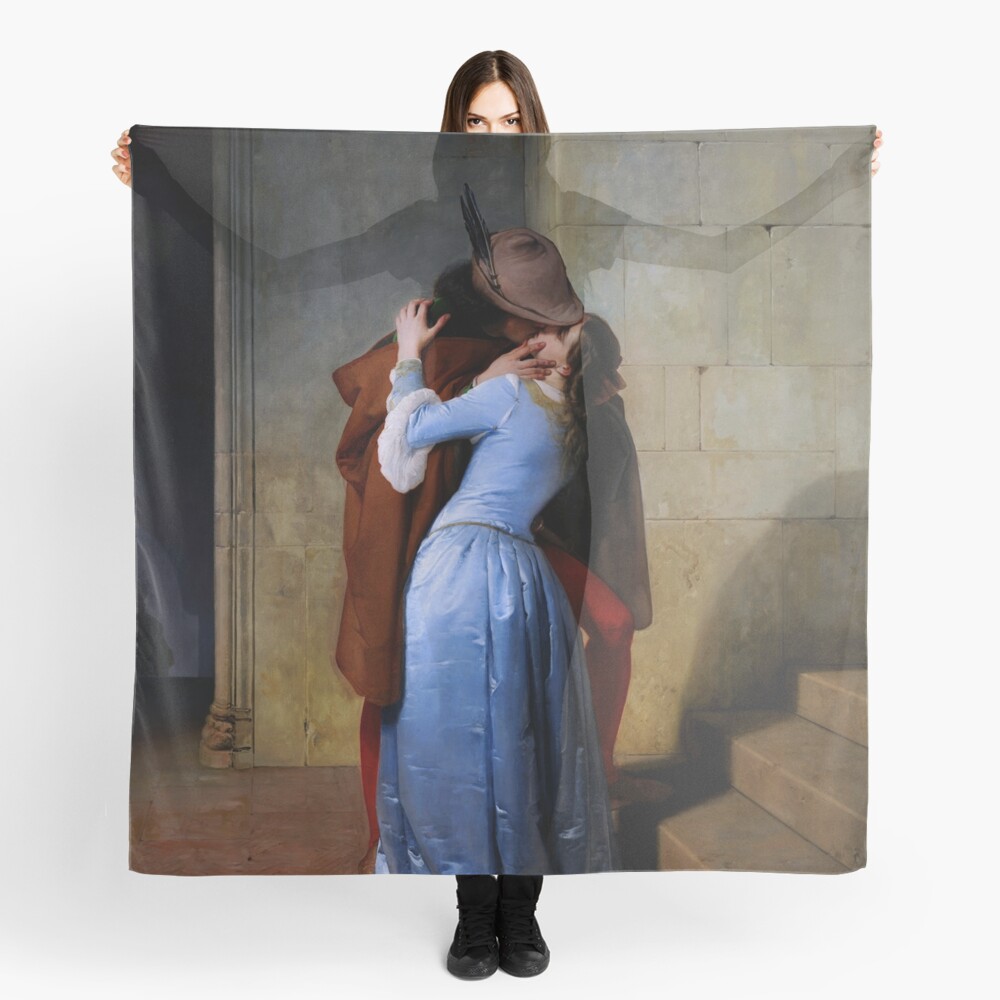
בקטע הזה, the central focus is the kiss shared between a man and a woman, each dressed in period-specific attire, their bodies entwined in a tender yet fervent embrace. The lovers’ פרצופים, captured at the moment of their kiss, convey an overwhelming sense of passion and longing. האיש, dressed in a reddish-brown cloak, holds the woman with one hand, while his other hand grips a green object, possibly symbolizing life or hope. His face is partially obscured by his hat, but the tension in his posture reveals both his deep affection for the woman and the sense of urgency that seems to pervade the scene.
האישה, clothed in a flowing blue gown, stands close to him, her body pressed against his in a stance that signifies emotional and physical closeness. הארוכה שלה, flowing hair is partially visible, her face bathed in the soft light that seems to emanate from the left, highlighting her delicate features. The deep emotional intensity in her expression, coupled with the almost sacred nature of the kiss, suggests that this moment is one of profound importance for both characters. The sensuality of the kiss is palpable, yet it is underscored by a sense of melancholy, as if this act of love must be performed in secrecy, or perhaps as a final farewell.
The setting of the artwork is crucial to understanding the deeper layers of its meaning. The scene takes place in an open, stone-walled interior, with towering, almost monolithic walls that loom over the lovers. These walls are not merely a backdrop but symbolize the oppression and constraints of the era, particularly in the context of Italy’s political situation. The rough, unfinished stone surfaces hint at a time of transition and struggle.
The archway in the background frames the lovers, emphasizing their isolation in the moment and their vulnerability to the outside world. The positioning of the couple in front of the stone walls may also allude to the notion of love as a fortress in a time of uncertainty or political strife, where their embrace provides a form of protection from the harsh reality beyond.
The colors in the painting are rich and symbolic. The warm tones of the man’s cloak contrast with the cooler blues and whites of the woman’s gown, signifying a balance between opposing forces—passion and purity, action and passivity. The use of light is also notable; the couple is illuminated from one side, casting shadows on their bodies and the environment around them. This creates a sense of intimacy and draws the viewer’s attention solely to the couple, ensuring that the emotional intensity of their embrace remains the focal point of the composition.
מבחינת חומרים, the painting is executed with oil on canvas, a traditional medium that allows Hayez to achieve a remarkable level of detail and depth in his figures and surroundings. The texture of the canvas is almost palpable, with the brushstrokes contributing to the tactile nature of the painting. The artist’s skillful manipulation of light and shadow gives the piece a three-dimensional quality, making it feel as though the viewer could step into the scene and experience the emotional weight of the kiss firsthand.
The overall theme of “…” is one of passion, defiance, וגעגוע. The moment captured is not simply a tender exchange between two lovers; it is an act of rebellion and a declaration of love against the backdrop of an oppressive society. At the time Hayez painted this work, Italy was undergoing significant political upheaval, as various regions were striving for unification and freedom from foreign domination.

The kiss, then, can be seen as a metaphor for the struggle for independence, with the lovers representing the spirit of resistance and the hope for a brighter, freer future. The kiss is not just an emotional act but a political statement, an expression of the deep desire for change that resonated with the people of Italy during the Romantic period.
The mood of the painting is complex and multi-layered. While it captures the intense passion of the lovers, it also evokes a sense of sorrow and longing. The lovers are caught in a moment of transcendence, but there is a sense that this moment is fleeting.
The raw emotion conveyed through their embrace suggests that their love is either forbidden or destined to end, making the act of kissing both a sweet and painful experience. The viewer is left to ponder whether the kiss signifies the beginning of a relationship, a final farewell, or a stolen moment in a turbulent world.
לסיכום, Francesco Hayez’s “…” is not just a beautiful depiction of love and romance; it is a rich, symbolic painting that speaks to the political, חֶברָתִי, and emotional climate of its time. The work’s exquisite use of light, צֶבַע, והרכב, combined with its deep thematic resonance, makes it a timeless masterpiece that continues to captivate viewers. It invites reflection on the nature of love, the power of passion, and the struggles that shape our world, all while celebrating the profound connection between two individuals caught in the midst of history.
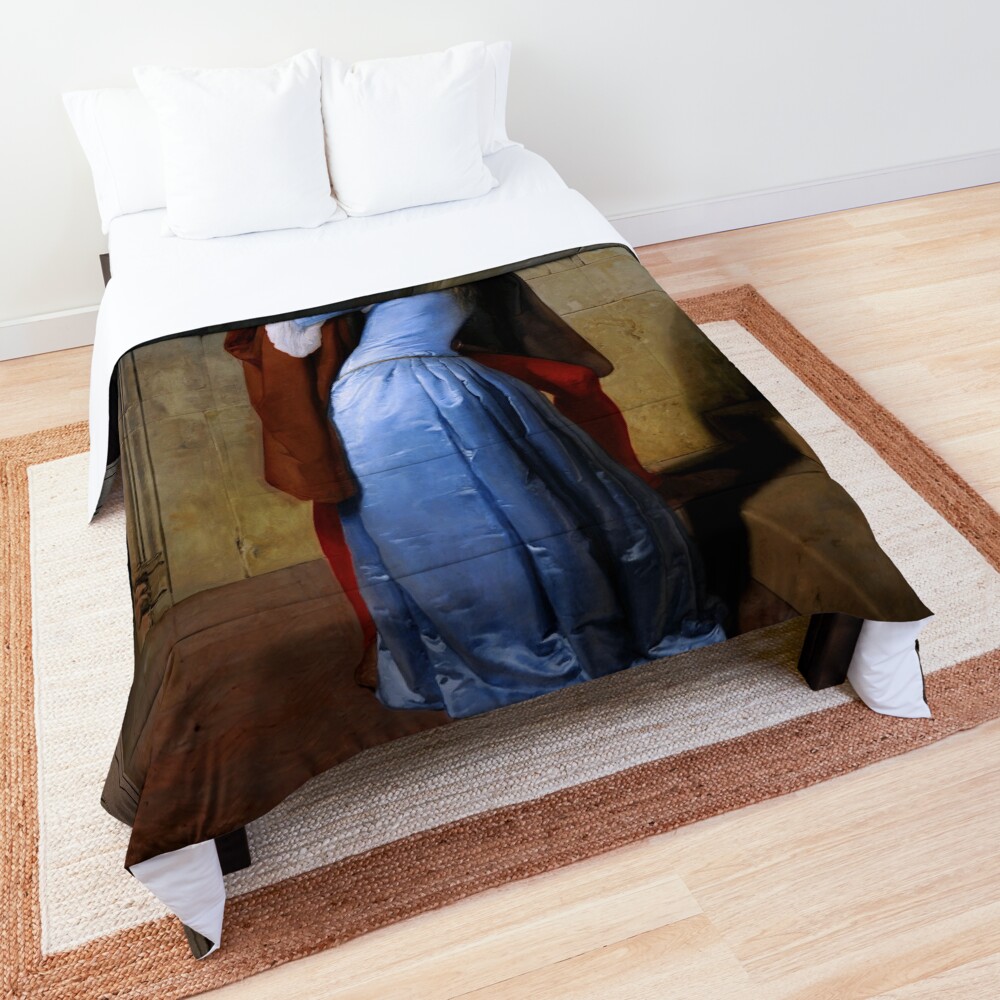
The Kiss is a retouched digital art old masters reproduction of a public domain image that is available as an acrylic, מַתֶכֶת, עץ, rolled and הדפסת קנבס באינטרנט.
מידע למטה מ Wikipedia.org
פרנצ'סקו הייז היה בן למשפחה ענייה יחסית מוונציה. אביו, ג'ובאני, היה ממוצא צרפתי בזמן שאמו, קיארה טורצ'לה, היה ממוראנו. פרנצ'סקו היה הצעיר מבין חמישה בנים.
הוא חונך על ידי אחותה של אמו, שנישאה לג'ובאני בינסקו, בעל אוניה ואספן אמנות אמיד. הייז הפגין נטייה לציור מילדות. דודו, לאחר שהבחין בכישרון הקדום שלו, למד אותו אצל משחזר אמנות בוונציה. הייז היה לימים תלמידו של הצייר פרנצ'סקו מג'וטו, אצלו המשיך את לימודיו במשך שלוש שנים.
הוא התקבל לקורס הציור של האקדמיה החדשה לאמנויות יפות בוונציה ב 1806, שם למד אצל תאודורו מטייני. ב 1809 הוא זכה בתחרות מהאקדמיה של ונציה לשנה אחת באקדמיה די סן לוקה ברומא.
הוא נשאר ברומא עד 1814, לאחר מכן עבר לנאפולי שם הוזמן על ידי יואכים מוראט לצייר יצירה מרכזית המתארת את יוליסס בחצר אלקינוס. באמצע שנות ה-30 הוא למד בסלון מאפי במילאנו, בהנחיית קלרה מאפי. בעלה של מאפי יזמין מאוחר יותר את הייז דיוקן של אשתו. ב 1850 הייז מונה למנהל האקדמיה בררה.
במהלך קריירה ארוכה, הייז התגלה כפורה במיוחד. תפוקתו כללה ציורים היסטוריים שנועדו לפנות לרגישות הפטריוטית של פטרוניו וכן יצירות המשקפות את הרצון ללוות סגנון ניאו-קלאסי לנושאים גדולים., או מהספרות המקראית או הקלאסית.
הוא גם צייר סצנות ממצגות תיאטרליות. נעדר באופן בולט מיצירתו, למרות זאת, הם מזבחים – אולי בגלל פלישות נפוליאון שחיללו כנסיות ומנזרים רבים בצפון איטליה. היסטוריון האמנות קוראדו ריצ'י תיאר את הייז כקלאסיקאי שהתפתח לאחר מכן לסגנון של מהומה רגשית. פרנצ'סקו הייז, … (1859)
לדיוקנאות שלו יש עוצמה של אינגרס ושל התנועה הנצרית. לעתים קרובות יושבים, הנושאים של הייז לבושים לעתים קרובות בקפידה, בגדים בשחור ולבן, עם מעט או בלי אבזור. ואילו הייז עשה דיוקנאות עבור האצולה, הוא גם חקר נושאים אחרים כמו עמיתים אמנים ומוזיקאים. בסוף הקריירה שלו, ידוע שהוא עבד באמצעות תצלומים.
אחד הנושאים האהובים על הייז היה אודליסק בלבוש למחצה, המעורר נושאים מזרחיים - נושא אהוב על ציירים רומנטיים.[3] התיאורים של ההרמונים והנשים שלהם אפשרו לאמנים את היכולת לצייר סצנות שאינן מקובלות בחברה אחרת. אפילו למרי מגדלנה של הייז יש יותר חושניות מאשר להט דתי.
ציורו של הייז "הנשיקה" נחשב בין יצירותיו הטובות ביותר על ידי בני דורו, והוא אולי המאמץ הידוע ביותר שלו. האנונימי, מחווה בלתי מושפעת של בני הזוג אינה דורשת ידע במיתוס או ספרות כדי לפרש, ופונה למבט מודרני.
הערכה מדעית של הקריירה של הייז הסתבכה בגלל הנטייה שלו לא לחתום או לצאת עם יצירותיו. לעתים קרובות תאריכים בציוריו מציינים מתי היצירה נרכשה או נמכרה, לא זמן יצירתו. יתר על כך, לעתים קרובות הוא צייר את אותן קומפוזיציות מספר פעמים עם וריאציות מינימליות אם בכלל.
בין תלמידיו מאקדמיית בררה היו קרלו בלגיוסו, Amanzio Cattaneo, אלסנדרו פוקוסי, ג'ובאני בטיסטה למפרטי, ליבו פקורה, אנג'לו פיאטרסנטה, אנטוניו שילה, קרלו אנטוניו טבלה, איסמאלה טגליו מילה ופרנצ'סקו ואלפרטה.
הייז מת במילאנו, גיל 91. הסטודיו שלו באקדמיית בררה מסומן בצלחת.