

O fabricante de rendas
The Lace Maker c1853 by Belgian Painter Josephus Laurentius Dyckmans (1811 – 1888); a genre and portrait painter of highly detailed scenes.
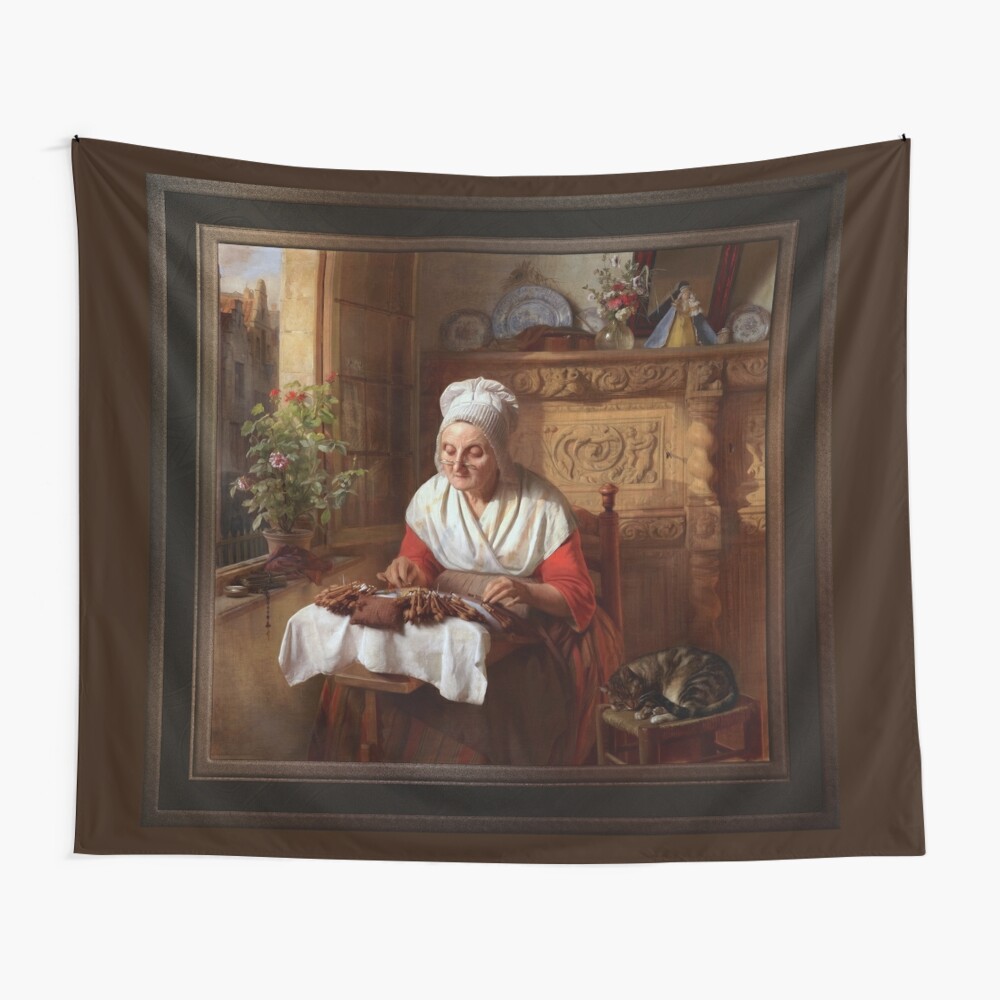
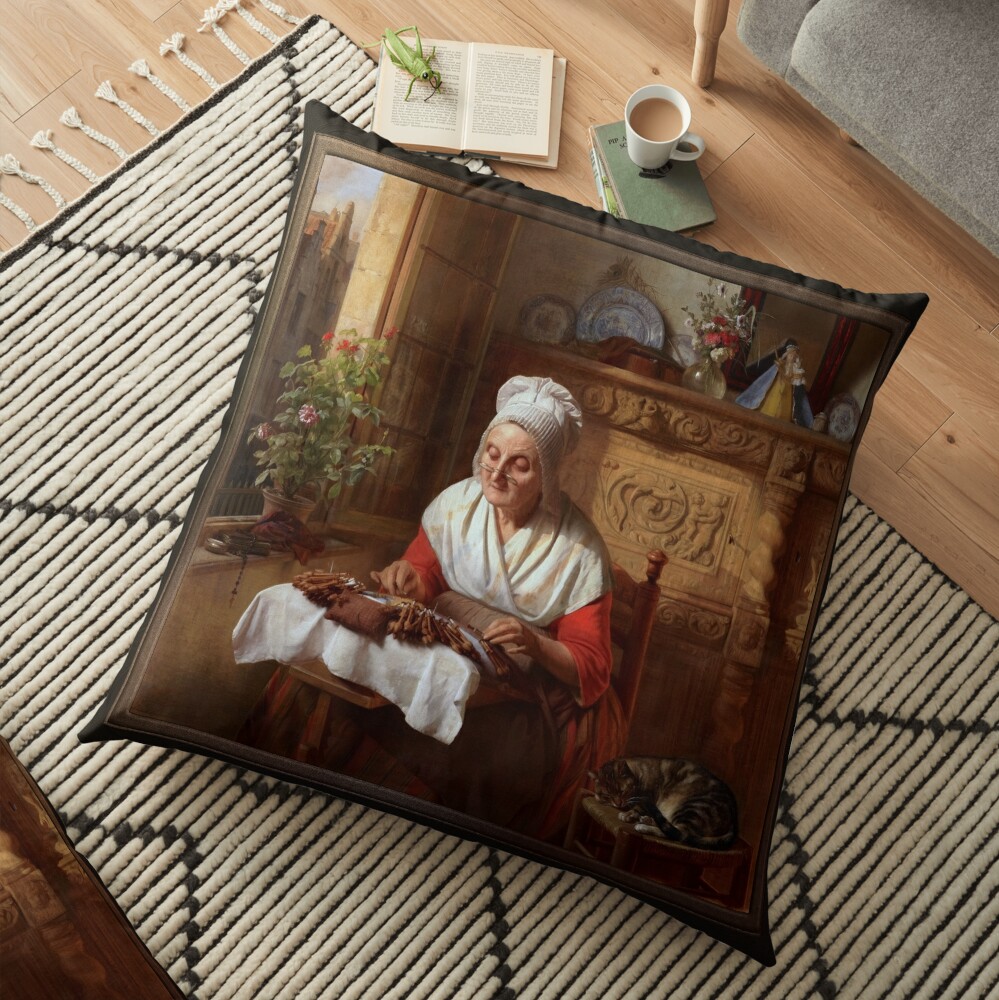
A beautifully painted classic image of an elderly woman in her home sitting in a chair by an open window working on an embroidery.
Beside her on the left is her cat sleeping on a stool; and on the right is an open pain glass window where we can see the architectural beauty of old buildings.
On the window shelf is a flower pot with blossoming flowers, a mini bowl, a bible that is wrapped with a rosary and what looks like a kerchief.
Behind her on the shelf of a cupboard is a large decorative plate and three smaller decorative plates as well as sowing box, a glass vase with a bouquet of flowers, a porcelain or ceramic doll, a small jar with a cover and double red border mirror that is reflecting the back of the doll.
Esta é uma reprodução de mestres antigos de arte digital retocada de uma imagem de domínio público que está disponível online como um impressão em tela enrolada.
Use the following link to watch the retouch video of O fabricante de rendas
Abaixo Informações Cortesia Wikipedia.org
Josephus was born in Lier a municipality that is located in the Belgian province of Antwerp; and it is here where he first received his artistic training from Belgian Painter Melchior Gommar Tieleman (1784 – 1864) of Lier.
At the start of his career he was a decorative painter in his native town; e como seus patronos locais reconheceram seus talentos artísticos, além de ganhar todos os principais prêmios da escola de desenho local; a prefeitura de Lier concedeu-lhe um subsídio que lhe permitiu continuar seus estudos na Academia de Belas Artes de Antuérpia aos 23.
Ele estudou na academia de 1835 para 1835 e também trabalhou na oficina do importante pintor romântico e histórico belga Gustaf Wappers (1803 – 1874); também conhecido como Egide Charles Gustave, Barão Wappers).
Dentro 1834 Josefo apresentou seu primeiro trabalho ao salão de Antuérpia em Lier, chamado Uma Confissão de Amor; que foi bem recebido e em 1836 ele apresentou sua peça Jogo de Damas que ganhou a Medalha de Prata no salão de Bruxelas.
Dentro 1838 sua sobrinha, o Mercado de Vegetais, foi bem recebido no Salão de Gante e dois anos depois em 1840 foi exibido em Antuérpia, e depois em Haia em 1841; com a peça recebendo Medalha de Prata.
Ele também expôs suas obras de arte na Royal Academy of Arts de Londres em 1846, 1860, 1863 e 1869; além de expor no 1867 Exposição Universal em Paris.