

Martyrdom St. Sebastian
Martyrdom St. Sebastian c1600-1604 by Dutch Engraver Jan Muller (1571 – 1628); a bharrachd air peantair bho Linn Òir na h-Òlaind.
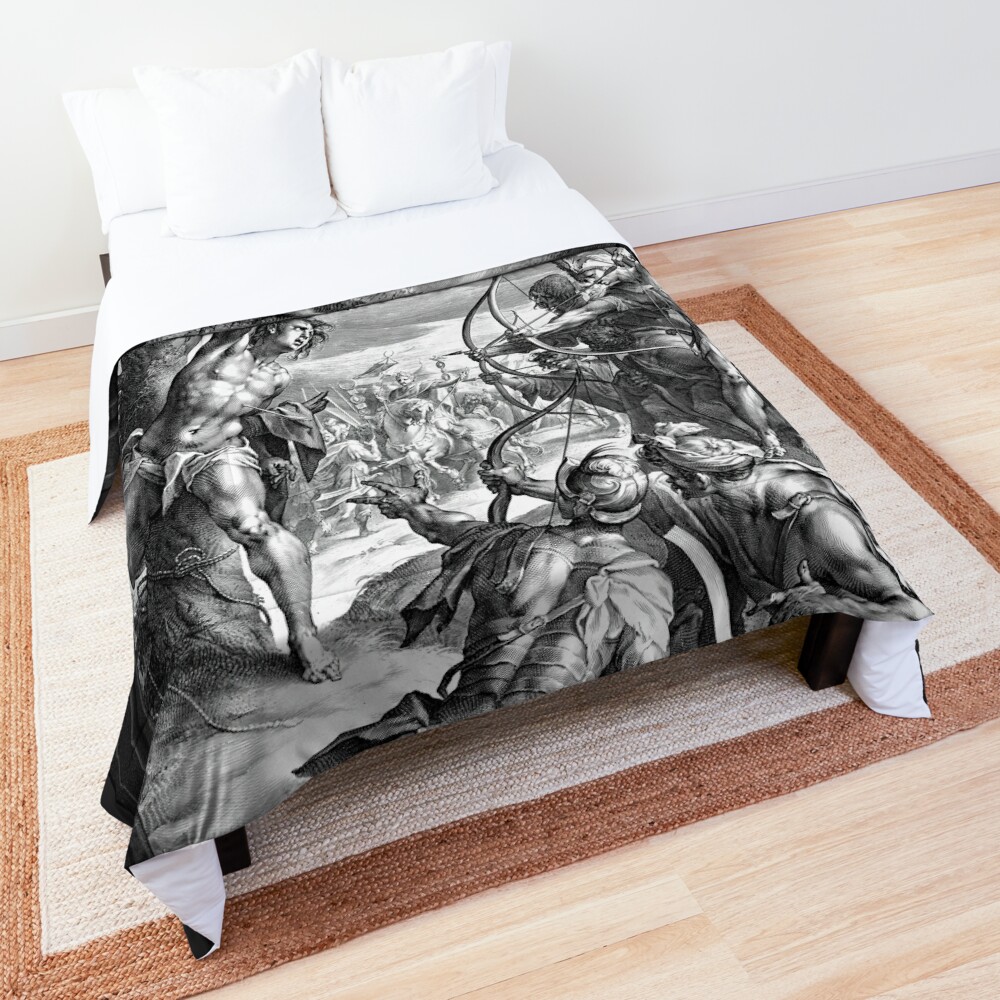
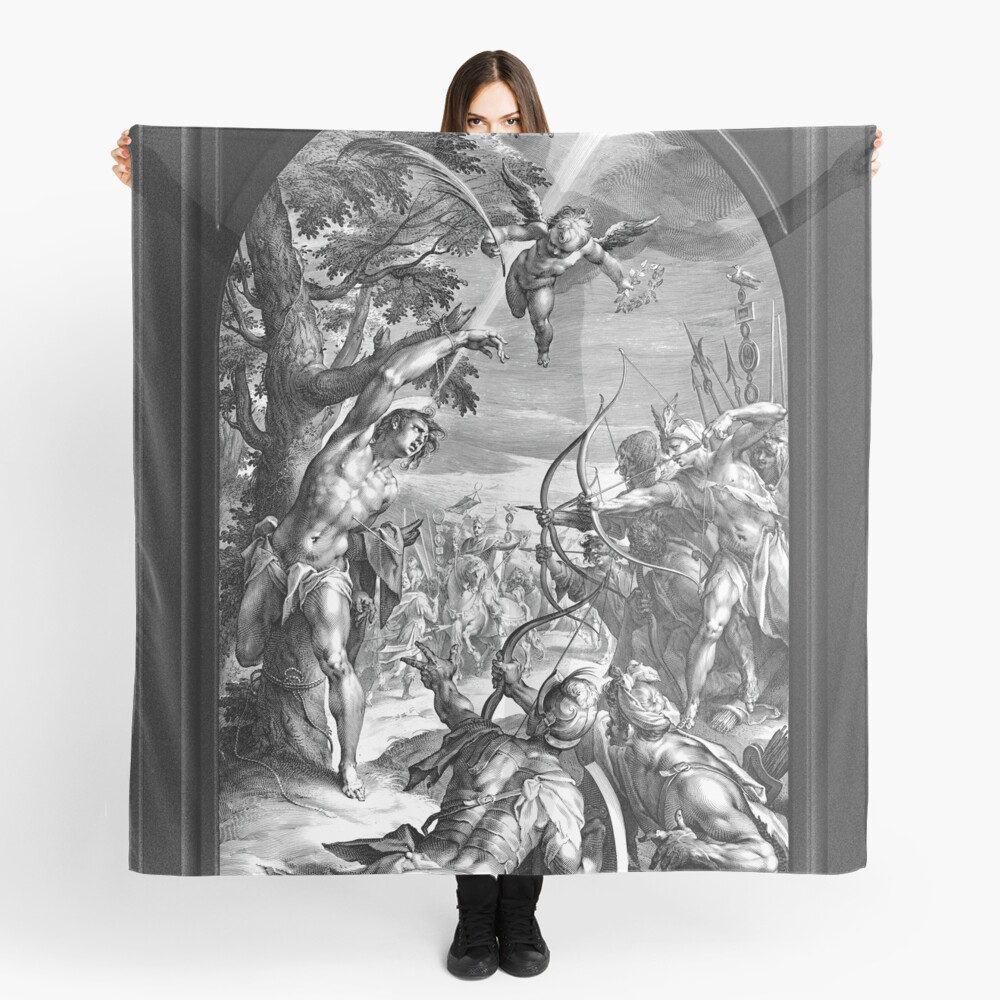
This engraving depicts Sebastian a Prætorian Guard, who would later be known as St. Sebastian The Martyr as he is being executed; which is based on a painting by the German Painter Hans van Aachen (1552 – 1615); who was a court painter and art collector for Holy Roman Emperor Rudolf II (1552 – 1612).
St. Sebastian was born in what now is Southern France during the mid-third century, and was a member of the Prætorian Guard; which were soldiers that made up the personal security for the Roman Emperors.
It was during this period in Roman history that Christians were being actively persecuted by the Roman Empire for their beliefs in one GOD, and it is during the pursuit of anyone following the Christian faith, that Sebastian’s superiors discover that he is a Christian, and that he is actively converting other soldiers to Christianity.
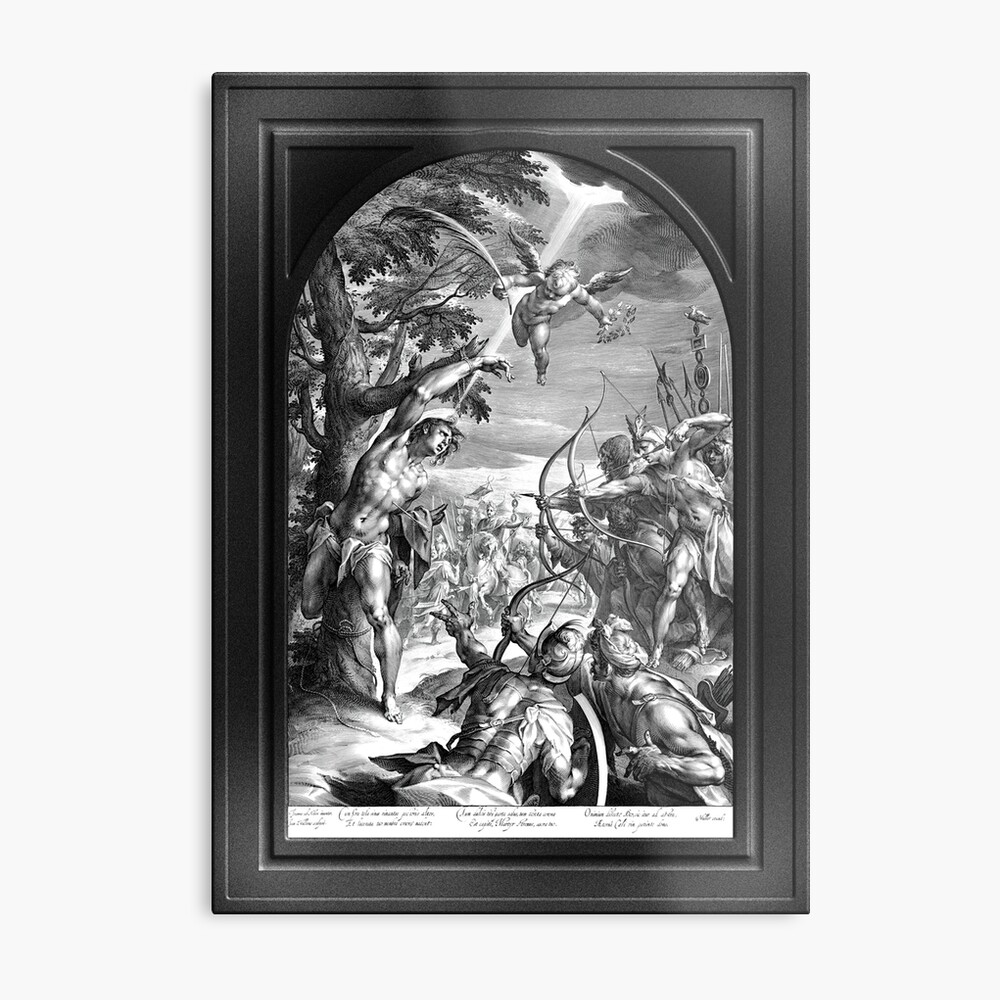
Sebastian is thus condemned to death; and in this depiction of the story we see that he has been stripped of his clothing by the very soldiers he had served with, and tied to a tree; with a single arrow shot into his chest by a soldier being given commands from his commander, with other soldiers prepared to fire more arrows at him.
In the background center of the engraving we see what may be the Roman Emperor on horseback with is guard detail behind him and a few soldiers in front of him;while above him the light of heaven streams on to his head forming a partial halo, as an angel above him carries a palm branch in its right hand and a wreath in its left hand.
The palm and the wreath symbolize GODs protection; because even though Sebastian was gravely injured and was left for dead, he did not die; as he was found by Irene of Rome, who was married to a devout Christian and who nursed him back to health.
Is e seo ath-riochdachadh seann mhaighstirean ealain didseatach ath-leasaichte de ìomhaigh raon poblach a tha ri fhaighinn mar a clò-bhualadh canabhas rollaichte.
Mu dheidhinn an Neach-ealain
B' e gràbhaladair agus peantair bhon Linn Òir Duitseach a bh' ann an Jan Muller a rugadh ann an Amsterdam on 1571 agus dh' ionnsaich e malairt gràbhalaidh o athair Harmen Jansz. Muller (1540 – 1617) a bha na chlò-bhualadair leabhar, gràbhalaiche, agus foillsichear.
Bha Jan na ghràbhalaiche torrach agus sgileil a bha ainmeil airson a chuid aire gu mion-fhiosrachadh, agus rinn iad dealbhan dèanta, gràbhalaidhean, dealbhan, agus bha e gu sònraichte ainmeil airson a dhealbhan de dhaoine poilitigeach, rìoghalachd, agus daoine ainmeil eile aig an àm.
Tha na h-obraichean as ainmeil aig Jan a’ toirt a-steach na gràbhalaidhean aige de fhigearan miotasach Minerva agus Mercury, na dealbhan aige den teaghlach rìoghail Duitseach, agus a cho-obrachadh leis an snaidheadair Adriaen de Vries (1545 – 1626), Peantair Linn Òir Duitseach, Rembrandt Harmenszoon van Rijn (1606 – 1669), agus an Grabhadair Flemish, Jan Sadeler (1550 – 1600).
Bha e ainmeil cuideachd airson na dealbhan aige den pheantair cruth-tìre Duitseach mòr, Jan van Goyen (1596 – 1656), a chaidh a dhèanamh airson deasachadh de shaothair van Goyen; agus thàinig e gu bhith na dhuine cudromach ann an gràbhaladh Duitseach, agus tha na h-obraichean aige air am faicinn mar theisteanas air aois òir ealain Duitseach.
Bha Jan cuideachd na tidsear cliùiteach, a’ toirt seachad a sgilean dha na h-oileanaich aige, a thug a-steach an gràbhalaiche Duitseach agus am peantair, Pieter de Molyn (1597 – 1661); agus chuir e gu mòr ri Linn Òir ealain na h-Òlaind.