

Minerva en Mercurius bewapenen Perseus (Minerva agus Mercury a 'toirt ionnsaigh air Perseus), c1604
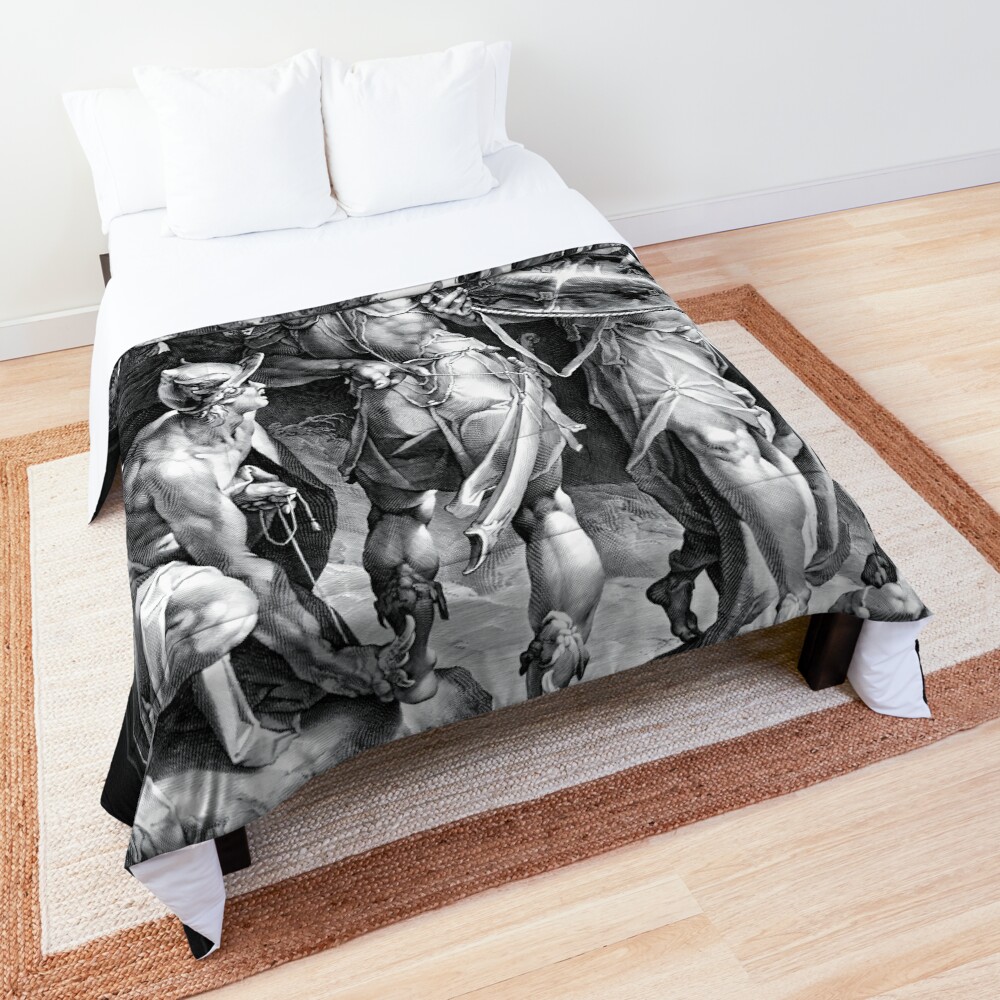
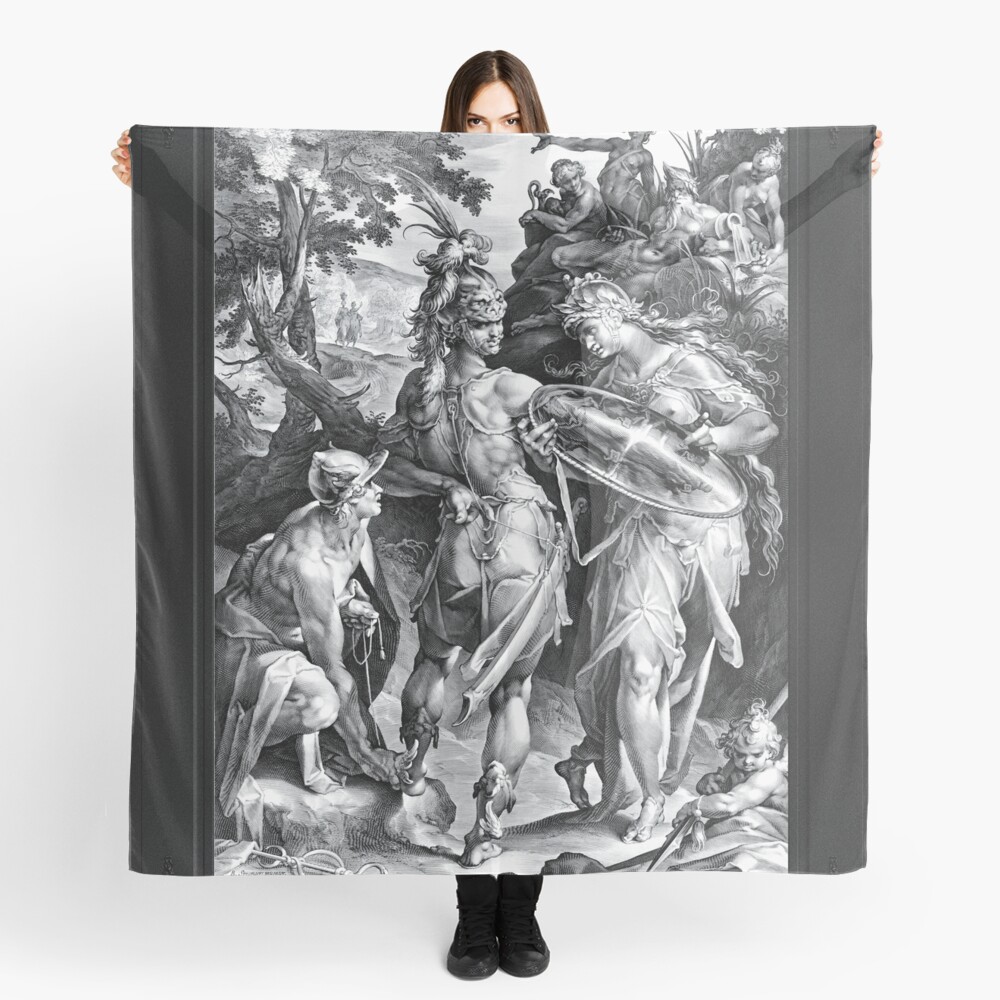
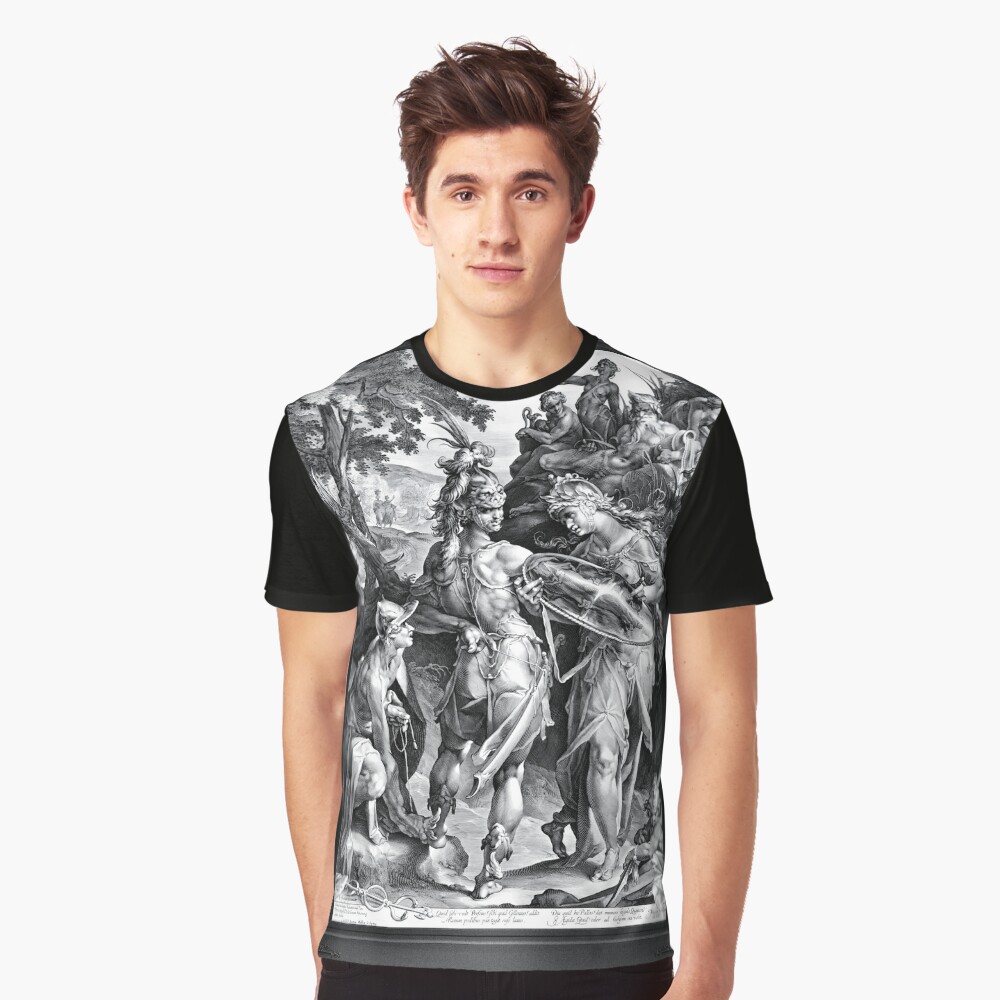
An gràbhaladh Minerva en Mercurius bewapenen Perseus (Minerva agus Mercury a 'toirt ionnsaigh air Perseus), air a chruthachadh a-steach 1604 by the Dutch engraver Jan Harmensz. Muller (1571 – 1628), offers a compelling visual narrative drawn from classical mythology. This highly detailed print captures the moment when the gods Minerva and Mercury provide the hero Perseus with the tools he needs to defeat the monstrous Medusa. An sealladh, rich in symbolism and action, exemplifies the mannerist style that defined much of the Dutch Renaissance, combining mythological grandeur with intricate craftsmanship.
Clàr-innse
Main Subject and Characters
The central figures of the artwork are Minerva, the goddess of wisdom, and Mercury, the messenger god, who are depicted arming Perseus for his daunting mission. The portrayal of Perseus is particularly notable for his youthful and heroic demeanor, emphasizing the divine assistance he receives. Perseus stands in the center of the composition, confidently poised as Minerva hands him the shield, a crucial element in his quest to defeat Medusa. His gaze is focused, conveying a sense of readiness and determination.
Minerva, adorned with her characteristic helmet and armor, stands behind Perseus, her posture dignified and supportive. She holds a shield in one hand while her other hand extends toward the hero, offering both guidance and protection. A socair, authoritative expression contrasts with the action surrounding her, embodying wisdom and strategy. Mercury, positioned at Perseus’ side, is seen in the act of preparing him for the battle ahead. He is often depicted with winged sandals and a caduceus, symbolizing his role as the divine messenger and his speed in assisting Perseus.
Rudan agus samhlachas
The objects in this engraving are meticulously detailed, each holding symbolic significance. The most prominent of these is the shield that Minerva presents to Perseus. The shield’s reflective surface will allow Perseus to view Medusa’s image without directly gazing upon her, a crucial aspect of the myth. The shield’s intricate design and polished surface reflect the engraver’s skill in rendering texture and light. The shield serves as both a tool of protection and a symbol of divine favor.
Mercury is shown with the caduceus, the staff entwined with two serpents, a powerful emblem of his role as a guide and protector. His winged sandals, which suggest swiftness and freedom, further emphasize his divine nature and role in the mythological narrative. A bharrachd air an sin, the presence of the gods highlights the importance of divine intervention in mortal affairs, a recurring theme in classical mythology.
Talamh agus cùl-raon
The terrain depicted in the engraving is a rugged, rocky landscape, typical of the mythical scenes often associated with the gods and heroes of antiquity. The jagged rocks and winding paths suggest the treacherous journey that lies ahead for Perseus as he sets out to slay Medusa. The background is filled with a mountainous horizon, signifying the dangerous and remote location of the Medusa’s lair.
Behind Perseus and the gods, there are several smaller figures who represent the entourage of gods and heroes that often surround mythological events. Na figearan seo, though less detailed than the central characters, contribute to the composition’s dynamic energy, and their gazes and poses add to the narrative flow. The overall composition seems to convey the tension between mortal heroism and divine support, as well as the intricacies of mythological storytelling.
Stoidhle agus innleachd
Jan Harmensz. Muller’s engraving reflects the high level of detail typical of the Mannerist style, which dominated European art during the late Renaissance. The intricate cross-hatching, delicate shading, and smooth lines are indicative of the artist’s virtuosity in handling the medium of engraving. The attention to detail in the folds of the garments, the textures of the armor, and the reflections on the shield show Muller’s deep understanding of human anatomy and the subtleties of light and shadow.
Cleachdadh chiaroscuro, or the contrast between light and dark, is a prominent feature in this work. This technique serves not only to model the figures in a realistic manner but also to create a dramatic atmosphere that underscores the mythological narrative. The figures emerge from a dark, shaded background, drawing the viewer’s eye toward the illuminated characters at the center of the scene. The dynamic poses of the figures, particularly the gestures of Minerva and Mercury, imbue the scene with a sense of motion and life, despite the still nature of the engraving.
Cuspair agus mood
The engraving presents a heroic and mythological theme, drawing from classical stories to evoke the timeless struggle between mortals and the gods. The act of arming Perseus reflects a broader narrative of divine intervention in human affairs, where the gods assist heroes in overcoming seemingly insurmountable challenges. The mood is one of anticipation and readiness, with Perseus poised to embark on his perilous journey, supported by the wisdom of Minerva and the speed of Mercury.
There is an underlying tension in the engraving, as the viewer understands that Perseus must face a terrifying foe, yet the gods’ involvement lends an air of inevitability to his success. The mood is further enriched by the compositional balance between the calm, controlled demeanor of Minerva and the active, guiding presence of Mercury. The figures are arranged in such a way that their placement and posture create a harmonious yet dramatic tension within the composition.
Co-dhùnadh
Jan Harmensz. Muller’s Minerva en Mercurius bewapenen Perseus is a masterful engraving that captures a moment from classical mythology with elegance and complexity. The composition is rich with symbolism, meticulously detailed figures, and a carefully crafted narrative. Through his technical expertise and artistic vision, Muller creates a vivid portrayal of divine intervention and the heroic journey, providing a glimpse into the mythological world that has captivated generations.
Is e seo ath-riochdachadh seann mhaighstirean ealain didseatach ath-leasaichte de ìomhaigh fearann poblach a tha ri cheannach air-loidhne mar a clò-bhualadh canabhas rollaichte.
An cruthachadh ealain didseatach seo, mar a tha leis a h-uile obair-ealain a gheibhear air làrach-lìn Xzendor7 ri fhaighinn airson a cheannach air-loidhne ann an grunn chruthan stuth a’ gabhail a-steach clò-bhualaidhean canabhas, dealbhan acrylic, clò-bhualaidhean meatailt, clò-bhualaidhean fiodha, lèileagan frèam, postairean, agus mar chlò-bhualadh canabhas air a roiligeadh ann an grunn mheudan bho 12 òirlich gu 72 òirlich a rèir meud an fhìor obair-ealain agus a’ bhùth clò-bhualaidh air iarrtas a thaghas tu airson an ealain a cheannach.
Tha an obair-ealain cuideachd ri fhaighinn air raon farsaing de dh’ aodach fireannaich is boireannaich, mugaichean, toitean, sgarfaichean, leabhraichean notaichean agus irisean agus mòran stuthan sgeadachaidh dachaigh.
Mu dheidhinn an Neach-ealain
B' e gràbhaladair agus peantair bhon Linn Òir Duitseach a bh' ann an Jan Muller a rugadh ann an Amsterdam on 1571 agus dh' ionnsaich e malairt gràbhalaidh o athair Harmen Jansz. Muller (1540 – 1617) a bha na chlò-bhualadair leabhar, gràbhalaiche, agus foillsichear.
Bha Jan na ghràbhalaiche torrach agus sgileil a bha ainmeil airson a chuid aire gu mion-fhiosrachadh, agus rinn iad dealbhan dèanta, gràbhalaidhean, dealbhan, agus bha e gu sònraichte ainmeil airson a dhealbhan de dhaoine poilitigeach, rìoghalachd, agus daoine ainmeil eile aig an àm.
Tha na h-obraichean as ainmeil aig Jan a’ toirt a-steach na gràbhalaidhean aige de fhigearan miotasach Minerva agus Mercury, na dealbhan aige den teaghlach rìoghail Duitseach, agus a cho-obrachadh leis an snaidheadair Adriaen de Vries (1545 – 1626), Peantair Linn Òir Duitseach, Rembrandt Harmenszoon van Rijn (1606 – 1669), agus an Grabhadair Flemish, Jan Sadeler (1550 – 1600).
Bha e ainmeil cuideachd airson na dealbhan aige den pheantair cruth-tìre Duitseach mòr, Jan van Goyen (1596 – 1656), a chaidh a dhèanamh airson deasachadh de shaothair van Goyen; agus thàinig e gu bhith na dhuine cudromach ann an gràbhaladh Duitseach, agus tha na h-obraichean aige air am faicinn mar theisteanas air aois òir ealain Duitseach.
Bha Jan cuideachd na tidsear cliùiteach, a’ toirt seachad a sgilean dha na h-oileanaich aige, a thug a-steach an gràbhalaiche Duitseach agus am peantair, Pieter de Molyn (1597 – 1661); agus chuir e gu mòr ri Linn Òir ealain na h-Òlaind.