

The Mirror
“The Mirror,” created by Pierre-Charles Comte (1823 – 1895), is a delicate and intimate portrayal of a young woman seated in a refined, aristocratic setting. This artwork is a finely executed example of French Romanticism, a movement that emphasized emotion, Individualismus, and a deep connection to the beauty of the past. D'Kompositioun, Stëmmung, and meticulous attention to detail speak volumes about the artist’s skill in capturing the nuances of human emotion, raffinéiert Schéinheet, and the grandeur of the interior spaces typical of the 19th-century French elite.
Inhaltsverzeechnes
Haaptthemium
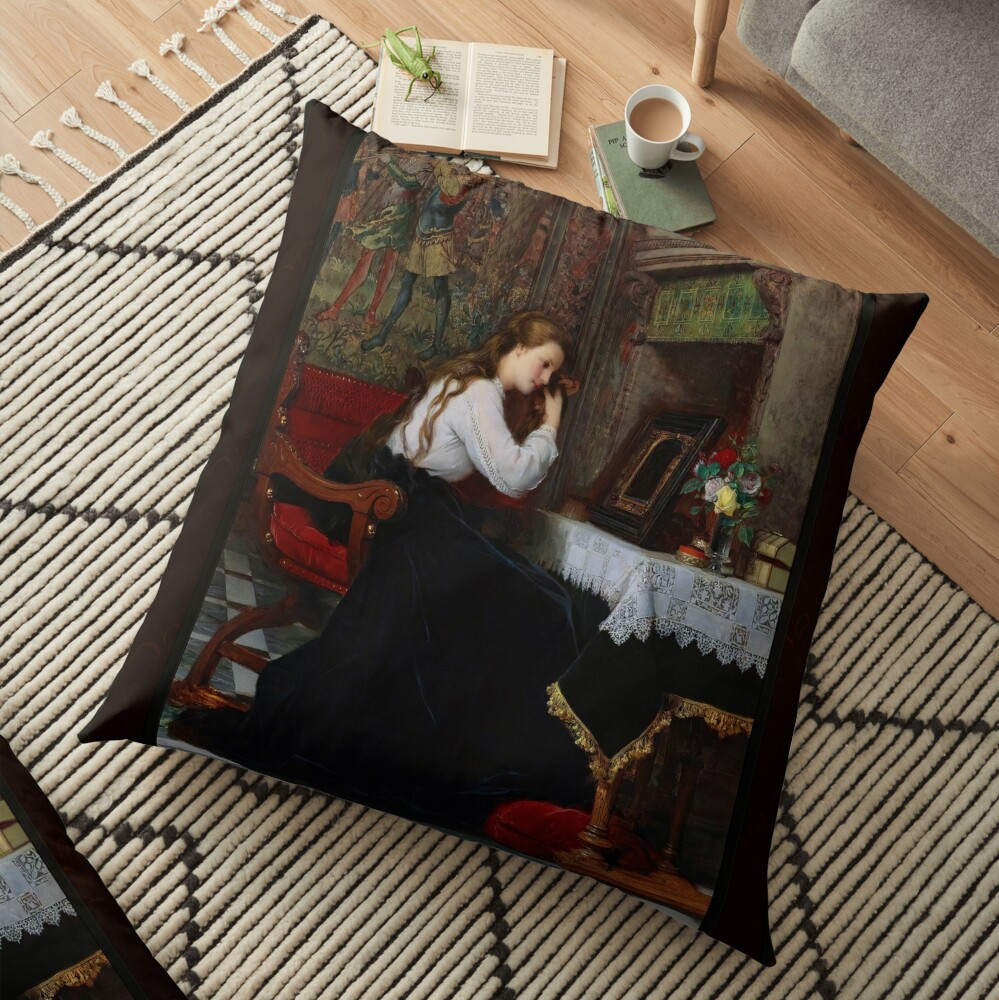
Am Häerz vun dëser Genre Molerei is the young woman, whose profile is slightly turned as she gazes at her reflection in a mirror. She is dressed in a flowing black gown, déi schéi kontrastéiert mat der wäisser Blouse déi vun drënner ukuckt. Hir laang, gewellte brong Hoer si graziéis arrangéiert, mat e puer Strécke falen loose ronderëm hir Gesiicht.
Déi mëll Beliichtung ënnersträicht d'Delikatesse vun hire Funktiounen, eng bal ätheresch Qualitéit un hir Porträt ze léinen. Den Ausdrock op hirem Gesiicht, eng Mëschung aus Iwwerleeung a liicht Melancholie, ass de Brennpunkt vum Bild. Si ass an hirer Reflexioun absorbéiert, awer et gëtt e Gefill vun eppes iwwer d'Vanitéit; hire Bléck schéngt Introspektioun ze suggeréieren oder vläicht eng Erënnerung un eppes wäitem.
D'Positioun vun der jonker Fra, souz mat enger Hand bei hirem Gesiicht, sanft hir Hoer ajustéieren, verstäerkt weider den Androck vun engem delikate Moment. Den Akt an de Spigel ze kucken, kombinéiert mat der Solitude vun hirer Figur, proposéiert eng narrativ vu Selbstreflektioun, souwuel wuertwiertlech wéi metaphoresch. It is as if the artist is inviting the viewer into a private, perséinleche Moment, an der Zäit suspendéiert.
Objeten a Kader
De Kader vun “The Mirror” is a richly adorned, luxurious interior, one that reflects the opulence of French aristocracy during the Romantic period. Hannert der Fra, a finely painted tapestry decorates the wall. The figures within the tapestry, though somewhat subdued in detail compared to the primary subject, help set the scene by adding depth and historical context.
The tapestry features two figures, likely noblemen or warriors, clothed in Renaissance-style garments. Their presence hints at a time of grandeur, reinforcing the social status and refinement of the young woman in the foreground.
In front of her, on the table, several objects are arranged with careful precision. A dark wood-framed mirror sits prominently, reflecting the woman’s image. Beside it is a small collection of decorative items: a vase filled with fresh flowers, a box, and a few books.
The arrangement of these objects suggests a world of calm leisure, where the subject is engaged in personal care or thought. D'Blummen, possibly roses, hint at themes of beauty and fragility, reinforcing the intimate mood of the painting.
The tablecloth beneath the objects is richly detailed, showcasing lace and embroidery that highlight the artist’s dedication to texture and visual richness. The fine linen contrasts with the darker tones of the furniture and the dress of the subject, drawing attention to the finer, softer aspects of the scene.
Terrain a Materialien
The floor beneath the woman’s feet is decorated with intricate marble tiles, hir geometresch Mustere kreéieren e Gefill vu Raum a Bewegung am Raum. D'Spill vum Liicht iwwer déi poléiert Uewerfläch ënnersträicht déi luxuriéis Natur vum Kader a ergänzt d'Opulenz vun der Fra Kleedung.
De Raum ronderëm hatt ass intim an expansiv, mam Marmerbuedem suggeréiert e Raum dee grousst awer privat ass. D'Benotzung vu Marmer, eng klassesch Material fir héich Societeit Interieur, füügt eng extra Schicht vu Verfeinerung un d'Stéck.
D'Materialien déi de Comte fir dëst Bild gewielt huet, besonnesch am Rendering vun Texturen, seng Fäegkeet ze weisen, d'Spill vu Liicht a Schied ze erfassen. Déi reflektiv Flächen vum Spigel an de poléierte Buedem kontrastéieren mat der Weichheet vun der Fra Kleeder an déi delikat Detailer vum Dësch. This interplay of surfaces, shiny, mëll, and textured, creates a dynamic visual experience for the viewer.
Stil a Stëmmung
The overall style of the painting is characterized by a fine attention to detail, a hallmark of 19th-century French Romanticism. Comte’s precise brushwork and careful layering of light and shadow bring the scene to life, infusing it with an almost photographic realism.
Trotzdem, despite this realism, there is an undeniable romantic quality to the piece, from the contemplative nature of the subject to the luxurious surroundings. The mood evoked is one of quiet introspection, where the young woman’s moment of personal reflection seems to carry a sense of melancholy, as though she is lost in thought or caught in a moment of nostalgia.
De Kader, iwwerdeems grouss, does not overshadow the subject; éischter, it serves to enhance her solitude and quiet contemplation. The artist’s use of color is subtle but effective, donkel, rich tones dominate the background, while the woman’s attire is a deep contrast, drawing the eye directly to her figure. The soft light that illuminates her face and hands adds a dreamlike quality, further enhancing the overall romantic mood of the painting.
Thema
Op sengem Kär, “The Mirror” explores themes of self-reflection, Schéinheet, an de Passage vun der Zäit. The mirror itself, als Objet, becomes a symbol of self-awareness, vanity, and perhaps even a fleeting sense of identity. The woman’s engagement with her own image invites the viewer to ponder the nature of her thoughts.
Is she merely admiring her appearance, or is she contemplating something deeper? Her solitary pose and introspective gaze suggest that the painting’s true theme is one of personal introspection, where the mirror serves as a gateway not only to the physical self but to the emotional world beneath the surface.
Conclusioun
Pierre-Charles Comte’s “The Mirror” is a masterful example of Romanticism, capturing both the elegance and the emotional depth of a young woman lost in the quiet moment of self-reflection. Through his detailed rendering of light, Texture, a Raum, Comte transforms an ordinary scene of vanity into a poetic exploration of introspection. The combination of the luxurious interior, the graceful subject, and the reflective mirror creates a timeless narrative that speaks to the viewer’s sense of personal reflection and emotional connection.
Dëst ass eng remastered digital Konscht al Master Reproduktioun vun engem Public Domain Bild dat als Canvas Print online verfügbar ass.
Kënschtler Bio ofgeleet vun AskArt.com
Pierre was born on April 23,1823 in Lyon, France and studied under the French Painters Jean-Claude Bonnefond (1796 – 1860) and Joseph-Nicolas Robert-Fleury (1797 – 1890); and demonstrated a talent for creating grand historic paintings which was so popular at the time in France; and was encouraged by his teachers to focus in this area of art.
However Pierre was also very gifted at creating intimate genre scenes the depicted the Medieval and Renaissance periods that captured the everyday activities of life, that many people could relate to, since it wasn’t much different then the way people were living at the time.