

The Monuments of Paris (Les Monuments de Paris) c1789
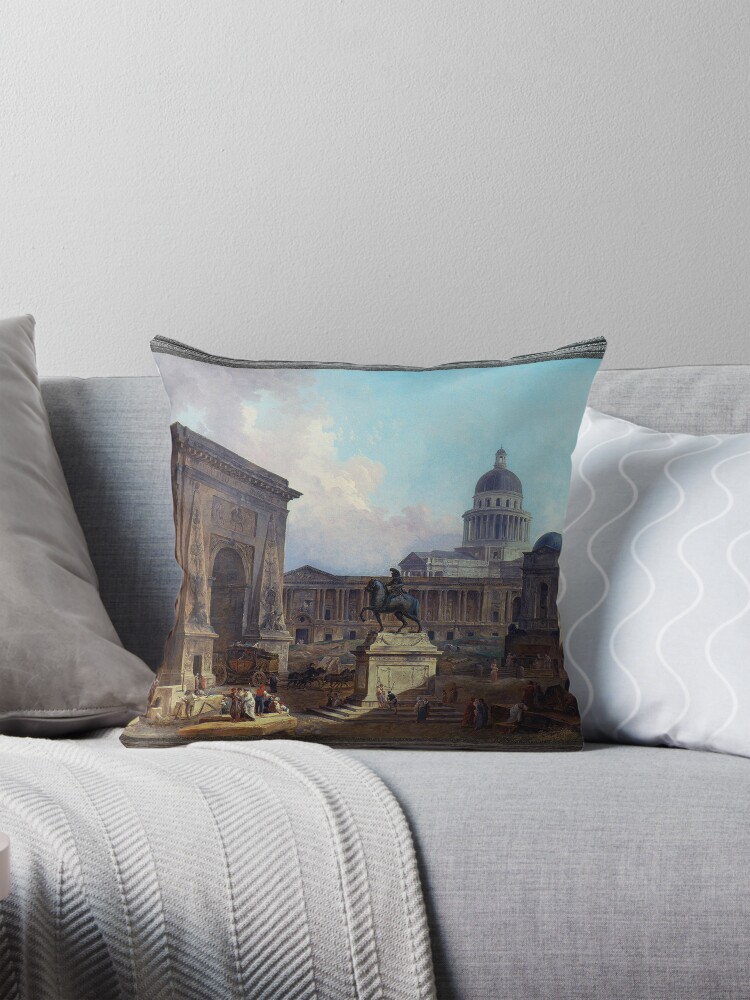
“The Monuments of Paris” (Les Monuments de Paris), skildere yn 1789 by the French artist Hubert Robert (1733 – 1808), is a magnificent example of classical landscape painting that showcases the enduring beauty and grandeur of Parisian architecture in a moment frozen in time. A well-known painter during the French Enlightenment period, Robert was celebrated for his historical and picturesque views of both real and imagined ruins, creating a sense of timelessness that evokes nostalgia for a lost era. This work is one of his many contributions to the genre of “capricci,” a type of landscape that often combines elements of actual buildings with imaginative ruins, offering a contemplative vision of what was, what could have been, and what remains.
Ynhâldsopjefte
Haadûnderwerp en komposysje
The central focus of the painting is an imposing Roman-style arch, reminiscent of the iconic triumphal arches of the Roman Empire. This monumental arch, which stands boldly in the foreground, is not only the primary subject of the artwork but also serves as a symbol of grandeur, skiednis, and human achievement. The arch’s weathered stone surface, carved with intricate reliefs, suggests a narrative of past glory and civilization. It is strategically positioned in the center of the composition, anchoring the viewer’s eye and creating a sense of balance within the artwork.
To the left of the arch, we see a regal statue of a horse-mounted figure, perhaps a historical leader or emperor, adding further grandeur and historical weight to the scene. This figure, rendered in exquisite detail, contrasts with the surrounding crumbling ruins, heightening the sense of both imperial magnificence and the inevitable passage of time. The figure appears to watch over the decaying remnants of what once was, capturing the viewer’s imagination with the juxtaposition of human strength against nature’s inexorable erosion.
The background of the painting is dominated by the stately dome of a neoclassical building, which stands as a beacon of human achievement and architectural skill. The building’s grand dome is flanked by columns, and the entire structure seems to radiate a sense of permanence and majesty. It contrasts with the surrounding ruins, reinforcing the theme of lost grandeur. This building, possibly meant to represent the Pantheon or another significant structure in Paris, spilet in krúsjale rol by it beklamjen fan it tydlike karakter fan riken en arsjitektoanyske ynspanningen.
Terrein, Materialen, en Texture
It terrein ôfbylde yn “The Monuments of Paris” is ien fan oneffen oerflakken en ferspraat oerbliuwsels. Grutte stiennen en brutsen kolommen lizze oer de foargrûn, as fynt it toaniel de neisleep fan in histoarysk barren. Dizze fallen fragminten symbolisearje it ferfal fan ienris grutte beskavingen, útnoegjend refleksje oer de kwetsberens fan minsklike prestaasjes. De rotsen, hoewol brutsen, noch behâlde harren monumintale foarmen, tsjinje as in oantinken dat wylst fysike struktueren meie ôfbrokkelje, harren histoaryske en artistike neilittenskip bliuwt yn it kollektyf ûnthâld.
It materiaalgebrûk fan de keunstner is masterlik, mei delicate borstelwurk dat jout tekstuer en djipte oan it toaniel. De stiennen fan 'e bôge en it stânbyld hawwe in tactile kwaliteit, almost inviting the viewer to reach out and touch their weathered surfaces. The soft light that bathes the scene enhances the sense of realism, casting long shadows that suggest the passing of time. The ruins themselves, bathed in the golden light of either dawn or dusk, seem to take on a melancholic beauty, further enhancing the mood of nostalgic reflection that permeates the painting.
Yn 'e fierte, we see a view of the city that seems both timeless and dreamlike. The buildings rise in the background, but the soft haze of the atmosphere gives them an ethereal quality, as if the city is at once real and imaginary. This blending of the tangible and the intangible further underscores the Romantic ideals of Robert’s time—ideas centered around emotion, nostalgy, and the sublime.
Styl, Tema, en Mood
The style of Hubert Robert’s “The Monuments of Paris” is firmly rooted in the neoclassical tradition, but it also hints at a romantic interpretation of the ruins and the passage of time. While the painting’s composition, perspektyf, and attention to architectural detail adhere to the principles of neoclassical art, Robert imbues the scene with an emotional depth that suggests a more romantic vision. The juxtaposition of monumental ruins with majestic, still-standing buildings elicits a sense of melancholy, as the viewer is reminded of the impermanence of human achievement. The mood is one of reflection and reverence for the past, combined with an acknowledgment of the inevitable decline of all things.
The theme of decay and renewal is prevalent throughout the painting, emphasizing the transient nature of civilizations. By positioning the monument in a ruinous context, Robert invites contemplation about the fleeting nature of power and the enduring qualities of art and architecture. The contrast between the ruined foreground and the still-standing architectural structures hints at the possibility of regeneration, suggesting that even in decay, there is beauty to be found.
The soft lighting and gentle color palette, featuring warm tones of ochre, brún, and golden hues, further enhance the painting’s nostalgic and contemplative mood. The carefully rendered details of the scene evoke a sense of reverence for both the past and the natural world, giving the viewer a chance to pause and reflect on the passing of time.
Dit is in retouchearre digitale keunst âlde masters reproduksje fan in byld yn it iepenbier domein dat is beskikber as in opgerold canvas print online.
Artist Bio
Hjirûnder Info ôflaat fan Wikipedia.org
Hubert Robert waard berne yn Parys yn 1733. Syn heit, Nicolas Robert, wie yn tsjinst fan François-Joseph de Choiseul, markies de Stainville in liedende diplomaat út Lorraine. De jonge Robert die syn stúdzje ôf by de jezuïten oan it Collège de Navarre yn 1751 en kaam yn it atelier fan 'e byldhouwer Michel-Ange Slodtz dy't him ûntwerp en perspektyf learde, mar him oanmoedige om nei it skilderjen te gean. Yn 1754 hy gie nei Rome yn 'e trein fan Étienne-François de Choiseul, soan fan syn heit syn wurkjouwer, dy't de Frânske ambassadeur beneamd wie en steatssekretaris fan Bûtenlânske Saken wurde soe by Loadewyk XV yn 1758.
Hy brocht folslein alve jier yn Rome troch, in opmerklike lingte fan tiid; neidat de offisjele residinsje fan de jonge keunstner oan de Frânske Akademy yn Rome oprûn, hy stipe him troch wurken dy't er produsearre foar besikers fan kenners lykas de abbé de Saint-Non, dy't Robert yn april nei Napels naam 1760 om de ruïnes fan Pompeii te besykjen. Marquis de Marigny, direkteur fan de Bâtiments du Roi hâldde yn korrespondinsje mei Natoire op 'e hichte fan syn ûntwikkeling, direkteur fan de Fryske Akademy, dy't de pensjonearren oantrúnje om bûtendoar te sketsen, út de natuer: Robert hie gjin oanstriid nedich; tekeningen út syn sketsboeken dokumintearje syn reizen: Villa d'Este, Caprarola.
Utsicht op de haven fan Rippeta yn Rome, c. 1766, toant it Alde Romeinske Pantheon neist in tinkbyldige haven
It kontrast tusken de ruïnes fan it âlde Rome en it libben fan syn tiid wekte syn heulste belangstelling. Hy wurke in skoft yn it atelier fan Pannini, waans ynfloed te sjen is yn 'e Imaginary View of the Ruined Louvre Gallery (yllustraasje). Robert brocht syn tiid yn it selskip fan jonge keunstners yn 'e rûnte fan Piranesi, waans capricci fan romantysk oergroeide ruïnes him sa bot beynfloede dat er de bynamme Robert des ruines krige. De albums fan sketsen en tekeningen dy't er yn Rome gearstalde, levere him motiven dy't er syn hiele karriêre yn skilderijen wurke.