

Carraighean-cuimhne Paris (Carraighean-cuimhne Paris) c1789
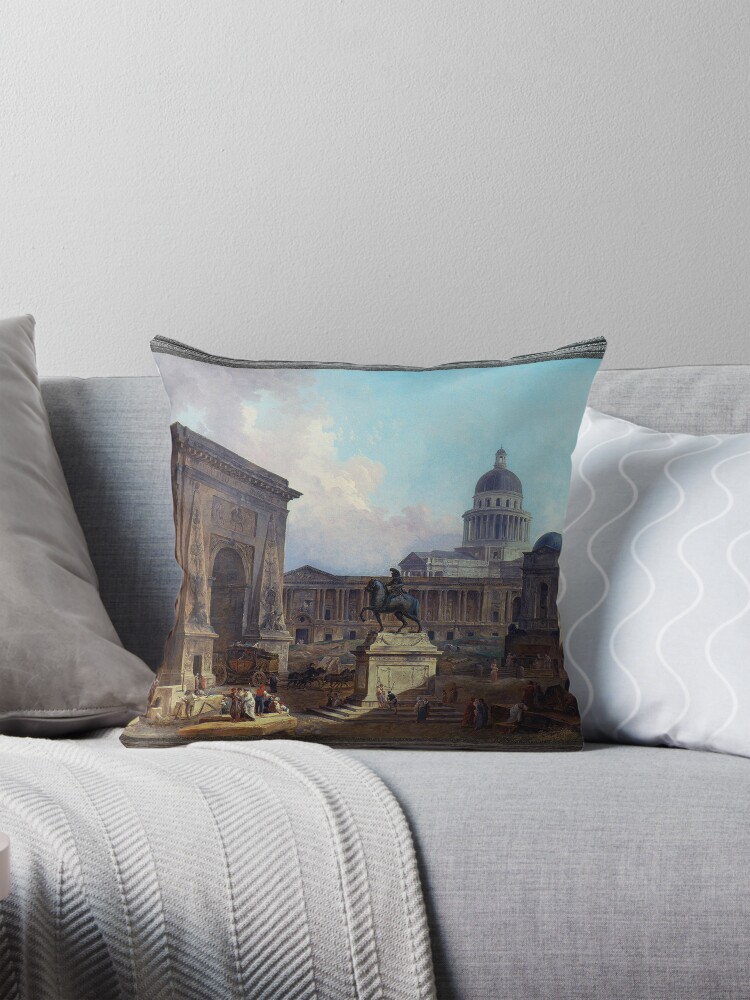
“Carraighean-cuimhne Paris” (Carraighean-cuimhne Paris), mar thoradh air stèidheachadh an Salon des Refusés le riaghaltas na Frainge 1789 leis an neach-ealain Frangach Hubert Robert (1733 – 1808), na dheagh eisimpleir de pheantadh cruth-tìre clasaigeach a tha a’ taisbeanadh bòidhchead agus mòrachd ailtireachd Parisianach ann an àm reòta ann an ùine. Peantair ainmeil aig àm Soillseachadh na Frainge, Chaidh Raibeart a chomharrachadh airson a sheallaidhean eachdraidheil agus breagha de thobhtaichean fìor agus mac-meanmnach, a’ cruthachadh faireachdainn gun ùine a dh’ adhbhraicheas cianalas airson àm air chall. Tha an obair seo mar aon de na chuir e gu mòr ri gnè “geasan,” seòrsa de chruth-tìre a bhios gu tric a’ measgachadh eileamaidean de thogalaichean fìor agus tobhtaichean mac-meanmnach, a’ toirt sealladh meòrachail air na bha ann, dè dh'fhaodadh a bhith, agus na tha air fhàgail.
Clàr-innse
Prìomh chuspair agus sgrìobhadh
Is e prìomh fhòcas an deilbh bogha eireachdail ann an stoidhle Ròmanach, reminiscent of the iconic triumphal arches of the Roman Empire. This monumental arch, which stands boldly in the foreground, is not only the primary subject of the artwork but also serves as a symbol of grandeur, eachdraidh, and human achievement. The arch’s weathered stone surface, carved with intricate reliefs, suggests a narrative of past glory and civilization. It is strategically positioned in the center of the composition, anchoring the viewer’s eye and creating a sense of balance within the artwork.
To the left of the arch, we see a regal statue of a horse-mounted figure, perhaps a historical leader or emperor, adding further grandeur and historical weight to the scene. Am figear seo, rendered in exquisite detail, contrasts with the surrounding crumbling ruins, àrdachadh mothachadh air an dà chuid eireachdail ìmpireil agus do-sheachanta ùine. Tha e coltach gu bheil am figear a’ cumail sùil air na tha air fhàgail de na bha uaireigin, a’ glacadh mac-meanmna an neach-amharc le bhith a’ cur neart daonna ri chèile an aghaidh bleith neo-sheasmhach nàdair.
Tha cùl an deilbh air a smachdachadh le cruinneach eireachdail togalach neoclassical, a tha na sheasamh mar lòchran de choileanadh daonna agus sgil ailtireachd. Tha gàrraidhean air gach taobh den togalach, agus tha coltas gu bheil an structar gu lèir a’ gluasad faireachdainn de sheasmhachd agus mòrachd. Tha e eadar-dhealaichte bho na tobhtaichean mun cuairt, a’ daingneachadh cuspair mòrachd caillte. An togalach seo, is dòcha gu robh e an dùil am Pantheon no structar cudromach eile ann am Paris a riochdachadh, a’ cluich pàirt chudromach ann a bhith a’ cur cuideam air nàdar ùineail ìmpirean agus oidhirpean ailtireil.
Talamh, Stuthan, agus Texture
An cruth-tìre air a shealltainn ann an “Carraighean-cuimhne Paris” tha e mar aon de uachdar neo-chòmhnard agus fuigheall sgapte. Tha clachan mòra agus colbhan briste air an sgaoileadh thairis air aghaidh an deilbh, mar gum biodh an sealladh a’ glacadh na thachair às deidh tachartas eachdraidheil. Tha na criomagan sin a tha air tuiteam a’ samhlachadh crìonadh sìobhaltachdan a bha uair air leth math, a’ toirt cuireadh do mheòrachadh air cho cugallach ‘s a tha euchdan daonna. Na creagan, ged a tha e briste, fhathast a’ cumail nan cruthan cuimhneachail aca, a 'frithealadh mar chuimhneachan ged a dh' fhaodadh structaran corporra tuiteam, mairidh an dìleab eachdraidheil agus ealanta mar chuimhneachan coitcheann.
Tha cleachdadh stuthan an neach-ealain sàr-mhath, le obair bhruis fìnealta a bheir inneach agus doimhneachd don t-sealladh. Tha càileachd tactile aig clachan a' bhogha agus an ìomhaigh, almost inviting the viewer to reach out and touch their weathered surfaces. The soft light that bathes the scene enhances the sense of realism, casting long shadows that suggest the passing of time. The ruins themselves, bathed in the golden light of either dawn or dusk, seem to take on a melancholic beauty, further enhancing the mood of nostalgic reflection that permeates the painting.
Air astar, we see a view of the city that seems both timeless and dreamlike. The buildings rise in the background, but the soft haze of the atmosphere gives them an ethereal quality, as if the city is at once real and imaginary. This blending of the tangible and the intangible further underscores the Romantic ideals of Robert’s time—ideas centered around emotion, cianalas, agus an sublime.
Stoidhle, Cuspair, agus Mood
The style of Hubert Robert’s “Carraighean-cuimhne Paris” stèidhichte gu daingeann anns an traidisean neoclassical, ach tha e cuideachd a’ toirt iomradh air mìneachadh romansach air na tobhtaichean agus mar a chaidh ùine seachad. Mar a tha an dealbh air a dhèanamh suas, sealladh, agus aire gu mion-fhiosrachadh ailtireil a’ cumail ri prionnsapalan ealain neoclassical, Tha Raibeart a’ toirt buaidh air an t-sealladh le doimhneachd tòcail a tha a’ moladh sealladh nas romansaich. Co-thaobhadh tobhtaichean carragh-cuimhne le mòrail, tha togalaichean a tha fhathast nan seasamh a’ nochdadh faireachdainn de lionn-dubh, oir tha an neach-coimhead air a chuimhneachadh air neo-sheasmhachd coileanadh daonna. Tha am faireachdainn mar aon de mheòrachadh agus urram airson an àm a dh'fhalbh, maille ri aideachadh mu chrìonadh do-sheachanta nan uile nithe.
Tha an cuspair crìonadh agus ath-nuadhachadh cumanta air feadh an deilbh, a’ cur cuideam air nàdar neo-ghluasadach sìobhaltachdan. Le bhith a’ suidheachadh a’ charragh-cuimhne ann an suidheachadh tobhta, Tha Raibeart a’ sireadh cnuasachadh air nàdar siùbhlach cumhachd agus feartan maireannach ealain is ailtireachd. Tha an eadar-dhealachadh eadar an aghaidh tobhta agus na structaran ailtireil a tha fhathast nan seasamh a’ nochdadh gu bheil e comasach ath-nuadhachadh, a 'moladh sin eadhon ann an lobhadh, tha maise ri fhaotainn.
An solas bog agus am paileas dath socair, a’ nochdadh tònaichean blàth òiche, donn, agus dathan òir, cuir tuilleadh ri faireachdainn cianalais agus meòrachail a’ pheant. Tha mion-fhiosrachadh an t-seallaidh air a thoirt seachad gu faiceallach a’ togail faireachdainn de dh’ urram don àm a dh’ fhalbh agus don t-saoghal nàdarra., a’ toirt cothrom don neach-coimhead stad agus meòrachadh air dol seachad ùine.
Is e seo ath-riochdachadh seann mhaighstirean ealain dhidseatach de ìomhaigh raon poblach a tha ri fhaighinn mar a clò-bhualadh canabhas air-loidhne.
Neach-ealain Bio
Gu h-ìosal Fiosrachadh a thàinig bho Wikipedia.org
Rugadh Hubert Robert ann am Paris ann an 1733. Athair, Nicolas robert, bha e ann an seirbheis François-Joseph de Choiseul, marquis de Stainville prìomh thagraiche à Lorraine. Chrìochnaich Raibeart òg a chuid ionnsachaidh leis na h-Ìosaichean aig an Collège de Navarre ann an 1751 agus a-steach do chlàr-ithe an snaigheadair Michel-Ange Slodtz a theagaisg dealbhadh agus sealladh dha ach a bhrosnaich e gu bhith a ’tionndadh gu peantadh. Ann an 1754 dh'fhalbh e dhan Ròimh ann an trèana Étienne-François de Choiseul, mac fastaiche athar, a chaidh ainmeachadh mar thosgaire na Frainge agus a bhiodh na Rùnaire Stàite airson Cùisean Cèin gu Louis XV ann an 1758.
Chuir e seachad aon bliadhna deug anns an Ròimh, ùine iongantach; às deidh do dhachaigh oifigeil an neach-ealain òg aig Acadamaidh na Frainge san Ròimh ruith a-mach, thug e taic dha fhèin le obraichean a rinn e airson tadhal air connoisseurs mar an abbé de Saint-Non, a thug Raibeart gu Napoli sa Ghiblean 1760 gus tadhal air tobhtaichean Pompeii. Am marcas de Marigny, bha stiùiriche nam Bâtiments du Roi a ’cumail suas ris an leasachadh aige ann an litrichean le Natoire, stiùiriche Acadamaidh na Frainge, a chuir ìmpidh air na peinnseanairean sgeidse a-muigh, bho nàdar: Cha robh feum aig Raibeart air ìmpidh sam bith; tha dealbhan bho na leabhraichean sgeidse aige a ’clàradh a shiubhal: Villa bliadhnaEste, Caprarola.
Sealladh de Phort Rippeta san Ròimh, c. 1766, a ’sealltainn an t-Seann Pantheon Ròmanach ri taobh port mac-meanmnach
Bha an eadar-dhealachadh eadar tobhta na seann Ròimhe agus beatha na h-ùine aige a ’togail ùidh mhòr. Bha e ag obair airson ùine ann an stiùidio Pannini, chithear a bhuaidh ann an Sealladh Ìomhaigh Gailearaidh Ruined Louvre (dealbh). Chuir Raibeart seachad a chuid ùine ann an companaidh luchd-ealain òga ann an cearcall Piranesi, thug an t-iomall de thobhtaichean romansach aige buaidh cho mòr air is gun d’ fhuair e am far-ainm Robert des ruines. Thug na clàran de dhealbhan agus dhealbhan a chruinnich e san Ròimh motifan dha a dh ’obraich e a-steach do dhealbhan rè a bheatha.