

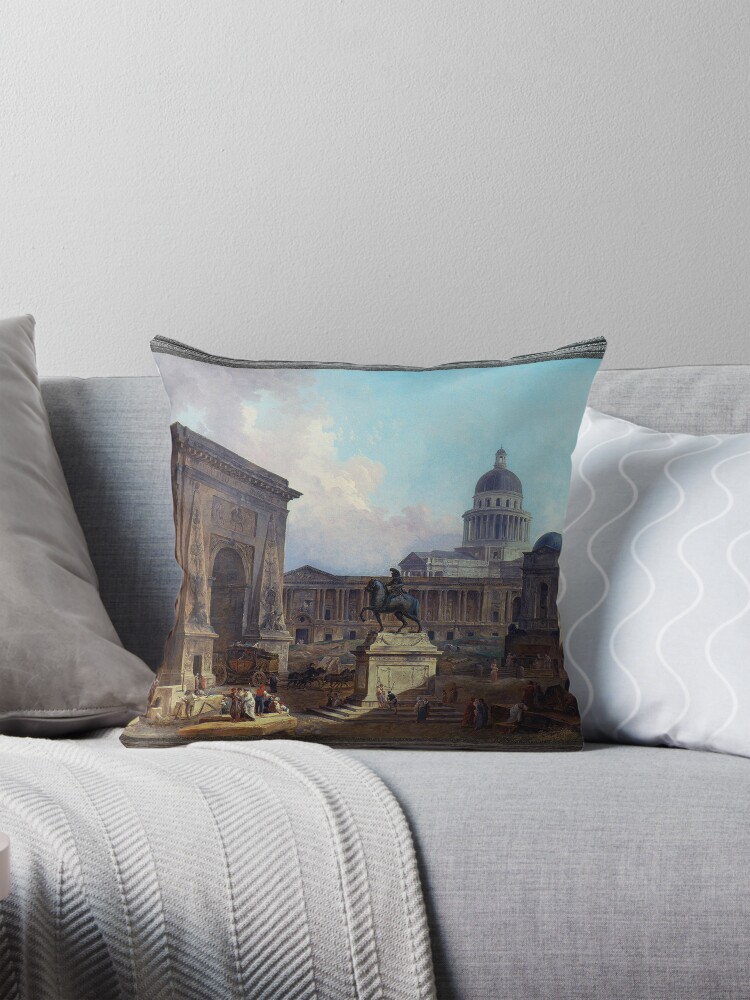
The Monuments of Paris (파리의 기념물) c1789
“The Monuments of Paris” (파리의 기념물), 그린 1789 프랑스 예술가의 휴버트 로버트 (1733 – 1808), is a magnificent example of classical landscape painting that showcases the enduring beauty and grandeur of Parisian architecture in a moment frozen in time. A well-known painter during the French Enlightenment period, Robert was celebrated for his historical and picturesque views of both real and imagined ruins, creating a sense of timelessness that evokes nostalgia for a lost era. This work is one of his many contributions to the genre of “capricci,” a type of landscape that often combines elements of actual buildings with imaginative ruins, offering a contemplative vision of what was, what could have been, and what remains.
목차
주요 주제 및 구성
The central focus of the painting is an imposing Roman-style arch, reminiscent of the iconic triumphal arches of the Roman Empire. This monumental arch, which stands boldly in the foreground, is not only the primary subject of the artwork but also serves as a symbol of grandeur, 역사, and human achievement. The arch’s weathered stone surface, carved with intricate reliefs, suggests a narrative of past glory and civilization. It is strategically positioned in the center of the composition, anchoring the viewer’s eye and creating a sense of balance within the artwork.
To the left of the arch, we see a regal statue of a horse-mounted figure, perhaps a historical leader or emperor, adding further grandeur and historical weight to the scene. 이 그림, 절묘한 디테일로 표현된, contrasts with the surrounding crumbling ruins, heightening the sense of both imperial magnificence and the inevitable passage of time. The figure appears to watch over the decaying remnants of what once was, capturing the viewer’s imagination with the juxtaposition of human strength against nature’s inexorable erosion.
The background of the painting is dominated by the stately dome of a neoclassical building, which stands as a beacon of human achievement and architectural skill. The building’s grand dome is flanked by columns, and the entire structure seems to radiate a sense of permanence and majesty. It contrasts with the surrounding ruins, reinforcing the theme of lost grandeur. This building, possibly meant to represent the Pantheon or another significant structure in Paris, plays a crucial role in emphasizing the temporal nature of empires and architectural endeavors.
지역, 재료, 및 질감
묘사 된 지형 “The Monuments of Paris” is one of uneven surfaces and scattered remnants. Large stones and broken columns are strewn across the foreground, as if the scene captures the aftermath of some historical event. These fallen fragments symbolize the decay of once-great civilizations, inviting reflection on the fragility of human accomplishments. The rocks, though broken, still retain their monumental forms, serving as a reminder that while physical structures may crumble, their historical and artistic legacies endure in the collective memory.
The artist’s use of materials is masterful, with delicate brushwork that gives texture and depth to the scene. The stones of the arch and the statue possess a tactile quality, almost inviting the viewer to reach out and touch their weathered surfaces. The soft light that bathes the scene enhances the sense of realism, 시간의 흐름을 암시하는 긴 그림자를 드리우다. 폐허 그 자체, 새벽이든 황혼이든 황금빛 빛을 받으며, 우울한 아름다움을 띠는 것 같아요, 그림에 스며드는 향수 어린 반성의 분위기를 더욱 강화합니다..
멀리서, 우리는 시대를 초월하고 꿈같은 도시의 풍경을 봅니다.. 건물들이 배경으로 솟아오른다, 하지만 대기의 은은한 안개가 그들에게 영묘한 느낌을 줍니다, 마치 도시가 현실이면서 동시에 상상인 것처럼. 유형과 무형의 이러한 혼합은 감정을 중심으로 한 로버트 시대의 낭만주의 이상을 더욱 강조합니다., 노스탤지어, 그리고 숭고한.
스타일, 주제, 그리고 기분
휴버트 로버트(Hubert Robert)의 스타일 “The Monuments of Paris” 신고전주의 전통에 확고히 뿌리를 두고 있다., 그러나 그것은 또한 폐허와 시간의 흐름에 대한 낭만적인 해석을 암시하기도 합니다.. 그림의 구성을 보면, 관점, 건축학적 세부 사항에 대한 관심은 신고전주의 예술의 원칙을 고수합니다., 로버트는 더욱 낭만적인 비전을 제시하는 감정적 깊이로 장면을 가득 채웁니다.. 장엄한 유적과 기념비적 유적의 병치, 여전히 서있는 건물은 우울한 느낌을 불러 일으 킵니다., 시청자는 인간 성취의 무상함을 상기하게 됩니다.. 과거에 대한 반성과 존경의 분위기입니다., 모든 것의 불가피한 쇠퇴에 대한 인정과 결합됨.
부패와 재생이라는 주제가 그림 전체에 널리 퍼져 있습니다., 문명의 일시적인 성격을 강조. 파멸적인 맥락에 기념물을 배치함으로써, 로버트는 권력의 순간적인 성격과 예술과 건축의 지속적인 특성에 대해 묵상하도록 유도합니다.. The contrast between the ruined foreground and the still-standing architectural structures hints at the possibility of regeneration, suggesting that even in decay, there is beauty to be found.
The soft lighting and gentle color palette, featuring warm tones of ochre, 갈색, and golden hues, further enhance the painting’s nostalgic and contemplative mood. The carefully rendered details of the scene evoke a sense of reverence for both the past and the natural world, giving the viewer a chance to pause and reflect on the passing of time.
이것은 리터칭된 디지털 아트로 사용할 수 있는 공개 도메인 이미지의 오래된 마스터 복제입니다. 롤 캔버스 온라인 인쇄.
아티스트 약력
아래에서 파생된 정보 Wikipedia.org
Hubert Robert는 파리에서 태어났습니다. 1733. 그의 아버지, 니콜라스 로버트, François-Joseph de Choiseul의 서비스에 있었다, 후작 드 스테인빌(Marquis de Stainville)은 로렌(Lorraine)의 주요 외교관. Young Robert는 Collège de Navarre에서 예수회와 함께 공부를 마쳤습니다. 1751 그리고 그에게 디자인과 원근법을 가르쳤지만 그림으로 전향하도록 격려한 조각가 Michel-Ange Slodtz의 아틀리에에 들어갔습니다.. 에 1754 그는 Étienne-François de Choiseul의 기차를 타고 로마로 떠났다., 아버지 고용주의 아들, 그는 프랑스 대사로 임명되었고 루이 15세의 외무장관이 되었다. 1758.
그는 로마에서 완전히 11년을 보냈다, 놀라운 시간; 로마에 있는 프랑스 아카데미에서 젊은 예술가의 공식 거주지가 끝난 후, 그는 abbe de Saint-Non과 같은 방문 감정가를 위해 제작한 작품으로 생계를 유지했습니다., 4월에 로버트를 나폴리로 데려간 사람 1760 폼페이 유적지를 방문하기 위해. 후작 드 마리니, Bâtiments du Roi의 감독은 Natoire와 통신하면서 그의 발전을 따라갔습니다., 프랑스 아카데미 원장, 연금 수급자들에게 야외에서 스케치를 하라고 촉구한 사람, 자연에서: 로버트는 재촉할 필요가 없었다; 그의 스케치북에 있는 그림은 그의 여행을 기록합니다.: 빌라 데스테, 카프라롤라.
로마의 리페타 항구 전경, 씨. 1766, 상상의 항구 옆에 고대 로마 판테온을 보여주는
고대 로마의 폐허와 당대의 삶의 대조는 그의 가장 뜨거운 관심을 불러일으켰습니다.. 그는 Pannini의 스튜디오에서 한동안 일했습니다., 폐허가 된 루브르 박물관의 상상 속의 모습에서 그 영향력을 볼 수 있습니다. (삽화). Robert는 Piranesi 서클의 젊은 예술가 회사에서 시간을 보냈습니다., 낭만적으로 자란 폐허의 변덕스러움이 그에게 큰 영향을 주어 그는 로베르 데 폐허라는 별명을 얻었습니다.. 그가 로마에서 수집한 스케치와 그림의 앨범은 그가 평생 동안 그림으로 작업한 모티브를 제공했습니다..