

D'Monumenter vu Paräis (D'Monumenter vu Paräis) c1789
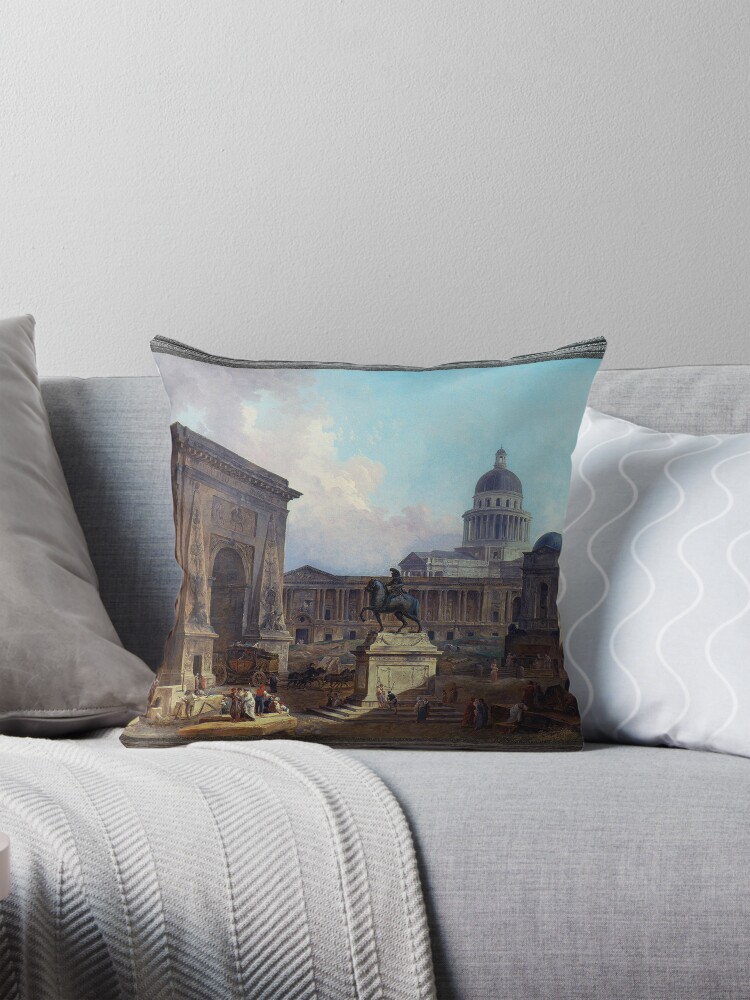
“D'Monumenter vu Paräis” (D'Monumenter vu Paräis), gemoolt an 1789 vum franséische Kënschtler Hubert Robert (1733 – 1808), is a magnificent example of classical landscape painting that showcases the enduring beauty and grandeur of Parisian architecture in a moment frozen in time. A well-known painter during the French Enlightenment period, Robert was celebrated for his historical and picturesque views of both real and imagined ruins, creating a sense of timelessness that evokes nostalgia for a lost era. This work is one of his many contributions to the genre of “capricci,” a type of landscape that often combines elements of actual buildings with imaginative ruins, offering a contemplative vision of what was, what could have been, and what remains.
Inhaltsverzeechnes
Haaptwiel a Zesummesetzung
The central focus of the painting is an imposing Roman-style arch, reminiscent of the iconic triumphal arches of the Roman Empire. This monumental arch, which stands boldly in the foreground, is not only the primary subject of the artwork but also serves as a symbol of grandeur, Geschicht, and human achievement. The arch’s weathered stone surface, carved with intricate reliefs, suggests a narrative of past glory and civilization. It is strategically positioned in the center of the composition, anchoring the viewer’s eye and creating a sense of balance within the artwork.
To the left of the arch, we see a regal statue of a horse-mounted figure, perhaps a historical leader or emperor, adding further grandeur and historical weight to the scene. Dës Figur, rendered in exquisite detail, contrasts with the surrounding crumbling ruins, heightening the sense of both imperial magnificence and the inevitable passage of time. The figure appears to watch over the decaying remnants of what once was, capturing the viewer’s imagination with the juxtaposition of human strength against nature’s inexorable erosion.
The background of the painting is dominated by the stately dome of a neoclassical building, which stands as a beacon of human achievement and architectural skill. The building’s grand dome is flanked by columns, and the entire structure seems to radiate a sense of permanence and majesty. It contrasts with the surrounding ruins, reinforcing the theme of lost grandeur. This building, possibly meant to represent the Pantheon or another significant structure in Paris, plays a crucial role in emphasizing the temporal nature of empires and architectural endeavors.
Terrain, Material, an Textur
Den Terrain duergestallt an “D'Monumenter vu Paräis” is one of uneven surfaces and scattered remnants. Large stones and broken columns are strewn across the foreground, as if the scene captures the aftermath of some historical event. These fallen fragments symbolize the decay of once-great civilizations, inviting reflection on the fragility of human accomplishments. The rocks, though broken, still retain their monumental forms, serving as a reminder that while physical structures may crumble, their historical and artistic legacies endure in the collective memory.
The artist’s use of materials is masterful, with delicate brushwork that gives texture and depth to the scene. The stones of the arch and the statue possess a tactile quality, almost inviting the viewer to reach out and touch their weathered surfaces. The soft light that bathes the scene enhances the sense of realism, casting long shadows that suggest the passing of time. The ruins themselves, bathed in the golden light of either dawn or dusk, seem to take on a melancholic beauty, further enhancing the mood of nostalgic reflection that permeates the painting.
An der Distanz, we see a view of the city that seems both timeless and dreamlike. The buildings rise in the background, but the soft haze of the atmosphere gives them an ethereal quality, as if the city is at once real and imaginary. This blending of the tangible and the intangible further underscores the Romantic ideals of Robert’s time—ideas centered around emotion, nostalgie, an d'Sublime.
Stil, Thema, a Stëmmung
The style of Hubert Robert’s “D'Monumenter vu Paräis” is firmly rooted in the neoclassical tradition, but it also hints at a romantic interpretation of the ruins and the passage of time. While the painting’s composition, Perspektiv, and attention to architectural detail adhere to the principles of neoclassical art, Robert imbues the scene with an emotional depth that suggests a more romantic vision. The juxtaposition of monumental ruins with majestic, still-standing buildings elicits a sense of melancholy, as the viewer is reminded of the impermanence of human achievement. The mood is one of reflection and reverence for the past, combined with an acknowledgment of the inevitable decline of all things.
The theme of decay and renewal is prevalent throughout the painting, emphasizing the transient nature of civilizations. By positioning the monument in a ruinous context, Robert invites contemplation about the fleeting nature of power and the enduring qualities of art and architecture. The contrast between the ruined foreground and the still-standing architectural structures hints at the possibility of regeneration, suggesting that even in decay, there is beauty to be found.
The soft lighting and gentle color palette, featuring warm tones of ochre, brong, and golden hues, further enhance the painting’s nostalgic and contemplative mood. The carefully rendered details of the scene evoke a sense of reverence for both the past and the natural world, giving the viewer a chance to pause and reflect on the passing of time.
Dëst ass eng retouched digital Konscht al Master Reproduktioun vun engem Public Domain Bild dat als verfügbar ass gerollt Leinwanddruck online.
Kënschtler Bio
Ënnert Info Ofgeleet Vun Wikipedia.org
Den Hubert Robert gouf zu Paräis gebuer 1733. Säi Papp, Nicolas robert, war am Déngscht vum François-Joseph de Choiseul, marquis de Stainville e féierende Diplomat aus Loutrengen. De jonke Robert huet seng Studie mat de Jesuiten um Collège de Navarre ofgeschloss 1751 an den Atelier vum Sculpteur Michel-Ange Slodtz eragaangen, deen him Design a Perspektiv geléiert huet, awer hien encouragéiert huet sech op d'Molerei ze zéien.. An 1754 hien ass am Zuch vum Étienne-François de Choiseul op Roum fortgaang, Jong vu sengem Papp sengem Patron, dee franséischen Ambassadeur ernannt gouf a Staatssekretär fir Aussepolitik vum Louis XV. 1758.
Hien huet voll eelef Joer zu Roum verbruecht, eng bemierkenswäert Längt vun der Zäit; nodeems dem jonke Kënschtler seng offiziell Residenz op der Franséischer Akademie zu Roum ausgaang ass, hien huet sech selwer ënnerstëtzt vu Wierker, déi hie produzéiert huet fir besiche Kenner wéi den Abbé de Saint-Non, deen de Robert op Neapel am Abrëll geholl huet 1760 fir d'Ruine vu Pompeji ze besichen. Der Marquis de Marigny, Direkter vun de Bâtiments du Roi hält sech a senger Entwécklung a Korrespondenz mam Natoire um Laafenden, Direkter vun der Franséischer Akademie, déi d'Pensiounskräften opgeruff hunn ausserhalb vun Dieren ze skizzéieren, aus der Natur: De Robert brauch keen Drang; Zeechnungen aus senge Skizzenbicher dokumentéieren seng Reesen: Villa d'Este, Caprarola.
Vue op den Hafen vu Rippeta zu Roum, c. 1766, weist den antike Réimesche Pantheon nieft engem imaginären Hafen
De Kontrast tëscht de Ruine vum antike Roum an dem Liewen vu senger Zäit huet säi gréissten Interessi opgereegt. Hien huet eng Zäit am Studio vu Pannini geschafft, deenen hiren Afloss an der Imaginary View of the Ruined Louvre Gallery ze gesinn ass (Illustratioun). De Robert huet seng Zäit an der Gesellschaft vu jonke Kënschtler am Krees vu Piranesi verbruecht, deem seng Capricci vu romantesch iwwerwuessene Ruinen hien esou staark beaflosst hunn, datt hien de Spëtznumm Robert des ruines krut. D'Alben mat Sketcher an Zeechnungen, déi hien zu Roum zesummegesat huet, hunn him Motiver geliwwert, déi hien a senger ganzer Karriär a Biller geschafft huet.