

Martröðin c1781
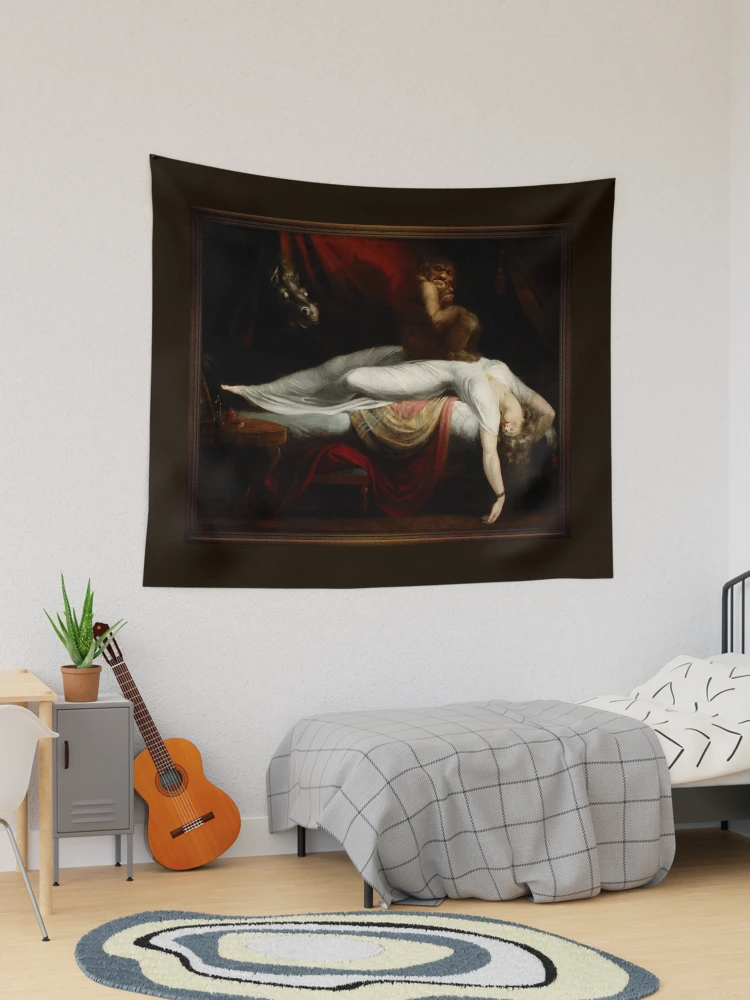
“Martröðin,” málað í 1781 eftir svissneska listamanninn Henry Fuseli (1741-1825), er eitt merkasta og óhugnanlegasta verk seint á 18. öld, blanda saman þemum yfirnáttúrulegrar og sálrænnar vanlíðan. Þetta dramatíska og áleitna verk kannar svið martraða og grótesku. Þekktur fyrir djörf notkun andstæða, Sláandi mynd hennar af konu í djúpum svefni, og táknrænir þættir þess, “Martröðin” stendur sem vitnisburður um einstaka nálgun Fuselis á rómantík, blanda saman þáttum gotnesku við miklar tilfinningar og súrrealisma. List Fuselis efaðist oft um mörkin milli veruleika og drauma, og þetta verk er dæmi um leikni hans í að lýsa myrkri undirmeðvitundar mannsins.
Efnisyfirlit
Aðalefni og samsetning
Í miðju goðsagnafræðileg samsetning liggur kona, í hvítum slopp, höfuð hennar hallaði aftur, augun lokuðust, og munnur hennar örlítið agalegur. Hún liggur útbreidd yfir rúmi, stelling hennar sem bersýnilega varnarlaus. Staðsetning líkama hennar, haltra handleggi hennar, og lúin form hennar bendir til þess að hún sé ekki bara sofandi, en fastur í fanginu á hræðilegri martröð.
Andlit hennar er fölt, undirstrika óttann eða vanlíðan sem hún gæti verið að upplifa í draumi sínum. Líkamstjáning myndarinnar sýnir bæði vanmáttarkennd og undirgefni, eins og konan sé upp á náð og miskunn öfl sem hún hefur ekki stjórn á. Ofan á hana, hallaði sér að hluta til á brjósti hennar, er gróteska, voðaleg mynd sem líkist djöfullegri veru. Þessi vera, með ýktum einkennum sínum og ákafa tjáningu, miðlar tilfinningu um illgjarn kraft.
Staða verunnar, það er krumpað, nánast frumafstaða, gefur til kynna táknræna framsetningu á martröð eða næturhræðslu, sem margir á tímabilinu töldu vera verk yfirnáttúrulegra afla. Hin óheillavænlega persóna virðist vera að þrýsta á konuna, eins og að kæfa hana, en samt geislar hún af ánægju og yfirráðum, eins og það hafi ánægju af kvöl hennar.
Í bakgrunni tónverksins, a myrkvað, óskýr skuggamynd af höfði hests vofir yfir, augun stór með óttasvip. Þessi litrófshestur bætir aukalagi af sálrænum styrkleika við verkið, eins og sjón verunnar sé skakkt og pínd, bendir til þess að martröðinni sé deilt á milli bæði konunnar og hestsins. Nærvera þess eykur aðeins vanlíðan áhorfandans, þar sem það táknar skrípandi eðli óræðs ótta, sífellt að leynast í skuggum huga dreymandans.
Hlutir og smáatriði
Herbergið sem umlykur miðjumyndina er ríkt af dökkum tónum, sem vekur tilfinningu fyrir vanlíðan og innilokun. Til vinstri, lítið borð geymir hluti eins og kerti og hvolfðan vasa, eykur andrúmsloftið óreiðu og truflunar.
Dauf lýsingin frá kertinu varpar dökkum skugga á veggina, eykur tilfinninguna um einangrun og hið óþekkta. Myrkur innanhúss bendir til þess að martröðin eigi sér stað í næturlagi, enn frekar að leggja áherslu á varnarleysi og úrræðaleysi konunnar í viðkvæmu ástandi hennar.
Rúmið sjálft, dúkað með djúprauðu flauelsgardínu, gegnir mikilvægu hlutverki við að magna upp andrúmsloftið. Djúpið, ríkur litur á rúmfötunum gefur til kynna bæði lúxus og hættu, gefa í skyn að jafnvel í þægindarými, skelfing getur dunið yfir. Þessi glæsileiki, oft tengt við gnægð öruggs og friðsæls heimilislífs, er í mikilli andstæðu hinnar skelfilegu birtingar sem ræður ríkjum á vettvangi.
Samspil ljóss og skugga í þessu verki er merkilegt. Notkun Fuseli á chiaroscuro, tæknin að nota sterkar andstæður ljóss og myrkurs, eykur dramatík tónverksins. Ljósið sem fellur á form konunnar lýsir upp líkama hennar í algjörri mótsögn við myrkrið í kring, beina athygli áhorfandans að hjálparvana ástandi hennar á meðan hún varpar umhverfi sínu í þrúgandi skugga. Þetta skapar öfluga tilfinningu fyrir dýpt og vídd, vekur upp spennu milli raunveruleika líkamlegs forms hennar og martröðarinnar sem ásækir hana.
Stemning, Stíll, og Þema
“Martröðin” vekur hryllingsstemningu, kvíða, og köfnun. Það er öflug sjónræn framsetning á sálfræðilegri skelfingu sem tengist martraðum, sú ótti sem virðist áþreifanlegur en samt er algjörlega óskynsamlegur. Listamaðurinn blandar saman þáttum úr gotneskum hryllingi og rómantískri könnun á hinu óþekkta. Á 18. öld, fólk heillaðist sérstaklega af yfirnáttúrulegu og óþekktu sviðum hugans, sem gerir lýsinguna á þessum þáttum að eðlilegri áherslu fyrir verk Fuseli.
Nálgun Fuseli við málverk lagði oft áherslu á mikla tilfinningalega reynslu, og þetta verk er engin undantekning. Spennan í atriðinu er áþreifanleg, ekki bara í gegnum miðlægu fígúrurnar heldur í mikilli andstæðu ljóss og myrkurs.
Þema bældrar skelfingar er kannað í gegnum hið yfirnáttúrulega, þar sem bæði konan og áhorfandinn dragast inn í heim sem er bæði órólegur og furðulegur. Þessi myrka könnun á sálarlífi mannsins kallar á spurningar um takmörk meðvitundar, óttann við hið ósýnilega, og möguleikann á skelfingu sem býr í draumum.
Stíll verka Fuseli var undir áhrifum frá útsetningu hans fyrir nýklassík, en hann hvarf frá skynsemi þess og jafnvægi með því að innlima ýkt form og dramatískt, frábærir þættir. Súrrealískt eðli verunnar sem liggur á brjósti konunnar endurspeglar áhuga hans á sálfræðilegri huglægni og höfnun hans á raunsæi í þágu tilfinningalegrar styrks..
Niðurstaða
Henry Fuseli “Martröðin” er ögrandi, hrollvekjandi könnun á ótta mannsins, bæði raunverulegt og ímyndað. The surreal quality of the painting, the disturbing imagery, and the unsettling use of light and shadow all contribute to the timeless power of this piece. Fuseli captured a universal experience, the sensation of being vulnerable and at the mercy of forces beyond understanding, in a way that continues to resonate with viewers today. The painting is a masterclass in both technique and emotional depth, exploring themes of vulnerability, terror, and the haunting nature of dreams.
The Nightmare er lagfærð stafræn list af gömlum meistara eftirgerð af mynd í almenningseign.
Lífsmynd listamanns frá Wikipedia.org
Fuseli fæddist í Zürich, Sviss, annað af 18 börn. Faðir hans var Johann Caspar Füssli, málari portrett og landslagsmyndir, og höfundur Lives of the Helvetic Painters. Hann ætlaði Henry fyrir kirkjuna, og sendi hann í Caroline háskólann í Zürich, þar sem hann hlaut framúrskarandi klassíska menntun. Einn skólafélagi hans þar var Johann Kaspar Lavater, sem hann varð náinn vinur við.
Eftir að hafa tekið við pöntunum inn 1761, Fuseli neyddist til að yfirgefa landið vegna þess að hafa aðstoðað Lavater við að afhjúpa ranglátan sýslumann., þar sem öflug fjölskylda hans leitaði hefnda. Hann ferðaðist um Þýskaland, og svo, inn 1765, heimsótt England, þar sem hann framfleytti sér um nokkurt skeið með margvíslegum skrifum.
Að lokum, hann kynntist Sir Joshua Reynolds, sem hann sýndi teikningar sínar. Fylgst með Reynolds’ ráðh, hann ákvað að helga sig listinni alfarið. Í 1770 hann fór í list-pílagrímsferð til Ítalíu, þar sem hann var þar til 1778, að breyta nafni sínu úr Füssli í hið ítalska hljómandi Fuseli.
Snemma í 1779 hann sneri aftur til Bretlands, tekur í Zürich á leið sinni. Í London fann hann þóknun sem beið hans frá Alerman Boydell, sem þá var að setja upp Shakespeare galleríið sitt.
Fuseli málaði fjölda verka fyrir Boydell, og gaf út enska útgáfu af verkum Lavaters um lífeðlisfræði. Hann veitti William Cowper einnig dýrmæta aðstoð við að undirbúa þýðingu á Hómer.
Í 1788 Fuseli kvæntist Sophiu Rawlins (upphaflega ein af fyrirmyndum hans), og skömmu síðar varð hann félagi við Konunglegu akademíuna. Snemma femínistinn Mary Wollstonecraft, hvers mynd hann hafði málað, skipulagði ferð með honum til Parísar, og elti hann ákveðinn, en eftir afskipti Sophiu er Fuselis’ dyr voru lokuð henni að eilífu.
sagði Fuseli síðar “Ég hata sniðugar konur. Þeir eru bara erfiðir”. Í 1790 hann varð fullgildur fræðimaður, kynna Thor Batting the Miðgarðsorm sem diplómaverk sitt. Í 1799 Fuseli var skipaður prófessor í málaralist við Akademíuna. Fjórum árum síðar var hann valinn markvörður, og sagði upp prófessorsstöðu sinni, en byrjaði aftur inn 1810, hélt áfram að gegna báðum embættum til dauðadags.[4] Sem markvörður, Henry Thomson tók við af honum.
Í 1799 Fuseli sýndi röð af málverkum úr myndefni eftir verk John Miltons, með það fyrir augum að mynda Milton gallerí sem er sambærilegt við Shakespeare gallerí Boydell.
Það voru 47 Milton málverk, margar þeirra mjög stórar, lokið með níu ára millibili. Sýningin reyndist misheppnuð í viðskiptum og lokaðist 1800. Í 1805 hann gaf út útgáfu af Pilkington's Lives of the Painters, sem gerði lítið fyrir orðstír hans.
Antonio Canova, þegar hann var í heimsókn sinni til Englands, var mikið tekið með verkum Fuseli, og aftur til Rómar í 1817 olli því að hann var kjörinn meðlimur fyrsta flokks í Akademíu St Luke.