

The Play Thing
The Play Thing c1897 by Italian Painter Vittorio Matteo Corcos (1859 – 1933); þekktur fyrir listaverk sín sem sýna fínklædda menn og konur á tímum tómstunda og leiks.
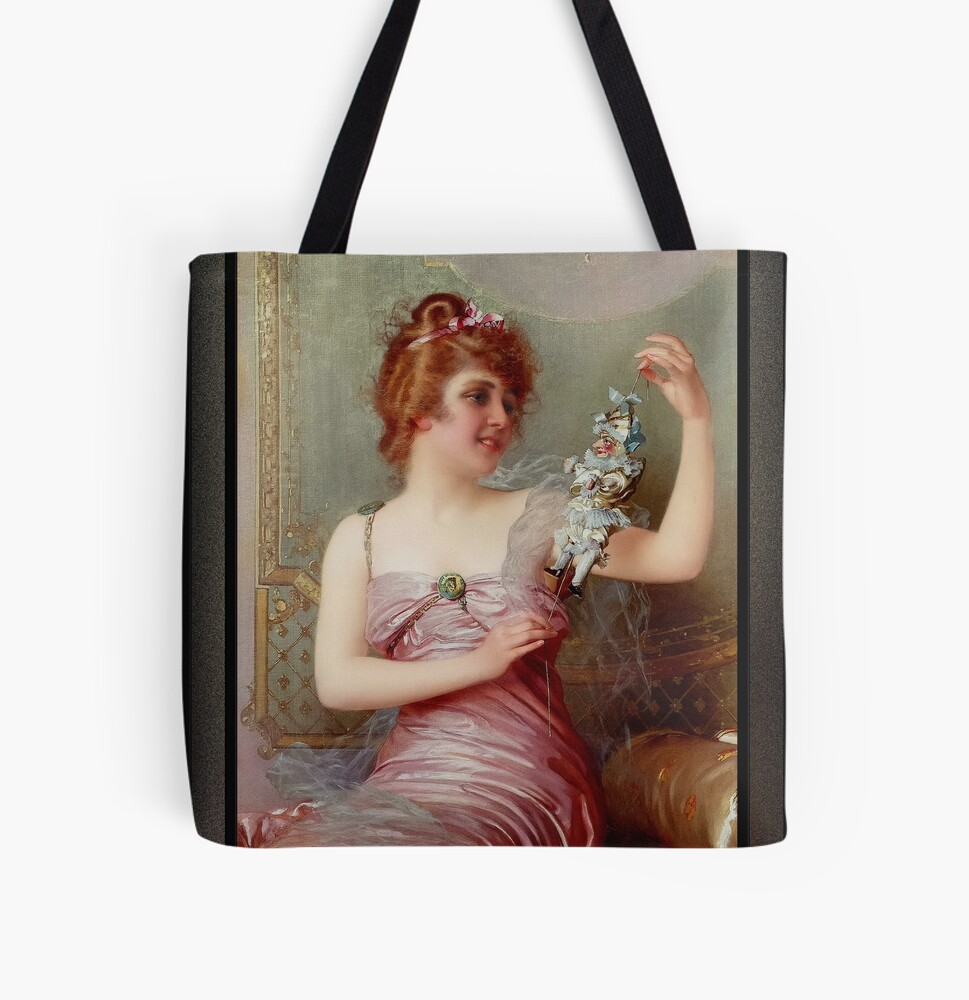
A beautiful young redhead with a red and white ribbon tied around her hair wearing a pink satin dress with chain shoulder straps and coin embellishments is playing with a puppet as she sits on a couch covered with embroidered satin cloth.
The Play Thing is a retouched digital art old masters reproduction of a public domain image, and as with all the artwork that can be found on the Xzendor7 website is available for purchase online in a variety of material formats including canvas prints, akrýl prentun, málmprentun, viðarprentanir, innrömmuð prentun, veggspjöld, og sem upprúlluð strigaprentun í ýmsum stærðum frá 12 tommur til 72 tommur eftir stærð raunverulegu listaverksins og prentunarversluninni sem þú velur að kaupa listina frá.
Upplýsingar hér að neðan fengnar af Wikipedia.org
Vittorio was born to Jewish parents, Isacco e Giuditta Baquis, in Livorno, og á umr 16, hann hlaut listnám við Listaháskólann í Flórens undir handleiðslu ítalska málarans Enrico Pollastrini (1817 – 1876).
Síðan á milli 1878 og 1879 hann starfaði undir ítalska málaranum Domenico Morelli (1826 – 1901) í Napólí; þekktur fyrir að framleiða sögulegar og trúarlegar málverk; og sem þótti hafa mikil áhrif í listum á síðari hluta 19. aldar.
Vittorio ferðaðist síðan til Parísar þar sem hann hitti franska málarann Léon Bonnat (1833 – 1922), og skrifaði undir samning við Goupil & Þetta er leiðandi umboð í Frakklandi á 19. öld, þaðan gat hann bætt tekjur sínar sem portrettmálari með myndskreytingum fyrir tímarit.
Hann fór oft í hringi ítalska málarans Giuseppe De Nittis (talinn vera einn mikilvægasti ítalski málarinn á 19. öld); og frá 1881 þar til 1886, he frequently exhibited at the Salon.

Í 1886 Vittorio returned to Italy, putatively to join the army, and then settled in Florence. At which time he converted to Catholicism and married a widow named Emma Ciabatti.
In Florence, he made friends in the intellectual circles of the time, and made portraits of Italian Realist painter Silvestro Lega (1826 – 1895), Italian Poet Giosue Carducci (1835 – 1907), and Italian Composer Pietro Mascagni (1863 – 1945).
After 1900, he wrote for the Florentine Journal Il Marzocco.; as well as published a short story in the magazine Fanfulla della Domenica titled Mademoiselle Leprince.
Í 1904, he traveled to Potsdam to paint Emperor William II (1859 – 1941) and other members of the German monarchy.
During World War I in 1916, Vittorio’s son died in battle. Later in the 1920s he joined the Gruppo Labronico along with Italian Painters Plinio Nomellini (1866 – 1943) and Ulvi Liegi (1858 – 1939).
He also painted portraits of Mussolini (Benito Amilcare Andrea Mussolini 1883 – 1945) inn 1928; Countess Annina Morosini (1924 – 1965); Countess Nerina Volpi di Misurata; Carducci, Puccini and Mascagni; Queen Amélie of Portugal and Princess of Orleans.