

De Pottersdochter
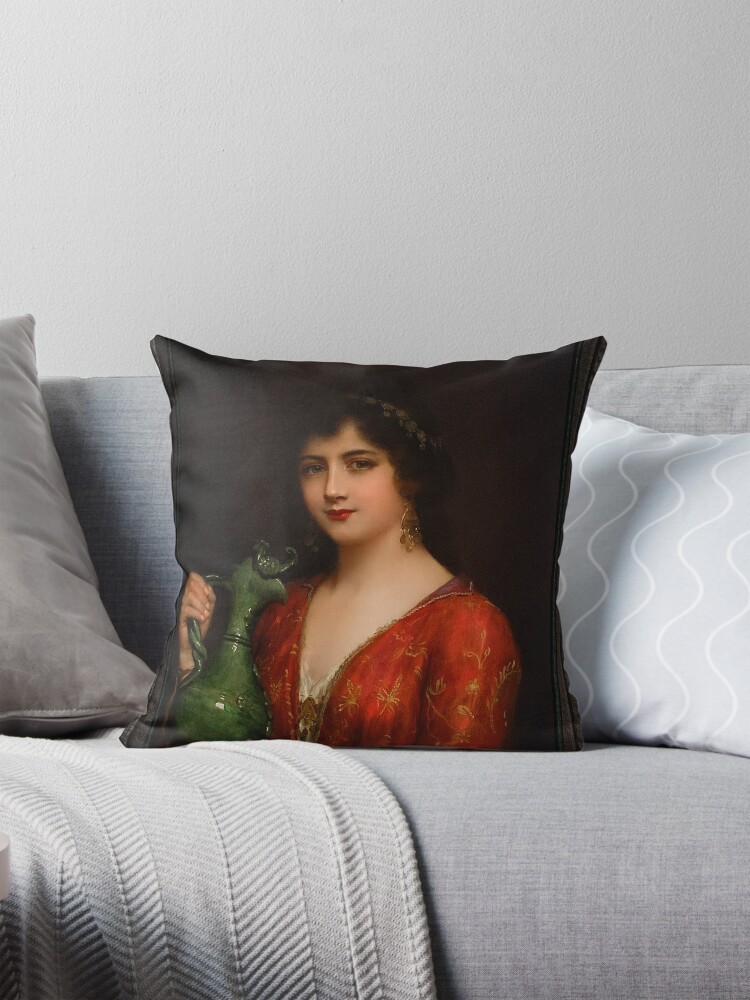
“De Pottersdochter”, makke troch de Britske keunstner Abbey Abraham Altson (1866 – 1949), is in boeiend stik út de lette 19e oant begjin 20e ieu, reflektearje de stilistyske ynfloeden fan 'e tiid. Altson, bekend om syn ferfine portretten en gebrûk fan ljocht en skaad, in tiidleas momint fêstlein yn it libben fan in jonge frou, realisme kombinearret mei in touch fan romantyk. Dit wurk, werjûn yn oalje op doek, ferbyldet in frou dy't in ierdewurkkanne hâldt, draped yn ryk, waarme toanen. It toaniel resonearret mei de estetyk fan it Viktoriaanske tiidrek, wylst se subtyl triuwe nei de 20e-ieuske ferkenning fan naturalisme en emoasje.
Ynhâldsopjefte
Underwerp en stimming
Yn it hert fan it skilderij is de moai portret of a serene and dignified figure of a young woman, traditionally referred to as “The Potter’s Daughter.” She gazes directly at the viewer with a soft yet assured expression, her posture graceful and poised, as though caught in a reflective moment. The subject’s youth and beauty are evident, but there is also an air of quiet strength about her, as she holds the pottery jug—a symbolic object that connects her to the past, har erfskip, and perhaps to the daily work that would have been common for women in rural or artisanal settings.
The woman’s expression, serene but slightly enigmatic, invites the viewer into a personal narrative, one that is neither overly dramatic nor plainly neutral. The subtle upward curve of her lips suggests an inner confidence, a knowledge of her place in the world. Dit elemint fan rêst, hast ûnoantaaste troch de tiid, is in sintraal tema yn Altson syn ôfbylding, en it ropt in gefoel fan nostalgy foar in ienfâldiger, pre-yndustriële tiidrek. Har donker hier is elegant styled, framing har delicate funksjes, en har sieraden, grut, hingjende earrings, foeget in lucht fan beskieden elegânsje ta.
De objekten en har betsjutting
De ierdewurkkruik dy't de frou hâldt is it wichtichste objekt yn 'e komposysje, sawol as symboal en as elemint fan it ferhaal. Pottery, faak ferbûn mei sawol keunstsinnigens as nut, betsjut it lykwicht tusken húslik wurk en kreatyf ambacht. It skip is sels in soarchfâldich makke keunstwurk, werjûn mei yngewikkelde detaillearring, showing Altson syn foarsichtich omtinken oan de tekstueren en foarmen fan deistige items. The artist’s choice to include the jug in the portrait likely suggests the importance of craftsmanship in this woman’s life, possibly alluding to a heritage or legacy passed down through generations of potters.
Oanfoljend, the deep red of the woman’s robe stands out against the dark, gedempte eftergrûn. The fabric’s rich texture and color imply both warmth and luxury, suggesting that she may not be a mere worker but someone from a family of artisans, perhaps even one whose father’s pottery has achieved some acclaim. This connection between the woman and her father is central to understanding the painting’s underlying narrative: she is not just a daughter, but a representative of a lineage, poised to carry on the traditions of her forebears.
Lânskip en eftergrûn
The backdrop of the painting is dark, almost enveloping the subject, creating a striking contrast that focuses the viewer’s attention entirely on the woman and her object. There is no obvious landscape or bustling environment; ynstee, the focus remains inward, on the subject herself. The neutral, deep tones of the background enhance the vividness of the subject, giving her a timeless, almost otherworldly presence. This technique is characteristic of Altson’s portrait style, where the lack of distracting elements elevates the individual and their relationship with the viewer.
This stark contrast between the woman and her environment also suggests an intentional detachment from the world around her. The simplicity of the background can be interpreted as symbolic of the quietude of rural life or artisanal existence, where the internal world of the subject becomes paramount. The absence of any significant landscape or setting may also imply that the subject’s identity is not defined by her surroundings, but by her inner world and the quiet dignity she carries with her.
Styl en technyk
Altson’s artistic style in “The Potter’s Daughter” blends elements of realism with a slightly romanticized portrayal. De keunstner syn gebrûk fan sêft, almost ethereal lighting enhances the sense of refinement and grace surrounding the subject.
The technique of sfumato, blending colors and tones to create a soft, smoky transition between colors, gives the woman’s face a lifelike quality, while the rich textures of her robe and the pottery jug invite the viewer to appreciate the artist’s detailed brushwork. The blending of warm and dark tones, contrasted with the intricate details of the subject’s attire and the pottery, is characteristic of Altson’s ability to balance form and texture, bringing out the tactile qualities of both the human figure and the objects she interacts with.
Konklúzje
“The Potter’s Daughter” by Abbey Abraham Altson is an exemplary piece of late 19th-century portraiture that captures both the elegance and quiet strength of its subject. Troch soarchfâldich omtinken foar detail, weefselstruktuer, en ljocht, Altson transforms a simple moment, holding a pottery jug, into a reflection on heritage, identiteit, and the role of women in a pre-industrial society.
The muted background, the symbolism of the pottery, and the serene expression of the young woman all work in harmony to create an artwork that speaks not only of personal grace but also of an era that valued craftsmanship and familial legacies. Altson’s masterful rendering of this intimate, timeless scene remains a testament to his ability to capture the essence of both the human spirit and the world it inhabits.
Dit is in retoucheerde reproduksje fan âlde masters fan digitale keunst fan in ôfbylding yn it iepenbier domein dat online te keap is as in opgerold canvas print.
Artist Bio
Info hjirûnder ôflaat fan Wikipedia.org
Abbey Abraham Altson waard berne yn Middlesbororough-on-Tees, Yorkshire yn it jier 1864. Yn septimber fan 1883 hy en syn broer Barnett Hayman Altson gongen nei Austraalje ; en begjin yn 1885 Abraham begon twa nachten yn 'e wike tekenjen te studearjen oan 'e National Gallery School of Design, leit yn Melbourne.
ik 1886 hy skreau him doe yn as folsleine studint oan de Skoalle foar Skilderij; studearje mei oare bekende artysten, lykas Fred McCubbin, John Longstaff, Emmanuel Phillips Fox, David Davis, Tudor St. George Tucker en Fred Williams.
Abraham wûn elk jier prizen as hy op 'e skoalle wie, en kritisy ferkundigje him as in meast kânsrike learling fan 'e takomst.