

The Red Cape: A Timeless Elegance Of Mid-Century Glamour
Einführung in das Kunstwerk
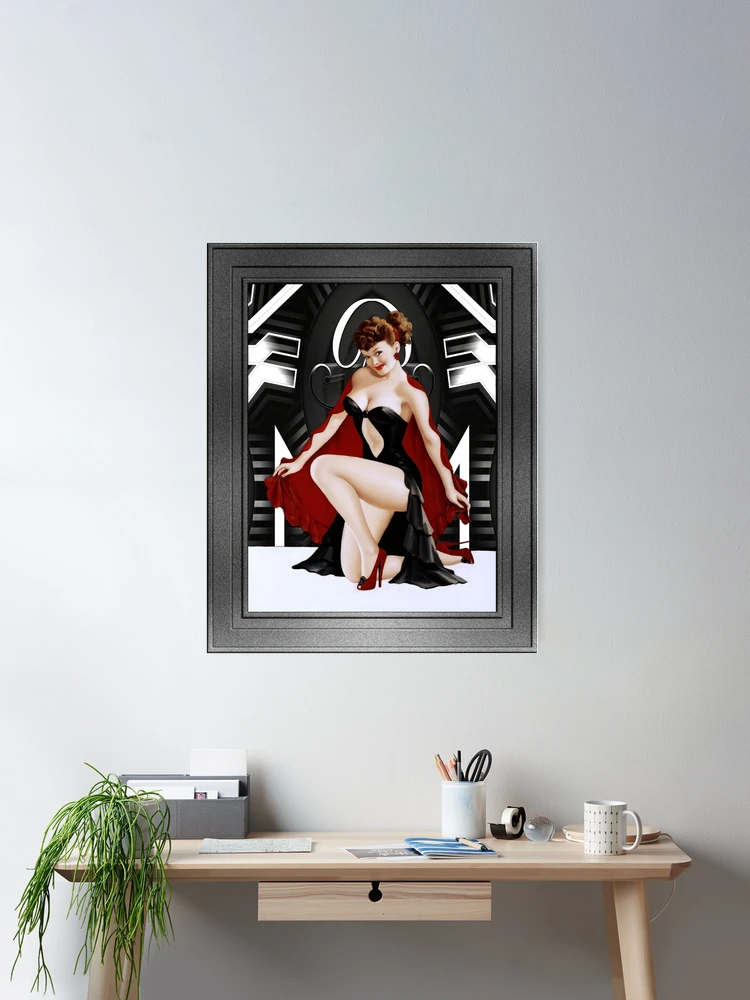
“The Red Cape” is a quintessential work by the American artist Peter Driben, a celebrated figure known for his pin-up art in the mid-20th century. Driben’s mastery in creating seductive and lively compositions is well represented in this piece. The artwork captures the essence of glamour, locken, and sophisticated femininity, themes that resonate throughout his body of work. “The Red Cape” is a vivid portrayal of a woman embodying confidence and charm, set against a striking, almost cinematic backdrop.
Inhaltsverzeichnis
Das Hauptthema: A Seductive Femme Fatale
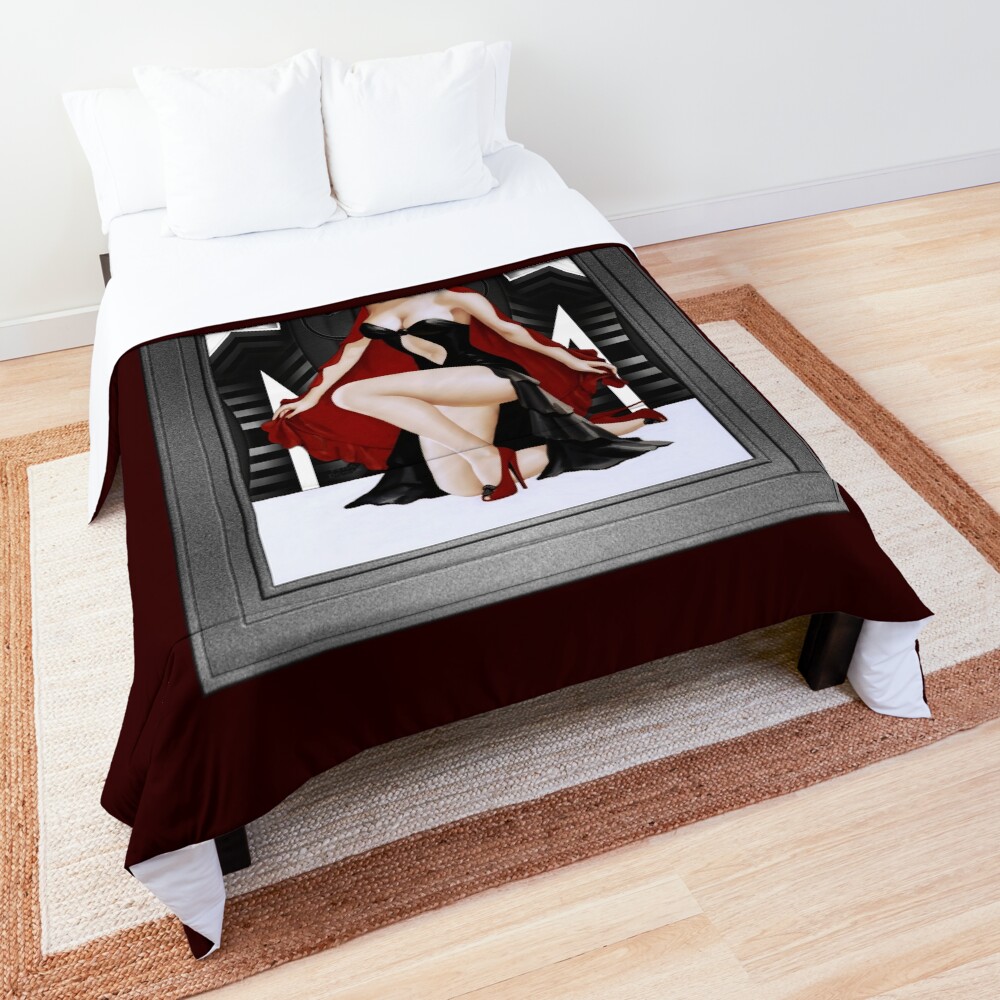
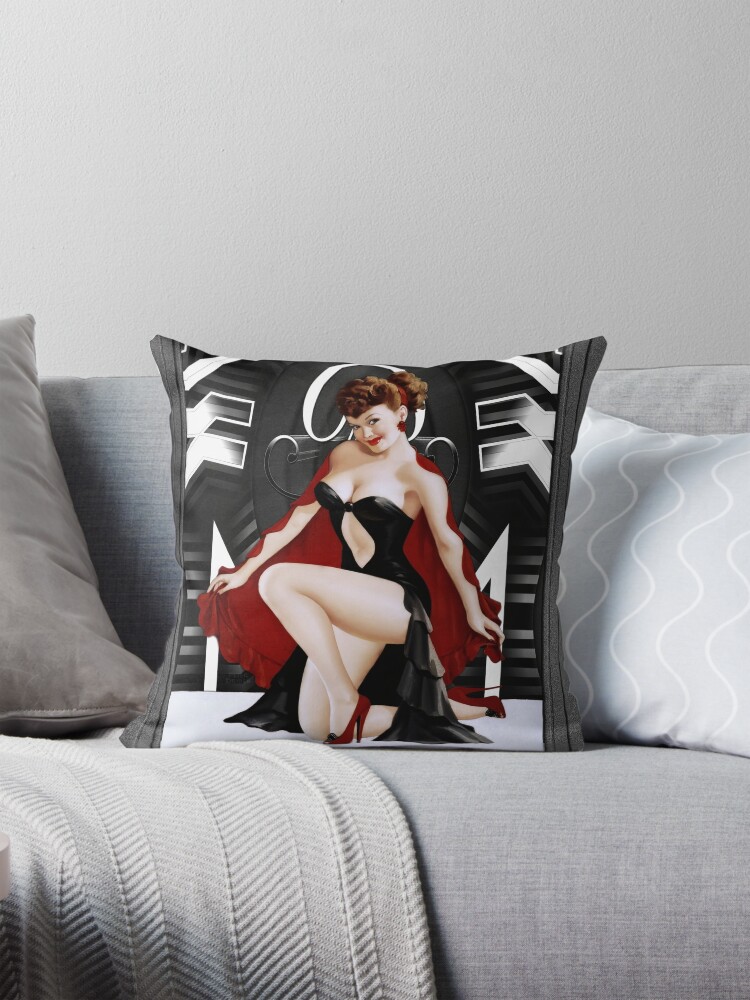
Die zentrale Figur in “The Red Cape” is a young woman in an arresting pose, exuding an irresistible charm. Her posture is confident, sitting on the ground with one knee raised, her body slightly turned to the side. She gazes directly at the viewer with a playful yet enticing expression, her lips slightly parted in a smile. Her hairstyle is carefully styled into soft curls that frame her face, adding to the sophistication of her appearance. The woman’s strikingly seductive look is enhanced by the rich color contrasts in her attire and surroundings.
She wears a fitted black dress with a daring plunging neckline, the silhouette of which accentuates her curves. The black dress, a classic emblem of elegance, is complemented by a flowing red cape that drapes behind her, extending across her shoulders and fluttering like a vivid extension of her powerful femininity. The red cape contrasts dramatically against the dark tones of the background and the black dress, drawing the eye directly to the central figure. Her bold red lipstick and matching earrings mirror the deep hue of the cape, underscoring her glamorous allure.
The Background and Mood
Der Hintergrund von “The Red Cape” further enhances the sense of grandeur and stylized sophistication. The background is composed of striking geometric elements, with sharp, angular lines creating a dynamic contrast with the soft, curvaceous lines of the model’s figure. The black and white tones in the background, along with the radial design, evoke a sense of art deco elegance and modernity. These elements work in tandem with the central figure, Dies betont die zeitlose Qualität des Bildes und verankert es gleichzeitig in der Mid-Century-Ästhetik, für die Driben bekannt ist.
Die Gesamtstimmung des Kunstwerks ist von Glamour und Kraft geprägt. Die Frau in dem Stück ist nicht nur ein passives, sondern ein aktives Subjekt, selbstbewusste Figur, Sie ist sich ihrer Schönheit und der Wirkung, die sie auf die Menschen um sie herum hat, voll bewusst. Der rote Umhang, insbesondere, fungiert als Symbol für Stärke und Kühnheit, ähnlich wie die Heldenfiguren in den Geschichten des klassischen Kinos. Die Farbe Rot, sowohl sinnlich als auch gebieterisch, unterstreicht ihre Dominanz in der Komposition, verwandelt sie in eine fast mythische Figur – eine Heldin, eingehüllt in die Eleganz des Vintage-Hollywoods.
Symbolism and Thematic Elements
“The Red Cape” ist eine Darstellung von mehr als nur einer modischen Frau; Es vermittelt eine tiefere Erzählung der Ermächtigung, locken, und Unabhängigkeit. The woman is portrayed as a figure of control, unapologetically seductive yet regal. The flowing red cape could symbolize both a cloak of protection and a dramatic visual extension of her persona. Der Umhang, in its voluminous fluidity, brings a sense of movement to an otherwise static scene, suggesting that the woman is not only a passive subject in the image but also an active force in her environment.
The composition itself echoes the optimism and post-war exuberance of the 1940s and 1950s. This period in American history saw a cultural explosion of confidence and self-expression, much of which was embodied in the burgeoning pin-up culture. Driben’s work encapsulates the sense of freedom and charm that characterized this era, an era where art and fashion collided to elevate everyday femininity to the level of art. The subject’s confident posture and seductive smile reflect the desire for attention and admiration that was often captured in pin-up art of the time.
The Medium and Artistic Style
Peter Driben’s work is rooted in the commercial and illustration art tradition, which is evident in “The Red Cape.” His style, influenced by the pin-up art movement and commercial illustration of the 1940s and 1950s, is both vivid and approachable. While it is clear that Driben’s work was intended for mass consumption—often for advertisements, Plakate, and magazine covers—he elevated the genre through his attention to detail, Farbe, und Komposition.
Im “The Red Cape,” Dribens Einsatz scharfer Hell-Dunkel-Kontraste verstärkt den Fokus des Bildes. Gesicht und Körper des Models heben sich hell von den tiefen Schatten des Hintergrunds ab, Es entsteht eine dreidimensionale Qualität, die den Blick des Betrachters auf sich zieht. Die glatten Linien des Kleides und des Umhangs kontrastieren mit den geometrischen Linien im Hintergrund, was auf ein Gleichgewicht zwischen Weichheit und Stärke hindeutet.
Der lebendige Einsatz von Farben im Kunstwerk ist der Schlüssel zu seiner Gesamtattraktivität. Die Kombination aus tiefen Rottönen, Schwarze, und Weiß tragen zur visuellen Dramatik der Szene bei, während die kräftigen Linien im Hintergrund ein Gefühl modernistischer Bewegung vermitteln. Die glänzende Oberfläche und die klaren Konturen des Gemäldes spiegeln die ästhetischen Vorlieben der Zeit wider, showcasing a blend of realism with the stylized and idealized beauty characteristic of pin-up art.
Abschluss: A Timeless Icon of Mid-Century Beauty
“The Red Cape” by Peter Driben stands as a classic example of mid-century pin-up art that continues to captivate audiences with its timeless blend of glamour, locken, and sophisticated femininity. Die Figur der Frau, with her powerful gaze and poised posture, represents the confidence and independence that was becoming more prevalent in American culture during the post-war years. Driben’s use of color, Zusammensetzung, and dramatic mood creates a piece that transcends its commercial origins, elevating it to the status of fine art.
This artwork is not merely a visual representation of a beautiful woman but a statement of power, Vertrauen, und zeitlose Eleganz, rendered in the perfect balance of style and substance. Through “The Red Cape,” Driben’s ability to capture the essence of his era—its optimism, Schönheit, and emerging social dynamics—remains as relevant and arresting as ever.
Über das Kunstwerk
The Red Cape by American Painter Peter Driben (1903 – 1968); Maler, Illustrator und einer der produktivsten Pin-up-Künstler der 1940er und 1950er Jahre.
A hot and sexy beautiful young brunette with a red ribbon in her hair and red earrings that is a wearing a large red cape over a black revealing evening dress and red high heel shoes with high a black polka-dot ribbons on top.
I decided to replace the black background with a digital art background to create a more dynamic look.
Dies ist eine remasterte digitale Kunst-Reproduktion alter Meister eines gemeinfreien Bildes, das als verfügbar ist Leinwanddruck online.
Über den Künstler
Info unten von Wikipedia.org
Peter Driben wurde in Boston geboren, und er studierte an der Vesper George Art School, bevor er nach Paris zog 1925. Während des Unterrichts an der Sorbonne in 1925, er begann eine Reihe von sehr beliebten Federzeichnungen der Showgirls der Stadt.
Im März von 1934 Driben schuf sein erstes bekanntes Pin-up, das das Cover von La Paree Stories war; und von 1935, er produzierte Cover für Snappy, Pep, New Yorker Nächte, Französisches Nachtleben und Caprice.
Als Dribens Popularität in den späten dreißiger Jahren weiter zunahm, schuf er weitere Cover für andere Zeitschriften, darunter Silk Stocking Stories, Filmkarussell und echter Bildschirmspaß.
Dribens Karriere weitete sich auf die Werbung aus, als er Ende des Jahres nach New York zog 1936. Hier schuf er originale dreidimensionale gestanzte Schaufensterauslagen für Philco Radios, Cannon Badetücher, und die Bäckerei Weber.
Sein vielleicht berühmtestes Werk sind die Originalplakate und Werbegrafiken für The Maltese Falcon. Peter Driben war auch ein enger Freund des Verlegers Robert Harrison, und in 1941 er wurde beauftragt, Cover für Harrisons neues Magazin Beauty Parade zu produzieren.
Von da an malte Peter Hunderte von Covern für diese Veröffentlichung und für die anderen sieben Titel, die Harrison herausbringen sollte – Flirt, Flüstern, Spähen, Zwinkern, Augenfällig, Kichert, und Joker.
Driben veröffentlichte oft bis zu sechs oder sieben seiner Cover jeden Monat. Dribens Arbeit für Harrison machte ihn zu einem der bekanntesten und erfolgreichsten Pin-up- und Glamour-Künstler Amerikas. Kurz bevor er anfing für Harrison zu arbeiten, Driben hat den Künstler geheiratet, Schauspielerin und Dichterin, Louise Kirby.
Im 1944 ihm wurde die ungewöhnliche Gelegenheit geboten, für einen Pin-up-Künstler; das war der Art Director der New York Sun, ein Posten, den er behielt, bis 1946. Während des Krieges, Sein beliebtes Gemälde von amerikanischen Soldaten, die in Iwo Jima die Flagge hissen, löste eine beträchtliche Medienaufmerksamkeit aus.
Im 1956, Driben und Louise sind nach Miami Beach gezogen, wo er seine Ruhestandsjahre verbrachte, um Porträts zu malen (einschließlich eines von Dwight D. Eisenhower) und andere Kunstwerke, die von seiner Frau zu erfolgreichen Ausstellungen organisiert wurden. Driben starb in 1968, Louise in 1984.