

The Red Cape: A Timeless Elegance Of Mid-Century Glamour
Introduction to the Artwork
“The Red Cape” is a quintessential work by the American artist Peter Driben, a celebrated figure known for his pin-up art in the mid-20th century. Driben’s mastery in creating seductive and lively compositions is well represented in this piece. The artwork captures the essence of glamour, viehätys, and sophisticated femininity, themes that resonate throughout his body of work. “The Red Cape” is a vivid portrayal of a woman embodying confidence and charm, set against a striking, almost cinematic backdrop.
Sisällysluettelo
Pääaihe: A Seductive Femme Fatale
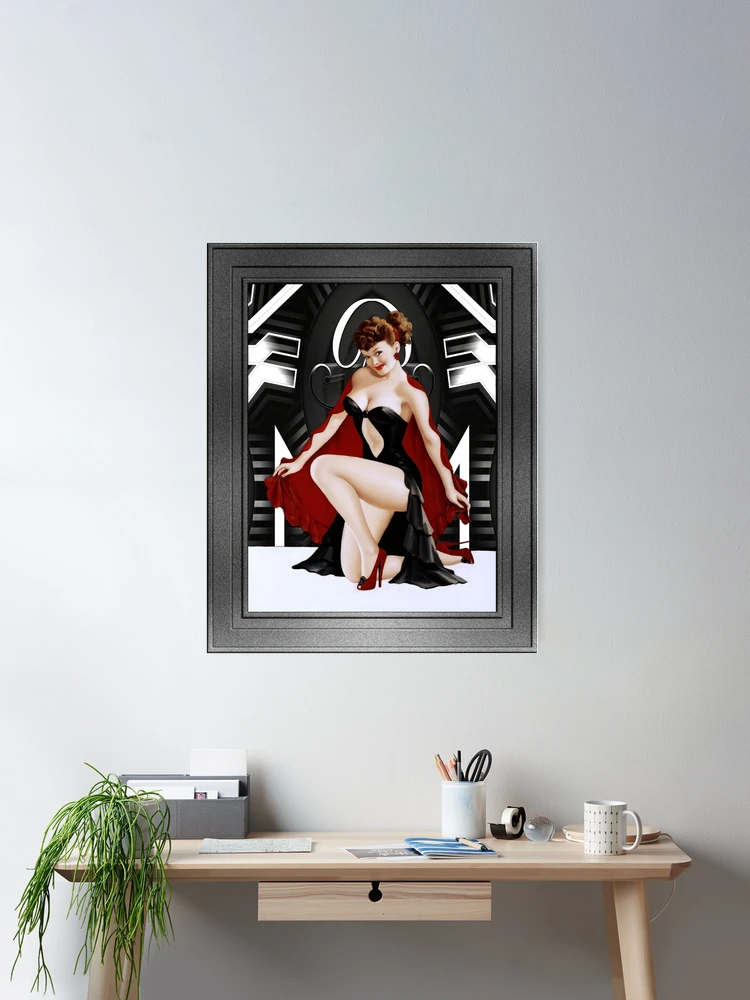
The central figure in “The Red Cape” is a young woman in an arresting pose, exuding an irresistible charm. Her posture is confident, sitting on the ground with one knee raised, her body slightly turned to the side. She gazes directly at the viewer with a playful yet enticing expression, her lips slightly parted in a smile. Her hairstyle is carefully styled into soft curls that frame her face, adding to the sophistication of her appearance. The woman’s strikingly seductive look is enhanced by the rich color contrasts in her attire and surroundings.
She wears a fitted black dress with a daring plunging neckline, the silhouette of which accentuates her curves. The black dress, a classic emblem of elegance, is complemented by a flowing red cape that drapes behind her, extending across her shoulders and fluttering like a vivid extension of her powerful femininity. The red cape contrasts dramatically against the dark tones of the background and the black dress, drawing the eye directly to the central figure. Her bold red lipstick and matching earrings mirror the deep hue of the cape, underscoring her glamorous allure.
The Background and Mood
The backdrop of “The Red Cape” further enhances the sense of grandeur and stylized sophistication. The background is composed of striking geometric elements, with sharp, angular lines creating a dynamic contrast with the soft, curvaceous lines of the model’s figure. The black and white tones in the background, along with the radial design, evoke a sense of art deco elegance and modernity. These elements work in tandem with the central figure, accentuating the timeless quality of the image while also grounding it in the mid-century aesthetic that Driben is known for.
The overall mood of the artwork is one of glamour and power. The woman in the piece is not merely a passive subject but an active, confident figure, fully aware of her beauty and the impact it has on those around her. The red cape, erityisesti, acts as a symbol of strength and boldness, much like the heroic personas in the stories of classic cinema. The color red, both sensual and commanding, highlights her dominance in the composition, turning her into an almost mythical figure—a heroine wrapped in the elegance of vintage Hollywood.
Symbolism and Thematic Elements
“The Red Cape” is a portrayal of more than just a fashionable woman; it conveys a deeper narrative of empowerment, viehätys, and independence. The woman is portrayed as a figure of control, unapologetically seductive yet regal. The flowing red cape could symbolize both a cloak of protection and a dramatic visual extension of her persona. The cape, in its voluminous fluidity, brings a sense of movement to an otherwise static scene, suggesting that the woman is not only a passive subject in the image but also an active force in her environment.
The composition itself echoes the optimism and post-war exuberance of the 1940s and 1950s. This period in American history saw a cultural explosion of confidence and self-expression, much of which was embodied in the burgeoning pin-up culture. Driben’s work encapsulates the sense of freedom and charm that characterized this era, an era where art and fashion collided to elevate everyday femininity to the level of art. The subject’s confident posture and seductive smile reflect the desire for attention and admiration that was often captured in pin-up art of the time.

The Medium and Artistic Style
Peter Driben’s work is rooted in the commercial and illustration art tradition, which is evident in “The Red Cape.” His style, influenced by the pin-up art movement and commercial illustration of the 1940s and 1950s, is both vivid and approachable. While it is clear that Driben’s work was intended for mass consumption—often for advertisements, julisteita, and magazine covers—he elevated the genre through his attention to detail, väri-, ja koostumus.
Sisään “The Red Cape,” Driben’s use of sharp contrasts between light and dark enhances the focal point of the image. The model’s face and body are brightly illuminated against the deep shadows of the background, creating a three-dimensional quality that draws the viewer’s eye. The smooth lines of the dress and cape contrast with the geometric lines in the background, suggesting a balance between softness and strength.
The vivid use of color in the artwork is key to its overall appeal. The combination of deep reds, mustat, and whites adds to the visual drama of the scene, while the bold lines in the background contribute a sense of modernist movement. The painting’s glossy finish and clean contours reflect the aesthetic preferences of the time, showcasing a blend of realism with the stylized and idealized beauty characteristic of pin-up art.
Johtopäätös: A Timeless Icon of Mid-Century Beauty
“The Red Cape” by Peter Driben stands as a classic example of mid-century pin-up art that continues to captivate audiences with its timeless blend of glamour, viehätys, and sophisticated femininity. The figure of the woman, with her powerful gaze and poised posture, represents the confidence and independence that was becoming more prevalent in American culture during the post-war years. Driben’s use of color, koostumus, and dramatic mood creates a piece that transcends its commercial origins, elevating it to the status of fine art.
This artwork is not merely a visual representation of a beautiful woman but a statement of power, luottamusta, and timeless elegance, rendered in the perfect balance of style and substance. Through “The Red Cape,” Driben’s ability to capture the essence of his era—its optimism, kauneus, and emerging social dynamics—remains as relevant and arresting as ever.
Tietoja Taideteoksesta
The Red Cape by American Painter Peter Driben (1903 – 1968); taidemaalari, kuvittaja ja yksi tuottavimmista pin-up-taiteilijoista 1940- ja 1950-luvuilla.
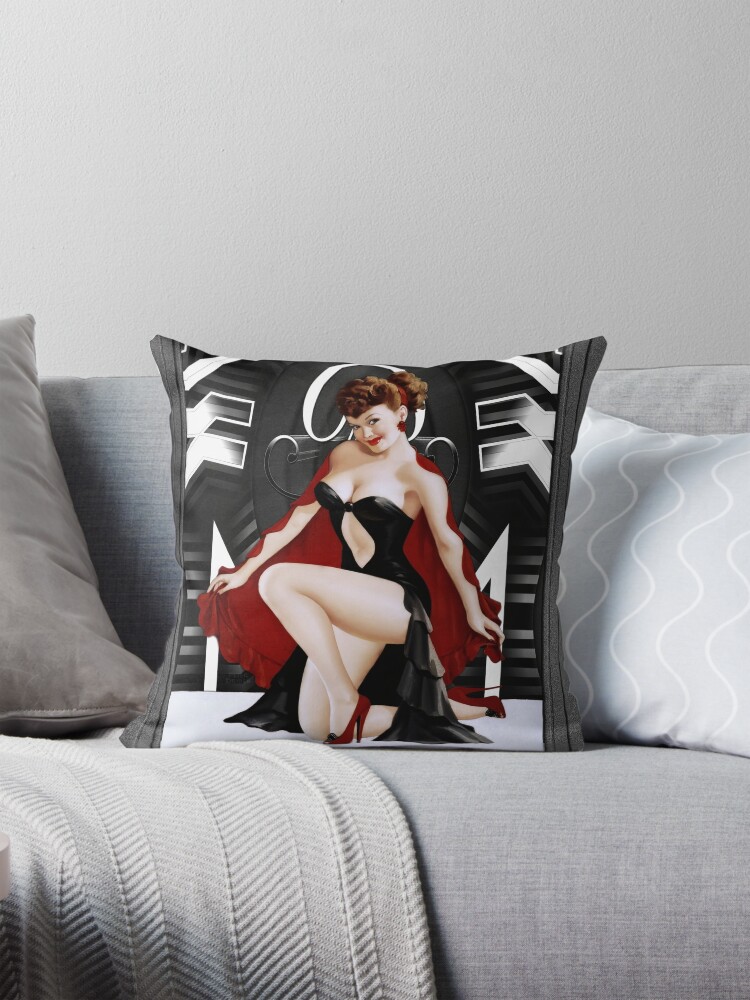
A hot and sexy beautiful young brunette with a red ribbon in her hair and red earrings that is a wearing a large red cape over a black revealing evening dress and red high heel shoes with high a black polka-dot ribbons on top.
I decided to replace the black background with a digital art background to create a more dynamic look.
Tämä on remasteroitu digitaalisen taiteen vanhojen mestareiden kopio julkisessa käytössä olevasta kuvasta, joka on saatavilla a kanvastulostus verkossa.
Tietoja Taiteilijasta
Tiedot alla Wikipedia.org
Peter Driben syntyi Bostonissa, ja hän opiskeli Vesper George Art Schoolissa ennen kuin muutti Pariisiin vuonna 1925. Kun opiskelen Sorbonnessa 1925, hän aloitti sarjan erittäin suosittuja kynä- ja mustepiirroksia kaupungin esitystaiteista.
Maaliskuussa 1934 Driben loi ensimmäisen tunnetun pin-upinsa, joka oli La Paree Storiesin kansi; ja mennessä 1935, hän tuotti coverit Snappylle, Pep, New Yorkin yöt, Ranskalainen yöelämä ja Caprice.
Kun Dribenin suosio jatkoi nousuaan 30 -luvun lopulla, hän loi lisää kansia muille aikakauslehdille, mukaan lukien Silk Stocking Stories., Elokuva Merry-Go-Round ja Real Screen Fun.
Dribenin ura laajeni mainontaan, kun hän muutti New Yorkiin myöhään 1936. Täällä hän loi alkuperäiset kolmiulotteiset leikkausikkunanäytöt Philco Radiosille, Cannon kylpypyyhkeet, ja Weber Baking Company.
Ehkä hänen tunnetuin teoksensa on The Maltese Falconin alkuperäiset julisteet ja julkisuus. Peter Driben oli myös kustantaja Robert Harrisonin läheinen ystävä, ja sisään 1941 hän sai sopimuksen tuottaa kansia Harrisonin uudelle Beauty Parade -lehdelle.
Sieltä Peter jatkoi maalaamaan satoja kansia kyseiselle julkaisulle ja seitsemälle muulle teokselle, jotka Harrisonin oli määrä julkaista – Flirttailla, Kuiskaus, Kurkistus, Silmänisku, Kaunis tyttö, Giggles, ja Jokeri.
Driben julkaisi usein jopa kuusi tai seitsemän hänen kansiaan joka kuukausi. Dribenin työ Harrisonille vahvisti hänet yhdeksi Amerikan tunnetuimmista ja menestyneimmistä pin-up- ja glamour-taiteilijoista. Juuri ennen kuin hän aloitti Harrisonin palveluksessa, Driben meni naimisiin taiteilijan kanssa, näyttelijä ja runoilija, Louise Kirby.
Sisään 1944 hänelle tarjottiin epätavallinen mahdollisuus, pin-up-taiteilijalle; siitä tuli New York Sunin taiteellinen johtaja, virkaan, jonka hän säilytti kunnes 1946. Sodan aikana, hänen suosittu maalauksensa amerikkalaisista sotilaista, jotka nostivat lippua Iwo Jimalla, herätti huomattavaa mediahuomiota.
Sisään 1956, Driben ja Louise muuttivat Miami Beachille, jossa hän vietti eläkevuosia maalaamalla muotokuvia (mukaan lukien yksi Dwight D.. Eisenhower) ja muita taideteoksia, jotka hänen vaimonsa järjesti onnistuneiksi näyttelyiksi. Driben kuoli vuonna 1968, Louise sisään 1984.