

Kauneusparaati helmikuussa 1949 – An Artistic Journey Into Glamour And Intrigue
Esittely: A Glimpse into the Past
Peter Driben’s Kauneusparaati helmikuussa 1949 captures an iconic moment of American glamour and vintage allure, bringing together the bold and seductive spirit of mid-20th-century pin-up art. Known for his mastery of the pin-up genre, Driben’s work was celebrated for its sophisticated yet playful depictions of women, often embracing a combination of sensuality and class. Tämä taideteos, maalattu sisään 1949, exemplifies the refined yet bold portrayal of feminine beauty through a strategic balance of color, muodossa, ja koostumus.
Sisällysluettelo
Pääaihe: The Femme Fatale in a Red Dress
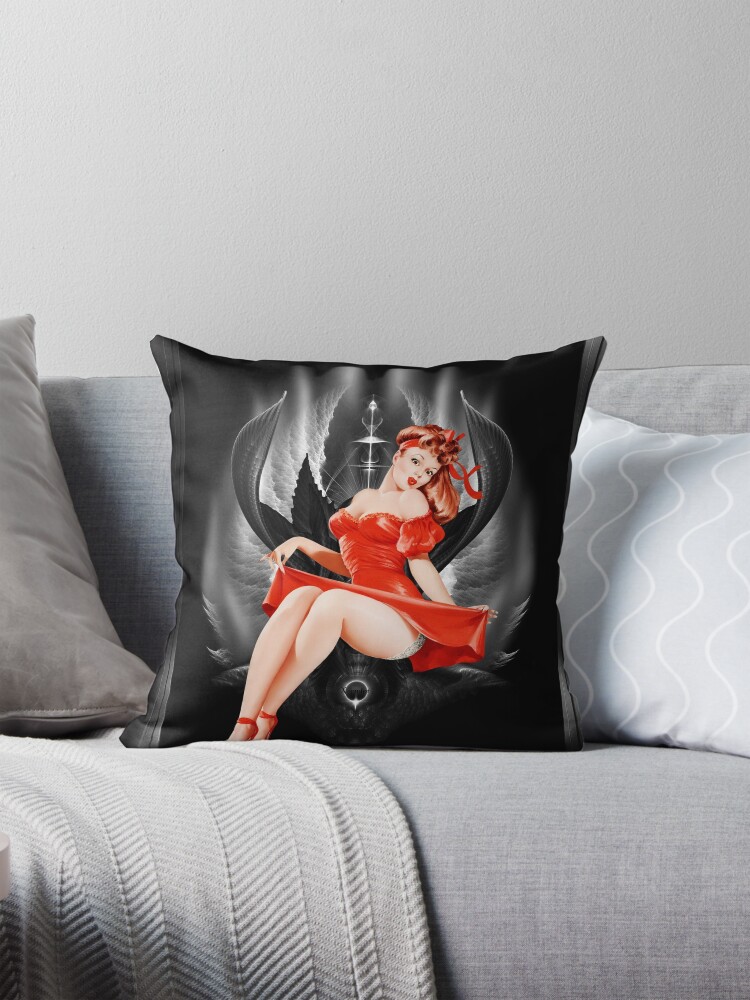
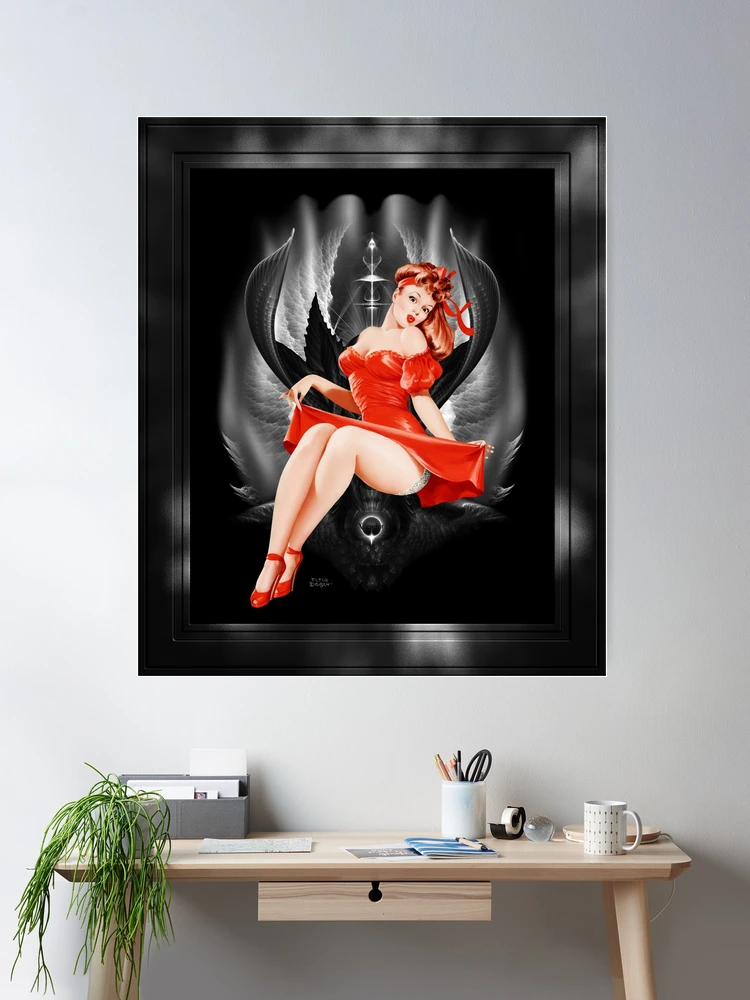
At the heart of the composition is the captivating figure of a woman, portrayed in a seductive and confident pose. She sits with one leg poised delicately over the other, her body turned slightly to the side, yet her gaze directly confronts the viewer. The figure exudes a sense of both allure and power, her crimson dress billowing slightly as if caught in a breeze, emphasizing her voluptuous form. Mekko, with its off-the-shoulder cut, accentuates her graceful, feminine curves, while the bright red hue suggests passion and vitality.
Her expression is one of mischievous charm, a classic hallmark of Driben’s subjects, whose gaze often invites curiosity and intrigue. The woman’s red heels match her dress, a visual cue that reinforces her boldness and confidence. Pään päällä, a carefully styled mass of waves and curls frames her face, with a ribbon adding a touch of playful elegance. The artist’s attention to detail is evident in her delicate features—high cheekbones, a soft smile, and slightly arched eyebrows—creating a harmonious balance of beauty and grace.
Her pose also suggests a subtle narrative. Resting lightly on her thigh, one hand holds a long, slender object (perhaps a cigarette holder), adding to the sense of poised sophistication and the timeless glamour of the era.
Surrounding Elements: The Shadowed Background and Wings
The background of the piece is as compelling as the figure herself. Tumma, almost ethereal shadows emerge from either side of the central subject, forming what appear to be angelic or bird-like wings. These dark, contrasting elements not only serve to frame the woman but also add a dramatic sense of mystery and power. The wings are smooth and stylized, echoing the fashion trends of the time, which often included dramatic statements in art and design. These wings lend an air of fantasy and exaggerate the beauty of the subject, providing a striking contrast against the vivid red of her dress.
The composition is completed by a soft play of light that surrounds the figure, accentuating the curves of her body and the flowing fabric of her dress. The darker tones in the wings and background provide an aura of tension, as if the woman is both part of and removed from the mysterious world around her. There is an underlying sense of both elegance and danger, a reflection of the femme fatale archetype.
Materiaalit ja tekniikat: Masterful Illustration
Peter Driben’s style is rooted in the traditions of commercial illustration, where detail and glamour are paramount. His use of bold, clean lines and the careful attention to proportions gives the figure a lifelike quality that remains faithful to the conventions of pin-up art. The application of colors is deliberate and evocative; the rich red of the dress contrasts starkly against the dark, muted background. Driben’s use of highlights and shadowing on the woman’s skin creates depth, emphasizing her form and the play of light across her body.
The technique is characterized by smooth gradations of light and dark, which give a three-dimensional quality to the figure. The background is softer, with fewer details, placing all focus on the central subject. This simplicity of the background serves to highlight the intricate details of the woman’s pose, kasvojen piirteet, ja pukeutuminen.
Tyyli: Pin-Up Art at Its Peak
This piece embodies the pinnacle of mid-20th-century pin-up art. It was during this period that pin-up art became a symbol of youthful exuberance, seduction, and American culture. The stylistic approach employed by Driben in Kauneusparaati helmikuussa 1949 is rich in its visual appeal, with a heightened sense of femininity, luottamusta, ja viehätys. His figures, though idealized, are imbued with personality, suggesting that these women are not just objects of beauty, but active participants in their narratives.
Driben’s work often blurred the lines between commercial art and fine art, appealing to both mass audiences and collectors. His pin-up models, with their glamorized but relatable characteristics, were meant to celebrate the sensuality of the female form while remaining within the bounds of taste and style.
Teema ja mieliala: Seduction, Confidence, and Power
Ensisijainen teema Kauneusparaati helmikuussa 1949 is one of sensuality paired with a quiet but undeniable strength. The woman’s posture and expression suggest an empowered persona—someone who is fully aware of her beauty and the power it holds. There is a confident playfulness in her stance, enhanced by the subtle details of her hand positioning and the graceful way in which she sits. The wings behind her, though dark, are elegant, providing an almost mystical quality to the composition that reinforces the idea of beauty as something transcendent and otherworldly.
The mood of the piece is seductive and alluring but also imbued with a sense of mystery. The figure’s direct gaze draws the viewer in, yet the surrounding shadows and surreal wings leave a lingering sense of ambiguity. Is the woman an angel or a temptress, a mythic figure or a flesh-and-blood reality? This tension between the ethereal and the grounded plays a significant role in the overall atmosphere of the artwork.
Johtopäätös: An Iconic Representation of 1940s Glamour
Peter Driben’s Kauneusparaati helmikuussa 1949 remains an iconic representation of mid-20th-century glamour and the era’s fascination with sensuality, kauneus, and fantasy. Through his use of bold color, dramatic composition, and attention to detail, Driben crafted a work that continues to evoke the allure and power of the pin-up model. His combination of elegance, charm, and mysterious strength makes this artwork a lasting testament to the timeless appeal of the feminine form as depicted in the art of the 1940s.
Tietoja Taideteoksesta
Kauneusparaati helmikuussa 1949 kirjoittanut American Painter Peter Driben (1903 – 1968); taidemaalari, kuvittaja ja yksi tuottavimmista pin-up-taiteilijoista 1940- ja 1950-luvuilla.
Tämä on hauska kappale helmikuulta 1949 Edition of Beauty Parade Magazine, which shows an attractive redhead, with red lipstick in mid length off shoulder red dress, a red bow bandana in her hair that is also wearing red strap high heel shoes.
Originally she was seated on a greyish-blue decorative pouf and was set against a black background; but decided to replace those and add in my fractal art composition portrait Taidushan Sai The Talons Of Time, to change the look as if she may be in for some enticing hot water.
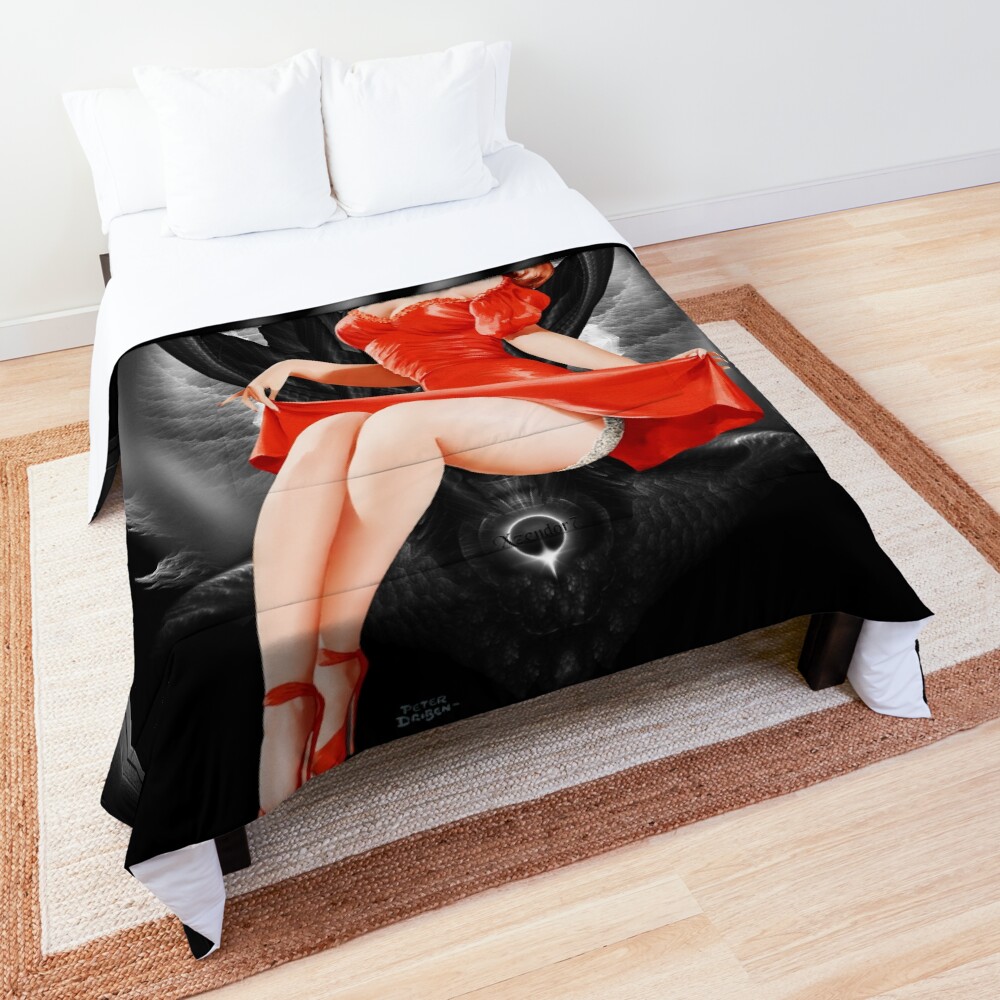
The young redhead has her dressed lifted and spread over her thighs using her two hands, which reveals her decorative panty and her beautiful full figured legs.
This is a remastered digital art old masters reproduction of a public domain image that is available as a canvas, acrylic and metalliprintti verkossa.
Artist Info
Tiedot alla Wikipedia.org
Peter Driben syntyi Bostonissa, ja hän opiskeli Vesper George Art Schoolissa ennen kuin muutti Pariisiin vuonna 1925. Kun opiskelen Sorbonnessa 1925, hän aloitti sarjan erittäin suosittuja kynä- ja mustepiirroksia kaupungin esitystaiteista.
Maaliskuussa 1934 Driben loi ensimmäisen tunnetun pin-upinsa, joka oli La Paree Storiesin kansi; ja mennessä 1935, hän tuotti coverit Snappylle, Pep, New Yorkin yöt, Ranskalainen yöelämä ja Caprice.
Kun Dribenin suosio jatkoi nousuaan 30 -luvun lopulla, hän loi lisää kansia muille aikakauslehdille, mukaan lukien Silk Stocking Stories., Elokuva Merry-Go-Round ja Real Screen Fun.
Dribenin ura laajeni mainontaan, kun hän muutti New Yorkiin myöhään 1936. Täällä hän loi alkuperäiset kolmiulotteiset leikkausikkunanäytöt Philco Radiosille, Cannon kylpypyyhkeet, ja Weber Baking Company.
Ehkä hänen tunnetuin teoksensa on The Maltese Falconin alkuperäiset julisteet ja julkisuus. Peter Driben oli myös kustantaja Robert Harrisonin läheinen ystävä, ja sisään 1941 hän sai sopimuksen tuottaa kansia Harrisonin uudelle Beauty Parade -lehdelle.
Sieltä Peter jatkoi maalaamaan satoja kansia kyseiselle julkaisulle ja seitsemälle muulle teokselle, jotka Harrisonin oli määrä julkaista – Flirttailla, Kuiskaus, Kurkistus, Silmänisku, Kaunis tyttö, Giggles, ja Jokeri.
Driben julkaisi usein jopa kuusi tai seitsemän hänen kansiaan joka kuukausi. Dribenin työ Harrisonille vahvisti hänet yhdeksi Amerikan tunnetuimmista ja menestyneimmistä pin-up- ja glamour-taiteilijoista. Juuri ennen kuin hän aloitti Harrisonin palveluksessa, Driben meni naimisiin taiteilijan kanssa, näyttelijä ja runoilija, Louise Kirby.
Sisään 1944 hänelle tarjottiin epätavallinen mahdollisuus, pin-up-taiteilijalle; siitä tuli New York Sunin taiteellinen johtaja, virkaan, jonka hän säilytti kunnes 1946. Sodan aikana, hänen suosittu maalauksensa amerikkalaisista sotilaista, jotka nostivat lippua Iwo Jimalla, herätti huomattavaa mediahuomiota.
Sisään 1956, Driben ja Louise muuttivat Miami Beachille, jossa hän vietti eläkevuosia maalaamalla muotokuvia (mukaan lukien yksi Dwight D.. Eisenhower) ja muita taideteoksia, jotka hänen vaimonsa järjesti onnistuneiksi näyttelyiksi. Driben kuoli vuonna 1968, Louise sisään 1984.