

The Red Hotline
The Red Hotline: A Celebration of Glamour and Playfulness
The Red Hotline vum Peter Driben (1903 – 1968), an esteemed American pin-up artist of the mid-20th century, was celebrated for his ability to infuse vitality and charm into his works; and this piece is a quintessential example of his artistry, epitomizing the flirtatious yet wholesome essence of pin-up culture. Driben‘s vibrant palette, mastery of form, and knack for storytelling through visual art are on full display in this piece.
Inhaltsverzeechnes
Haaptthemium: The Radiant Blonde in Blue
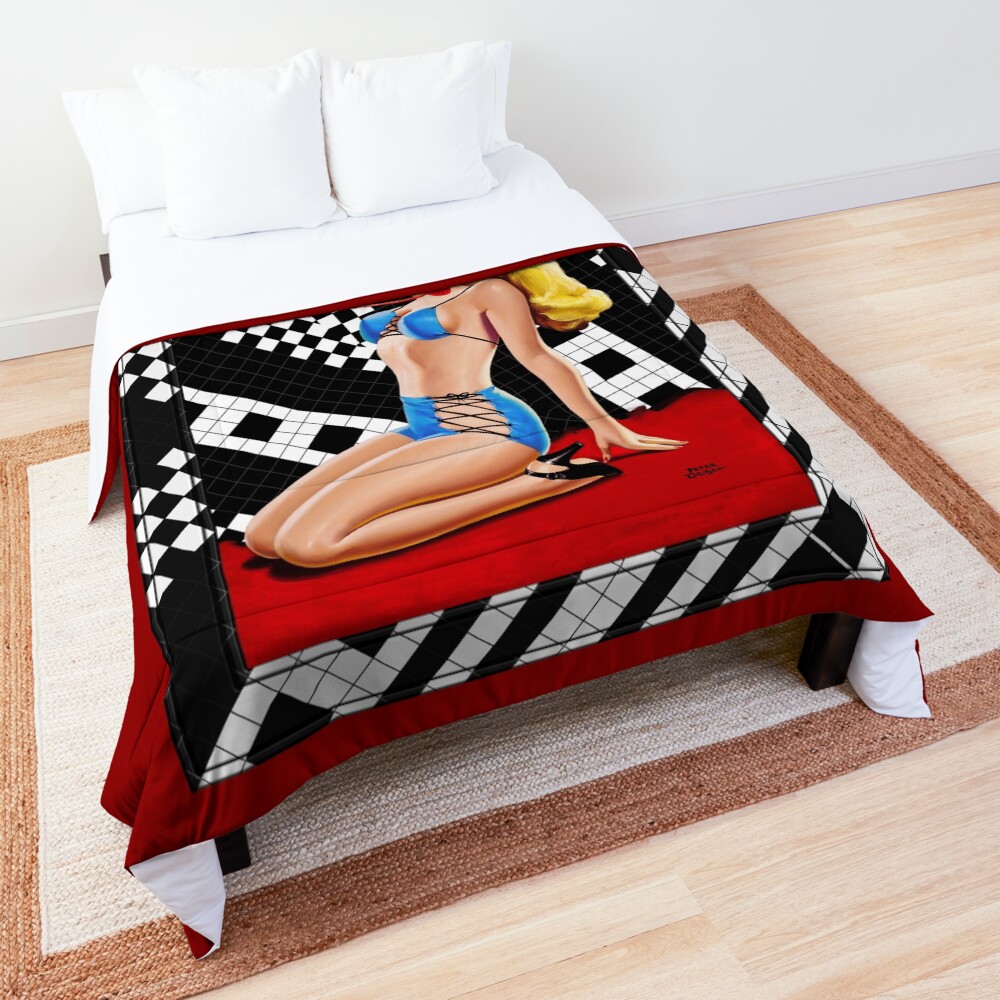
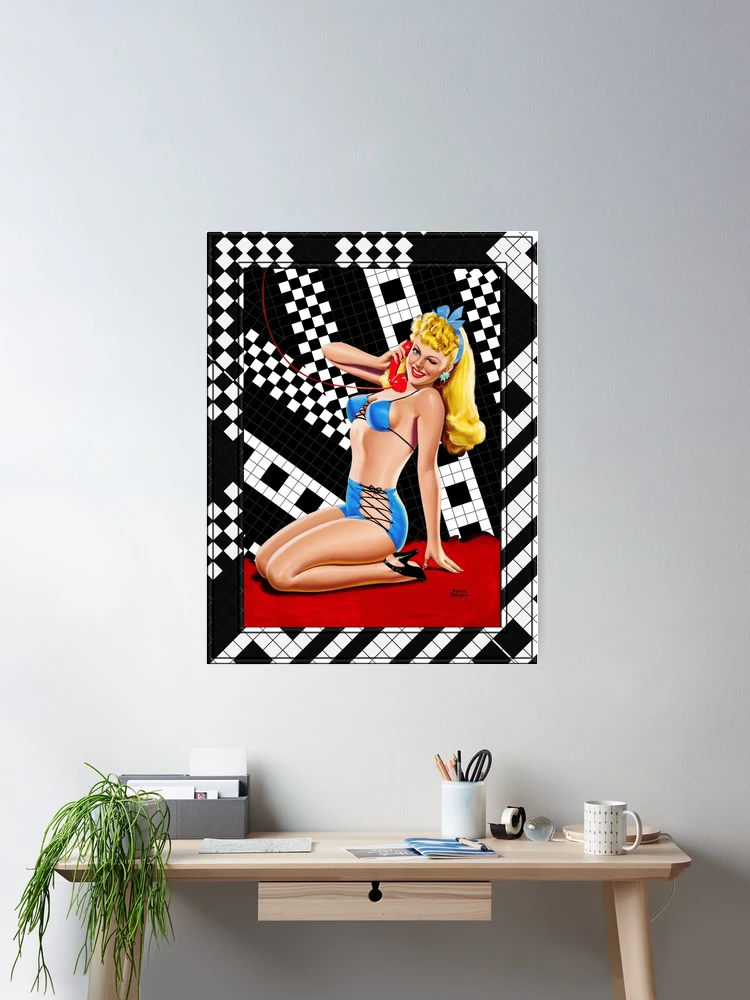
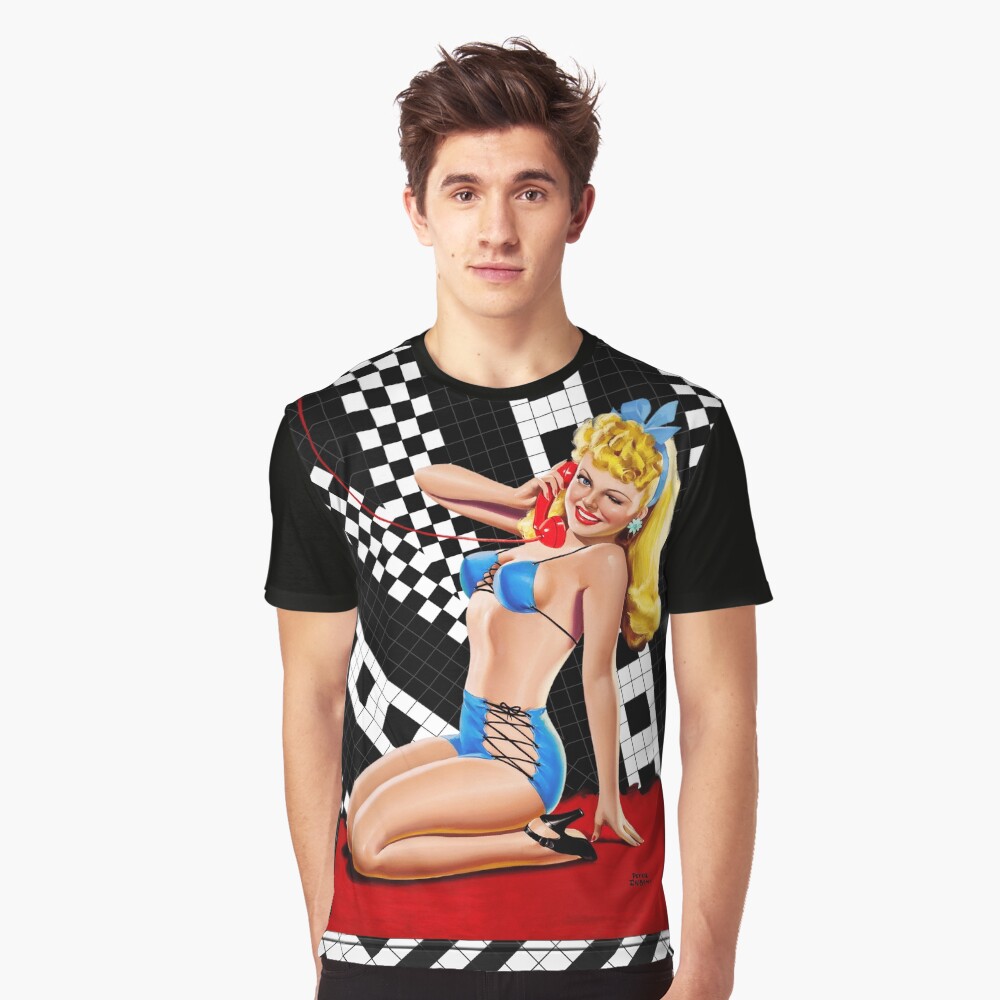
Um Häerz vun “The Red Hotline” lies a playful and coquettish depiction of a young blonde woman. Her golden hair cascades in carefully stylized waves, adorned with a large, cheerful blue bow that complements her swimsuit. The bright smile on her face, coupled with her winking eye, exudes an inviting charm, drawing viewers into the narrative. She holds a bright red telephone receiver, which lends the artwork its name and serves as a pivotal object within the composition.
The subject is dressed in a light blue bikini with black lace detailing. The high-waisted bottoms, characteristic of 1940s and 1950s fashion, are secured with crisscrossed laces, adding a touch of suggestive allure without compromising the overall playfulness of the scene. Her slender figure, accented by the pose, kneeling on a red carpet with one hand on the ground and the other holding the phone, demonstrates Driben’s skillful portrayal of anatomy and movement.
Background and Surrounding Objects
Den Hannergrond vun “The Red Hotline” is a dazzling geometric checkerboard pattern, a staark schwaarz a wäiss ausgefouert. Dës Grafik, bal optesch Illusioun-wëll Design gëtt e modernistesche Kontrast zu der mëll, feminin Figur am Virdergrond. Den abstrakte Hannergrond erënnert e Gefill vun Energie a Fett, verstäerkt déi dynamesch Qualitéit vun der Zesummesetzung.
De roude Telefonschnouer wéckelt spilleresch iwwer de Rumm, d'Thema mat engem onsiichten Uruffer ze verbannen an e Gefill vun der narrativer Intrig ze sprëtzen. Den Telefon selwer, engem knalleg rout, steet schaarf géint déi monochrom a blo Elementer eraus, als visuell an thematesch Anker handelen.
De rouden Teppech ënnert der Fra déngt en duebelen Zweck. Et cadréiert hir Pose wärend e waarme bäidréit, invitéierend Toun an d'Kompositioun. Dëse Fleck vu rout balanséiert déi méi cool Téin vun hirem Kleedung a verbënnt zréck op den Telefon, e kohäsive Faarfschema ze kreéieren.
Styl an Technik
Dem Driben seng Aarbecht verkierpert de Golden Age vun der Pin-up Konscht, eng Ära wou Illustratoren eng idealiséiert ageholl hunn, dacks frech Duerstellung vu Weiblechkeet. Säi Stil gëtt duerch fett Faarwen definéiert, propper Linnen, an en héijen Niveau vu polnesche, deen un déi glänzend Annoncen an Zäitschrëftdeckele vu senger Zäit erënnert.
An “The Red Hotline,” Driben d'Benotzung vu Liicht a Schiet ass subtil awer effektiv. De glänzenden Glanz um Telefon an d'Schnouer vum Schwammkleed füügt e Gefill vun Textur a Realismus bäi, während déi mëll Schatten laanscht d'Kéiren vun der Figur hir Dräidimensionalitéit verbesseren. Dem Kënschtler seng Opmierksamkeet op Detailer - sou wéi déi präzis Rendering vun hire glänzend schwaarzen Fersen oder déi subtil Highlights an hiren Hoer - weist seng technesch Fäegkeeten..
Thema a Stëmmung
D'Thema vun “The Red Hotline” ass liichtfäerteg ofgeschloss a spilleresch, verwuerzelt am Optimismus an de frechen Humor, deen d'Pin-up-Konscht vun der Mëtt vum Joerhonnert charakteriséiert huet. Den Telefon stellt en Element vun der Storytelling vir, Zuschauer invitéieren d'Gespréich virzestellen. Hatt flirtt mat engem Fräier? Deelen engem laachen mat engem Frënd? D'Ambiguitéit erlaabt eng Rei Interpretatiounen, déi scheinbar einfach Szene bäidroen.
D'Stëmmung ass onweigerlech Spaass a flirtatious, awer bleift et am Räich vum onschëllegen Flucht. Dem Driben seng Pin-ups sinn dacks d'Linn tëscht Suggestivitéit a Wuelstand gaang, e Gläichgewiicht, deen se an hirer Zäit wäit populär an zougänglech gemaach huet. “The Red Hotline” ass keng Ausnahm, bitt eng spilleresch Fantasie, déi ni an d'Vulgaritéit verwandelt.
Material a Medium
While the specific medium of this piece isn’t detailed here, Driben was known for his work in gouache and oil paints. These mediums allowed him to achieve the vibrant colors and smooth finishes seen in “The Red Hotline.” The level of precision in the lines and shading suggests that this artwork was originally created as an illustration, likely intended for print in a magazine, calendar, or poster.
Cultural Context and Legacy
“The Red Hotline” reflects the cultural zeitgeist of its era. Created during a time when pin-up art was at its peak, it embodies the idealized femininity and playful sensuality that appealed to audiences in the mid-20th century. Driben’s works were part of a broader movement that celebrated beauty, Glamour, and the allure of the everyday woman.
As a piece of pin-up art, “The Red Hotline” dréit d'Ierfschaft vun engem Genre mat sech, deen d'Moud beaflosst, Reklammen, a populär Kultur. Haut, et steet als nostalgesch Erënnerung un eng vergaangen Ära, appréciéiert souwuel fir seng ästhetesch Qualitéiten a seng historesch Bedeitung.
Conclusioun
“The Red Hotline” vum Peter Driben ass e meesterlecht Beispill vu Pin-up Konscht am Mëttelalter. Seng faszinéierend Thema, fett Design, a lieweg Ausféierung weisen dem Kënschtler säin Talent a Kreativitéit. Dem Driben seng Fäegkeet fir Spilllechkeet mat technescher Präzisioun ze kombinéieren garantéiert datt dëst Konschtwierk eng dauerhaft Ikon vu sengem Genre bleift. Et erfaasst e Moment an der Zäit wou Glamour a Charme gefeiert goufen, bitt Zuschauer en erfreelechen Abléck an d'Welt vun der vintage Illustratioun.
Dëst ass eng remastered digital Konscht al Master Reproduktioun vun engem Public Domain Bild dat als verfügbar ass metalldruck online.
Iwwer de Kënschtler
Info Ënnen Vun Wikipedia.org
De Peter Driben gouf zu Boston gebuer, an hien huet op der Vesper George Art School studéiert ier hien op Paräis geplënnert ass 1925. Wärend Coursen op der Sorbonne an 1925, hien huet eng Serie vun héich populär Pen-an-Tënt Zeechnungen vun der Stad Showgirls ugefaangen.
Am Mäerz vun 1934 Den Driben huet säin éischte bekannte Pin-up erstallt deen den Cover zu La Paree Stories war; an vum 1935, hien huet Coveren fir Snappy produzéiert, Pep, New York Nuechten, Franséisch Nuetsliewen a Caprice.
Wéi dem Driben seng Popularitéit an de spéiden Drëssegjärege weider eropgeet, huet hien méi Coveren fir aner Zäitschrëften erstallt, dorënner Silk Stocking Stories, Film Merry-Go-Round a Real Écran Spaass.
Dem Driben seng Carrière huet sech an d'Reklamm erweidert wéi hien spéit op New York geplënnert ass 1936. Hei huet hien originell dreidimensional gestuerwe Fënstere fir Philco Radios erstallt, Cannon Bath Handdicher, an der Weber Baking Company.
Vläicht säi bekanntste Wierk ass d'Original Plakater a Publizitéitskonscht fir The Maltese Falcon. De Peter Driben war och e gudde Frënd vum Verlag Robert Harrison, an an 1941 hie gouf vertraglech fir Coveren fir dem Harrison säin neie Magazin Beauty Parade ze produzéieren.
Vun do un huet de Peter Honnerte vun Deckele fir dës Verëffentlechung gemoolt a fir déi aner siwen Titelen, déi den Harrison lancéiere soll. – Flirt, Geflüstert, Kucken, Wink, Augeful, Giggles, an Joker.
Driben hätt dacks esou vill wéi sechs oder siwe vu senge Coveren all Mount publizéiert. Dem Driben seng Aarbecht fir den Harrison huet hien als ee vun den unerkannten an erfollegräichsten Pin-up a Glamour Kënschtler vun Amerika etabléiert. Just ier hien ugefaang fir Harrison ze schaffen, Driben bestuet de Kënschtler, Schauspillerin an Dichter, Louise Kirby.
An 1944 hie krut déi ongewéinlech Geleeënheet ugebueden, fir e Pin-up Kënschtler; dat sollt den Art Director vun der New York Sun ginn, e Post, deen hien behalen huet bis 1946. Während dem Krich, seng populär Molerei vun amerikaneschen Zaldoten, déi de Fändel op Iwo Jima erhéijen, huet eng bedeitend Quantitéit vu Medienopmierksamkeet ausgeléist.
An 1956, Driben a Louise sinn op Miami Beach geplënnert, wou hien seng Pensiounsjoer Portraite gemoolt huet (dorënner ee vun Dwight D. Eisenhower) an aner Konschtwierker, déi an erfollegräich Ausstellungen vu senger Fra organiséiert goufen. Driben ass gestuerwen 1968, Louise an 1984.