

The Russian Brides Attire
The Russian Brides Attire c1889 by Russian Painter Konstantin Makovský (1839 – 1915); specializující se na ruské historické obrazy zobrazující idealizovaný pohled na ruský život v minulých staletích.
Konstantin Makovsky’s The Russian Brides Attire (1889) presents a captivating glimpse into the ceremonial preparations of a Russian bride in a traditional 19th-century setting. The scene is set within an intimate, richly adorned room where the bride-to-be, poised in anticipation, is surrounded by her closest family and friends. This historical genre painting, rooted deeply in Russian culture, reflects both the bride’s personal moment and the social customs of the time.
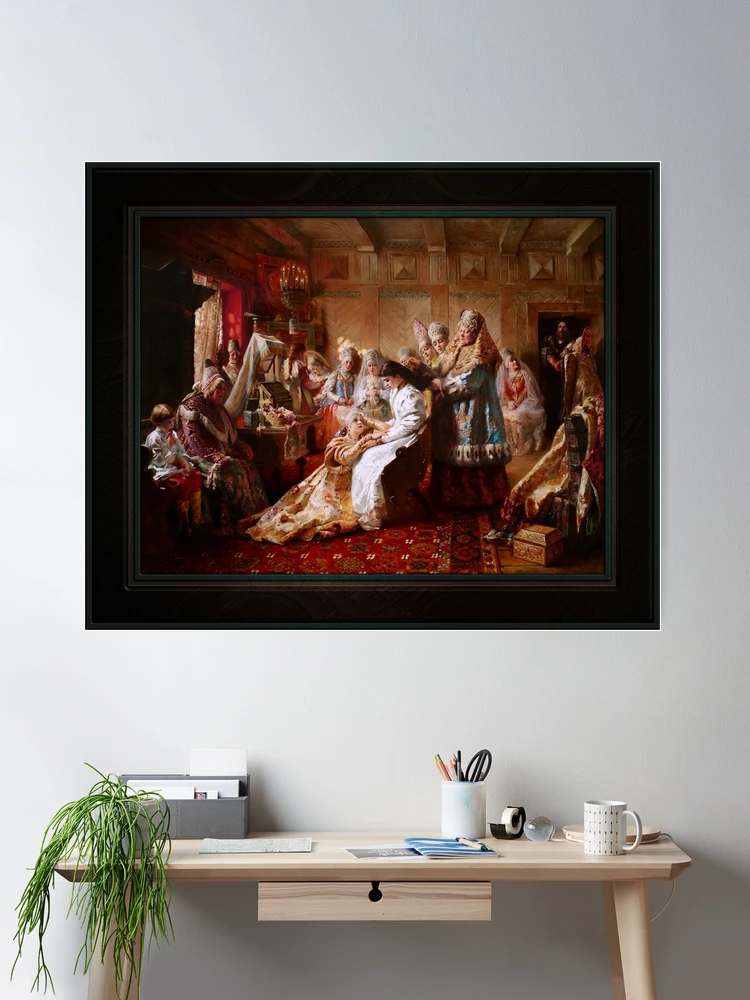
At the heart of the painting sits the young bride, dressed in an opulent, meticulously detailed gown of traditional Russian wedding attire. The intricacies of her attire are striking; every fold and embellishment in her richly embroidered dress echoes the skill and craftsmanship of the period. The gown’s texture, enhanced by the gentle play of light, emphasizes its luxurious fabric, hinting at the bride’s high social standing.
The gown, with its intricate patterns and vibrant colors, combines tradition with beauty, setting her apart as the central figure in the composition. Její výraz, serene yet tinged with the anticipation of the upcoming union, contributes to the painting’s overall sense of reverence for this momentous life event.
The surrounding figures enhance the emotional depth of the scene. Bridesmaids, family members, and an attentive mother are present, each contributing to the bride’s preparations. The bridal party’s clothing is also detailed, showcasing the opulence typical of the Russian aristocracy during the era.
These individuals are all engaged in the intimate tasks of finalizing the bride’s appearance, with one figure seated at the bride’s feet, holding her hands tenderly—a subtle gesture of familial connection and support. Na rozdíl od toho, a young man, possibly the groom, appears at the threshold of the room, holding a gift box. His presence is restrained, his access to the bride’s space halted by a gentle but firm barrier, as custom would dictate.
The setting further complements the mood of the painting. The room is lavishly decorated, s temnou, rich tones contrasting against the soft glow of candlelight and the bride’s radiant attire. This use of light symbolizes both the bride’s purity and the solemnity of the occasion.
The opulent, antique furniture and the delicate furnishings suggest an upper-class household, indicative of the wealth and status of the bride’s family. These elements come together to transport the viewer to the Russian nobility’s private spaces, where tradition and social rituals were deeply ingrained.
Makovsky’s approach to the painting reflects his expertise in academic art and historical realism, grounded in his training and experience with the Peredvizhniki (Poutníci) hnutí. Known for portraying the everyday lives of Russians, Makovsky’s work in Oděv ruské nevěsty transcends mere documentation, offering an emotional portrait of a pivotal moment in a young woman’s life. His mastery of detail, barva, and light conveys a sense of reverence for the traditions of Russian weddings, while the gentle interactions between the figures in the scene imbue the work with a sense of warmth and familial love.
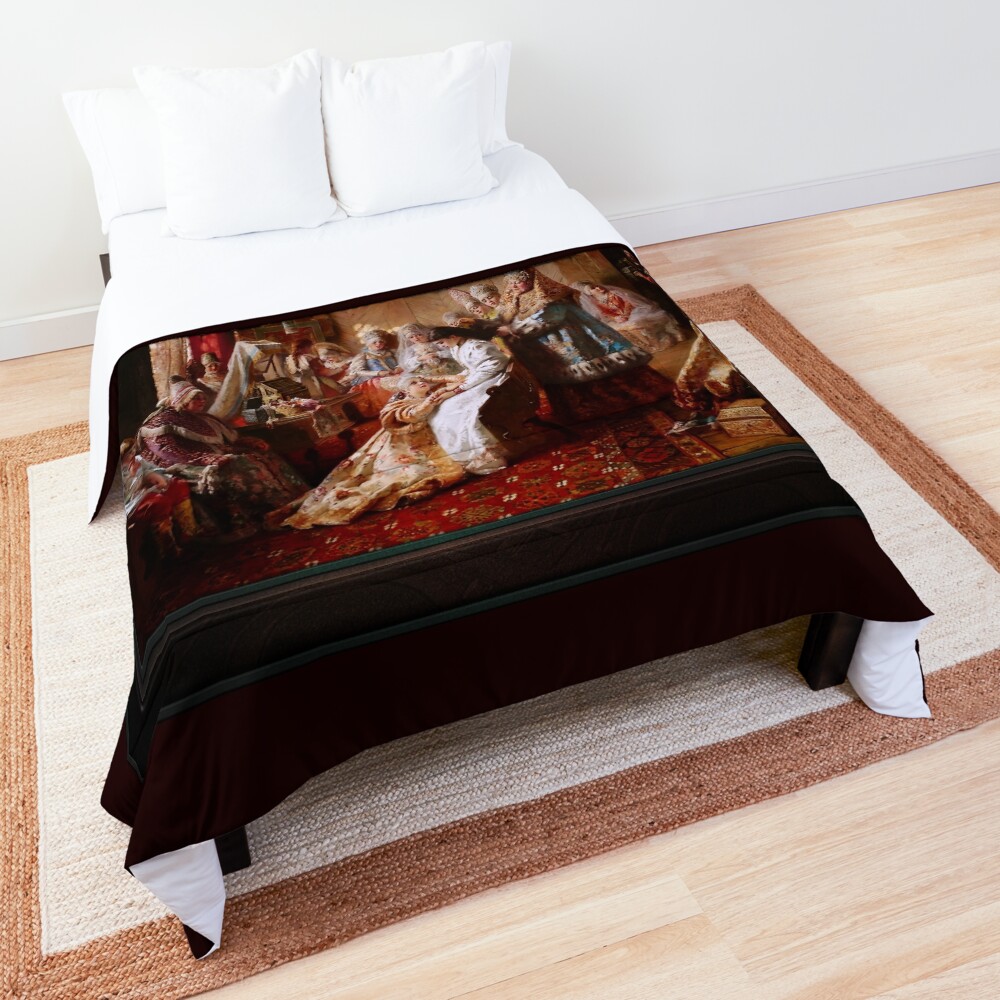
The mood of the painting is one of quiet anticipation, ceremonial dignity, and a deep respect for cultural traditions. The bride is presented not just as the central figure in a social ritual, but as a symbol of purity, continuity, a dědictví.
The work conveys a mixture of joy and solemnity, emphasizing the gravity of the wedding ceremony while celebrating the familial bonds that are integral to it. The groom, awaiting his bride’s arrival, is a figure of patience and longing, and the space between the bride and groom symbolizes the sacredness and exclusivity of the pre-wedding ritual.
Z hlediska stylu, Oděv ruské nevěsty is a quintessential example of Russian academic realism. Makovsky’s technique, with its sharp focus on the textures of fabrics, the naturalism of facial expressions, and the subtle play of light, creates a vivid, almost tangible atmosphere.
The figures are carefully posed to convey a sense of unity and purpose, while the careful rendering of the bride’s dress and the surrounding details showcases the artist’s skill in depicting texture and material.
Tematicky, the work explores the cultural importance of the Russian wedding, which was more than just a personal event—it was a public and familial milestone. Through the artist’s portrayal of the bride’s attire, the familial interaction, and the ceremonial anticipation, the viewer is invited to witness an intimate, yet highly structured moment in Russian society. The painting also highlights the role of tradition in Russian culture, where customs surrounding marriage were highly ritualized and carefully observed.
Oděv ruské nevěsty is not only a visual narrative of a traditional wedding but also an insightful reflection of the values and customs of 19th-century Russian aristocracy. It stands as a testament to Konstantin Makovsky’s ability to blend historical accuracy with emotional depth, offering the viewer a vivid portrayal of Russian cultural heritage at its most beautiful and ceremonial.
Toto je retušovaná reprodukce starého umění digitálního umění obrazu veřejného díla.
Níže uvedené informace jsou odvozeny z Wikipedia.org
Konstantin Makovsky byl vlivný ruský malíř, přidružený k “Peredvizhniki (Poutníci)”. Mnoho z jeho historických obrazů, jako například Pod korunou (1889) také známý jako Oděv ruské nevěsty a Před svatbou, ukázal idealizovaný pohled na ruský život předchozích staletí. Často je považován za představitele akademického umění.
Konstantin Makovsky se narodil v Moskvě. Jeho otec byl ruský umělec a amatérský malíř, Jegor Ivanovič Makovskij. Jeho matka byla skladatelka, a doufala, že její syn jednou půjde v jejích stopách. Jeho mladší bratři Vladimir a Nikolay a jeho sestra Alexandra se také stali malíři.
v 1851 Makovsky vstoupil do Moskevské malířské školy, Sochařství a architektura, kde se stal nejlepším studentem, snadno získat všechna dostupná ocenění. Jeho učiteli byli Karl Bryullov a Vasily Tropinin. Makovského sklony k romantismu a dekorativním efektům lze vysvětlit vlivem Bryullova.
I když umění bylo jeho vášní, také zvažoval, co po něm matka chtěla, aby udělal. Vydal se hledat skladatele, na které by se mohl obrátit, a nejprve odjel do Francie. Před, vždy byl milovníkem klasické hudby, a poslouchal mnoho skladeb. Často si přál, aby mohl změnit melodii, nebo styl některých z nich, aby byly příjemnější. Později v jeho životě se to stalo skutečností.
v 1858 Makovskij vstoupil na Imperiální akademii umění v Petrohradě. Z 1860 podílel se na výstavách Akademie s obrazy jako Curing of the Blind (1860) a Agents of the False Dmitry zabijí syna Borise Godunova (1862). v 1863 Makovský a dalších třináct studentů protestovali proti tomu, aby akademie nastolila témata ze skandinávské mytologie v soutěži o Velkou zlatou medaili akademické obce; všichni opustili akademii bez formálního diplomu.
Makovský se stal členem družstva (artel) umělců pod vedením Ivana Kramského, typicky produkovat Wanderers obrazy o každodenním životě (Vdova 1865, Prodavač sledě 1867, atd.). Z 1870 byl zakládajícím členem Společnosti pro putovní umělecké výstavy a pokračoval v práci na obrazech věnovaných každodennímu životu. Svá díla vystavoval jak na výstavách Academia, tak na putovních výstavách poutníků.
Významná změna v jeho stylu nastala po cestě do Egypta a Srbska v polovině 70. let 19. století. Jeho zájmy se změnily od sociálních a psychologických problémů k uměleckým problémům barev a tvarů.
V 80. letech 19. století se stal módním autorem portrétů a historických obrazů. Na světové výstavě 1889 v Paříži obdržel Velkou zlatou medaili za obrazy Smrt Ivana Hrozného, Soud v Paříži, a Démon a Tamara. Byl jedním z nejvíce ceněných a vysoce placených ruských umělců té doby. Mnoho demokratických kritiků ho považovalo za odpadlíka Wanderers’ ideály, vyrábějící (jako Henryk Siemiradzki) nápadná, ale mělká díla,[2] zatímco jiní v něm vidí předchůdce ruského impresionismu.
Makovský byl zabit v 1915 když jeho koňský povoz srazila v Petrohradu elektrická tramvaj.