

Bohyně vody
Bohyně vody od ruského malíře Konstantin Makovský (1839 – 1915); specializující se na ruské historické obrazy zobrazující idealizovaný pohled na ruský život v minulých staletích.
Malování “Bohyně vody” is a masterful depiction of the divine beauty and power of water through classical mythology. The artist’s rich use of color, dramatické osvětlení, and careful attention to detail create a vivid and serene representation of the goddess of water as she is transported by swans across a vast oceanic expanse.
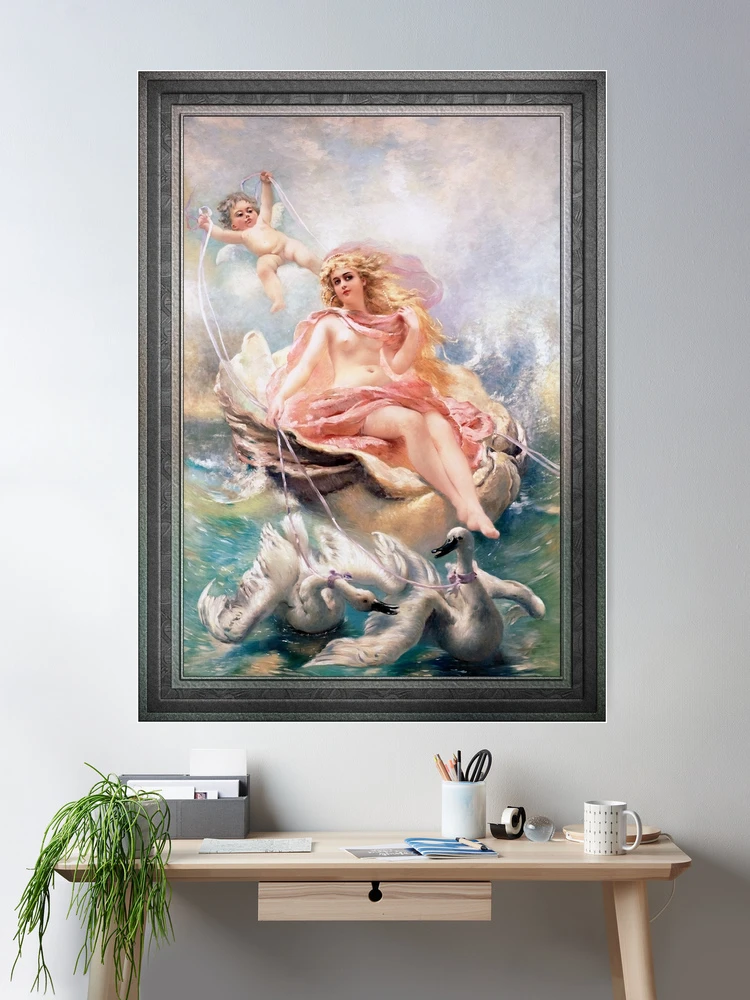
The central figure in the artwork is the goddess herself, a beautiful woman with flowing golden locks, her body partially draped in a pink and soft mauve sheer cloth that clings delicately to her form, revealing the curves of her body.
The goddess is seated serenely in a boat-like structure made of what appears to be soft seashells, floating on undulating waves, with a faint glow surrounding her, symbolizing her divine nature. Její tvář, calm and composed, carries an air of grace and timeless beauty, reinforcing the ethereal nature of her character.
Za ní, a cherubic figure, a child-like angel, is tethered to the goddess by ribbons, symbolizing a divine connection between the mortal and the immortal. This child, whose face expresses innocence and purity, seems to guide or assist in the goddess’s journey across the waters.
The angel holds onto ribbons that extend out into the air, tethering the goddess to the swans pulling her vessel. The gentle hands of the cherub grasp the flowing ribbons with precision, and his childlike features lend a sense of playful innocence to the otherwise tranquil scene.
The swans, regal and powerful, are the carriers of the goddess, their long necks extending gracefully through the scene, and their white feathers rendered with a soft, almost glowing light, enhancing their majestic appearance.
The swans pull the boat forward, seemingly in motion as the ripples of water, shown through the smooth, soft waves, reflect the calmness of the scene. The swans’ presence in mythology often symbolizes purity and spiritual grace, which complements the goddess’s serene and powerful nature.
The background of the painting is a vast and dreamy oceanic landscape, bathed in soft, teplé světlo, as if the sun itself is fading into the horizon. Voda, although calm and peaceful, seems to ripple with the movement of the swans, adding life and a sense of motion to the otherwise still moment. The sky above is filled with soft, billowy clouds, reminiscent of a serene and timeless world where the goddess’s presence is natural and eternal.
The mood of the painting is peaceful, klidný, and divine. The soft pastel colors used in the piece lend a sense of tranquility, while the glowing light surrounding the goddess and the angel enhances the mystical nature of the scene. There is a harmony in the painting that speaks to the balance of the elements—water, air, and earth—through the goddess’s gentle interaction with the swans, voda, and the sky.
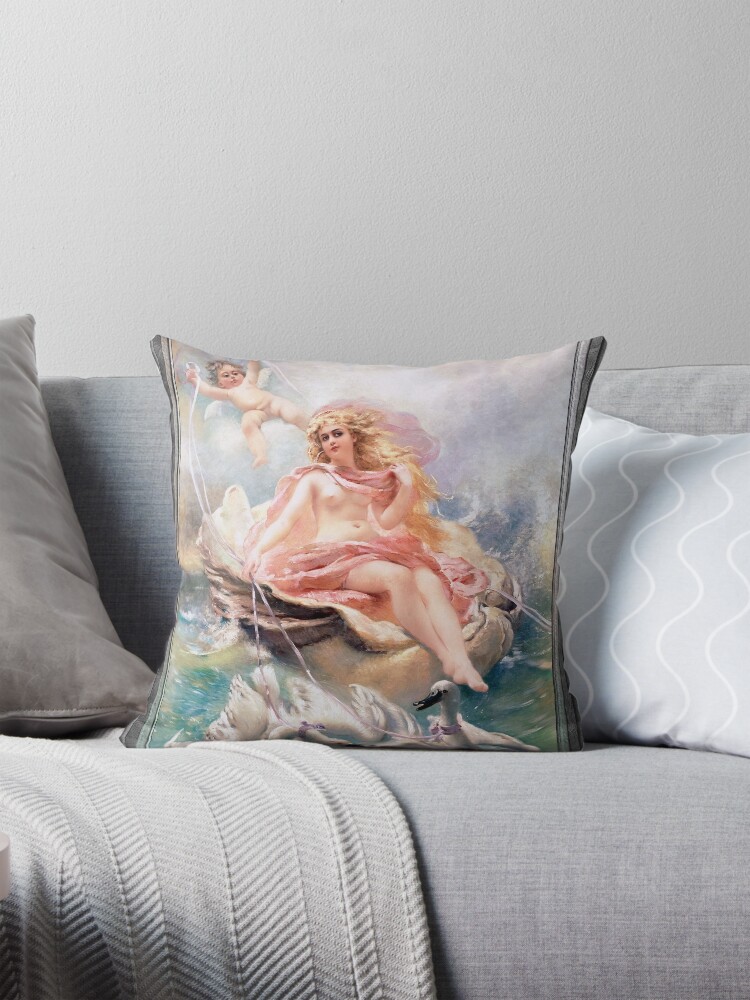
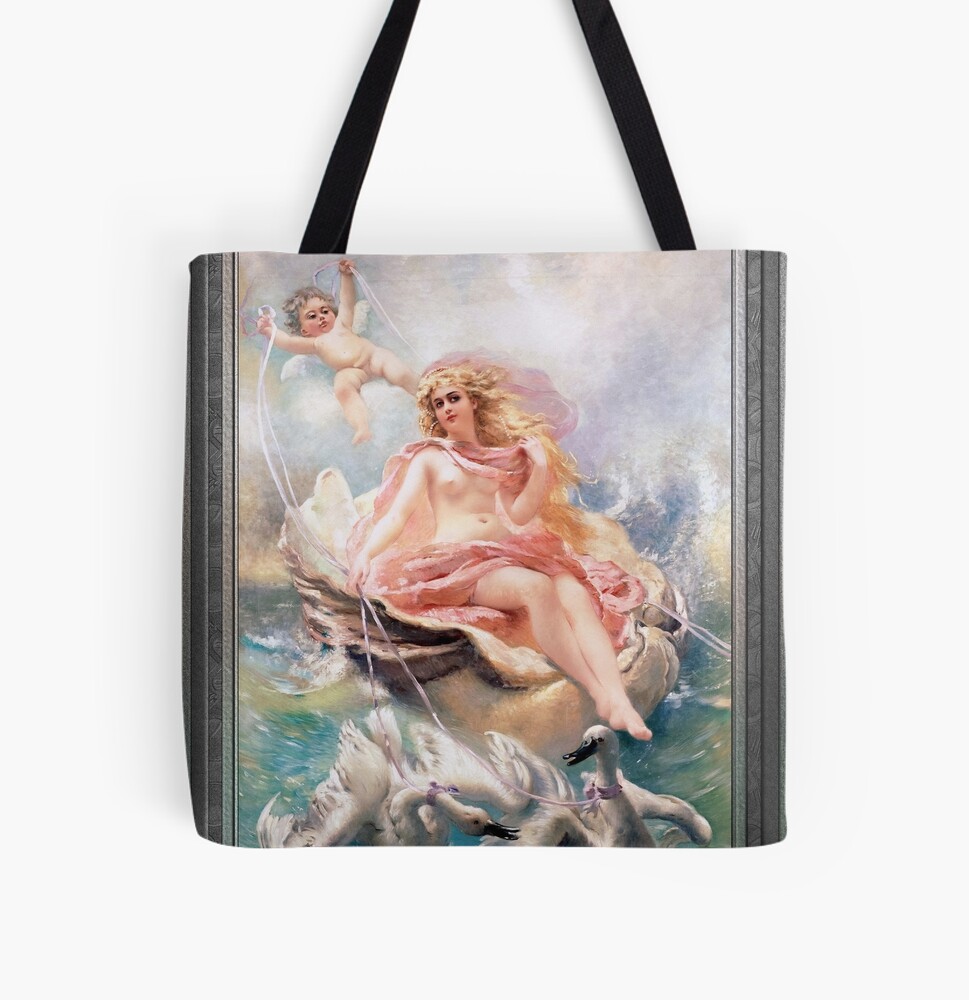
Makovsky’s mastery of classical techniques shines through in the detailed depiction of the figures, textur, and natural elements. The soft texture of the goddess’s flowing hair, the delicate folds of her clothing, and the smoothness of the swans’ feathers all demonstrate his skill in bringing the ethereal into the visual realm. The light, radiant atmosphere throughout the artwork communicates the theme of purity, božství, and the eternal cycle of nature.
The theme of water as a symbol of life, čistota, and fertility is prevalent in the painting. The goddess of water, accompanied by the cherubic guide and the swans, creates a powerful and harmonious image of nature’s beauty and divine intervention.
Water in mythological contexts often represents fluidity, přeměna, and the nurturing aspects of life, all of which are conveyed through the painting’s serene depiction of the goddess as she floats effortlessly across the waters.
This painting embodies the 19th-century Russian fascination with classical themes, blending mythological subjects with a refined and sophisticated approach to realism. It showcases a period of artistic exploration that was both romantic and idealized, drawing on ancient mythological figures to embody ideals of beauty, milost, and divine connection with nature.
Na závěr, “Bohyně vody” is a masterpiece that combines the beauty of nature with the divine, vytváření klidu, mystical atmosphere that is both timeless and transcendent. The detailed execution, the symbolic presence of the goddess, angel, and swans, a měkký, flowing colors make this piece a vivid representation of classical mythology, encapsulating the quiet power of water as an eternal, life-giving force.
Níže uvedené informace jsou odvozeny z Wikipedia.org
Konstantin Makovsky byl vlivný ruský malíř, přidružený k “Peredvizhniki (Poutníci)”. Mnoho z jeho historických obrazů, jako například Pod korunou (1889) také známý jako Oděv ruské nevěsty a Před svatbou, ukázal idealizovaný pohled na ruský život předchozích staletí. Často je považován za představitele akademického umění.
Konstantin Makovsky se narodil v Moskvě. Jeho otec byl ruský umělec a amatérský malíř, Jegor Ivanovič Makovskij. Jeho matka byla skladatelka, a doufala, že její syn jednou půjde v jejích stopách. Jeho mladší bratři Vladimir a Nikolay a jeho sestra Alexandra se také stali malíři.
v 1851 Makovsky vstoupil do Moskevské malířské školy, Sochařství a architektura, kde se stal nejlepším studentem, snadno získat všechna dostupná ocenění. Jeho učiteli byli Karl Bryullov a Vasily Tropinin. Makovského sklony k romantismu a dekorativním efektům lze vysvětlit vlivem Bryullova.
I když umění bylo jeho vášní, také zvažoval, co po něm matka chtěla, aby udělal. Vydal se hledat skladatele, na které by se mohl obrátit, a nejprve odjel do Francie. Před, vždy byl milovníkem klasické hudby, a poslouchal mnoho skladeb. Často si přál, aby mohl změnit melodii, nebo styl některých z nich, aby byly příjemnější. Později v jeho životě se to stalo skutečností.
v 1858 Makovskij vstoupil na Imperiální akademii umění v Petrohradě. Z 1860 podílel se na výstavách Akademie s obrazy jako Curing of the Blind (1860) a Agents of the False Dmitry zabijí syna Borise Godunova (1862). v 1863 Makovský a dalších třináct studentů protestovali proti tomu, aby akademie nastolila témata ze skandinávské mytologie v soutěži o Velkou zlatou medaili akademické obce; všichni opustili akademii bez formálního diplomu.
Makovský se stal členem družstva (artel) umělců pod vedením Ivana Kramského, typicky produkovat Wanderers obrazy o každodenním životě (Vdova 1865, Prodavač sledě 1867, atd.). Z 1870 byl zakládajícím členem Společnosti pro putovní umělecké výstavy a pokračoval v práci na obrazech věnovaných každodennímu životu. Svá díla vystavoval jak na výstavách Academia, tak na putovních výstavách poutníků.
Významná změna v jeho stylu nastala po cestě do Egypta a Srbska v polovině 70. let 19. století. Jeho zájmy se změnily od sociálních a psychologických problémů k uměleckým problémům barev a tvarů.
V 80. letech 19. století se stal módním autorem portrétů a historických obrazů. Na světové výstavě 1889 v Paříži obdržel Velkou zlatou medaili za obrazy Smrt Ivana Hrozného, Soud v Paříži, a Démon a Tamara. Byl jedním z nejvíce ceněných a vysoce placených ruských umělců té doby. Mnoho demokratických kritiků ho považovalo za odpadlíka Wanderers’ ideály, vyrábějící (jako Henryk Siemiradzki) nápadná, ale mělká díla,[2] zatímco jiní v něm vidí předchůdce ruského impresionismu.
Makovský byl zabit v 1915 když jeho koňský povoz srazila v Petrohradu elektrická tramvaj.