

The Russian Brides Attire
The Russian Brides Attire c1889 by Russian Painter קונסטנטין מקובסקי (1839 – 1915); מתמחה בציורים היסטוריים רוסיים המציגים מבט אידיאלי על החיים הרוסיים במאות האחרונות.
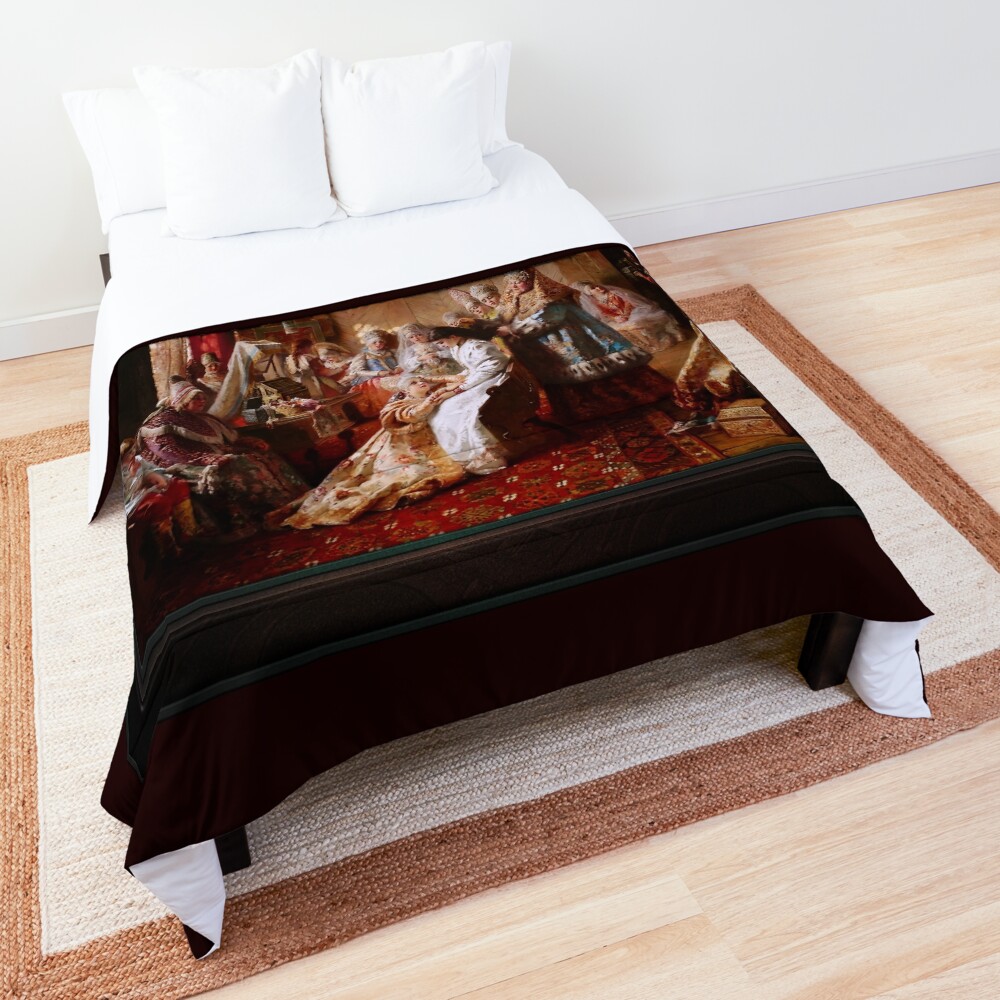
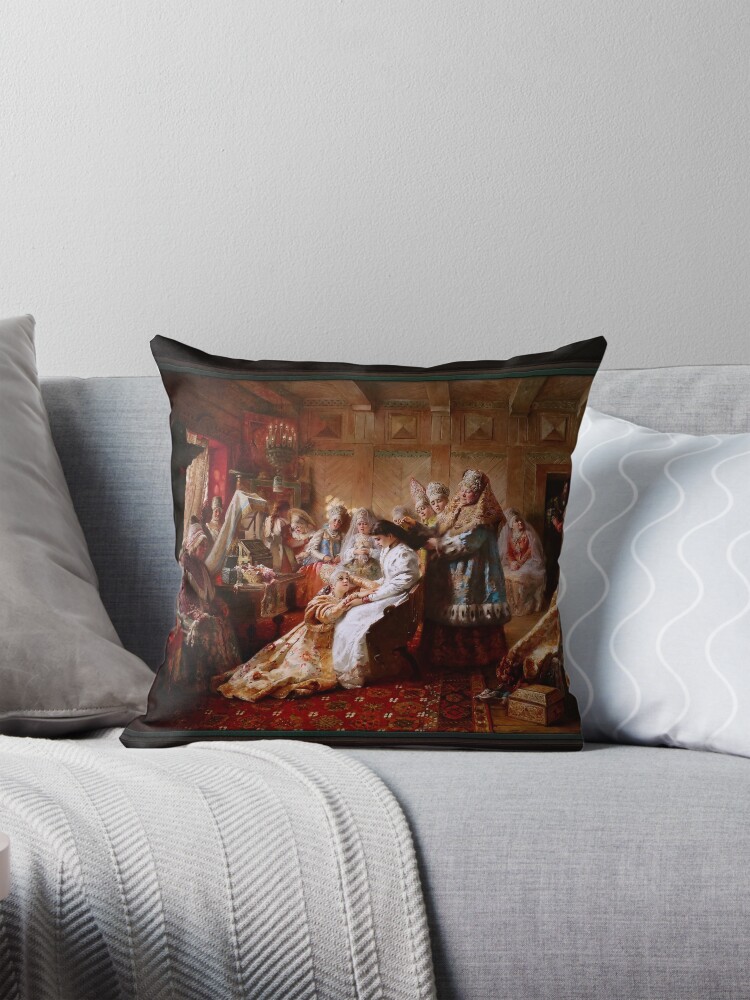
Konstantin Makovsky’s The Russian Brides Attire (1889) presents a captivating glimpse into the ceremonial preparations of a Russian bride in a traditional 19th-century setting. The scene is set within an intimate, richly adorned room where the bride-to-be, poised in anticipation, is surrounded by her closest family and friends. This historical genre painting, rooted deeply in Russian culture, reflects both the bride’s personal moment and the social customs of the time.
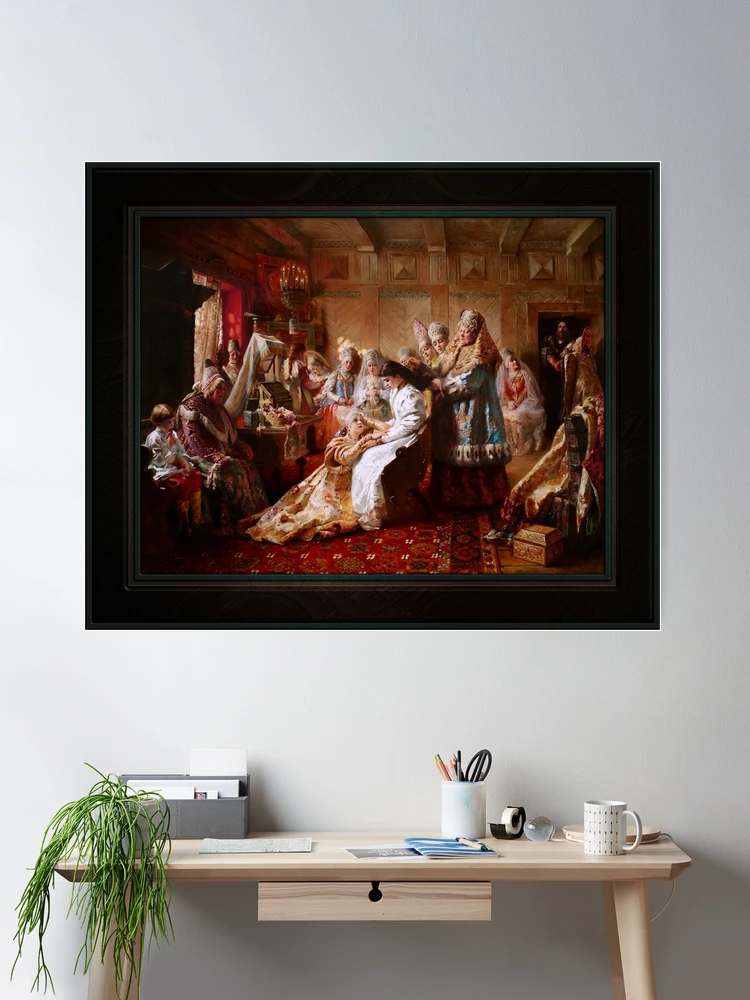
At the heart of the painting sits the young bride, dressed in an opulent, meticulously detailed gown of traditional Russian wedding attire. The intricacies of her attire are striking; every fold and embellishment in her richly embroidered dress echoes the skill and craftsmanship of the period. The gown’s texture, enhanced by the gentle play of light, emphasizes its luxurious fabric, hinting at the bride’s high social standing.
השמלה, with its intricate patterns and vibrant colors, combines tradition with beauty, setting her apart as the central figure in the composition. ההבעה שלה, serene yet tinged with the anticipation of the upcoming union, contributes to the painting’s overall sense of reverence for this momentous life event.
The surrounding figures enhance the emotional depth of the scene. Bridesmaids, family members, and an attentive mother are present, each contributing to the bride’s preparations. The bridal party’s clothing is also detailed, showcasing the opulence typical of the Russian aristocracy during the era.
These individuals are all engaged in the intimate tasks of finalizing the bride’s appearance, with one figure seated at the bride’s feet, holding her hands tenderly—a subtle gesture of familial connection and support. לעומת זאת, a young man, possibly the groom, appears at the threshold of the room, holding a gift box. His presence is restrained, his access to the bride’s space halted by a gentle but firm barrier, as custom would dictate.
The setting further complements the mood of the painting. The room is lavishly decorated, עם חושך, rich tones contrasting against the soft glow of candlelight and the bride’s radiant attire. This use of light symbolizes both the bride’s purity and the solemnity of the occasion.
The opulent, antique furniture and the delicate furnishings suggest an upper-class household, indicative of the wealth and status of the bride’s family. These elements come together to transport the viewer to the Russian nobility’s private spaces, where tradition and social rituals were deeply ingrained.
Makovsky’s approach to the painting reflects his expertise in academic art and historical realism, grounded in his training and experience with the פרדוויז'ניקי (משוטטים) תְנוּעָה. Known for portraying the everyday lives of Russians, Makovsky’s work in הלבוש של הכלה הרוסית transcends mere documentation, offering an emotional portrait of a pivotal moment in a young woman’s life. His mastery of detail, צֶבַע, and light conveys a sense of reverence for the traditions of Russian weddings, while the gentle interactions between the figures in the scene imbue the work with a sense of warmth and familial love.
The mood of the painting is one of quiet anticipation, ceremonial dignity, and a deep respect for cultural traditions. The bride is presented not just as the central figure in a social ritual, but as a symbol of purity, הֶמשֵׁכִיוּת, and heritage.
The work conveys a mixture of joy and solemnity, emphasizing the gravity of the wedding ceremony while celebrating the familial bonds that are integral to it. The groom, awaiting his bride’s arrival, is a figure of patience and longing, and the space between the bride and groom symbolizes the sacredness and exclusivity of the pre-wedding ritual.
מבחינת הסגנון, הלבוש של הכלה הרוסית is a quintessential example of Russian academic realism. Makovsky’s technique, with its sharp focus on the textures of fabrics, the naturalism of facial expressions, and the subtle play of light, creates a vivid, almost tangible atmosphere.
The figures are carefully posed to convey a sense of unity and purpose, while the careful rendering of the bride’s dress and the surrounding details showcases the artist’s skill in depicting texture and material.
מבחינה נושאית, the work explores the cultural importance of the Russian wedding, which was more than just a personal event—it was a public and familial milestone. Through the artist’s portrayal of the bride’s attire, the familial interaction, and the ceremonial anticipation, the viewer is invited to witness an intimate, yet highly structured moment in Russian society. The painting also highlights the role of tradition in Russian culture, where customs surrounding marriage were highly ritualized and carefully observed.
הלבוש של הכלה הרוסית is not only a visual narrative of a traditional wedding but also an insightful reflection of the values and customs of 19th-century Russian aristocracy. It stands as a testament to Konstantin Makovsky’s ability to blend historical accuracy with emotional depth, offering the viewer a vivid portrayal of Russian cultural heritage at its most beautiful and ceremonial.
זהו רפרודוקציה של אמנות דיגיטלית משופרת ותיקים של תמונה של נחלת הכלל.
מידע למטה נגזר Wikipedia.org
קונסטנטין מקובסקי היה צייר רוסי רב השפעה, מזוהה עם “פרדוויז'ניקי (משוטטים)”. רבים מציוריו ההיסטוריים, כמו מתחת לכתר (1889) ידוע גם בתור The Russian Bride's Attire ולפני החתונה, הראה השקפה אידיאלית על החיים הרוסיים של המאות הקודמות. לעתים קרובות הוא נחשב לנציג של אמנות אקדמית.
קונסטנטין מקובסקי נולד במוסקבה. אביו היה דמות האמנות הרוסית והצייר החובב, יגור איבנוביץ' מקובסקי. אמו הייתה מלחינה, והיא קיוותה שבנה יבוא יום אחד בעקבותיה. אחיו הצעירים ולדימיר וניקולאי ואחותו אלכסנדרה המשיכו גם הם להיות ציירים.
ב 1851 מקובסקי נכנס לבית הספר לציור במוסקבה, פיסול ואדריכלות שם הפך לתלמיד המוביל, לקבל בקלות את כל הפרסים הזמינים. מוריו היו קרל בריולוב ו-וסילי טרופינין. ניתן להסביר את נטיותיו של מקובסקי לרומנטיקה ולאפקטים דקורטיביים על ידי השפעתו של בריולוב.
למרות שאמנות הייתה התשוקה שלו, הוא גם שקל מה אמו רצתה שיעשה. הוא יצא לחפש מלחינים שאליהם הוא יכול להתייחס, ונסע תחילה לצרפת. לפני, הוא תמיד היה חובב מוזיקה קלאסית, והקשיב להרבה קטעים. לעתים קרובות הוא רצה שיוכל לשנות את המנגינה, או סגנון של כמה מהם כדי להפוך אותם למהנים יותר. מאוחר יותר בחייו זה התגשם.
ב 1858 מקובסקי נכנס לאקדמיה הקיסרית לאמנויות בסנט פטרבורג. מ 1860 הוא השתתף בתערוכות האקדמיה עם ציורים כגון ריפוי העיוורים (1860) וסוכני הדמיטרי השקר הורגים את בנו של בוריס גודונוב (1862). ב 1863 מקובסקי ושלושה עשר סטודנטים נוספים קיימו מחאה נגד הגדרת נושאי האקדמיה מהמיתולוגיה הסקנדינבית בתחרות על מדליית הזהב הגדולה של האקדמיה.; כולם עזבו את האקדמיה ללא תעודה רשמית.
מקובסקי הפך לחבר בקואופרטיב (ארטל) של אמנים בראשות איוון קראמסקי, בדרך כלל מפיק ציורים של נודדים על חיי היומיום (אַלמָנָה 1865, מוכר הרינג 1867, וכו '). מ 1870 הוא היה חבר מייסד בחברה לתערוכות אמנות נוסעות והמשיך לעבוד על ציורים המוקדשים לחיי היומיום. הוא הציג את עבודותיו הן בתערוכות האקדמיה והן בתערוכות האמנות הנודדות של הנודדים.
שינוי משמעותי בסגנונו חל לאחר שנסע למצרים ולסרביה באמצע שנות השבעים. תחומי העניין שלו השתנו מבעיות חברתיות ופסיכולוגיות לבעיות האמנותיות של הצבעים והצורה.
בשנות ה -80 של המאה ה -19 הפך לסופר אופנתי של דיוקנאות וציורים היסטוריים. ביריד העולמי של 1889 בפריז הוא קיבל את מדליית הזהב הגדולה על ציוריו מותו של איוון האיום, פסק הדין של פריז, ושד ותמרה. הוא היה אחד האמנים הרוסים המוערכים ביותר ובעלי השכר הגבוה ביותר באותה תקופה. מבקרים דמוקרטיים רבים ראו בו עריק של הנודדים’ אידיאלים, לייצר (כמו הנריק סימירדצקי) עבודות בולטות אך רדודות,[2] בעוד שאחרים רואים בו מבשר לאימפרסיוניזם הרוסי.
מקובסקי נהרג ב 1915 כאשר עגלתו הסוסה נפגעה בחשמלית חשמלית בסנט פטרבורג.