

The Russian Brides Attire
The Russian Brides Attire c1889 by Russian Painter Konstantin Makovsky (1839 – 1915); especializado em pinturas históricas russas mostrando uma visão idealizada da vida russa nos séculos passados.
Konstantin Makovsky’s The Russian Brides Attire (1889) presents a captivating glimpse into the ceremonial preparations of a Russian bride in a traditional 19th-century setting. The scene is set within an intimate, richly adorned room where the bride-to-be, poised in anticipation, is surrounded by her closest family and friends. This historical genre painting, rooted deeply in Russian culture, reflects both the bride’s personal moment and the social customs of the time.
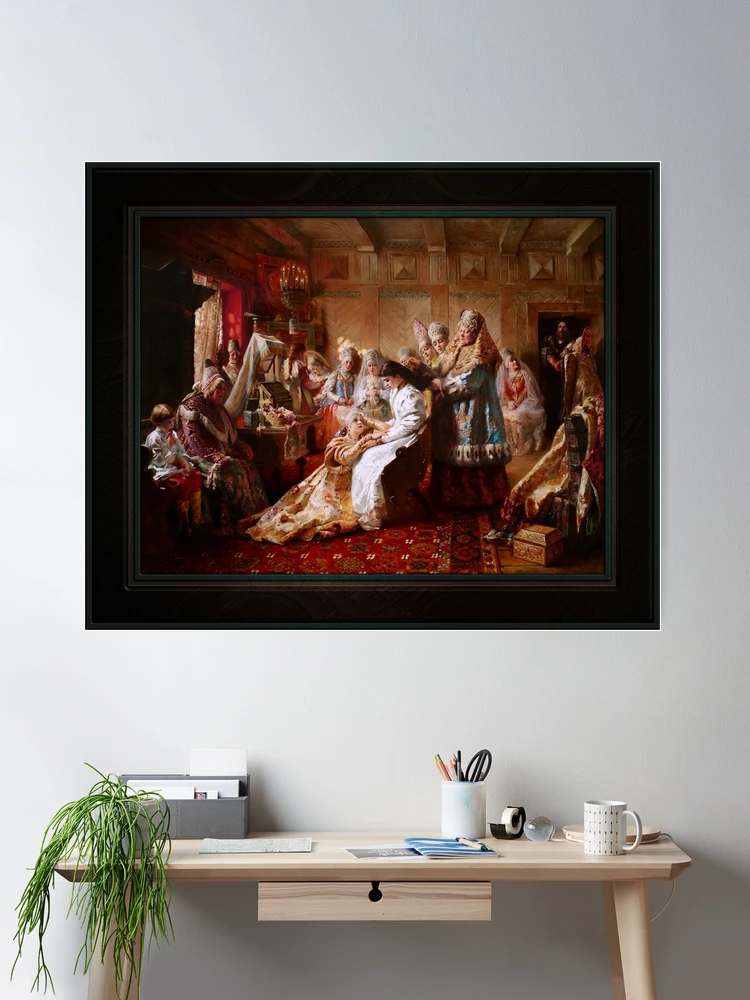
At the heart of the painting sits the young bride, dressed in an opulent, meticulously detailed gown of traditional Russian wedding attire. The intricacies of her attire are striking; every fold and embellishment in her richly embroidered dress echoes the skill and craftsmanship of the period. The gown’s texture, enhanced by the gentle play of light, emphasizes its luxurious fabric, hinting at the bride’s high social standing.
O vestido, with its intricate patterns and vibrant colors, combines tradition with beauty, setting her apart as the central figure in the composition. Sua expressão, serene yet tinged with the anticipation of the upcoming union, contributes to the painting’s overall sense of reverence for this momentous life event.
The surrounding figures enhance the emotional depth of the scene. Bridesmaids, family members, and an attentive mother are present, each contributing to the bride’s preparations. The bridal party’s clothing is also detailed, showcasing the opulence typical of the Russian aristocracy during the era.
These individuals are all engaged in the intimate tasks of finalizing the bride’s appearance, with one figure seated at the bride’s feet, holding her hands tenderly—a subtle gesture of familial connection and support. Em contraste, a young man, possibly the groom, appears at the threshold of the room, holding a gift box. His presence is restrained, his access to the bride’s space halted by a gentle but firm barrier, as custom would dictate.
The setting further complements the mood of the painting. The room is lavishly decorated, with dark, rich tones contrasting against the soft glow of candlelight and the bride’s radiant attire. This use of light symbolizes both the bride’s purity and the solemnity of the occasion.
The opulent, antique furniture and the delicate furnishings suggest an upper-class household, indicative of the wealth and status of the bride’s family. These elements come together to transport the viewer to the Russian nobility’s private spaces, where tradition and social rituals were deeply ingrained.
Makovsky’s approach to the painting reflects his expertise in academic art and historical realism, grounded in his training and experience with the Peredvizhniki (Andarilhos) movimento. Known for portraying the everyday lives of Russians, Makovsky’s work in The Russian Bride’s Attire transcends mere documentation, offering an emotional portrait of a pivotal moment in a young woman’s life. His mastery of detail, cor, and light conveys a sense of reverence for the traditions of Russian weddings, while the gentle interactions between the figures in the scene imbue the work with a sense of warmth and familial love.
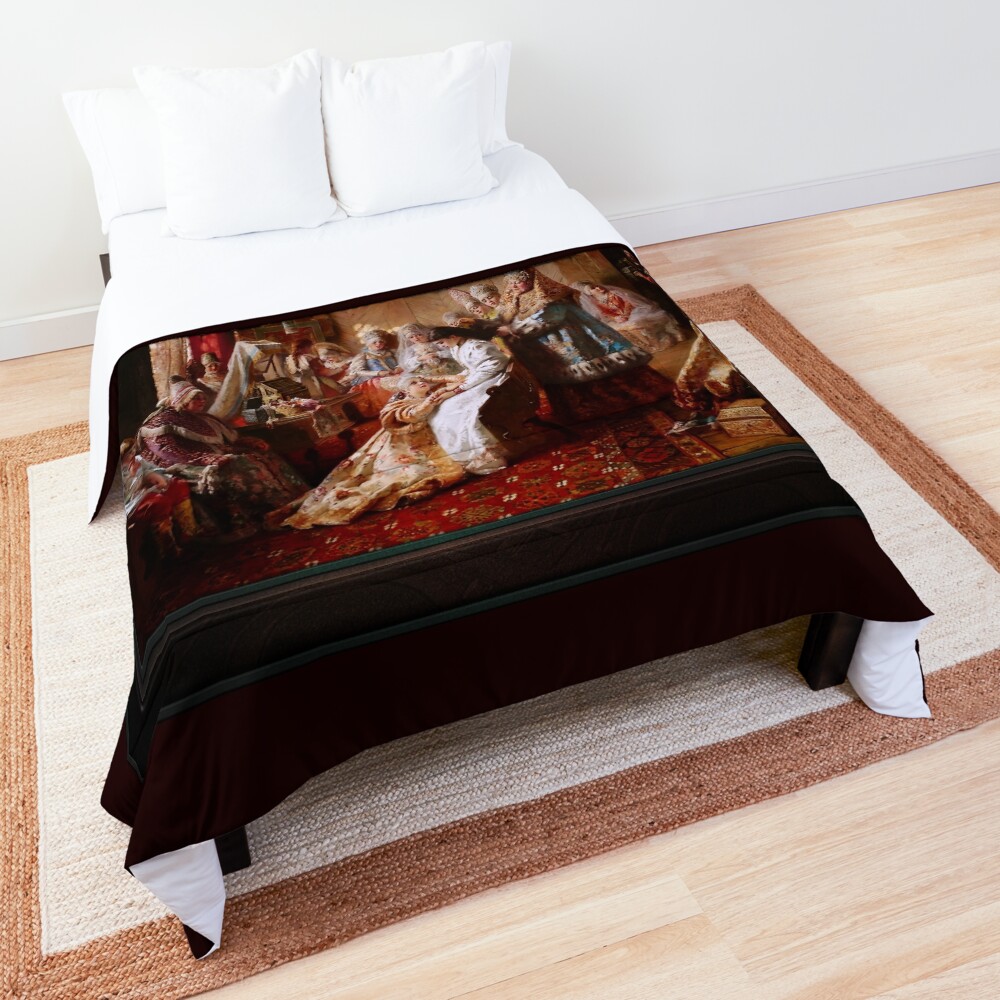
The mood of the painting is one of quiet anticipation, ceremonial dignity, and a deep respect for cultural traditions. The bride is presented not just as the central figure in a social ritual, but as a symbol of purity, continuity, and heritage.
The work conveys a mixture of joy and solemnity, emphasizing the gravity of the wedding ceremony while celebrating the familial bonds that are integral to it. The groom, awaiting his bride’s arrival, is a figure of patience and longing, and the space between the bride and groom symbolizes the sacredness and exclusivity of the pre-wedding ritual.
In terms of style, The Russian Bride’s Attire is a quintessential example of Russian academic realism. Makovsky’s technique, with its sharp focus on the textures of fabrics, the naturalism of facial expressions, and the subtle play of light, creates a vivid, almost tangible atmosphere.
The figures are carefully posed to convey a sense of unity and purpose, while the careful rendering of the bride’s dress and the surrounding details showcases the artist’s skill in depicting texture and material.
Tematicamente, the work explores the cultural importance of the Russian wedding, which was more than just a personal event—it was a public and familial milestone. Through the artist’s portrayal of the bride’s attire, the familial interaction, and the ceremonial anticipation, the viewer is invited to witness an intimate, yet highly structured moment in Russian society. The painting also highlights the role of tradition in Russian culture, where customs surrounding marriage were highly ritualized and carefully observed.
The Russian Bride’s Attire is not only a visual narrative of a traditional wedding but also an insightful reflection of the values and customs of 19th-century Russian aristocracy. It stands as a testament to Konstantin Makovsky’s ability to blend historical accuracy with emotional depth, offering the viewer a vivid portrayal of Russian cultural heritage at its most beautiful and ceremonial.
Esta é uma reprodução retocada dos antigos mestres de arte digital de uma imagem de domínio público.
Informações abaixo derivadas de Wikipedia.org
Konstantin Makovsky foi um influente pintor russo, afiliado com o “Peredvizhniki (Andarilhos)”. Muitas de suas pinturas históricas, como Abaixo da Coroa (1889) também conhecido como O Traje da Noiva Russa e Antes do Casamento, mostrou uma visão idealizada da vida russa dos séculos anteriores. Ele é frequentemente considerado um representante da arte acadêmica.
Konstantin Makovsky nasceu em Moscou. Seu pai era a figura da arte russa e pintor amador, Yegor Ivanovich Makovsky. Sua mãe era compositora, e ela esperava que seu filho um dia seguisse seus passos. Seus irmãos mais novos Vladimir e Nikolay e sua irmã Alexandra também se tornaram pintores.
Dentro 1851 Makovsky entrou na Escola de Pintura de Moscou, Escultura e Arquitetura onde se tornou o melhor aluno, obtendo facilmente todos os prêmios disponíveis. Seus professores foram Karl Bryullov e Vasily Tropinin. As inclinações de Makovsky para o romantismo e efeitos decorativos podem ser explicadas pela influência de Bryullov.
Embora a arte fosse sua paixão, ele também considerou o que sua mãe queria que ele fizesse. Ele partiu em busca de compositores aos quais pudesse se referir, e primeiro foi para a França. Antes, ele sempre foi um amante da música clássica, e ouvi muitas peças. Muitas vezes ele desejou poder mudar a melodia, ou estilo de alguns deles para torná-los mais agradáveis. Mais tarde em sua vida, isso se tornou realidade.
Dentro 1858 Makovsky ingressou na Academia Imperial de Artes de São Petersburgo. A partir de 1860 participou das exposições da Academia com pinturas como Curing of the Blind (1860) e Agentes do Falso Dmitry matam o filho de Boris Godunov (1862). Dentro 1863 Makovsky e treze outros alunos protestaram contra a definição de tópicos da mitologia escandinava pela Academia na competição pela Grande Medalha de Ouro da Academia; todos deixaram a academia sem um diploma formal.
Makovsky tornou-se membro de uma cooperativa (artel) de artistas liderados por Ivan Kramskoi, tipicamente produzindo pinturas de Wanderers na vida cotidiana (Viúva 1865, vendedor de arenque 1867, etc.). A partir de 1870 foi membro fundador da Society for Traveling Art Exhibitions e continuou a trabalhar em pinturas dedicadas à vida quotidiana. Expôs seus trabalhos tanto nas exposições da Academia quanto nas exposições de arte itinerantes dos Wanderers.
Uma mudança significativa em seu estilo ocorreu depois de viajar para o Egito e a Sérvia em meados da década de 1870.. Seus interesses mudaram de problemas sociais e psicológicos para os problemas artísticos de cores e formas.
Na década de 1880, ele se tornou um autor da moda de retratos e pinturas históricas.. Na Feira Mundial de 1889 em Paris, ele recebeu a Grande Medalha de Ouro por suas pinturas Morte de Ivan, o Terrível, O Julgamento de Paris, e Demônio e Tamara. Ele foi um dos artistas russos mais apreciados e bem pagos da época.. Muitos críticos democráticos o consideravam um renegado dos Wanderers’ ideais, produzindo (como Henryk Siemiradzki) obras impressionantes, mas rasas,[2] enquanto outros o veem como um precursor do impressionismo russo.
Makovsky foi morto em 1915 quando sua carruagem foi atropelada por um bonde elétrico em São Petersburgo.