

The Shepherdess With Seashell
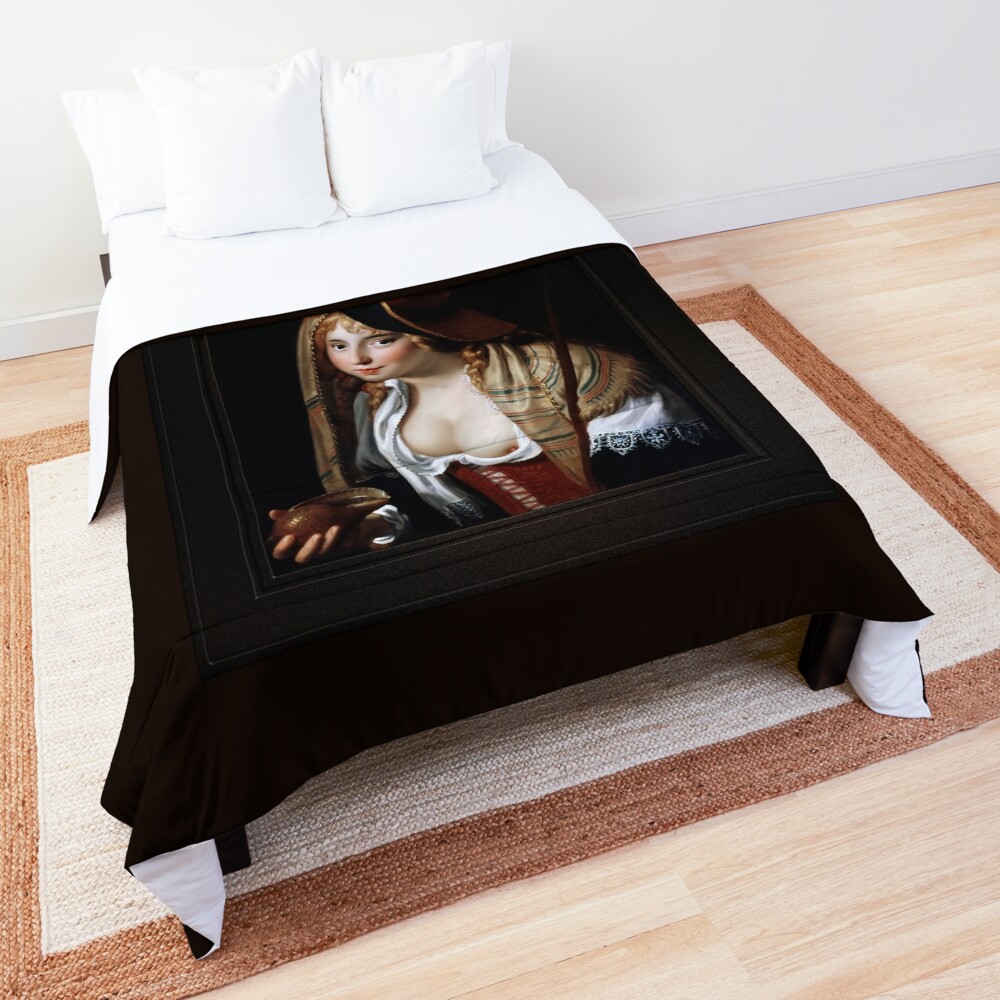
NS 肖像画 artwork titled The Shepherdess With Seashell was created by the renowned Dutch painter Paulus Moreelse (1571 – 1638). This exquisite piece exemplifies the artist’s deft handling of light, テクスチャ, and the portrayal of delicate feminine beauty, encapsulating the ideals of Dutch Baroque portraiture. Moreelse, known for his masterful use of light and shadow, imbues this painting with a unique vibrancy and tenderness that both charms and captivates the viewer. The portrait reflects the growing interest in naturalism and the sensuality of the female form during the Golden Age of Dutch art.
目次
主題と構成
The subject of The Shepherdess With Seashell 若い女性です, elegantly adorned in a lavish outfit that reflects the artistic conventions of the time. She is presented in a three-quarter view, gazing directly at the viewer with a slightly tilted head. Her eyes are warm and inviting, yet there is a hint of contemplation, as if caught in a moment of quiet reverie. The softness of her facial features, her rounded cheeks, delicate nose, and full lips—are painted with remarkable precision, highlighting Moreelse’s skill in capturing the human face with great realism.
She wears a striking hat decorated with a large feather and a few flowers, adding a touch of delicacy and grace. The vibrant colors of her attire contrast with the dark, shadowed background, further drawing the viewer’s attention to her serene expression and the soft textures of her clothing. The finely embroidered lace of her blouse and the layered, richly textured shawl over her shoulders demonstrate the artist’s attention to detail and an understanding of fabric. The fabric’s softness and fluidity are expertly depicted, creating a tactile sense of realism that is characteristic of Dutch Baroque painting.
Held gently in her hand is a seashell, a symbolic element often associated with beauty, 女性らしさ, and the sea. The seashell adds an intriguing layer to the painting, possibly alluding to the mythological associations with Venus, 愛の女神, whose emblem was the shell. This motif could suggest that the woman in the portrait is a symbol of purity or allure, but the choice of such an object also invites speculation about the deeper significance of the woman’s role. Whether a shepherdess or a figure of mythology, Moreelse elevates her to the status of an iconic image of femininity and grace.
The Setting and Mood
Unlike many of the artist’s contemporaneous works that feature elaborate outdoor or urban landscapes, this painting focuses purely on the figure of the woman against a dark, almost void-like backdrop. The background seems to dissolve into shadow, creating a sharp contrast with the illuminated subject. Chiaroscuroのこのテクニック, masterfully applied by Moreelse; emphasizes the sitter’s physicality and presence. The light falls gently on her face and upper body, casting soft shadows that enhance the contours of her features and giving the painting a sense of depth.
The absence of any distinct setting or objects in the background places the emphasis entirely on the subject, highlighting her clothing and the intimate, contemplative expression she holds. This removal of extraneous elements creates a meditative mood, where the focus remains on the quiet dignity of the woman herself, lending her an ethereal quality. The painting’s mood is thus serene, with a touch of elegance and wistfulness that speaks to the beauty of a moment frozen in time.
素材と技法
The materials used in the creation of this portrait are oils on canvas, a common medium of the time, which allowed Moreelse to achieve a high degree of realism. The artist’s technique is smooth and refined, particularly in the rendering of skin tones and the texture of fabrics. The soft transitions between light and shadow suggest a mastery of the oil medium, as it enables Moreelse to model the woman’s features and the folds of her clothes with striking lifelike precision.
The painting is rich in detail, and the artist’s skill is especially evident in his depiction of the seashell in the woman’s hand. Each curve of the shell is meticulously painted, as if Moreelse was fascinated by the object’s texture and form. The shell’s smooth surface contrasts with the rest of the portrait, creating an intriguing visual interplay between the organic and the soft, fleshy features of the sitter.
Style and Influence
Paulus Moreelse was a significant figure in the Dutch Golden Age, and his works reflect the stylistic tendencies of the Baroque period. The use of vivid contrast between light and dark, as well as the heightened realism, aligns the painting with the typical characteristics of Dutch Baroque portraiture. しかしながら, unlike some of his contemporaries, Moreelse often portrayed his subjects in a more intimate, personal manner, drawing the viewer into the emotional world of the individual depicted.
に The Shepherdess With Seashell, Moreelse’s delicate rendering of his subject’s features and his treatment of the light suggests an awareness of both Flemish and Italian Renaissance influences. The artist’s ability to combine these elements with his own distinctive style allowed him to produce portraits that were both lifelike and imbued with a sense of tranquility and timeless beauty.
結論
The Shepherdess With Seashell is a remarkable example of the Dutch Baroque portrait tradition, displaying both technical brilliance and emotional depth. Through his precise use of light and shadow, Paulus Moreelse transforms the simple depiction of a woman into a powerful symbol of grace, 美しさ, そして熟考. The seashell, combined with the softness of the sitter’s expression, imbues the piece with an air of mystery and timeless elegance, inviting viewers to reflect on the delicate balance between external beauty and inner thought.
これは、オンラインでキャンバス プリントとして入手できるパブリック ドメインのイメージのリマスターされたデジタル アートの古いマスターの複製です。.
アーティスト略歴の由来 Wikipedia.org
パウルス・モレルセは有名な肖像画家であり、ウルトレヒトで生まれ、人生のほとんどを過ごしました。, オランダ, オランダ全土で彼の肖像画やマニエリスム様式の歴史的絵画の制作依頼を受けています。, 牧歌的な群れの風景, 羊飼いと羊飼い; そのため、彼はそのような場面を描いた数少ないオランダの画家の一人となりました。.
彼は建築家でもありました (ユトレヒトのカタリネポートの建設 1626; それは取り壊された 224 数年後), そしておそらくフォール通りの Vleeshuis の可能性があります; 教師であり町議会の重要なメンバー, 聖教会の創設者の一人でもある. ルーカス・ギルド (画家ギルド) に 1611.