

הסערה על הכנרת
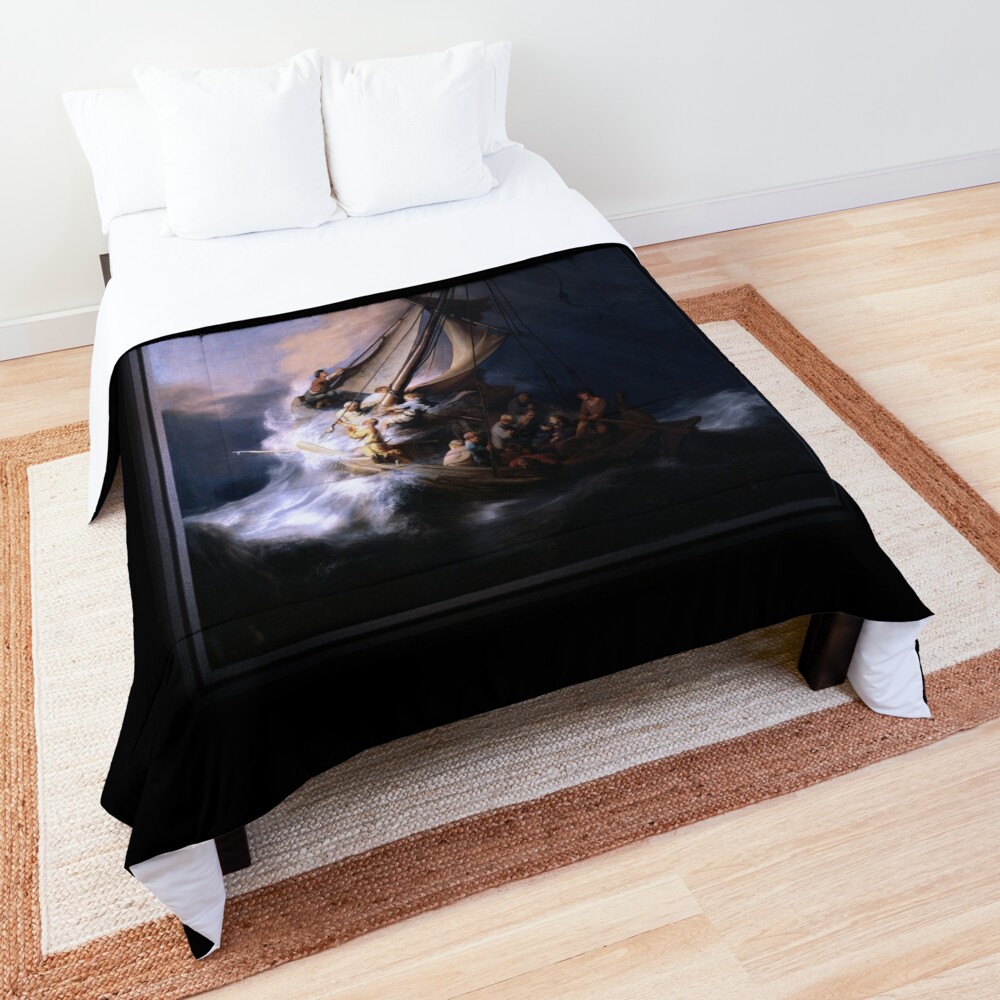
הסערה על הכנרת, נוצר ב 1633 by Dutch painter רמברנדט ואן ריין (1606 – 1669), stands as one of the most celebrated works of the artist’s early career. This monumental painting captures a pivotal biblical moment with striking realism, רֶגֶשׁ, and drama, showcasing the artist’s extraordinary talent in portraying light, צֵל, ורגש אנושי. The painting was commissioned as part of a set of paintings for a wealthy patron and depicts the moment when Christ and his disciples, aboard a small boat, are caught in a violent storm on the Sea of Galilee, as described in the Gospel of Mark, Chapter 4. The turbulent scene resonates with powerful themes of faith, פַּחַד, and divine intervention.
תוכן העניינים
הנושא העיקרי: Christ and His Disciples
At the center of this chaotic scene is the figure of Jesus Christ, whose calm and serene posture provides a stark contrast to the raging storm surrounding him. He is depicted sitting at the stern of the boat, his hands resting on the side, unfazed by the wind and waves crashing against the boat. Christ’s gaze is forward, embodying a sense of divine assurance that transcends the chaos. His clothing, a simple tunic and robe, are rendered with fine detail, reflecting the painter’s skill in portraying fabric textures. The light falling on his face highlights his central role in the narrative, symbolizing his divine nature and the peace he offers amidst turmoil.
Around Christ are the disciples, each responding to the storm in their own distinct ways. Some are visibly frightened, their faces contorted with fear and anxiety, while others are actively attempting to control the boat. One disciple, gripping the sail tightly, appears as if he is trying to maintain control, while another, kneeling by the side of the boat, prays desperately for safety. The diversity of expressions adds to the intensity of the composition, emphasizing the human emotions that contrast with Christ’s calm demeanor. Rembrandt uses the disciples’ fear as a visual representation of mankind’s vulnerability in the face of the unknown, drawing viewers into the emotional heart of the scene.
חפצים: The Boat, The Sea, and the Storm
The boat in the painting is a small fishing vessel, realistically depicted as a sturdy craft designed for traversing the turbulent waters of the Sea of Galilee. The boat’s detailed construction, including the visible planks of wood and ropes, is a testament to Rembrandt’s skill in capturing intricate textures. The boat tilts precariously to one side as the storm surges, with water pouring over the edges and into the boat, emphasizing the perilous nature of the situation.
ה יָם itself is depicted with dramatic intensity. Rembrandt masterfully renders the waves, using sweeping brushstrokes that convey their movement and violence. The water is frothy and turbulent, crashing against the boat and adding to the sense of impending disaster. The waves appear almost alive, reflecting the raw power of nature as it responds to the storm. The artist uses contrasting light and dark elements to heighten the drama, with the turbulent waters on the left side of the painting being darker and more menacing, while the right side of the composition contains a hint of light breaking through the clouds, suggesting hope and divine presence.
ברקע, ה storm clouds swirl ominously in shades of dark blue and gray, filling the sky with an oppressive and foreboding atmosphere. The turbulence of the clouds mirrors the emotional storm taking place within the boat, as the disciples’ anxiety is mirrored by the chaotic environment around them. A small hint of light peeks through the clouds, but it is minimal, further reinforcing the tumultuous mood of the scene. The use of light and dark is a key feature of Rembrandt’s style, known as אוֹרְצֵל, which he utilizes here to create a stark contrast between the dark, stormy elements and the calm serenity of Christ.
חומרים וטכניקה: Oil on Canvas
Rembrandt’s choice of שמן על בד as his medium allows him to achieve a level of depth and detail that is both striking and evocative. His skillful use of oil paint enables him to render both the fine details of the figures and the broader, sweeping elements of the storm with equal precision. The light falling on the figures and the texture of the water are achieved through layered application of paint, with light hues reflecting the effects of the storm’s light and shadows giving depth to the scene. The dynamic quality of the painting, particularly the movement of the waves and the figures, is achieved through brushstrokes that appear energetic and alive, contributing to the intensity of the composition.
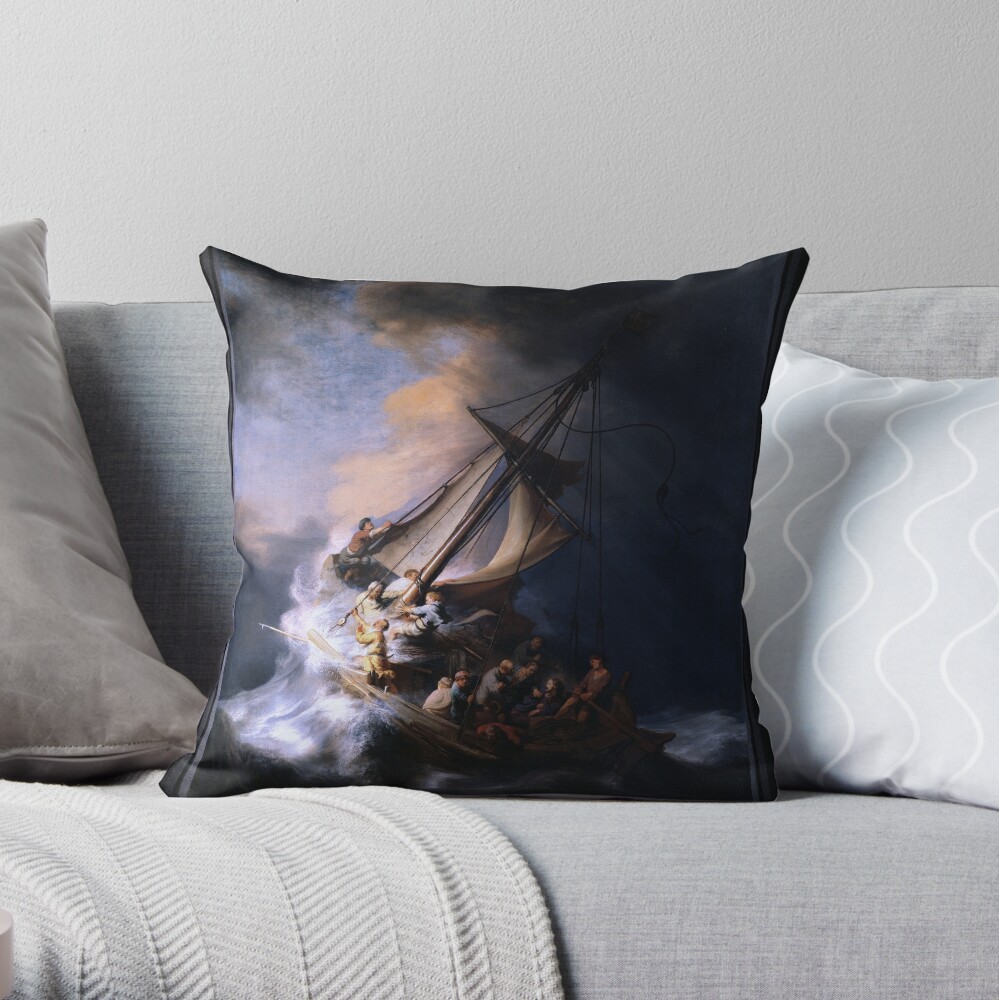
ה מִרקָם of the painting also serves to heighten the emotional impact. The rough, tumultuous sea is contrasted by the soft, almost ethereal rendering of Christ’s figure, whose calmness and serenity are made even more pronounced by the surrounding chaos. The figures of the disciples are given individual attention, with their expressions and movements captured with a remarkable sense of realism. Their facial expressions, the folds of their clothing, and their body language are portrayed with the utmost care, allowing the viewer to feel their fear, מַאֲבָק, and desperation.
סִגְנוֹן, נוֹשֵׂא, ומצב רוח: Dramatic Realism
Rembrandt’s signature style of dramatic realism is fully displayed in this painting. The focus on emotional depth and psychological complexity is a hallmark of his work, ובתוך הסערה על הכנרת, he uses the moment of crisis to explore profound themes of faith, התערבות אלוהית, and human frailty. The storm is not just a physical event but a metaphor for the turmoil that can engulf the human spirit, while Christ represents the unwavering presence of divinity that offers comfort and peace.
ה mood of the painting is one of tension and contrast. The disciples’ fear and desperation are palpable, while Christ’s calmness offers a sense of hope and divine assurance. The viewer is drawn into the storm, both in terms of the physical intensity of the scene and the emotional struggle of the figures. The contrasting elements of light and dark, calm and chaos, invite reflection on the nature of faith and the way in which belief can offer solace in times of greatest distress.
מַסְקָנָה
ב הסערה על הכנרת, Rembrandt van Rijn captures a biblical moment of profound significance with both artistic mastery and emotional depth. Through his dramatic use of light and shadow, תשומת לב לפרטים, and careful portrayal of human emotion, the painting becomes more than just a visual narrative, it is a meditation on the nature of divine intervention and the power of faith in the face of fear. The emotional intensity of the storm and the tranquil presence of Christ invite viewers to contemplate their own responses to life’s storms, whether internal or external.
הסערה בכנרת היא רפרודוקציה של אמנות דיגיטלית עתיקת יומין של תמונה ברשות הרבים הזמינה בתור הדפס מגולגל באינטרנט.
יצירת אמנות דיגיטלית זו, כמו כל יצירות האמנות שניתן למצוא באתר Xzendor7 זמין לרכישה אונליין במגוון פורמטים חומריים כולל הדפסי קנבס, הדפסי אקריליק, הדפסי מתכת, הדפסי עץ, הדפסים ממוסגרים, עמוד הבית של Xzendor7, וכהדפסי קנבס מגולגלים במגוון גדלים מ 12 אינצ'ים ל 72 אינצ'ים בהתאם לגודל הגרפיקה בפועל ולחנות ההדפסה לפי דרישה ממנה תבחר לקנות את האמנות.
יצירות האמנות זמינות גם במגוון רחב של בגדי גברים ונשים, ספלים, טוטס, צעיפים, מחברות ויומנים ומוצרי עיצוב לבית רבים.
ביו אמן
מידע למטה מ Wikipedia.org
הרפובליקה ההולנדית החדשה הייתה האומה המשגשגת ביותר באירופה והובילה את הסחר האירופי, מַדָע, ואמנות. The northern Netherlands provinces that made up the new state had traditionally been less important artistic centers than cities in Flanders in the south. התהפוכות והעברות האוכלוסייה בהיקפים גדולים של המלחמה, וההפסקה החדה עם המסורות התרבותיות המונרכיסטיות והקתוליות הישנות, פירושו היה שהאמנות ההולנדית צריכה להמציא את עצמה מחדש. ציור הנושאים הדתיים ירד בחדות, אבל התפתח שוק חדש וגדול לנושאים חילוניים רבים.
אמנם ציור הולנדי של תור הזהב נכלל בתקופה האירופית הכללית של ציור הבארוק, ולעתים קרובות מראה רבים ממאפייניו, most lacks the idealization and love of splendor typical of much Baroque work, including that of neighboring Flanders. רובם עובדים, לרבות זו שהתקופה ידועה לה ביותר, reflects the traditions of detailed realism inherited from Early Netherlands painting.
מאפיין ייחודי של התקופה הוא ריבוי ז'אנרים שונים של ציורים, כאשר רוב האמנים מייצרים את עיקר עבודתם בתוך אחד מאלה. ההתפתחות המלאה של התמחות זו נראית מסוף שנות ה-20, והתקופה שמאז ועד הפלישה הצרפתית ל 1672 הוא הליבה של ציור תור הזהב. אמנים היו מבלים את רוב הקריירה שלהם בציור פורטרטים בלבד, סצנות ז'אנר, נופים, נופי ים וספינות, או טבע דומם, ולעתים קרובות תת-סוג מסוים בתוך הקטגוריות הללו. רבים מסוגי הנושאים הללו היו חדשים בציור המערבי, והאופן שבו ציירו אותם ההולנדים בתקופה זו היה מכריע להתפתחותם העתידית.