

The Three Aces
“השלושה Aces” is a magnificent painting created by Italian artist Vittorio Matteo Corcos (1859 – 1933) in the late 19th to early 20th century, specifically around 1900. נוֹלָד בְּ 1859, Corcos became renowned for his vivid depictions of elegant women, their expressions, and social settings that reflect both the aristocracy and the refined societal circles of the time. הציור הזה, marked by his impeccable attention to detail, invites the viewer into a world of sophisticated leisure and subtle intrigue. It presents a scene of high society, offering not only a glimpse into the lives of the upper class but also insight into the artist’s remarkable technique.
תוכן העניינים
The Main Subject and Composition
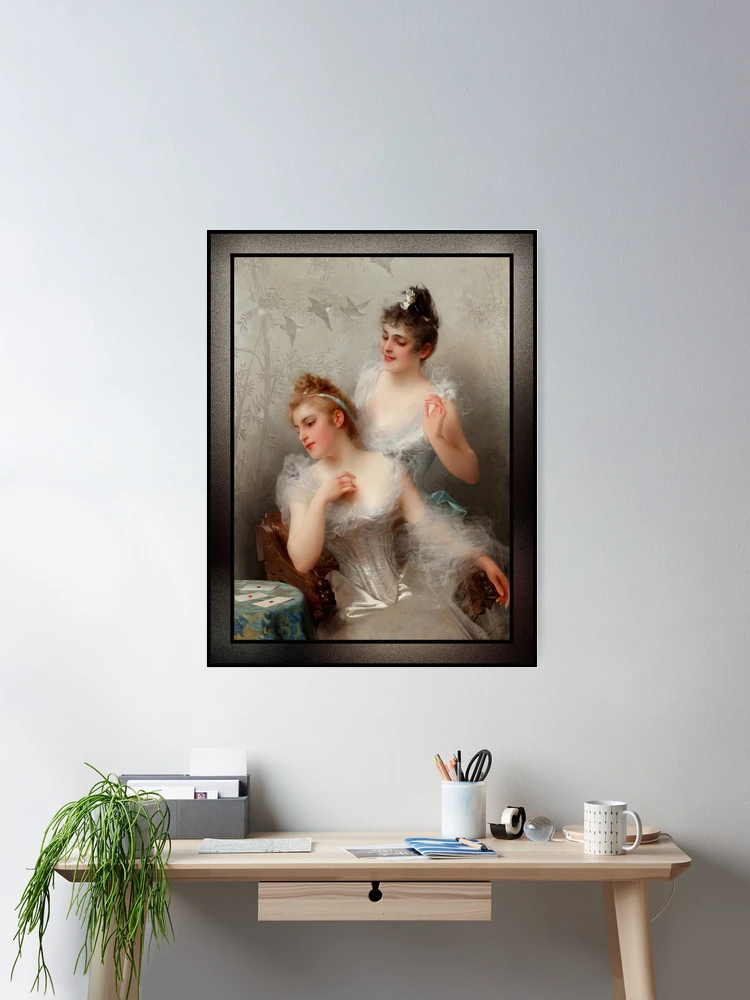
ב “The Three Aces,” the focus is on two women sitting together at a table, engaged in a playful moment. The scene is rich with subtle emotion, portraying two women in intricate, opulent attire, suggesting the care and attention given to their roles as part of society’s elite.
One of the women is seated in the foreground, her delicate, almost ethereal appearance marked by soft pastel hues. She is dressed in a corset that hugs her figure and is adorned with lace and fine fabric, creating a sense of formality, while her soft expression carries a hint of amusement. Her companion, standing behind her, seems more relaxed, offering a slight, playful smile that adds an air of intimacy and lightness to the composition.
The table between them adds a layer of interaction in the piece, its surface adorned with scattered playing cards. The presence of the cards is intriguing, as it symbolizes both a game of chance and a metaphorical reflection on life and fortune. The game is seemingly a part of their casual leisure, but it also hints at the uncertainties and playful risks inherent in high society, where appearance and reality often blur.
The two women’s hairstyles are another key element of the composition. Their luxurious hair is meticulously styled, with the first woman wearing a headband of blue that contrasts softly against the light tones of her hair. The other woman’s hair is slightly darker, adorned with flowers in the style of the period, symbolizing both youth and fertility. Their coiffures are not just fashion statements but also markers of their social status and refinement.
התפאורה והחומרים
The background of the painting is just as significant as the figures in the foreground. הרך, muted tones of the room complement the vibrant yet refined colors of the women’s attire. The neutral background is filled with delicate, almost dreamlike birds flying, adding a touch of motion to the otherwise still scene.
These ethereal creatures, drawn with great attention to detail, are almost like a breath of air against the otherwise soft, heavy atmosphere of the women’s lavish surroundings. החדר, faintly textured with floral wallpaper, is furnished with antique furniture, subtly reinforcing the sense of wealth and comfort.
The light that falls on the women and the surrounding environment highlights the masterful technique Corcos employed. The use of soft lighting and shadows creates a harmonious blend of realism and idealization. The pale, translucent fabrics of the women’s dresses glow in the light, and the texture of the lace and delicate veils they wear suggests an almost tactile reality that pulls the viewer into their world. Corcos’ command of light and texture captures the subtle shimmer of silk and lace, elevating the scene to an almost romantic level of beauty.
סִגְנוֹן, נוֹשֵׂא, ומצב רוח
Corcos’ style in this piece is a harmonious blend of realism with a touch of idealization that was characteristic of the late 19th century and early 20th century art. His use of soft pastels and delicate brushwork aligns with the aesthetic of the Belle Époque period, איפה יופי, פְּנַאִי, and luxury were celebrated through visual art. The women in “The Three Aces” are painted with a refined elegance that speaks to their high social status and an inherent sense of grace.
The theme of the painting is one of leisure, יוֹפִי, and subtle interaction. There is a palpable tension between the playful nature of the card game and the elegance of the women involved. It’s as if the cards represent a moment of respite in the lives of women who, despite their opulence, are engaged in the simple joys of companionship and a fleeting game of chance. Their poised yet serene expressions suggest that, even in moments of frivolity, they are part of a larger social dance where appearances are carefully managed.
The mood of the painting is one of quiet contemplation, with an undertone of intrigue. The playfulness of the game contrasts with the reserved expressions of the women, hinting at an inner world that is not immediately apparent. The softness of the colors and textures reinforces the tranquil atmosphere, making this work both visually striking and emotionally resonant. There is an element of timelessness in the painting, where the transient nature of the game is captured alongside the eternal qualities of beauty and poise.
מַסְקָנָה
ב “The Three Aces,” Vittorio Matteo Corcos has once again demonstrated his mastery in capturing the nuances of high society life. Through his meticulous rendering of his subjects and their environment, he invites us to appreciate both the elegance and the fleeting nature of the moment he portrays. The painting is not just a representation of two women in a luxurious setting, but a window into a world where the richness of life and the allure of social games coexist with beauty, חן, and the quiet tension of everyday interactions.
שלושת האסים היא יצירה משוחזרת של אמנות דיגיטלית של אמנים ותיקים של תמונת נחלת הכלל.
אמן ביו שמקורו Wikipedia.org
ויטוריו נולד להורים יהודים, אייזק וג'ודיטה באקיס, בליבורנו, ובגיל של 16, הוא קיבל הכשרה אמנותית באקדמיה לאמנויות יפות בפירנצה בהדרכתו של הצייר האיטלקי אנריקו פולסטריני (1817 – 1876).
ואז בין 1878 ו 1879 הוא עבד תחת הצייר האיטלקי דומניקו מורלי (1826 – 1901) בנאפולי; ידוע בייצור ציורים היסטוריים ודתיים; ומי נחשב להשפיע רבות באומנויות המחצית השנייה של המאה ה -19.
ויטוריו נסע לאחר מכן לפריז, שם פגש את הצייר הצרפתי לאון בונאט (1833 – 1922), וחתם על חוזה עם הגופיל & Cie סוכנות מובילה בצרפת של המאה ה -19, מהם הצליח להשלים את הכנסתו כצייר דיוקנאות באיורים למגזינים.
הוא פקד את מעגליו של הצייר האיטלקי ג'וזפה דה ניטיס (נחשב לאחד הציירים האיטלקיים החשובים של המאה ה -19); ומ 1881 עד 1886, הוא הציג לעתים קרובות בסלון.
ב 1886 ויטוריו חזר לאיטליה, באופן משוער להצטרף לצבא, ואז התיישב בפירנצה. באותה עת התגייר לקתוליות והתחתן עם אלמנה בשם אמה צ'יאבאטי.
בפירנצה, הוא התיידד במעגלים האינטלקטואליים של אותה תקופה, ועשה דיוקנאות של הצייר הריאליסטי האיטלקי סילבסטרו לגה (1826 – 1895), המשורר האיטלקי גיוס קארדוצ'י (1835 – 1907), והמלחין האיטלקי פייטרו מסקני (1863 – 1945).
לאחר 1900, הוא כתב בכתב העת פלורנטין איל מרזוקו.; כמו כן פרסם סיפור קצר במגזין Fanfulla della Domenica שכותרתו מדמואזל לפרינס.
ב 1904, הוא נסע לפוטסדאם כדי לצייר את הקיסר וויליאם השני (1859 – 1941) וחברים אחרים במלוכה הגרמנית.
במהלך מלחמת העולם הראשונה ב 1916, בנו של ויטוריו מת בקרב. מאוחר יותר בשנות העשרים הצטרף ל- Gruppo Labronico יחד עם הציירים האיטלקים פליניו נומליני (1866 – 1943) ואולבי ליגי (1858 – 1939).
הוא צייר גם דיוקנאות של מוסוליני (בניטו אמילקרה אנדראה מוסוליני 1883 – 1945) ב 1928; הרוזנת אנינה מורוסיני (1924 – 1965); הרוזנת נרינה וולפי ממיסוראטה; קרדוצ'י, פוצ'יני ומסקני; מלכת אמלי מפורטוגל ונסיכת אורלינס.