

Venuksen wc: The Allure of Leisure
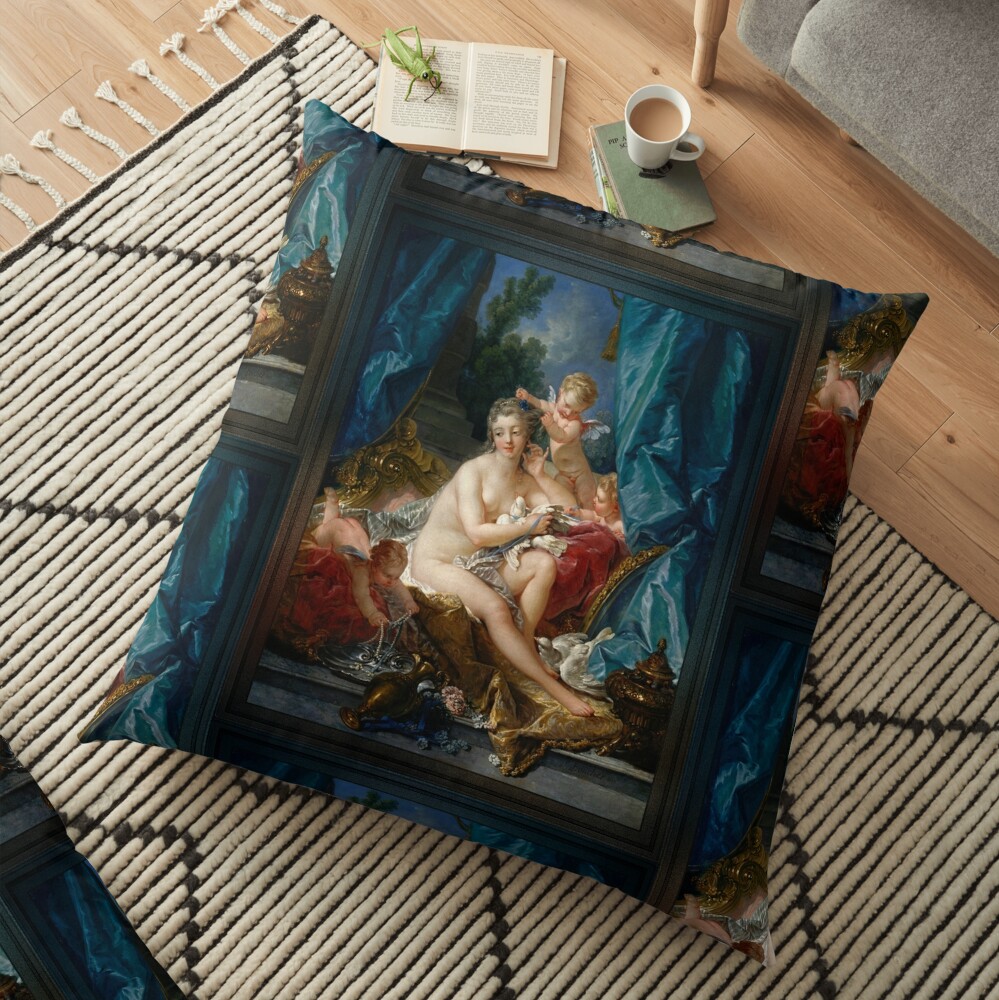
Venuksen wc, this version was painted by François Boucher (1703 – 1770) around 1751; and stands as a quintessential example of Rococo art, embodying its characteristic sensuality, eleganssi, and playful depiction of mythological themes. This large-scale canvas, currently residing in the Louvre Museum, transports viewers to a realm of idyllic beauty and leisurely indulgence, showcasing Boucher’s mastery of color, valaistus, ja koostumus. The painting is not merely a representation of the goddess Venus; it’s an exploration of feminine grace within a carefully constructed fantasy landscape.
Sisällysluettelo
A Scene of Delicate Rituals
Keskeinen hahmo, undeniably Venus (Aphrodite in Greek mythology), reclines upon a lavishly adorned chaise lounge. She is depicted mid-action, engaged in the intimate act of dressing her hair. Her posture is relaxed and graceful, conveying an air of serene contentment rather than any sense of formality or grandeur. The artist’s focus isn’t on portraying Venus as a powerful deity but rather as a beautiful woman enjoying a moment of personal care.
She holds a small mirror to one side, seemingly admiring her reflection while a handmaid gently arranges ribbons in her hair. This intimate scene is far removed from the heroic narratives often associated with classical mythology; sen sijaan, it emphasizes domesticity and private pleasure.
Cherubic Companions & Decorative Details
Surrounding Venus are several cherubs, characteristic figures within Rococo art. These playful spirits flit about, attending to the goddess’s needs. One cherub playfully blows bubbles, while another offers a bouquet of flowers. Their presence adds an element of lightness and whimsy to the scene, reinforcing the overall atmosphere of carefree enjoyment.
The chaise lounge itself is a masterpiece of decorative detail, featuring intricate carvings and luxurious fabrics in rich reds and golds. Scattered around Venus are various objects associated with beauty and adornment: perfume bottles, scattered roses, korut, and a small white rabbit – all contributing to the painting’s opulent aesthetic.
A Stage Setting of Opulence & Luonto
The setting for this idyllic scene is equally important. Heavy blue draperies frame the composition on either side, creating a sense of theatricality and enclosure. Beyond these curtains lies a glimpse of a lush garden with verdant trees and classical architecture in the distance. This carefully constructed backdrop suggests a secluded paradise, further enhancing the feeling of privacy and indulgence. The use of light is particularly noteworthy; Boucher masterfully employs soft, diffused lighting to illuminate Venus’s figure, highlighting her skin’s luminosity and creating a sense of warmth and intimacy.
Värivalikoima & Taiteellinen tekniikka
Boucher’s color palette in “The Toilet of Venus” is dominated by pastel hues – pinks, blues, vihreät, and golds – which are hallmarks of the Rococo style. These soft colors contribute to the painting’s overall feeling of lightness and delicacy. His brushwork is loose and fluid, Luomalla liikkeen ja spontaanisuuden tunteen. The artist’s technique prioritizes capturing the essence of beauty and pleasure over strict realism. He uses subtle gradations of color to model Venus’s form, emphasizing her curves and contours while maintaining an ethereal quality.

Konteksti & Perintö
“The Toilet of Venus” was created during a period when Rococo art flourished in France, particularly under the patronage of Madame de Pompadour, Louis XV’s influential mistress. Boucher became the leading artist of this style, Tunnettu koristeellisista maalauksistaan, jotka palvelivat aristokratian makuja. The painting reflects the prevailing cultural values of the time – an emphasis on pleasure, kauneus, and refined leisure.
It’s a testament to Boucher’s ability to create visually stunning works that captured the spirit of the Rococo era and continues to captivate audiences with its charm and elegance. The work’s influence can be seen in subsequent artistic trends, particularly in depictions of idealized feminine figures and the use of decorative elements to enhance visual appeal.
Taiteilija bio Wikipedia.org
Kotoisin Pariisista, Boucher oli vähemmän tunnettu taidemaalari Nicolas Boucherin poika, joka antoi hänelle ensimmäisen taiteellisen koulutuksen. Seitsemäntoistavuotiaana, Boucherin maalausta ihaili taidemaalari François Lemoyne. Lemoyne nimitti myöhemmin Boucherin oppipoikakseen, mutta vasta kolmen kuukauden jälkeen, hän meni töihin kaivertajalle Jean-François Carsille.
Sisään 1720, hän voitti eliitin Grand Prix de Rooman maalauksesta, mutta käytti seuraavaa tilaisuutta opiskella Italiassa vasta viisi vuotta myöhemmin, kuninkaallisten maalaus- ja kuvanveistoakatemian taloudellisten ongelmien vuoksi.[1] Palattuaan opiskelemaan Italiassa hänet hyväksyttiin uudelleen perustettuun Académie de peinture et de veistokseen 24 marraskuu 1731. Hänen vastaanottokappaleensa (vastaanottokappale) oli hänen Rinaldo ja Armida 1734.
Boucher meni naimisiin Marie-Jeanne Buzeaun kanssa vuonna 1733. Pariskunnalla oli kolme yhteistä lasta. Boucherista tuli tiedekunnan jäsen vuonna 1734 ja hänen uransa kiihtyi tästä lähtien, kun hänet ylennettiin professoriksi, sitten akatemian rehtoriksi, hänestä tuli tarkastaja Royal Gobelinsin manufaktuurissa ja lopulta pääministeri Peintre du Roi (Kuninkaan ensimmäinen maalari) sisään 1765. Muotokuva Marie-Louise O’Murphy c. 1752
Boucher kuoli 30 saattaa 1770 kotimaassaan Pariisissa. Hänen nimensä, yhdessä hänen suojelijansa Madame de Pompadourin kanssa, oli tullut synonyymi ranskalaiselle rokokoo -tyylille, johdattaa Goncourt -veljekset kirjoittamaan: “Boucher on yksi niistä miehistä, jotka edustavat vuosisadan makua, jotka ilmaisevat, personoida ja ilmentää sitä.”
Boucher on kuuluisa sanomalla, että luonto on “liian vihreä ja heikosti valaistu” (liian vihreä ja huonosti valaistu).
Boucher liittyi jalokivikaivertaja Jacques Guayhin, jonka hän opetti piirtämään. Hän opetti myös Moravian-itävaltalaisen taidemaalarin Martin Ferdinand Quadalin ja uusklassisen taidemaalarin Jacques-Louis Davidin. 1767.[4] Myöhemmin, Boucher teki sarjan piirroksia Guayn teoksista, jotka rouva de Pompadour kaiverrettiin ja jaettiin komeasti sidottuna teoksena suosituille hovimiehille
Venuksen wc on retusoitu digitaalisen taiteen kopio julkisesta kuvasta, joita voi ostaa a kanvastulostus verkossa.