

Klósettið á Venus: The Allure of Leisure
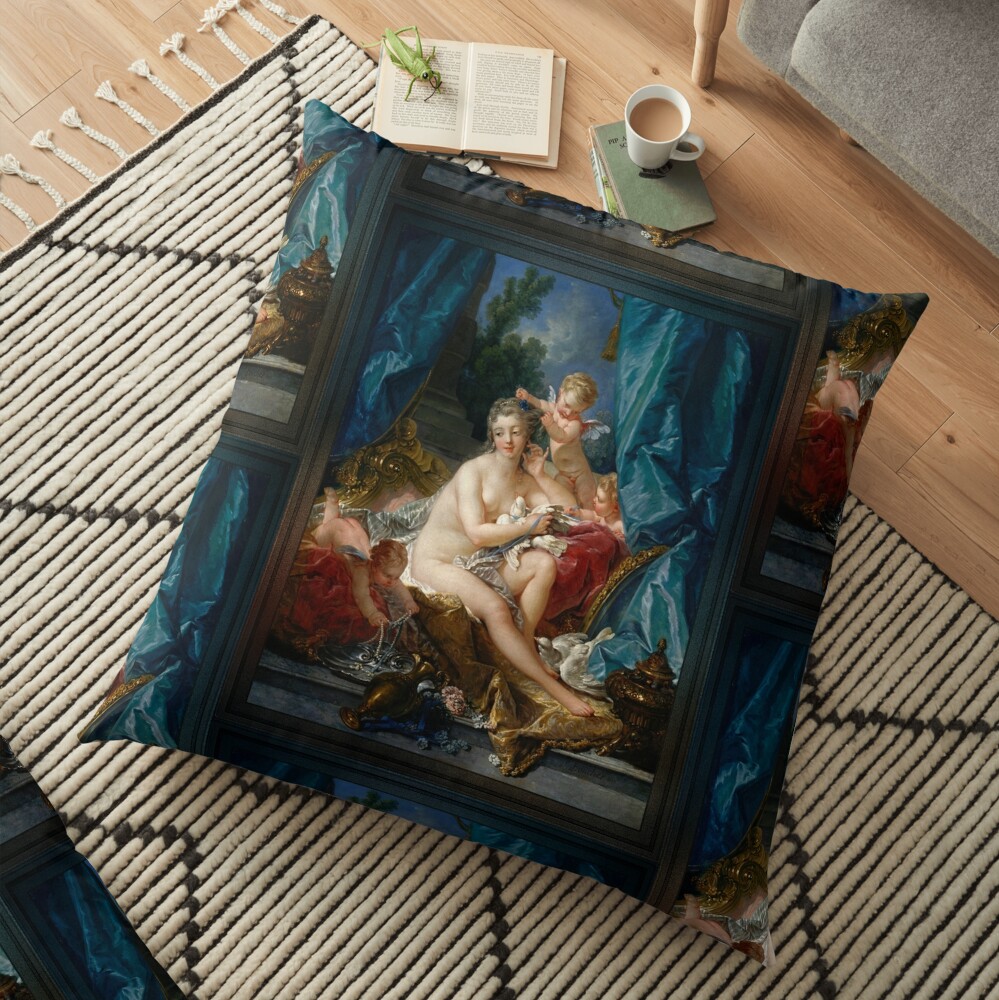
Klósettið á Venus, this version was painted by François Boucher (1703 – 1770) around 1751; and stands as a quintessential example of Rococo art, embodying its characteristic sensuality, glæsileiki, and playful depiction of mythological themes. This large-scale canvas, currently residing in the Louvre Museum, transports viewers to a realm of idyllic beauty and leisurely indulgence, showcasing Boucher’s mastery of color, Ljós, og samsetningu. The painting is not merely a representation of the goddess Venus; it’s an exploration of feminine grace within a carefully constructed fantasy landscape.
Efnisyfirlit
A Scene of Delicate Rituals
Miðlæg mynd, undeniably Venus (Aphrodite in Greek mythology), reclines upon a lavishly adorned chaise lounge. She is depicted mid-action, engaged in the intimate act of dressing her hair. Her posture is relaxed and graceful, conveying an air of serene contentment rather than any sense of formality or grandeur. The artist’s focus isn’t on portraying Venus as a powerful deity but rather as a beautiful woman enjoying a moment of personal care.
She holds a small mirror to one side, seemingly admiring her reflection while a handmaid gently arranges ribbons in her hair. This intimate scene is far removed from the heroic narratives often associated with classical mythology; í staðinn, it emphasizes domesticity and private pleasure.
Cherubic Companions & Decorative Details
Surrounding Venus are several cherubs, characteristic figures within Rococo art. These playful spirits flit about, attending to the goddess’s needs. One cherub playfully blows bubbles, while another offers a bouquet of flowers. Their presence adds an element of lightness and whimsy to the scene, reinforcing the overall atmosphere of carefree enjoyment.
The chaise lounge itself is a masterpiece of decorative detail, featuring intricate carvings and luxurious fabrics in rich reds and golds. Scattered around Venus are various objects associated with beauty and adornment: perfume bottles, scattered roses, skartgripir, and a small white rabbit – all contributing to the painting’s opulent aesthetic.
A Stage Setting of Opulence & Nature
The setting for this idyllic scene is equally important. Heavy blue draperies frame the composition on either side, creating a sense of theatricality and enclosure. Beyond these curtains lies a glimpse of a lush garden with verdant trees and classical architecture in the distance. This carefully constructed backdrop suggests a secluded paradise, further enhancing the feeling of privacy and indulgence. The use of light is particularly noteworthy; Boucher masterfully employs soft, diffused lighting to illuminate Venus’s figure, highlighting her skin’s luminosity and creating a sense of warmth and intimacy.
Litapalletta & Listræn tækni
Boucher’s color palette in “The Toilet of Venus” is dominated by pastel hues – pinks, blús, grænu, and golds – which are hallmarks of the Rococo style. These soft colors contribute to the painting’s overall feeling of lightness and delicacy. His brushwork is loose and fluid, creating a sense of movement and spontaneity. The artist’s technique prioritizes capturing the essence of beauty and pleasure over strict realism. He uses subtle gradations of color to model Venus’s form, emphasizing her curves and contours while maintaining an ethereal quality.

Samhengi & Arfleifð
“The Toilet of Venus” was created during a period when Rococo art flourished in France, particularly under the patronage of Madame de Pompadour, Louis XV’s influential mistress. Boucher became the leading artist of this style, known for his decorative paintings that catered to the tastes of the aristocracy. The painting reflects the prevailing cultural values of the time – an emphasis on pleasure, fegurð, and refined leisure.
It’s a testament to Boucher’s ability to create visually stunning works that captured the spirit of the Rococo era and continues to captivate audiences with its charm and elegance. The work’s influence can be seen in subsequent artistic trends, particularly in depictions of idealized feminine figures and the use of decorative elements to enhance visual appeal.
Lífsmynd listamanns frá Wikipedia.org
Innfæddur í París, Boucher var sonur minna þekkts málara Nicolas Boucher, sem veitti honum sína fyrstu listþjálfun. Á sautján ára aldri, málverk eftir Boucher var dáð af málaranum François Lemoyne. Lemoyne skipaði síðar Boucher sem lærling sinn, en eftir aðeins þrjá mánuði, hann fór að vinna hjá leturgröftaranum Jean-François Cars.
Í 1720, hann vann Elite Grand Prix de Rome fyrir málverk, en nýtti ekki tækifærið til að stunda nám á Ítalíu fyrr en fimm árum síðar, vegna fjárhagsvanda í Konunglegu málara- og höggmyndarakademíunni.[1] Þegar hann kom heim frá námi á Ítalíu fékk hann inngöngu í endurreista Académie de peinture et de sculpture á 24 nóvember 1731. Móttökustykkið hans (móttökustykki) var Rinaldo hans og Armida af 1734.
Boucher giftist Marie-Jeanne Buzeau árið 1733. Þau hjón eignuðust þrjú börn saman. Boucher varð deildarmeðlimur í 1734 og ferill hans hraðaði frá þessum tímapunkti þar sem hann var gerður prófessor þá rektor akademíunnar, verða eftirlitsmaður hjá Royal Gobelins Manufactory og loks forsætisráðherra Peintre du Roi (Fyrsti málari konungsins) inn 1765. Portrett af Marie-Louise O'Murphy c. 1752
Boucher lést á 30 maí 1770 í heimalandi sínu París. Nafn hans, ásamt verndara hans Madame de Pompadour, var orðið samheiti við franskan rókókóstíl, leiddi Goncourt bræður til að skrifa: “Boucher er einn af þessum mönnum sem tákna smekk aldar, sem tjá, persónugera það og setja það inn.”
Boucher er frægur fyrir að segja að náttúran sé það “of grænt og illa lýst” (of grænt og illa lýst).
Boucher var tengdur gimsteinagrafaranum Jacques Guay, sem hann kenndi að teikna. Hann leiðbeindi einnig moravísk-austurríska málarann Martin Ferdinand Quadal sem og nýklassíska málarann Jacques-Louis David í 1767.[4] Seinna, Boucher gerði röð teikninga af verkum eftir Guay sem frú de Pompadour greypti síðan út og dreifði sem myndarlega innbundnu bindi til hylli hirðmanna.
The Toilet of Venus er lagfærð stafræn listafritun af mynd í almenningseign, sem hægt er að kaupa sem a strigaprentun á netinu.