

Klósettið á Venus
The Enchanting Ritual: Examining François Boucher’s “The Toilet of Venus”
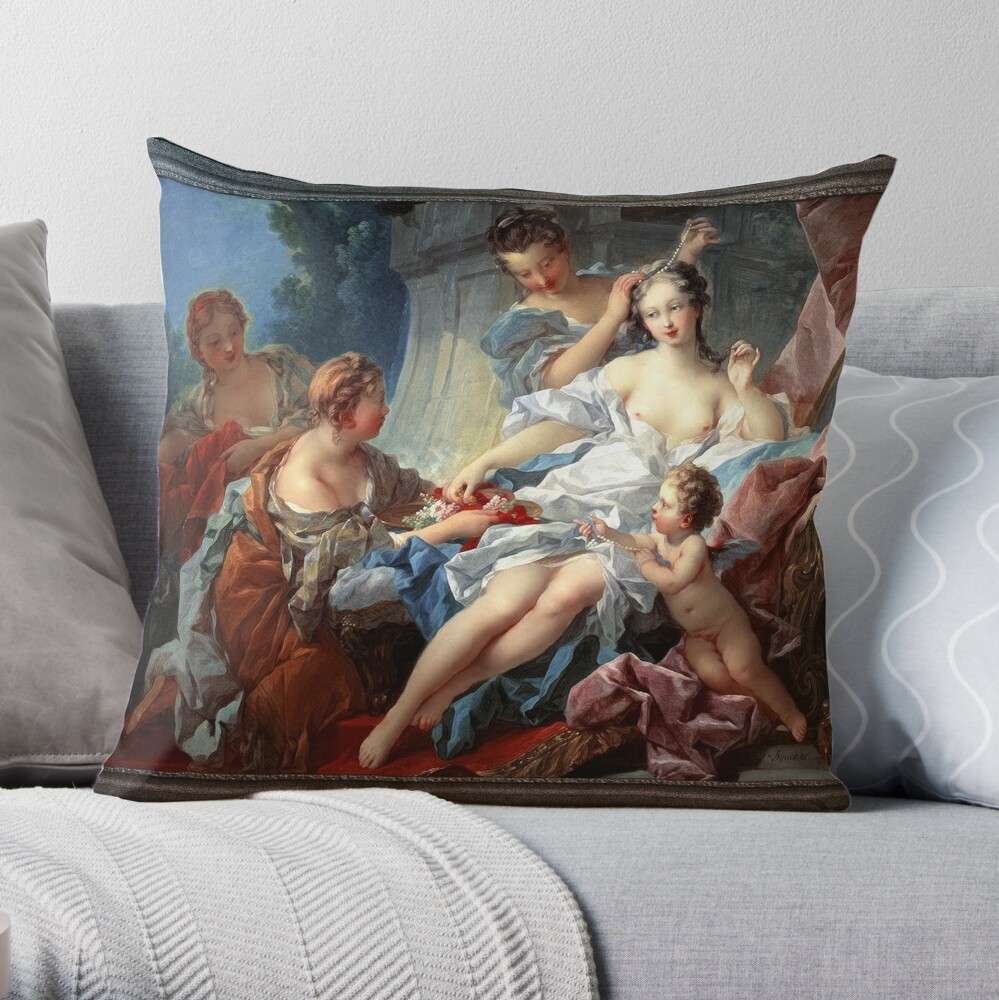
Klósettið á Venus, painted by François Boucher’s (1703 – 1770) around 1746, stands as a quintessential example of Rococo art, embodying its characteristic lightness, næmni, and decorative elegance. This large-scale canvas, currently housed in the Louvre Museum, transports viewers to an idyllic, dreamlike realm where the goddess Venus is attended by nymphs during her morning toilette. The painting isn’t merely a depiction of bathing; it’s a carefully orchestrated scene designed to evoke pleasure, fegurð, and a sense of refined leisure.
Efnisyfirlit
Samhljómur í tónsmíðum & Stilling
The composition unfolds within a shallow, theatrical space defined by classical architectural elements – columns, pilasters, and an arched niche – that frame the central action. These structures are rendered with a soft focus, appearing more as decorative backdrops than structurally significant components. The setting itself is deliberately ambiguous; it’s neither explicitly earthly nor entirely divine, contributing to the painting’s ethereal quality. Lush foliage spills in from the left side of the canvas, further blurring the boundaries between reality and fantasy. A rich red curtain drapes behind Venus, adding a touch of opulent warmth to the scene. The overall effect is one of secluded intimacy within a timeless paradise.
Venus: Aðalpersóna
Venus, the goddess of love and beauty, occupies the focal point of the painting. She reclines languidly on an ornate chaise lounge, her body partially draped in flowing blue fabric that reveals much more than it conceals. Her pose is relaxed and graceful, conveying a sense of effortless allure. Boucher masterfully captures the softness of her flesh through delicate brushstrokes and subtle gradations of light and shadow. Svipur hennar er rólegur, almost detached, as she engages with the attendants surrounding her. She isn’t actively participating in the toilette; frekar, she seems to be enjoying the attention and the beauty of the moment.
The Attendants: Nymphs & Cupid
Surrounding Venus are several female figures – nymphs – each engaged in a specific task related to her morning ritual. One nymph carefully arranges flowers into a bouquet, while another offers Venus a mirror for inspection. A third gently tends to her hair with a comb and brush. These attendants aren’t portrayed as servants; they appear more like companions or handmaidens, sharing in the goddess’s pleasure and contributing to the overall atmosphere of indulgence. In the lower right corner, Cupid playfully observes the scene, his presence reinforcing the theme of love and desire that permeates the painting. He is depicted with a mischievous grin, adding a touch of lightheartedness to the composition.
Litapalletta & Ljós
Boucher’s use of color is integral to the painting’s aesthetic appeal. The palette is dominated by soft pastels – pinks, blús, grænu, and creams – creating a harmonious and visually pleasing effect. These colors are applied with a delicate touch, resulting in a luminous quality that enhances the sense of dreamlike beauty. Light plays a crucial role in shaping the forms and defining the mood. It emanates from an unseen source, softly illuminating Venus and her attendants while leaving portions of the background shrouded in shadow. This chiaroscuro effect accentuates the figures’ sensuality and creates a sense of depth within the shallow space.
Rococo Style & Boucher’s Influence
“Klósettið á Venus” is a prime example of Rococo style, which emerged in France during the 18th century as a reaction against the more formal and grandiose Baroque aesthetic. Rococo art emphasized grace, glæsileiki, and playful sensuality. Boucher was one of the leading exponents of this style, and his paintings were highly sought after by members of the French aristocracy. His work helped to define the Rococo aesthetic, influencing countless artists and shaping the taste of the era. The painting’s focus on pleasure, fegurð, and refined leisure reflects the values and aspirations of the French court during the reign of Louis XV.
Tæknileg leikni & Arfleifð
Boucher’s technical skill is evident in every detail of “The Toilet of Venus.” His ability to render flesh tones with such subtlety and realism was remarkable for his time. The painting’s composition, litavali, and lighting all contribute to its overall effect of beauty and enchantment. “Klósettið á Venus” remains a celebrated masterpiece of Rococo art, admired for its exquisite beauty, sensual allure, and masterful execution. It continues to inspire artists and captivate viewers with its timeless depiction of feminine grace and idyllic pleasure.
Lífsmynd listamanns frá Wikipedia.org
Innfæddur í París, Boucher var sonur minna þekkts málara Nicolas Boucher, sem veitti honum sína fyrstu listþjálfun. Á sautján ára aldri, málverk eftir Boucher var dáð af málaranum François Lemoyne. Lemoyne skipaði síðar Boucher sem lærling sinn, en eftir aðeins þrjá mánuði, hann fór að vinna hjá leturgröftaranum Jean-François Cars.
Í 1720, hann vann Elite Grand Prix de Rome fyrir málverk, en nýtti ekki tækifærið til að stunda nám á Ítalíu fyrr en fimm árum síðar, vegna fjárhagsvanda í Konunglegu málara- og höggmyndarakademíunni.[1] Þegar hann kom heim frá námi á Ítalíu fékk hann inngöngu í endurreista Académie de peinture et de sculpture á 24 nóvember 1731. Móttökustykkið hans (móttökustykki) var Rinaldo hans og Armida af 1734.
Boucher giftist Marie-Jeanne Buzeau árið 1733. Þau hjón eignuðust þrjú börn saman. Boucher varð deildarmeðlimur í 1734 og ferill hans hraðaði frá þessum tímapunkti þar sem hann var gerður prófessor þá rektor akademíunnar, verða eftirlitsmaður hjá Royal Gobelins Manufactory og loks forsætisráðherra Peintre du Roi (Fyrsti málari konungsins) inn 1765. Portrett af Marie-Louise O'Murphy c. 1752
Boucher lést á 30 maí 1770 í heimalandi sínu París. Nafn hans, ásamt verndara hans Madame de Pompadour, var orðið samheiti við franskan rókókóstíl, leiddi Goncourt bræður til að skrifa: “Boucher er einn af þessum mönnum sem tákna smekk aldar, sem tjá, persónugera það og setja það inn.”
Boucher er frægur fyrir að segja að náttúran sé það “of grænt og illa lýst” (of grænt og illa lýst).
Boucher var tengdur gimsteinagrafaranum Jacques Guay, sem hann kenndi að teikna. Hann leiðbeindi einnig moravísk-austurríska málarann Martin Ferdinand Quadal sem og nýklassíska málarann Jacques-Louis David í 1767.[4] Seinna, Boucher gerði röð teikninga af verkum eftir Guay sem frú de Pompadour greypti síðan út og dreifði sem myndarlega innbundnu bindi til hylli hirðmanna.
The Toilet of Venus is a retouched digital art reproduction of a public domain image which you can purchase as a Rúlluð striga prentun á netinu.