

鏡のヴィーナスのトイレ: The Allure of Leisure
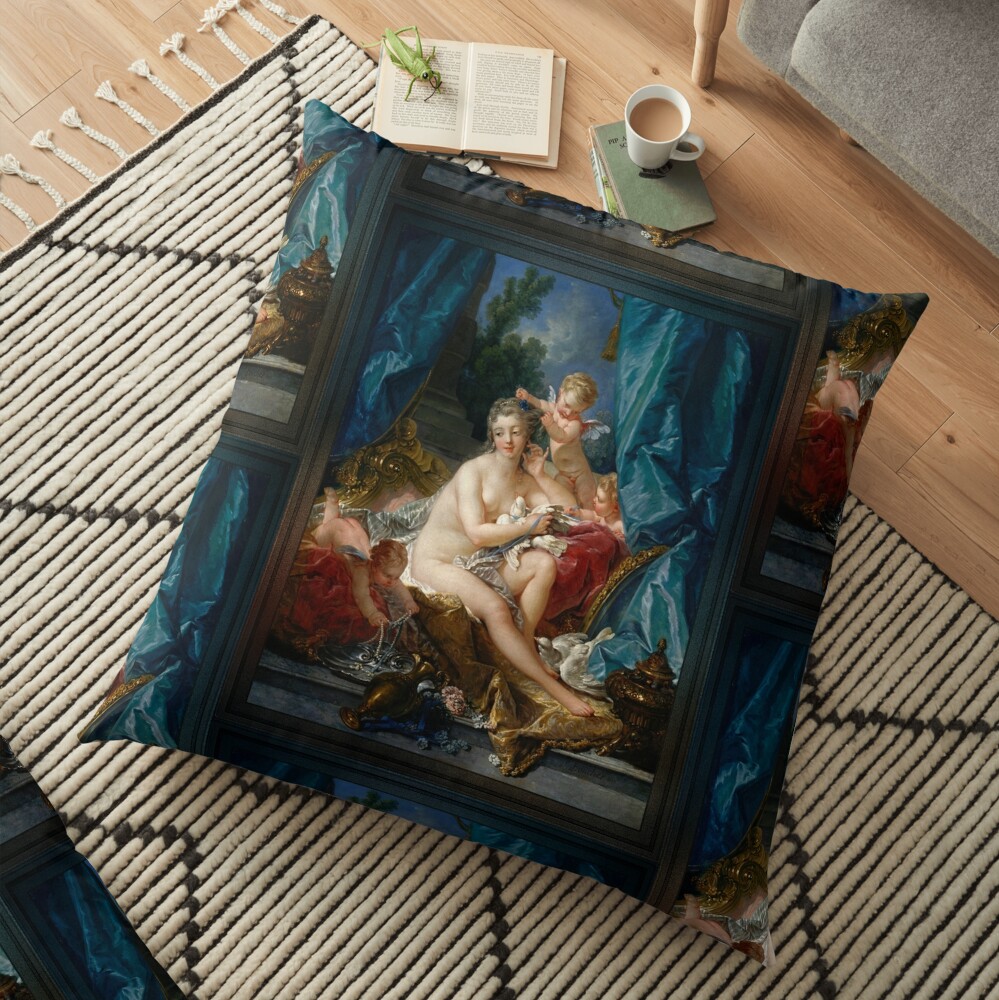
鏡のヴィーナスのトイレ, this version was painted by François Boucher (1703 – 1770) その周り 1751; and stands as a quintessential example of Rococo art, embodying its characteristic sensuality, 優雅, and playful depiction of mythological themes. この大規模なキャンバス, currently residing in the Louvre Museum, transports viewers to a realm of idyllic beauty and leisurely indulgence, showcasing Boucher’s mastery of color, ライト, そして構成. The painting is not merely a representation of the goddess Venus; it’s an exploration of feminine grace within a carefully constructed fantasy landscape.
目次
A Scene of Delicate Rituals
中心人物, undeniably Venus (Aphrodite in Greek mythology), reclines upon a lavishly adorned chaise lounge. She is depicted mid-action, engaged in the intimate act of dressing her hair. Her posture is relaxed and graceful, conveying an air of serene contentment rather than any sense of formality or grandeur. The artist’s focus isn’t on portraying Venus as a powerful deity but rather as a beautiful woman enjoying a moment of personal care.
She holds a small mirror to one side, seemingly admiring her reflection while a handmaid gently arranges ribbons in her hair. This intimate scene is far removed from the heroic narratives often associated with classical mythology; その代わり, it emphasizes domesticity and private pleasure.
ケルビックコンパニオン & 装飾的な詳細
Surrounding Venus are several cherubs, characteristic figures within Rococo art. These playful spirits flit about, attending to the goddess’s needs. One cherub playfully blows bubbles, while another offers a bouquet of flowers. Their presence adds an element of lightness and whimsy to the scene, reinforcing the overall atmosphere of carefree enjoyment.
The chaise lounge itself is a masterpiece of decorative detail, featuring intricate carvings and luxurious fabrics in rich reds and golds. Scattered around Venus are various objects associated with beauty and adornment: perfume bottles, scattered roses, ジュエリー, and a small white rabbit – all contributing to the painting’s opulent aesthetic.
A Stage Setting of Opulence & 自然
The setting for this idyllic scene is equally important. Heavy blue draperies frame the composition on either side, creating a sense of theatricality and enclosure. Beyond these curtains lies a glimpse of a lush garden with verdant trees and classical architecture in the distance. This carefully constructed backdrop suggests a secluded paradise, further enhancing the feeling of privacy and indulgence. 光の使用は特に注目に値します; Boucher masterfully employs soft, diffused lighting to illuminate Venus’s figure, highlighting her skin’s luminosity and creating a sense of warmth and intimacy.
カラーパレット & 芸術的なテクニック
Boucher’s color palette in “The Toilet of Venus” is dominated by pastel hues – pinks, ブルース, グリーン, and golds – which are hallmarks of the Rococo style. These soft colors contribute to the painting’s overall feeling of lightness and delicacy. His brushwork is loose and fluid, 動きの感覚と自発性を生み出します. The artist’s technique prioritizes capturing the essence of beauty and pleasure over strict realism. He uses subtle gradations of color to model Venus’s form, emphasizing her curves and contours while maintaining an ethereal quality.

コンテクスト & 遺産
“The Toilet of Venus” was created during a period when Rococo art flourished in France, particularly under the patronage of Madame de Pompadour, ルイ16世の影響力のある愛人. Boucher became the leading artist of this style, 貴族の好みに応える彼の装飾的な絵画で知られています. The painting reflects the prevailing cultural values of the time – an emphasis on pleasure, 美しさ, and refined leisure.
It’s a testament to Boucher’s ability to create visually stunning works that captured the spirit of the Rococo era and continues to captivate audiences with its charm and elegance. The work’s influence can be seen in subsequent artistic trends, particularly in depictions of idealized feminine figures and the use of decorative elements to enhance visual appeal.
アーティストバイオから Wikipedia.org
パリ出身, ブーシェはあまり知られていない画家ニコラスブーシェの息子でした, 彼に彼の最初の芸術的訓練を与えた人. 17歳で, ブーシェの絵画は、画家フランソワ・ルモワンに賞賛されました. Lemoyneは後にBoucherを彼の見習いとして任命しました, でもたった3ヶ月で, 彼は彫刻家ジャン=フランソワ・カーズのために働きに行きました.
に 1720, 彼は絵画でエリートローマグランプリを受賞しました, しかし、5年後までイタリアで勉強する結果的な機会をとらなかった, 王立絵画彫刻アカデミーの財政問題のため。[1] イタリアでの勉強から戻ったとき、彼は再建された王立絵画彫刻アカデミーに入学しました。 24 11月 1731. 彼のレセプションピース (レセプションピース) 彼のリナルドとアルミダは 1734.
ブーシェはマリージャンヌブゾーと結婚しました 1733. カップルには3人の子供がいました. Boucherはの教員になりました 1734 そして彼のキャリアはこの時点から加速し、彼は教授、そしてアカデミーの学長に昇進しました。, 王立ゴブラン製作所の検査官になり、ついに国王の筆頭画家になりました (王の最初の画家) に 1765. マリー=ルイーズ・オマーフィーの肖像c. 1752
ブーシェはで死んだ 30 5月 1770 彼の生まれ故郷のパリで. 彼の名前, 彼の常連客であるポンパドゥール夫人のそれと一緒に, フランスのロココ様式の代名詞になっていた, ゴンコート兄弟を率いて書く: “ブーシェは世紀の味を代表する男性の一人です, 表現する人, それを具体化して具体化します。”
ブーシェは自然が “緑が多すぎて照明が不十分” (緑が強すぎて照明が悪い).
ブーシェは宝石の彫刻家ジャック・ゲと関係がありました, 彼が描くことを教えた人. 彼はまた、モラヴィア・オーストリアの画家マーティン・フェルディナンド・クアダルと新古典主義の画家ジャック=ルイ・ダヴィッドを指導しました。 1767.[4] 後で, ブーシェは、ポンパドゥール夫人が彫刻し、好意的な廷臣に見事に綴じられた巻として配布した、グアイの一連の作品の素描を作成しました。
The Toilet of Venus is a retouched digital art reproduction of a public domain image, which can be purchased as a キャンバスプリントオンライン.