

ניצחון פרדריק הנדריק, Prince of Orange
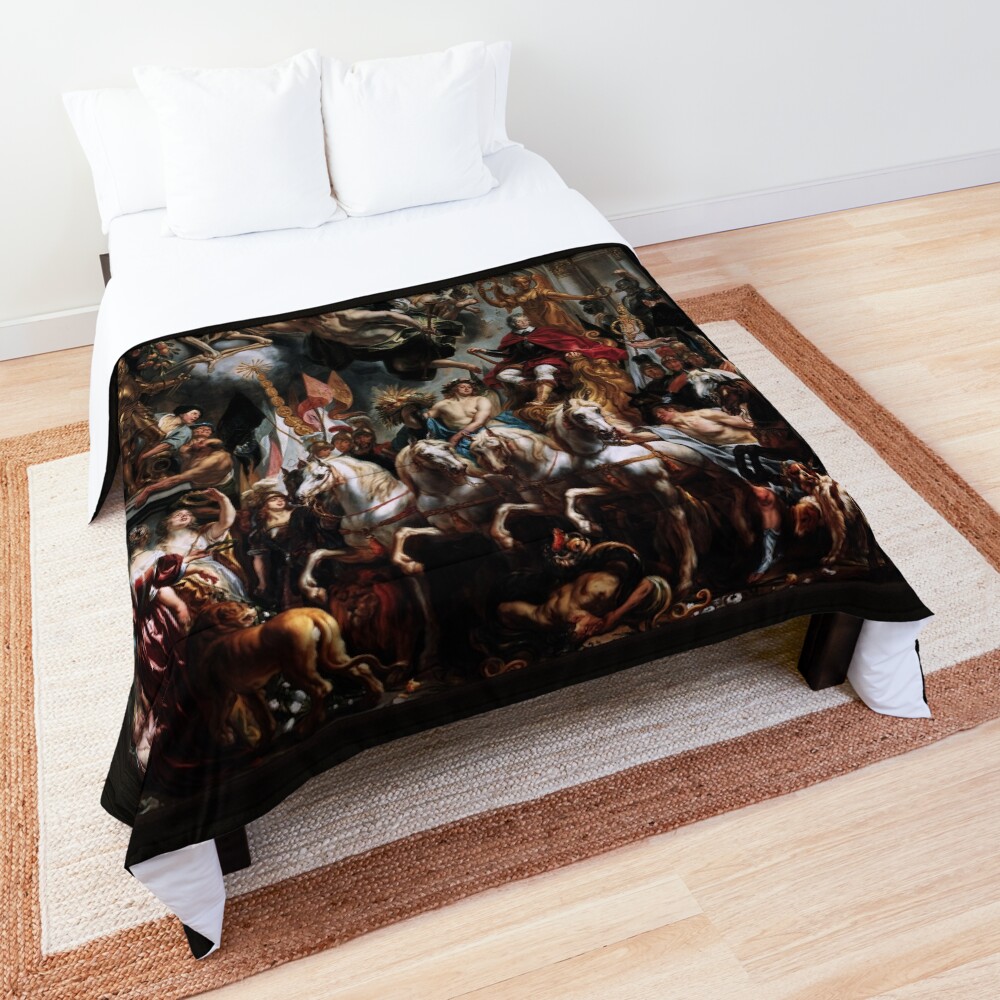
ניצחון פרדריק הנדריק, Prince of Orange c1652 by Jacob Jordaens I (1593–1678), one of the most prominent Flemish Baroque painters, שרטט ומעצב שטיחים; renowned for his lively and dynamic compositions. “This piece exemplifies Jordaens’ mastery of allegorical themes and his ability to convey both grandeur and complexity in monumental works of art. הציור הזה, commissioned to commemorate the military and political achievements of Prince Frederik Hendrik of Orange, is a visual symphony of both human and divine triumph. The narrative unfolds on a grand scale, enveloping the viewer in a world where earthly success and divine approval intertwine.
תוכן העניינים
נושא עיקרי והרכב
At the heart of the composition stands Frederik Hendrik, Prince of Orange, a central figure in Dutch history who played a significant role in the Eighty Years’ מִלחָמָה, which led to the independence of the Netherlands from Spain. Jordaens places the prince in a commanding position, mounted on a horse, crowned with a golden laurel wreath. פניו, marked with determination, gazes toward a future of power and glory. He is draped in imperial red robes, a visual marker of his rank and stature.
The prince is surrounded by a multitude of allegorical figures that reflect his virtues and victories. To his left, a muscular and imposing figure of a soldier, holding a flag, symbolizes military strength. מאחוריו, the figure of Fame, portrayed as a winged woman blowing a trumpet, heralds the prince’s achievements across the world. The surrounding figures are diverse, representing a range of virtues including justice, חַיִל, ושלום. ביניהם, the figure of Justice, depicted as a woman with a sword and scales, stands firmly at the prince’s side, emphasizing the righteousness of his military campaigns and political maneuverings.
A particularly striking element of the composition is the presence of mythological and symbolic beings. Above the prince and his entourage, angels, כרובים, and other ethereal creatures swirl in the heavens, embodying the divine approval of the prince’s earthly deeds. These celestial figures are often depicted with vibrant gestures and flowing robes, their expressions embodying the grandeur and solemnity of the triumph. The combination of real and mythological figures creates a world where divine forces actively shape human destiny, enhancing the grandiose tone of the piece.
אלמנטים של שטח ורקע
The scene is set against a dramatic, cloudy sky. The heavens, swirling with angels and spirits, create a dynamic backdrop that contrasts with the earthly figures below. The artist employs rich hues of gold and deep reds to evoke a sense of divine presence, with light streaming down in rays, bathing the principal figures in a celestial glow. On the earthly level, the terrain is barren, yet symbolically significant—representing the challenges and victories of warfare. בחזית, a lion—a symbol of strength and nobility—can be seen, reinforcing the themes of power and royalty associated with the prince.
A notable part of the composition is the reference to the past triumphs and future hopes for peace. To the left of the prince, an allegorical figure representing “שָׁלוֹם” is shown, with a laurel wreath and an olive branch, underscoring the final goal of Frederik Hendrik’s military campaigns: the establishment of peace through victory. The physical setting is grand, not only to convey the importance of the subject but also to elevate the viewer’s perception of the prince’s power, suggesting that the triumph is both earthly and divine.
סגנון ומצב רוח
Jordaens’ style is rooted in the Baroque tradition, characterized by dynamic compositions, intense emotional expression, and a dramatic use of light and shadow. ב “ניצחון פרדריק הנדריק,” Jordaens employs these techniques to accentuate the overwhelming scale of the event depicted. The composition is grand and energetic, with swirling figures that seem to leap out of the canvas. השימוש במודגש, saturated colors, from the deep reds of the prince’s attire to the shimmering golds of the angels’ כנפיים, gives the painting a vibrant and energetic quality, while the turbulent sky above creates a sense of unease, balanced by the stoic presence of the central figure.
The mood of the painting is both celebratory and solemn. The prince’s triumph is celebrated through the vivid depictions of mythological and allegorical figures, yet there is an underlying tone of seriousness and reflection. The presence of death, symbolized by the skeletal figure in the clouds, hints at the costs of war, with its inevitable toll on human life. This balance between victory and mortality speaks to the complexities of Frederik Hendrik’s legacy and the reality of his victories.
חומרים וטכניקה
The medium used for “ניצחון פרדריק הנדריק” is oil on canvas, which was typical for Baroque painters seeking to create works of monumental scale and dramatic impact. Oil paint allowed for rich texture, deep shadows, and vibrant color, all of which Jordaens expertly manipulates in this piece. The brushwork is fluid, with smooth transitions between light and dark, creating an almost ethereal quality in the depiction of the figures hovering above the prince. The detailed rendering of fabrics, פרצופים, and mythological elements further demonstrates the artist’s technical mastery, giving each figure a sense of movement and life.
The use of light is particularly striking, with intense rays illuminating the central figures and casting dramatic shadows on the figures below. This manipulation of light adds depth to the work and serves to emphasize the divine nature of the prince’s triumph. The figures in the lower part of the painting are cast in shadow, grounding them in the earthly realm, while the celestial beings glow in the upper reaches of the canvas, signaling their otherworldly origin and the divine nature of the triumph.
מַסְקָנָה
Jacob Jordaens I’s “ניצחון פרדריק הנדריק, Prince of Orange” is a masterful blend of history, myth, and artistic technique. Through his use of allegorical figures, סמליות עשירה, and a dynamic composition, Jordaens elevates the achievements of the prince to a level of divine grandeur. The painting not only celebrates the military victories of Frederik Hendrik but also reflects on the eternal cycle of life and death, victory and loss. The work’s dramatic energy, combined with its historical depth, makes it a powerful testament to both the prince’s legacy and Jordaens’ skill as a painter.
זהו רפרודוקציה של אמנות דיגיטלית משוחזרת של תדמית ברשות הרבים הזמינה לרכישה בתור בַּד, מַתֶכֶת, אַקרִילִי, הדפס עץ ומגולגל.
יצירת אמנות דיגיטלית זו, כמו כל יצירות האמנות שניתן למצוא באתר Xzendor7 זמין לרכישה אונליין במגוון פורמטים חומריים כולל הדפסי קנבס, הדפסי אקריליק, הדפסי מתכת, הדפסי עץ, הדפסים ממוסגרים, עמוד הבית של Xzendor7, וכמו הדפסי קנבס מגולגלים במגוון גדלים מ 12 אינצ'ים ל 72 אינצ'ים בהתאם לגודל הגרפיקה בפועל ולחנות ההדפסה לפי דרישה ממנה תבחר לקנות את האמנות.
יצירות האמנות זמינות גם במגוון רחב של בגדי גברים ונשים, ספלים, טוטס, צעיפים, מחברות ויומנים ומוצרי עיצוב לבית רבים.